

How long an AC unit lasts in Moscow, ID

Find an air conditioner pro

You're trying to figure out how many more summers your AC has left in Moscow. Dry heat and long runtimes in July and August wear on a unit differently than they would somewhere humid, and a system that looked fine last year can struggle to keep up this year. Most homeowners can't tell from the outside whether a unit is near the end or has plenty of life left, and guessing wrong either way costs you. Answer a few questions about your system and your home, and you'll be matched with a licensed contractor who works on AC units in Latah County and knows what tends to fail first in this climate. It's one contractor, not a handful calling you back, and they're local to Moscow, so they're familiar with the conditions your system runs in. They'll reach out to look at what you actually have.

How long does an AC unit last in Moscow, ID?

You want a straight number to plan around. Maybe your system is pushing 12 or 15 years and you're wondering if this is the summer it gives out, or you just want to know what to expect now that you're a homeowner in Moscow. Either way, the question is simple: how many years should an AC unit actually give you here before it needs to be replaced.

Most AC units last 12 to 15 years in Moscow

That range holds for most central air conditioners, and Moscow's climate sits on the easier end of what a compressor deals with. Summers here are hot, but they're dry, and dry heat is lighter work for a condenser than the humid heat units face in other parts of the country. Still, July and August push a unit hard, running for hours at a stretch on the worst days, and that adds up year over year. A unit that's had regular service tends to land in the later half of that range. One that's been ignored, or that ran through a few summers with a low charge or a dirty coil, tends to fall short of it.

  1. Compressor cycles on to pressurize refrigerant and start the cooling loop

  2. Hot refrigerant gas travels to the outdoor condenser coil to release heat

  3. Refrigerant cools and turns liquid before flowing inside to the evaporator coil

  4. Indoor blower pulls warm house air across the cold evaporator coil

Keep It or Replace It

Keep It Running

  • A unit that's still holding its charge and cycling normally can often make it a few more summers with regular service.
  • Replacing a working compressor or coil costs more than most repairs, so if the problem is a capacitor or a contactor, fixing it is the cheaper path for now.
  • Dry heat in Moscow doesn't stress a system the way humidity does elsewhere, so a well-maintained unit can outlast its rated age.
  • If the unit was serviced every year and the breakdowns so far have been minor, one more season of use is a reasonable bet.
  • You avoid the disruption of an install during the hottest stretch of July and August.

Replace It Now

  • Once the compressor or the coil fails, the cost of fixing it starts to rival putting in a new system.
  • A unit nearing the end of its expected life tends to fail on the hottest days, when it's working hardest and you need it most.
  • Power here is cheap, but an aging unit still draws more to do the same job as a new one would.
  • If last summer's calls for service are becoming this summer's pattern, replacing it ends the cycle of repeat visits.
  • A new system gets installed on your schedule instead of in the middle of a heat wave when the old one quits.
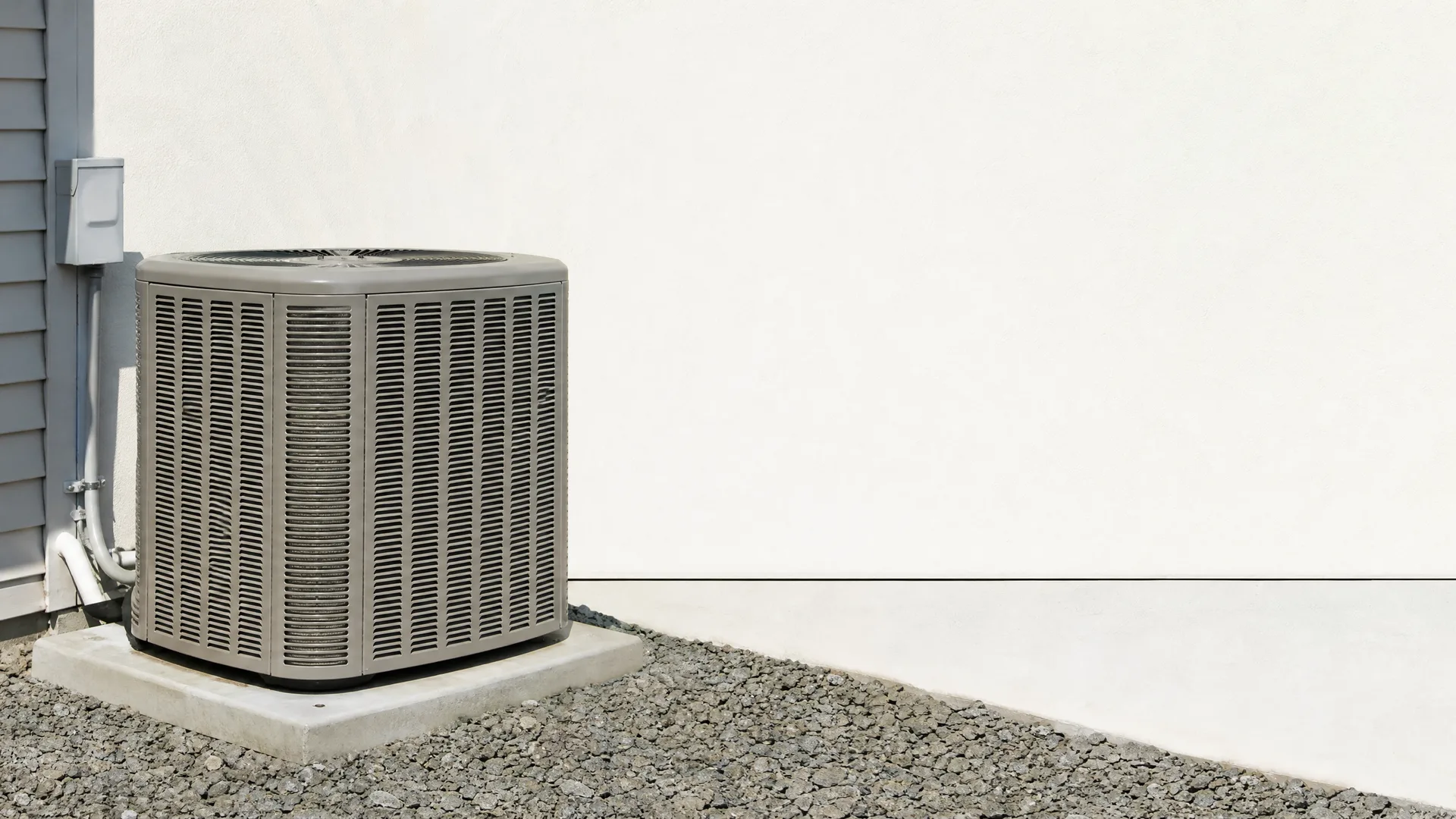
An outdoor air conditioning condenser unit sits on a concrete pad beside a plain light-colored wall, surrounded by gravel, with vinyl siding and an electrical box at the left edge.

Dry heat changes how it wears

An AC unit in Moscow runs harder on dry, hot afternoons than the same unit would in a humid climate, because the compressor cycles longer to pull heat out of air that has little moisture in it to begin with. Longer run times mean more hours on the compressor and the fan motor over a season. That adds up differently here than it would somewhere the air carries more moisture and the unit shuts off sooner.

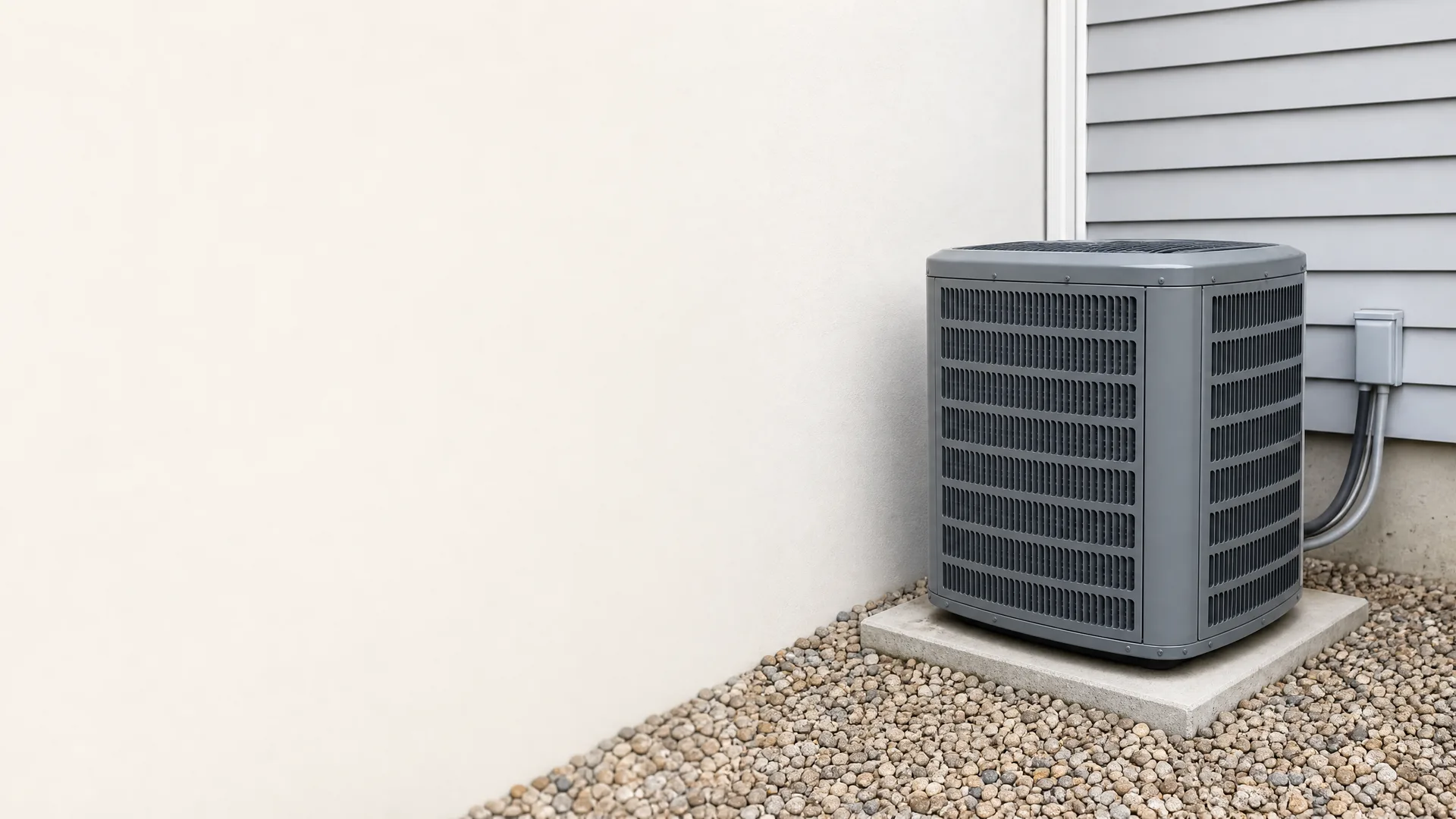
A gray outdoor air conditioning condenser unit sits on a concrete pad surrounded by gravel, beside a stucco wall and vinyl siding with an electrical disconnect box and conduit.

What usually fails first

The outdoor condenser coil sits exposed to sun and dust all summer, and over the years it loses some of its ability to shed heat. A capacitor that's weakened will make the compressor labor to start, and a low refrigerant charge forces longer cycles to hit the same temperature. None of these end a unit's life on their own, but together they tell you whether the system still has summers left in it or is working past what it should.

Is your AC struggling to keep up this summer?

You notice it most in the afternoon. The thermostat says 74 but the house feels warmer, and the unit is running almost the whole time the sun is up instead of cycling off like it used to. It might take longer to pull the house down after a hot day, or blow air that isn't as cold as you remember. Some units make a new sound, a rattle or a hum that wasn't there last July. None of this means it's done. But a system working this hard for this long is closer to the end of its life than the one that shuts off and rests, and if it quits in August you're without cooling on the hottest days of the year.

A gray outdoor air conditioning condenser unit on a concrete pad beside a house with horizontal lap siding and a stone veneer base, with a disconnect box and conduit on the wall, mulch bed and shrub to the right, and mowed grass in the foreground.

Running clean

A condenser that looks like this, clear cabinet, open space around it, a clean coil behind the mesh, can move heat the way it was built to. Air passes through freely, so the compressor doesn't have to cycle as long to cool the same house.


An outdoor air conditioner condenser unit on a gray composite pad beside a house with horizontal siding, a concrete foundation, a basement window, and a conduit and disconnect box on the wall.

Choked with dust

Dust packed into the mesh and across the coil blocks airflow before it reaches the refrigerant inside. The unit works harder to do the same job, and in a Moscow summer that extra strain shows up as a shorter life, not just a higher bill.

Power here costs 11.90 cents per kilowatt-hour

At 11.90 cents a kilowatt-hour, running a tired AC through a long, hot stretch costs less here than in most places. That makes it easier to justify keeping a weaker unit alive instead of replacing it the moment it starts to struggle.

EIA-861 2025

A gray-haired woman in a dark sweater sits with a blanket on her lap near a window, looking out at autumn-colored trees, in a living room with a sofa, built-in shelves, and a potted plant on a side table.
A woman with long gray hair in a knit sweater sits on a sofa with cushions and a blanket, looking out a large window toward yellow autumn foliage.
A gray-haired woman in a cream knit sweater sits on a light sofa with a blanket, looking out a window toward yellow autumn trees, with a framed picture and potted plant in the background.
An older woman in a cream knit turtleneck sweater sits on a sofa with a blanket, looking out a window with autumn-colored trees outside, in a dimly lit living room with a lamp, framed art, and a patterned rug.
A gray outdoor air conditioning condenser unit on a concrete pad beside a house with horizontal gray siding, with a wall-mounted electrical disconnect box and insulated refrigerant lines, and blue hydrangeas in a mulched bed to the left.
This condenser has room to breathe. Clear airflow and a clean coil let it cool the house without overworking the compressor.
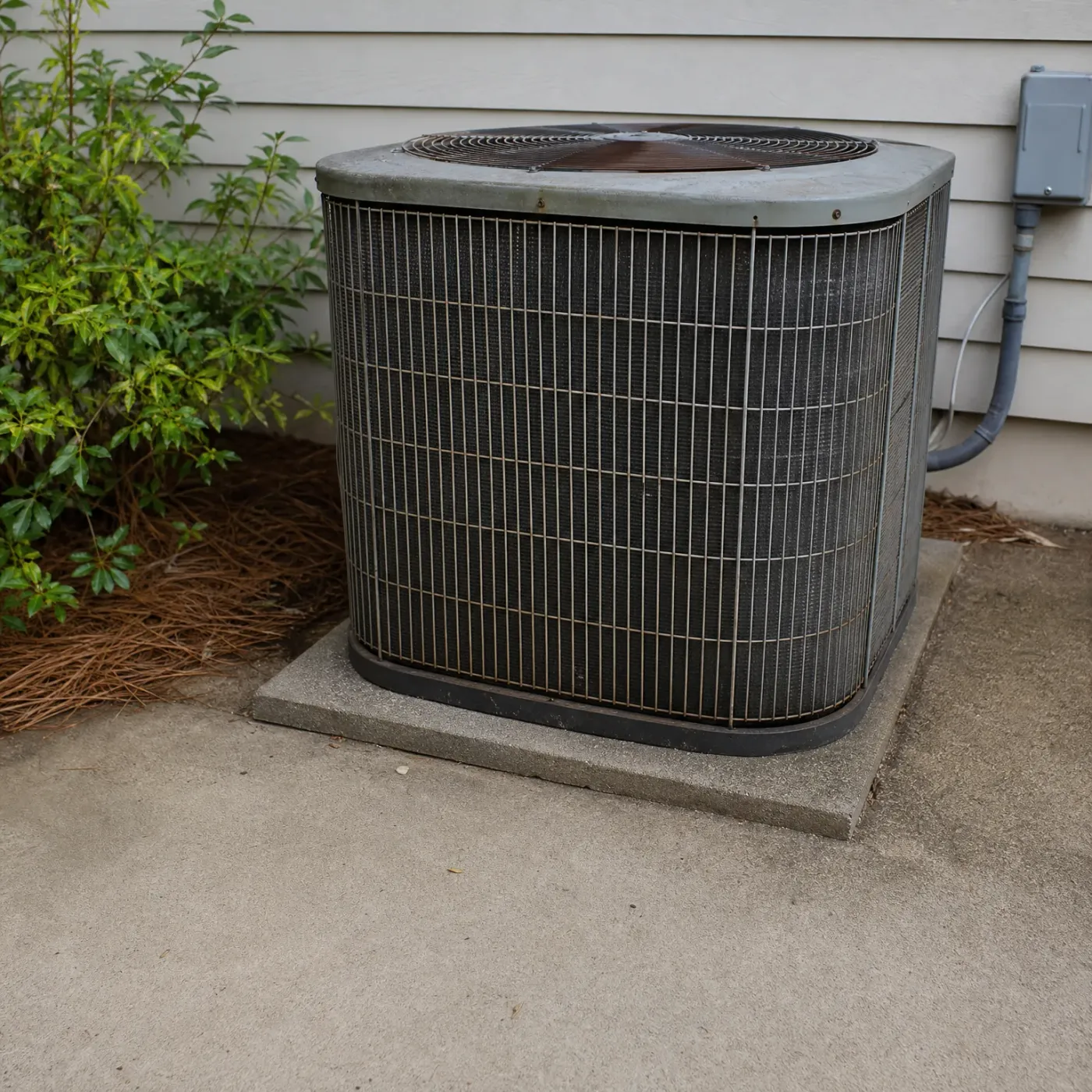
A gray outdoor air conditioner condenser unit on a concrete pad beside a house with beige horizontal siding, with an electrical disconnect box and insulated refrigerant lines on the wall and dry leaves on the ground.
Rust on the shroud and dirt packed in the fins force this unit to work harder for the same result, on top of years already logged.
A woman in a cream knit sweater sits in an armchair with her eyes closed and head tilted back, beside an open window showing orange and yellow foliage, with a mug on a small round table and a bookshelf behind her.
An older man with gray hair in a green quarter-zip sweater leans back on a couch with his eyes closed and head tilted up, in a sunlit room with windows, houseplants, a lamp, and a cushion behind him.
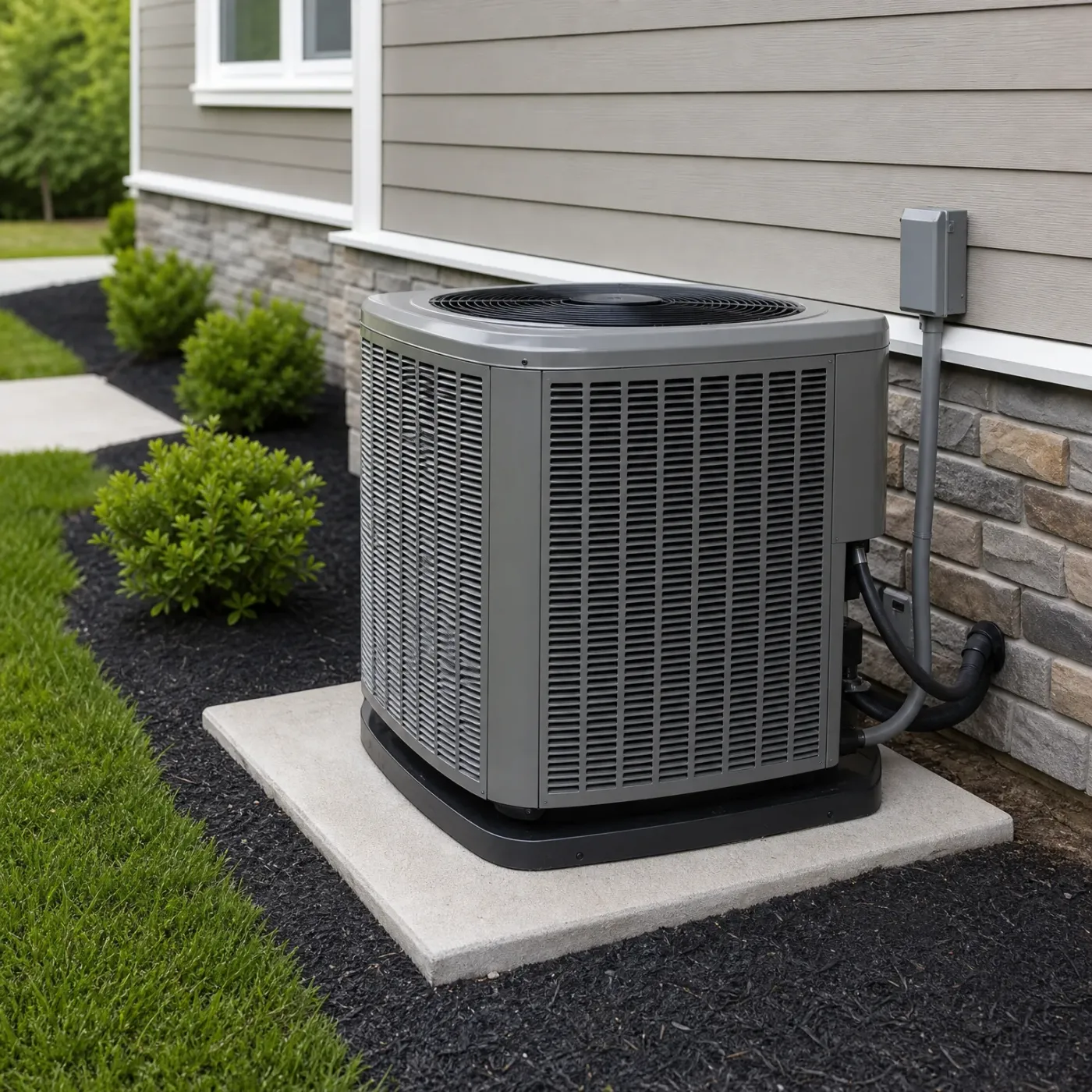
A gray outdoor air conditioner condenser unit on a concrete pad beside a house with horizontal siding and a stone veneer base, with a wall-mounted disconnect box, conduit and refrigerant lines, surrounded by black mulch, shrubs and lawn.

Get matched with an air conditioner pro in Latah County

A licensed installer who works in Latah County gets your project.

Get matched with someone who does this kind of work in Latah County.

Get one local pro

It costs nothing to send, and you don't have to hire anyone.

An outdoor air conditioner condenser unit on a concrete pad beside a house with horizontal lap siding, with a gray electrical disconnect box and conduit on the wall and a green shrub over pine-needle mulch at left.
Before you get your air conditioner installation
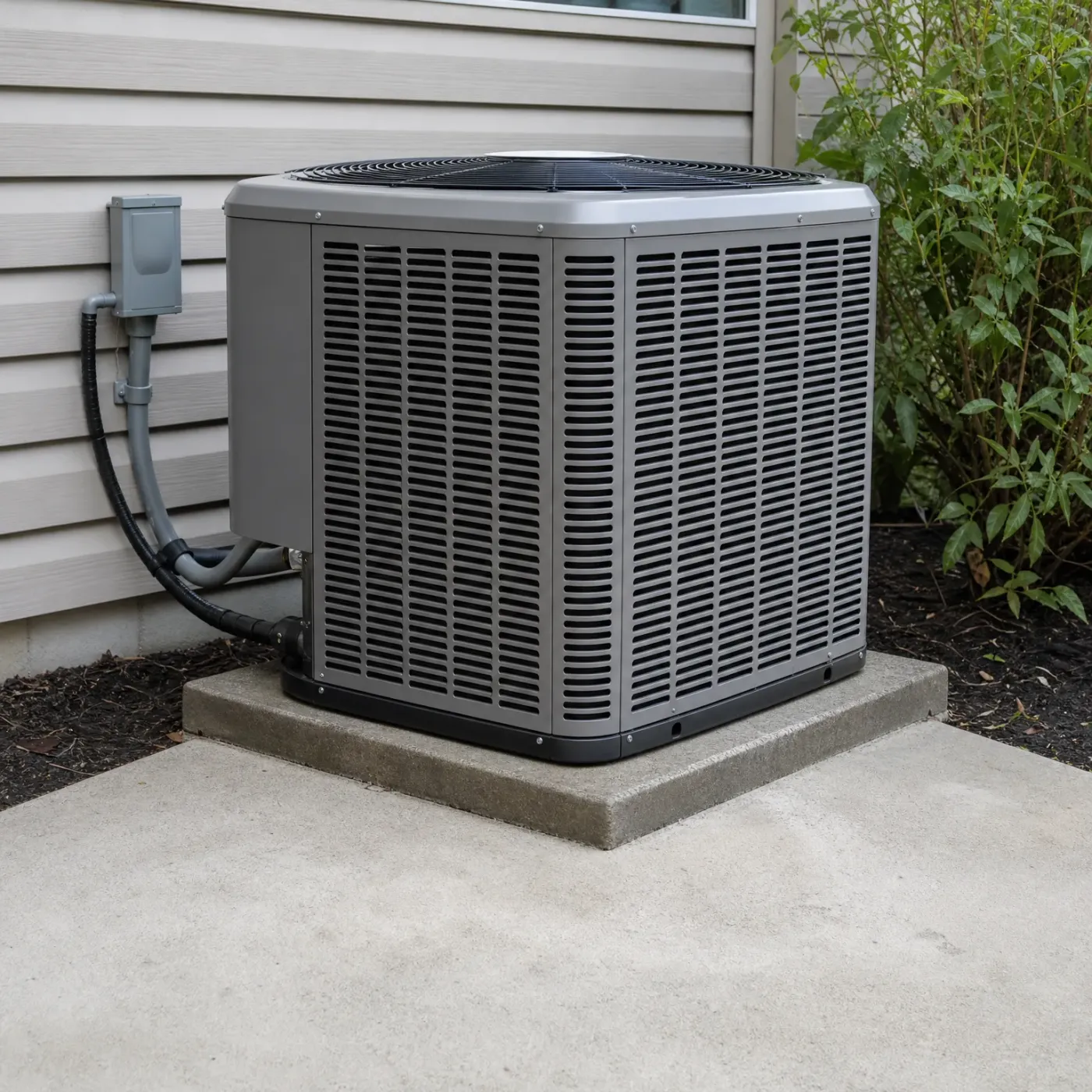
A gray outdoor air conditioner condenser unit on a concrete pad beside a house with light vinyl siding, with an electrical disconnect box and conduit on the wall and a leafy shrub with dark mulch to the right.
After you get your air conditioner installation
A two-story house with light beige siding and a gray shingled roof, fronted by a mowed lawn, shrubs, a large leafy tree at right, and a wet concrete walkway leading to the front door in low golden sunlight.

Latah County summers run dry, and the air here averages a 48°F dew point across June, July and August, according to NOAA climate data. That's low enough that sweat evaporates fast and the air feels lighter than the thermometer suggests. Your AC doesn't work that way. The compressor still has to run long stretches to pull heat out of dry air, since there's little moisture for the coil to wring out along the way. Where a humid climate lets a unit cool and dehumidify at once, yours spends those hours just chasing temperature, and the extra cycling adds up over a 15-year lifespan.

NASA POWER T2MDEW

A man in a navy polo and khaki pants walks up a curved concrete path toward a stone-faced house where a woman stands in the open front doorway, with shrubs, flowers and potted plants flanking the entry steps under a cloudy sky.

What an aging AC puts at risk in your house

If your compressor is on its way out, you'll likely know before it quits outright. The house takes longer to cool after dinner. A room upstairs stays warm no matter what the thermostat says. Your power bill climbs during a stretch of 90 degree days even though you haven't changed how you run the system. None of that means tomorrow is the day it fails, but it means the unit is spending more to do the same job it used to do easier.

A system that fails on a hot afternoon in Moscow doesn't give you much notice, and it rarely fails on a convenient day. Once you're past the point where repairs are small and occasional, a local contractor who services this equipment every summer can tell you from a look at the coil, the compressor and the refrigerant charge whether you're buying another season or borrowing against a failure. Getting matched with one who already knows what tends to go first on units your system's age means you're not explaining your situation twice.

A gray upholstered sofa with a beige cushion and knit blanket beside a curtained window, with a white mug and a book on a dark wooden table in the foreground and a lit lamp in the background.
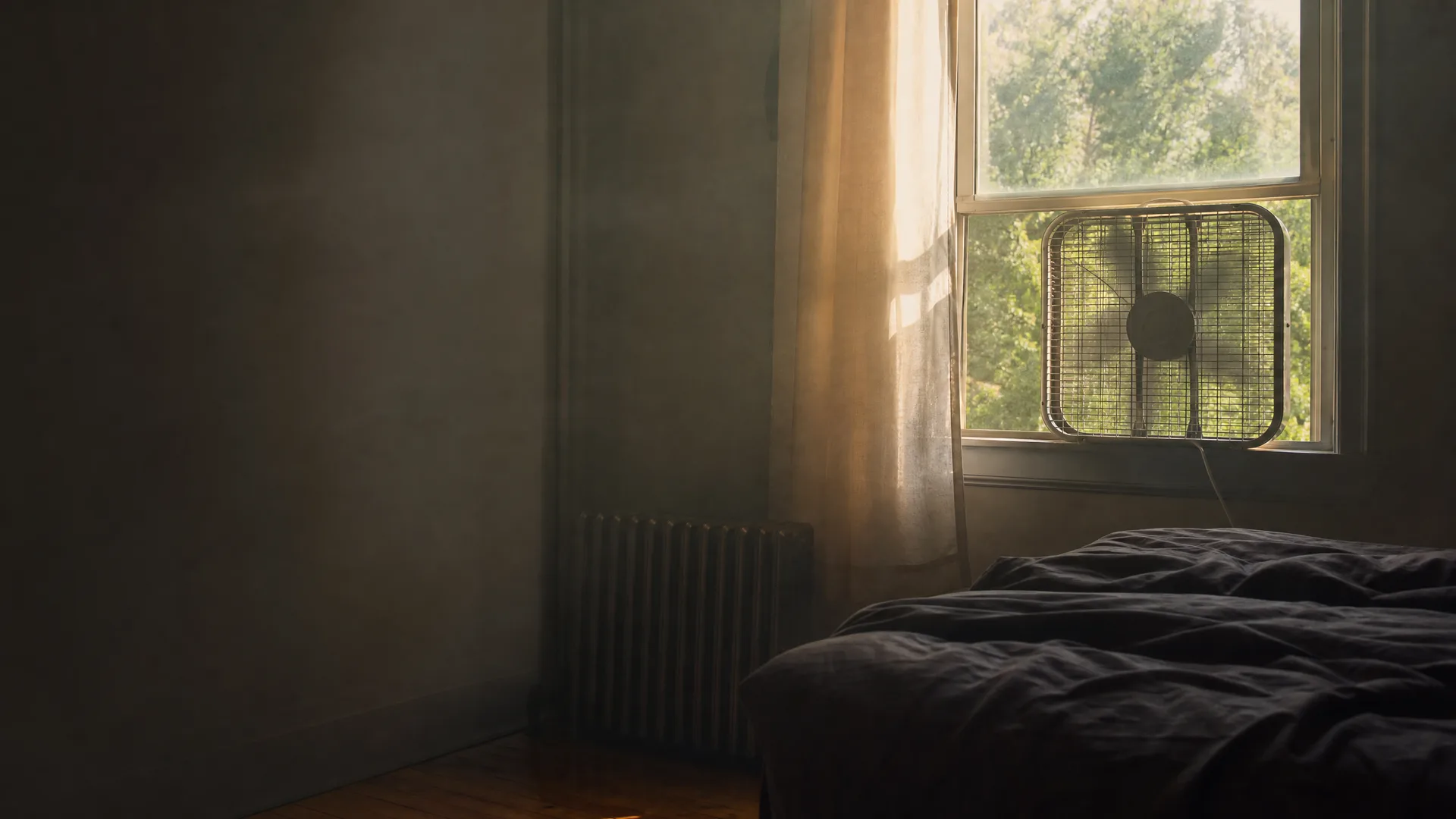
A dim bedroom with a bed covered in gray bedding, a cast-iron radiator against the wall, and sunlight entering through a window fitted with a box fan and a sheer curtain, with green trees outside.

It's past eight and still light out, the sky that late shade of gold June gets in Moscow. Upstairs, the bedroom hasn't let go of the day's heat. You've got the box fan wedged in the window, pulling in air that isn't much cooler than what's already in the room. The thermostat downstairs says it's working. Up here you can't tell. The sheets feel warm before you've even laid down, and the fan just pushes the same heavy air around instead of clearing it out.

Most AC units in Moscow make it somewhere between 12 and 15 years, less if the unit has had to work through dry, hard summers without much upkeep, more if it's been serviced on schedule and the airflow around the condenser has stayed clean. Where your unit falls in that range depends on how it's been running, not just how old it is. If yours is still holding its charge and cycling the way it should, there's no reason to replace it yet. If it's struggling in the afternoon heat or the bill keeps climbing, that's worth having someone look at before next summer makes the decision for you. A contractor who works on these units all over Latah County every season has seen what dry heat does to a compressor over time and can tell you where yours actually stands. You'll be matched with one contractor local to Moscow, not a handful of companies competing for your callback.

A single-story white stucco house with dark roof, stone-clad entry tower and three dark garage doors, lit from within at dusk, with a curved concrete driveway and dark mulch beds with boulders and bare young trees in the foreground under an orange and blue sunset sky.

Air Conditioner Installation

Find an air conditioner installation pro in Latah County

New system or replacementCentral ACLatah County, ID
Step 1 of 2

What ZIP code is the job in?

  • A multi-pane white window looking out on snow-covered evergreen and bare trees, with a ceramic mug, pine cones, a book, a knit blanket and a burlap cushion in the foreground.
    • Get matched with a pro who works on air conditioners in Latah County.
    • A local installer who puts in air conditioners gets your project.
  • A cream knit throw and striped pillow on a light upholstered sofa beside a window, with a woven basket of split firewood in the foreground.
    • Send the form and stop researching installers for the new air conditioner.
    • One request ends the search for an air conditioner installer.
  • A weathered wooden bench with a beige cushion and a fringed brown throw sits on a wood-plank porch beside a large planter with a thin-branched shrub, against a light-colored house wall with a dark-framed window.
    • Skip collecting and comparing quotes for the new air conditioner.
    • Skip the round of in-home estimates for a new air conditioner.
  • Exterior of a dark shingle-sided house with a white-trimmed divided-light window, a yellow-leaved tree, trimmed shrubs, and two small pumpkins on a stone pillar cap.
    • A licensed pro who works in Latah County gets your request.
    • One installer gets your project, so there's no bidding war over it.