July is the only month cooling runs here
Arco gets one month of cooling a year. When July hits, the air conditioner has to work right away, with no mild stretch to ease into.

Takes about a minute. No obligation.
Arco gets one month of cooling a year. When July hits, the air conditioner has to work right away, with no mild stretch to ease into.
A system sitting idle since last summer needs a look before it's asked to run hard again. June gives a contractor time to catch a weak capacitor or low charge before July's first hot day.

NOAA nClimDiv, 1991–2020 normals
One month of cooling a year is light duty for an air conditioner.
Light duty still wears on a capacitor and a contactor, so a yearly check is what keeps a system this lightly used running for years.



Half the houses in Butte County went up in 1971 or earlier. An air conditioner doesn't last that long, so if yours came with the house, it's not the original. What usually is original is the ductwork and the electrical behind the wall, and neither tells you anything by looking at it. A yearly check is how a contractor catches a connection or a charge going bad before it leaves you without cooling.
A check in June catches a weak capacitor or contactor before July asks anything of it. That's the whole job for a system that only runs one month a year.
Find a contractor
A thorough check means hands on the equipment. The tech pulls the panel, tests the capacitor under load rather than eyeballing it, and checks the contactor points for pitting. Refrigerant gets checked against the system's actual charge, measured with gauges, not guessed from how the air feels at the vent. A quick visit skips most of that. Someone shows up, glances at the outdoor unit, maybe hoses off the coil, and leaves. Nothing gets tested under load, so a capacitor that's about to fail looks the same as one that's fine. Ask what gets checked with a meter and what just gets looked at. That answer tells you which visit you're getting.
Dust builds on the indoor coil and across the outdoor coil fins, and both lose their grip on heat. The compressor still runs, but it runs longer to do the same job, and the extra heat it carries has nowhere good to go.
By the time ice shows up on a line or the air coming out feels warm, the strain has been building for a while. A check catches the coil buildup or the low charge before it shows up as a system that won't cool at all.
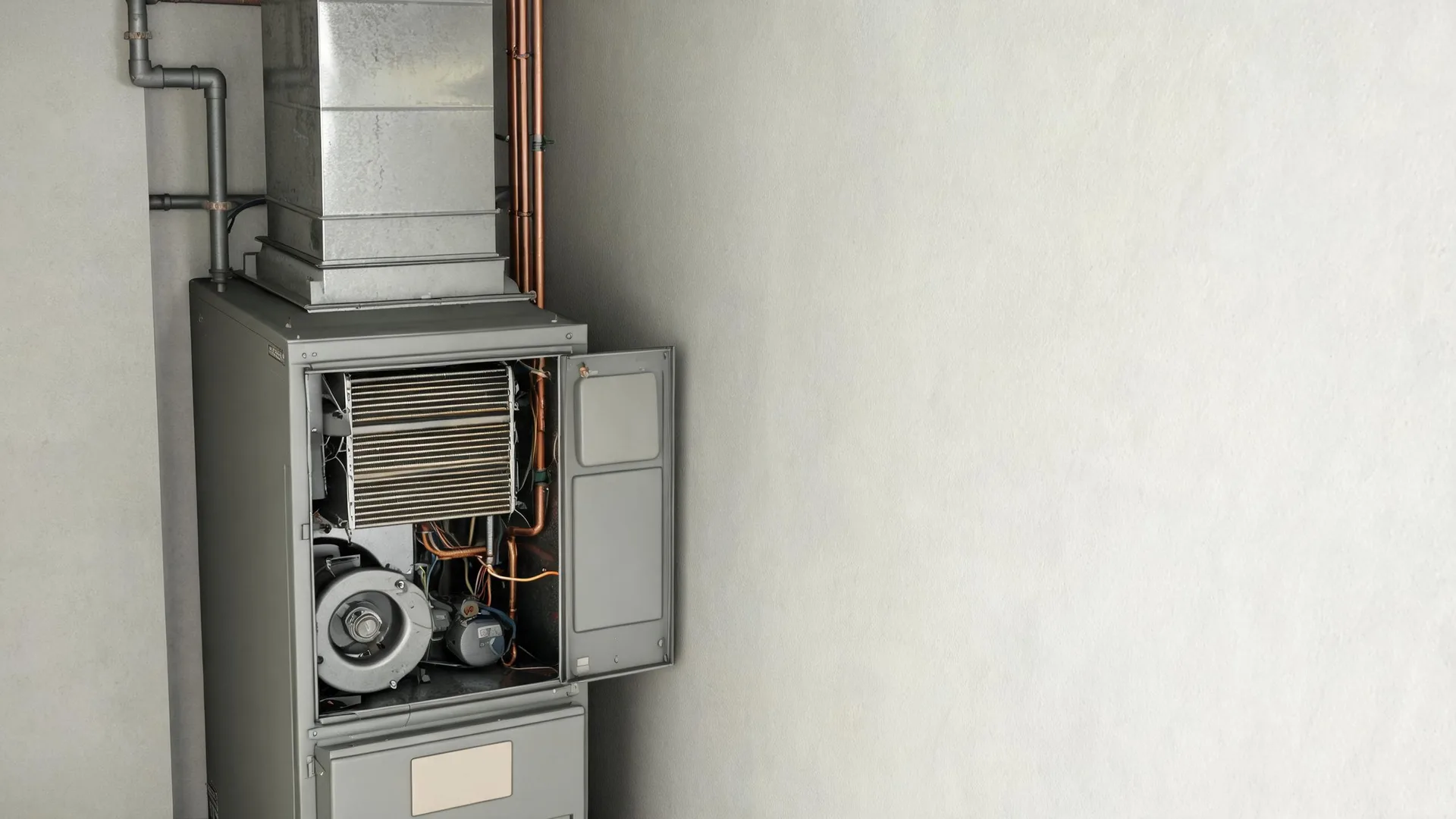
A tune-up checks the refrigerant charge, cleans the coils, tests the capacitor and tightens the electrical connections.
A tune-up starts with the coils, indoor and outdoor, cleaned if dirt has built up on either one. A dirty coil can't shed heat the way it should, and that alone makes the compressor work harder than it needs to. The tech checks refrigerant charge against what the system calls for, not just whether the air feels cold. Electrical connections get checked too, since a loose one creates resistance and resistance makes heat. The contactor and capacitor get tested under load, because both can look fine sitting still and still be close to failing. Condensate drain checked so it isn't clogged and backing up. None of this takes long, but skipping it is how a small problem turns into a compressor that doesn't start.