
How to keep your AC running in an Idaho heat wave

One request and finding someone for the tune-up is handled.

Tune-up, service, or cleaningCentral ACIdaho
Step 1 of 2

What ZIP code is the job in?

How do I keep my AC running in an Idaho heat wave?

When the temperature climbs past 95 and stays there for days, your AC is working harder than it does the rest of the year. A unit that ran fine in June can start struggling in late July, short cycling or blowing air that isn't as cold as it should be. You want to know what actually helps during the stretch of heat, not general advice about summer upkeep.

Get the coil and filter clean before the heat hits, then leave the system alone to run

Idaho's heat is dry, so your air conditioner is moving a lot of hot air across the coil without much humidity to fight. A dirty filter or a coil caked with dust makes it work harder to pull that heat out, and in a long stretch of 95 degree days that extra strain is what causes a breaker to trip or a compressor to overheat. A unit that's clean and has the right refrigerant charge can run for hours without stopping and hold up fine. Once a heat wave starts, resist the urge to push the thermostat down low to cool the house faster. It won't cool any quicker, it just makes the system run longer than it needs to, right when it can least afford the extra strain.

A gray outdoor air conditioner condenser unit on a concrete pad beside a house with horizontal vinyl siding, surrounded by mulch, flowering shrubs, and lawn.

Clean coil, clear airflow

The fins are open and the air moves through them the way they were built to. Heat pulls off the coil fast, so the compressor doesn't have to run as long to get your house down to temperature. On a 95 degree day that difference is what keeps the unit cycling off instead of running straight through the afternoon.


A weathered outdoor air conditioning condenser unit on a concrete pad beside a house with light horizontal siding, an electrical disconnect box and conduit on the wall, and mulched soil on either side.

Caked coil, trapped heat

Dirt and grass clippings have sealed the fins shut, so heat has nowhere to go. The compressor runs longer to do the same job, and on the hottest days it may not keep up at all. Left this way, it's the kind of load that burns out a compressor before its time.

Skip Maintenance or Get It Serviced

Skip maintenance

  • A dirty coil or a weak capacitor usually doesn't show up until the day it's 100 degrees and the unit has to run for hours straight.
  • If the system goes down on a weekend in August, you're waiting behind everyone else whose AC picked the same week to quit.
  • A unit that's low on refrigerant or has a clogged filter runs longer to hit the same temperature, and that shows up on your bill even with cheap power here.
  • Dust and dry air build up in the coil fins over an Idaho summer faster than most people expect, and that buildup doesn't clear itself.
  • Small problems like a failing capacitor tend to take the compressor down with them if nobody catches it first.

Get it serviced

  • A technician checks the refrigerant charge and the capacitor before a heat wave finds the weak point for you.
  • Cleaning the coil and the condenser fins restores airflow, so the compressor doesn't have to run as hard to cool the house down.
  • Catching a worn part in June or July means it gets replaced on a scheduled visit, not during an emergency call in August.
  • A local contractor who services AC units every summer here knows which parts tend to fail first in this kind of heat.
  • Since it's one contractor handling the visit, you get a straight answer about what the unit needs instead of several different opinions.
A gray outdoor air conditioner condenser unit on a concrete pad beside a house with horizontal lap siding, with a wall-mounted disconnect box and conduit to its right and shrubs to the left.

Running the way it should

This condenser sits clean on its pad, conduit tied in neat to the disconnect on the wall. Air moves through the coil without a fight. On a hot afternoon it cycles the way it's supposed to and shuts off instead of running straight through.

An outdoor air conditioning condenser unit on a concrete pad beside a house with horizontal lap siding, with a conduit and electrical disconnect box on the wall at right.

Falling behind

Dirt has built up on the coil guard of this one, thick enough to see from a few feet off. Airflow is choking down a little more each week. By the time a heat wave settles in, it's already running longer than it should to hold the house at temperature.

A woman in a cream knit sweater reclines on a sofa with her eyes closed and a slight smile, a closed dark book resting on a blanket in the foreground and a lit lamp and small potted plant behind her.
A smiling bearded man in a dark green sweater sits at a dinner table with a glass of red wine, a bowl of salad and a lit candle in the foreground, in a dimly lit room with a framed picture, lamp and potted plants behind him.

Let someone else find the pro

A licensed local pro takes the request for your air conditioner tune-up.

It costs nothing to send, and you don't have to hire anyone.

What dry heat does to a capacitor

Idaho's heat comes without the humidity, but the strain on the electrical side of your AC doesn't care about that. A capacitor gives the compressor and fan motor the jolt they need to start and keep running. Heat wears it down faster than normal use does, and a weak one still lets the unit start most days. It just can't hold up when the compressor has to run for hours straight on a 100 degree afternoon. That's when it fails, not in April when you first turn the system on for the year.

Why the thermostat reads wrong first

Before a unit stops cooling altogether, it usually struggles quietly for a while. Vents blow air that isn't as cold as it should be. The house holds at 78 instead of dropping to 72 no matter how long the AC runs. Refrigerant pressure, a failing capacitor, or a coil that isn't shedding heat the way it should can all cause this. A contractor who checks these parts before the hottest stretch of summer catches the slow decline while the fix is still simple, instead of after the unit gives out.

A smiling bearded man in a dark long-sleeved shirt sits on a brown leather sofa in a living room, with a large glass bowl of popcorn on a table in the foreground and a houseplant and doorway behind him.
A smiling man with gray-streaked hair and a beard in a dark blue sweater reclines on a sofa in a living room with a lit wood stove, shelves, wicker baskets and a bowl of popcorn on a table.
A smiling bearded man in a dark plaid shirt sits on a green couch beside a cushion and a wooden bowl of popcorn, with a blurred kitchen and living area behind him.
A smiling bearded man in a dark green henley shirt sits on a gray couch in a living room with a bookshelf, lit lamp, houseplant and framed picture behind him, and a bowl of popcorn in the foreground.

How your AC actually cools

  • The compressor pulls refrigerant through the system in a set order, and a dirty coil forces it to run longer to move the same heat.
  • A capacitor delivers a jolt of voltage to start the compressor and fan motor, then holds them steady while they run.
  • The contactor is the switch that sends power to the compressor each time the thermostat calls, and its contacts pit and wear with every cycle.
  • Refrigerant has to return to the compressor as vapor, not liquid, or the compressor can take damage that doesn't show up right away.
  • A condenser fan pulls outside air across the coil so the heat your house gave up has somewhere to go.
  • The thermostat's call for cooling runs through a low voltage circuit, and a worn connection there can stop the whole system before the compressor ever sees a problem.

Your AC works in a loop, and every part in it has one job that depends on the part before it. The compressor is the engine of the system. It pulls refrigerant through the coils in a set order, and when the outdoor coil is dirty, the compressor can't dump heat as fast, so it runs longer to do the same job. That extra runtime is where trouble starts on a 100 degree day.

Starting that compressor takes a jolt, and that's the capacitor's job. It delivers the voltage to get the compressor and fan motor spinning, then holds them steady. A weak capacitor still starts the system most days, then fails on the day it's asked to work hardest. The contactor is what sends power to the compressor every time your thermostat calls for cooling. It's a mechanical switch, and its contacts wear a little with every cycle, which in Idaho's long, hot stretch means a lot of cycles.

Refrigerant has to come back to the compressor as vapor. If it's still liquid when it gets there, the compressor can take damage that doesn't show up the day it happens. Outside, the condenser fan pulls air across the coil so the heat your house gave up actually has somewhere to go. And none of it runs at all if the low voltage wire from your thermostat has a worn connection. That's a small part, but it can stop the whole system before the compressor ever gets a chance to fail.

An outdoor air conditioner condenser unit on a concrete pad beside a house with light gray vinyl siding, with a gray electrical disconnect box and conduit on the wall, gravel beds and dried plants nearby, and a concrete sidewalk in the foreground.
Before you get your air conditioner maintenance
A gray outdoor air conditioning condenser unit on a concrete pad beside a house with horizontal siding and a stone veneer base, with a wall-mounted disconnect box and conduit, next to a shrub bed and a concrete patio.
After you get your air conditioner maintenance

Power costs 11.83 cents per kilowatt-hour statewide

At 11.83 cents a kilowatt-hour, running your AC hard through a heat wave costs less here than it does in most states. That's not a reason to ignore a struggling unit. A system fighting a dirty coil or a weak capacitor still pulls more power to do the same job, and it shows up on the bill even at this rate.

EIA-861 2025 statewide residential average

  1. Refrigerant pulls heat out of your house air at the indoor coil.

  2. The compressor squeezes that refrigerant until it gets hot and pressurized.

  3. The outdoor coil dumps that heat into the outside air.

  4. A clean coil and strong capacitor keep the whole cycle short.

A clean coil and a strong capacitor are what get your AC through a 95 degree stretch without quitting on you. That's the whole answer. Maintenance catches the dirty coil and the weak capacitor before the heat finds them for you. A local contractor who works on Idaho systems all summer has seen what a heat wave does to a unit that skipped a season, and knows which part usually gives out first. You'll get matched with one contractor, not a handful calling at once, so the person who shows up is someone who actually services equipment like yours in this kind of heat. Once you send the request, that part is off your plate. You don't have to figure out who's reliable or chase down a callback. You just need your AC to make it through August, and that's what the visit is for.

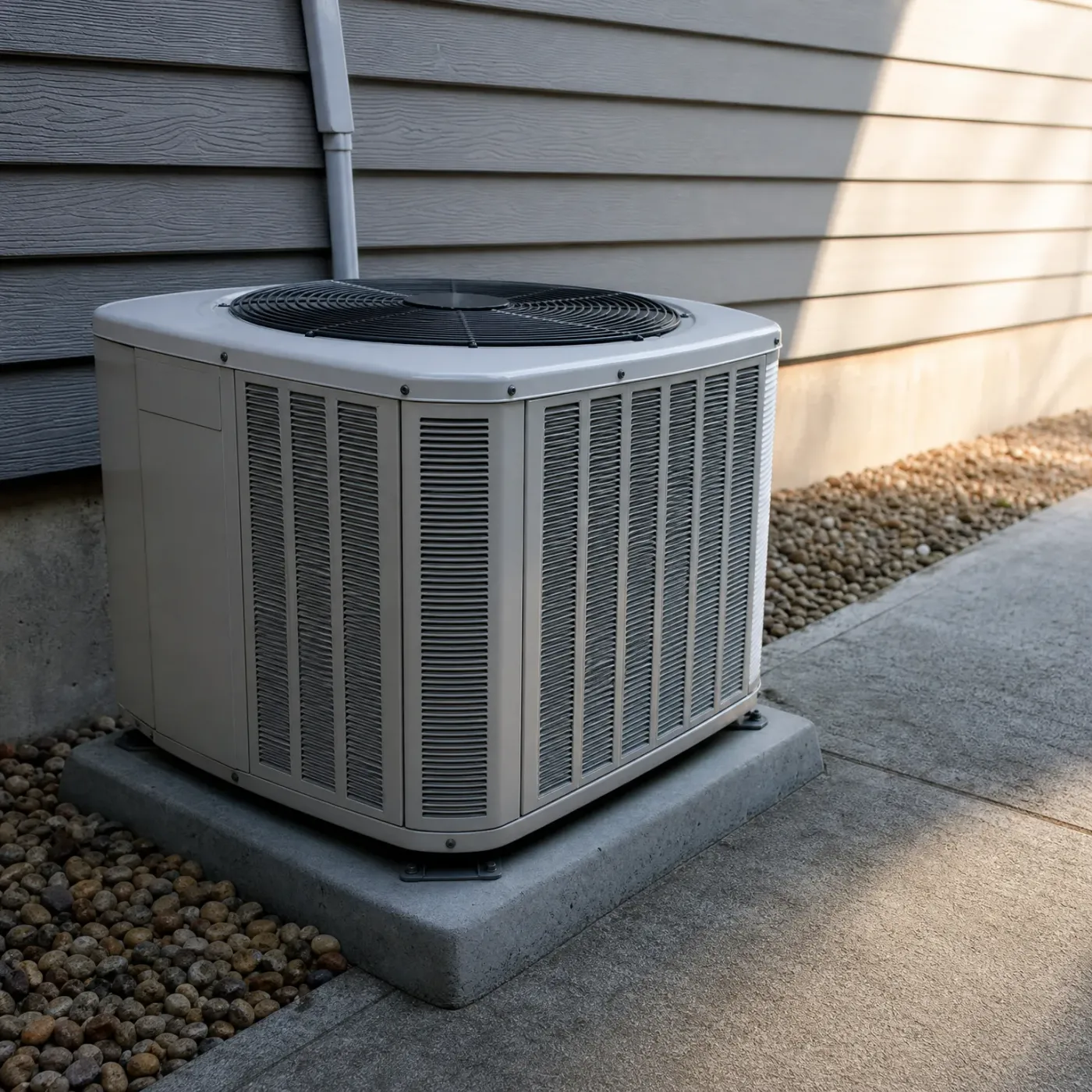
A beige outdoor air conditioner condenser unit with a top fan grille sits on a concrete pad beside a house with horizontal lap siding, bordered by gravel and a concrete walkway.

One request and it's handed off

Find a local pro

Your request stays with one local pro.

No charge to send it. You decide if you hire them.