What an AC tune-up covers before an Idaho summer

A local pro who services air conditioners gets in touch about the tune-up.

Tune-up, service, or cleaningCentral ACIdaho
Step 1 of 2

What ZIP code is the job in?

What does an AC tune-up include before summer in Idaho?

You want your AC running before Idaho's heat sets in, and you're not sure what a tune-up actually involves or whether it's worth having done. With summers here hot and dry, a unit that was fine last August can still struggle if it sat untouched all winter.

A tune-up checks the parts that let your AC keep up with a dry Idaho summer

A technician checks refrigerant charge, tests the capacitor and contactor, cleans the condenser coil, and checks that airflow through the system is where it should be. Each of those affects how well the unit cools once temperatures climb and stay there for months. A dirty coil or a weak capacitor won't always stop a system from running, but it makes the unit work harder to do the same job, and that shows up as rooms that don't cool evenly or a system that runs longer than it should. Catching that before summer means the unit is already working the way it's supposed to once the heat arrives, instead of you finding out mid-July when it matters most.

A gray outdoor air conditioner condenser unit on a concrete pad beside a house with horizontal lap siding, with a flowering shrub at left and a disconnect box with conduit on the wall at right.

Tuned up and running clean

Your condenser sits on its pad, coils clear, nothing blocking the airflow around it. It cycles on, cools the house, and shuts off without strain. A unit kept clear of debris and checked before the heat hits works the way it's supposed to all summer.

An outdoor air conditioner condenser unit on a concrete pad beside a house with light horizontal vinyl siding, surrounded by bare dirt, gravel and dry leaves, with refrigerant lines and conduit running along the wall.

Neglected and struggling

Dirt and dead leaves pile up against the cabinet. Refrigerant lines run along the wall unchecked. A condenser working through buildup like this pulls harder to do the same job, and by August, when Idaho's dry heat is steady, it may not keep up at all.

A woman in a cream sweater and jeans stands in the open doorway of a white stucco house, holding the dark door, while a man in a dark quilted jacket seen from behind walks toward the entry past potted plants.

If the tune-up gets skipped

Idaho's dry heat means your condenser is pulling in dust all summer, and that dust packs into the coils if nobody checks them. A dirty coil makes the compressor work harder to move the same heat out of the house, and you see that on your power bill even if power here is cheap. Push it far enough and the compressor is what fails, not a part you can swap for a quick fix.

You could call around to a few HVAC companies, explain your unit and your schedule to each one, then sit with the quotes and try to tell them apart. Skip that part. Tell us what you've got and where you live, and a contractor who works on systems like yours gets in touch with you directly.

Interior corner with a beige sofa holding a dark green and a light cushion and a textured throw, a potted small-leaved tree beside a white-framed window, and a dark shallow bowl on a wooden coffee table in the foreground.
A gray-haired, bearded man in a dark coat dusted with snow stands smiling in a dimly lit room with a lamp, mirror, framed art, and a sofa in the background.
An older man with white hair and a beard, wearing a dark snow-dusted coat and scarf, stands in a warmly lit interior hallway with a framed landscape picture, a table lamp and a potted plant behind him, and a snowy view through a window at left.
An older man in a dark snow-flecked overcoat and scarf stands smiling in a warmly lit home entryway, with a glass-paned door showing darkness outside and a lamp-lit room visible through a doorway behind him.
An older man with gray hair and a beard, wearing a dark snow-dusted jacket and scarf, stands smiling in a warmly lit interior hallway with a lit table lamp, a vase of dried branches, and a framed picture in the background.

Tune-Up Now vs. Wait It Out

Tune-up now

  • A contractor checks refrigerant charge, since a low charge makes the compressor run longer to cool the same house.
  • The condenser fins and coil get cleared of the dust Idaho's dry summers pack into them, which lets the unit shed heat the way it's built to.
  • Electrical connections and capacitors get checked, since a weak capacitor is a common reason a unit won't start on a hot afternoon.
  • The thermostat gets checked against what the system is actually doing, so a reading you trust matches the air coming out of the vents.
  • Airflow past the evaporator coil gets confirmed, since restricted airflow is what causes a coil to ice up mid-summer.
  • Drain lines get checked, since a clogged drain backs up and can shut the system down on its own.

Skip it this year

  • The unit starts the summer carrying whatever dust and strain built up since last year, with nobody having looked at it first.
  • A capacitor that's already weak gets found out on the day you need the AC most, not ahead of time.
  • Refrigerant that's a little low stays a little low, and the compressor keeps absorbing the extra strain all season.
  • A coil that's partly iced or restricted doesn't get caught until the house stops cooling the way it should.
  • Power here is cheap, but a unit working harder than it needs to still shows up on the bill before summer's over.
  • Any small problem has the whole season to turn into the kind that stops the system outright.
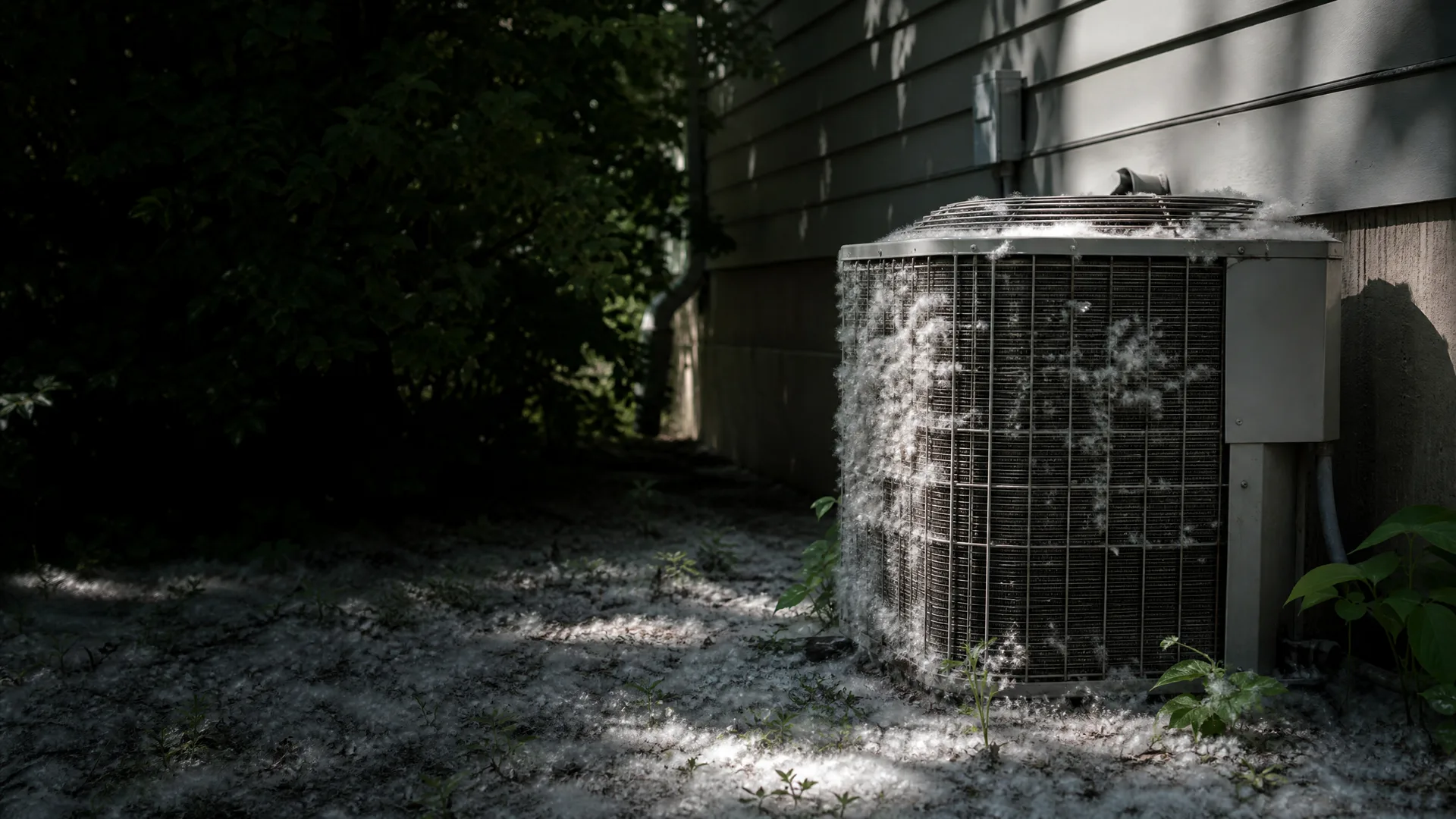
An outdoor air conditioner condenser unit beside a house with horizontal siding, its coil covered in white cottonwood fluff that also blankets the ground around it.

You're out pulling weeds along the side yard in late May, and you stop at the condenser. The fins are packed white with cottonwood fluff, thick enough that you can't see the metal underneath. It's been drifting off the trees for weeks and settling wherever it lands. You didn't think much of it until now. You press a finger against it and the fluff holds its shape, matted in tight against the coil. The unit's been running fine so far, cycling on in the afternoons, but Idaho's heat hasn't really set in yet. You make a note to call someone before it does.


A gray outdoor air conditioner condenser unit on a concrete pad beside a house with dark horizontal siding and a stone base, surrounded by gravel, with a flowering shrub at left and a concrete walkway in front.
The condenser sits clean against the siding, the disconnect box ready, nothing crowding its fins.
An outdoor air conditioner condenser unit sits on a concrete pad beside a stucco wall, with refrigerant lines and conduit running to the wall and a shrub to the left.
Grime has settled into the fins and casing, and the lines running into the wall carry the strain of it.
A two-story house with light beige horizontal siding, a gabled roof, a small covered front porch with dark door, and shrubs along the foundation, set behind a mown lawn and wet sidewalk with large leafy trees on both sides.

Idaho's summer air holds little moisture, with a dew point around 42°F on average across June, July and August, according to NOAA climate data. Dry air like that lets sweat evaporate off your skin fast, so the heat outside feels less brutal than it would somewhere muggy. Your AC gets a break from it too. A system doesn't have to wring water out of dry air the way it does in a humid climate, so the compressor spends less effort on that part of the job. But dry heat means more dust riding the air, and that dust is what settles into the condenser coil over a summer of running. A tune-up catches that before it makes the unit work harder than it should. A contractor who knows what Idaho summers do to a condenser can be matched to look at yours and reach out directly, so you're not the one calling around to find someone who gets it.

NASA POWER T2MDEW county cells weighted by homes

Matched to your air conditioner job

Fill out one form instead of calling around for an air conditioner tune-up.

Asking costs nothing, and the choice to hire stays yours.

What a tune-up actually checks

  • A contractor checks refrigerant charge by measuring pressures at the service valves, not by guessing from how the house feels.
  • The condenser fan and compressor draw amps that get checked against the nameplate rating to catch a motor starting to fail.
  • The evaporator coil inside gets inspected since a coil fouled with dust chokes airflow before you ever notice weaker cooling.
  • Electrical connections at the disconnect and contactor get tightened, since a loose connection arcs and burns before it ever trips a breaker.
  • The condensate drain gets cleared, since a clogged drain backs up and shuts the unit down or leaks into the house.
  • The thermostat gets checked against the actual temperature in the room to make sure the reading it's working from is correct.

A tune-up is a set order of checks, not a hose-down and a glance at the thermostat. A contractor hooks gauges to the service valves and reads the refrigerant pressures directly. That number tells the story the house can't. Low charge means the compressor runs longer to pull the same heat out of your home, and it shows up on the power bill before it shows up as warm air. The condenser fan motor and the compressor itself get tested under load, with the amp draw compared against what the nameplate says it should pull. A motor drifting out of range gets caught there, months before it fails outright in July.

Inside, the evaporator coil gets opened up and looked at. Dust settles on it slowly, and once it's thick enough it blocks airflow across the coil before you notice the house cooling slower. The disconnect box and the contactor get checked too. Connections loosen over time, and a loose one arcs rather than carries current cleanly, which burns the contact point without ever tripping the breaker that's supposed to protect it. The condensate drain line gets cleared of the algae and sediment that build up in it, since a blocked drain backs water up into the pan and either shuts the unit down or finds its way into the house. Last, the thermostat reading gets checked against a second thermometer in the room, because the unit can only respond to what the thermostat tells it, right or wrong.

A woman wrapped in a cream textured blanket sits in an armchair beside a lit lamp and a dark window, with an open book in the foreground.
An older woman with gray hair in a bun and glasses, wearing a beige knit sweater, smiles while looking to the side in a warmly lit kitchen, with a loaf of bread on the counter in the foreground and a snowy scene outside the window.

42°F average dew point

Idaho summer air stays dry, so a clean, properly charged system can cool the house without the compressor straining against moisture it doesn't have to fight.

Skip the search

One visit, not several calls

A contractor checks the whole system in one visit instead of you tracking down separate quotes for refrigerant, coils, and electrical checks on your own.

Skip the search
An outdoor air conditioner condenser unit sits on a gray pad beside a light vinyl-sided wall, on a concrete slab next to a gravel bed.
Before you get your air conditioner maintenance
A gray outdoor air conditioner condenser unit on a concrete pad beside a house with horizontal lap siding, with a wall-mounted disconnect box and conduit, mulch bed, shrub, and lawn nearby.
After you get your air conditioner maintenance
  1. Contractor shuts power to the unit at the disconnect.

  2. Condenser fins and coil get washed free of dust and debris.

  3. Refrigerant pressures get measured at the service valves.

  4. Compressor and fan motor amp draw gets checked against nameplate rating.

Power costs 11.83 cents per kilowatt-hour statewide

At 11.83 cents a kilowatt-hour, running the AC here doesn't strain the bill the way it might elsewhere. That's worth knowing, because it means a tune-up pays you back less in savings than in keeping the compressor from working harder than it has to through a dry Idaho summer.

EIA-861 2025 statewide residential average

An outdoor air conditioner condenser unit on a concrete pad beside a house with light horizontal siding, with a small electrical disconnect box on the wall, mulch and shrubs at left, and a plain white wall and concrete slab at right.

Finding someone to check it

You could call around to a handful of contractors, explain the same thing about your condenser and your last bill each time, then sit with a stack of quotes trying to tell them apart. Some won't call back. Some will quote a visit without ever asking what unit you have. By the third call you're doing the comparing yourself, with no way to know if one contractor's number means the same thing as another's.

A dark gray outdoor air conditioner condenser unit on a concrete pad beside a house with horizontal siding and a plain light wall, with mulch and grass in the foreground and a conduit and electrical box on the wall.

Getting matched instead

You answer a few questions about your house and your air conditioner once, and a contractor who works on your kind of system reaches out to you. No calling around, no repeating the story, no guessing which quote is the fair one. You still decide who you want doing the work. What changes is that you're not the one tracking down who's available and sorting through who actually knows your equipment.

A tune-up before summer comes down to a clean condenser, the right refrigerant charge, and a motor pulling the amps it's rated for. That's what keeps your AC cooling the house through a dry Idaho summer without the compressor straining against dust it shouldn't have to fight. You don't need to call around to find out who can check it. You'd otherwise be the one doing that work, phoning a few contractors, explaining the cottonwood fluff on your fins and what your last bill looked like, then waiting to see who calls back and trying to sort out which quote actually covers what. Instead you answer a few questions about your unit and your place, and a contractor who handles this reaches out to you directly. No repeating yourself to five different people, no guessing which quote is worth taking. Your condenser gets checked by someone who shows up knowing what you already told us.

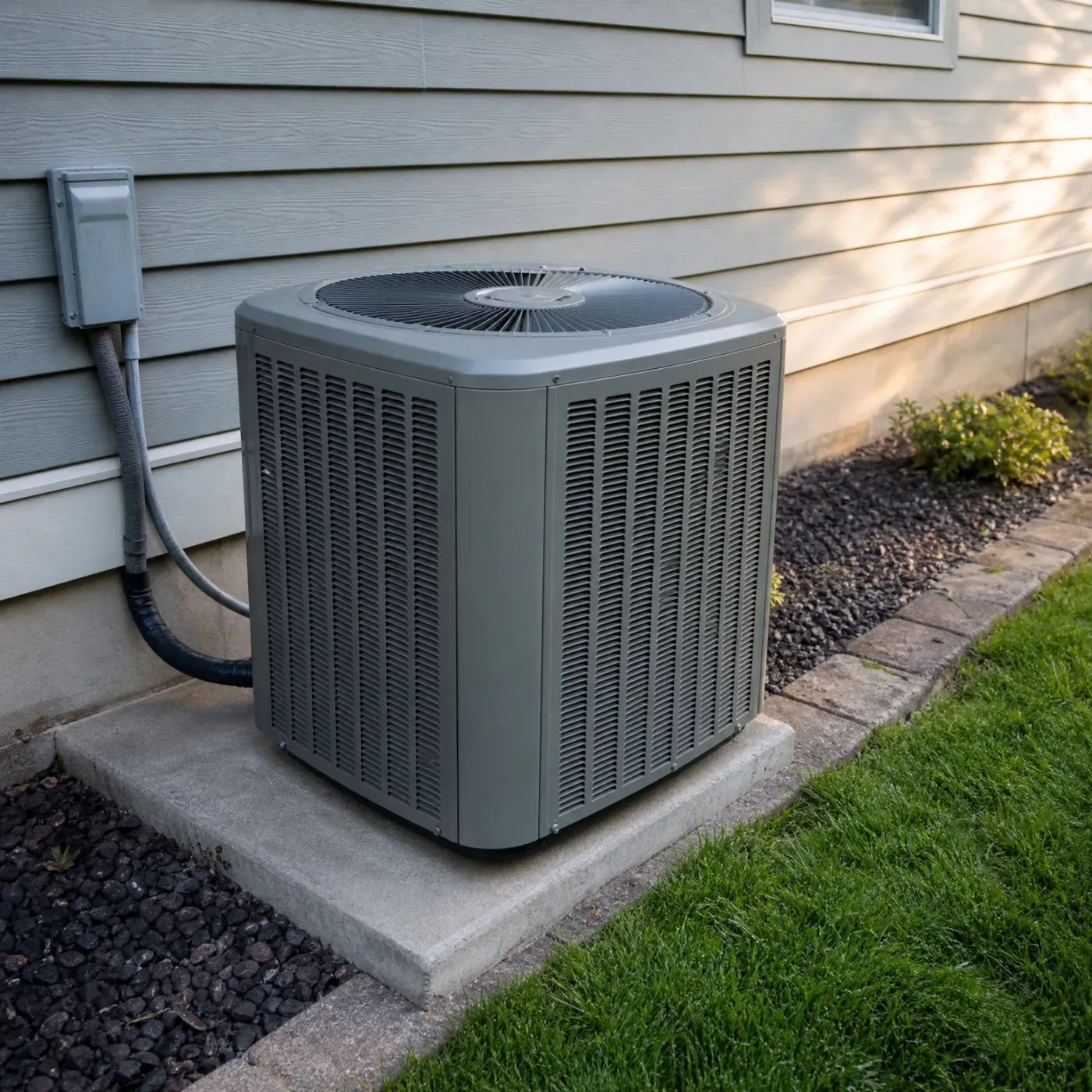
A gray outdoor air conditioning condenser unit on a concrete pad beside a house with horizontal lap siding, with a wall-mounted disconnect box and conduit, lava rock mulch, a shrub, and grass nearby.

A local pro for your air conditioner maintenance

Skip the calls

One form instead of hunting for a pro who does air conditioner tune-ups.

Sending the form costs nothing.