Illuminated stone-and-timber mountain homes line a quiet street at dusk, with evergreen trees and a mountain range in the background.

AC Maintenance in Gooding, ID

Tell us about the job

Takes about a minute. No obligation.

Tune-up, service, or cleaningCentral ACGooding County, ID
Step 1 of 2

What ZIP code is the job in?

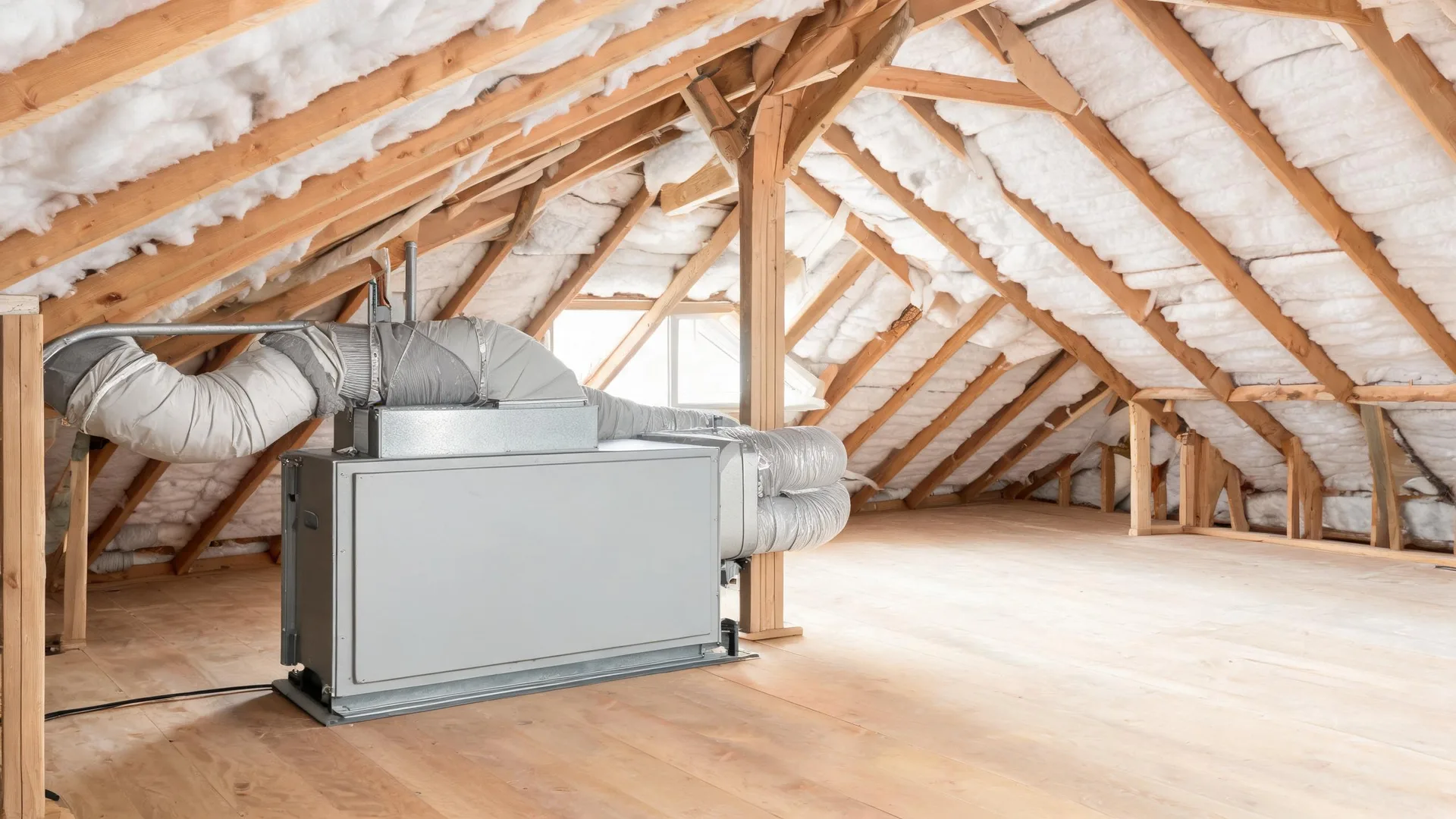
A dirty filter works the whole system harder

When the filter clogs with dust, the blower has to pull harder to move air across the coil. That makes the coil run colder than it should, and a cold enough coil will ice over. Once ice forms, airflow drops even further and the system stops cooling the house the way it should.

The drain line is what keeps water out of the house

The indoor coil pulls moisture out of the air as it cools, and that water has to go somewhere. It runs down to a drain line and out of the house. Algae and dirt build up in that line over time, and when it clogs, the water backs up into the drain pan and can overflow into the space around the air handler.

2 months
July through August, your air conditioner is on duty
86°F
the average summer afternoon it cools against
4 hail events
in ten years, and hail bends the fins on outdoor coils
16 wind events
in ten years, and wind drives debris into outdoor units
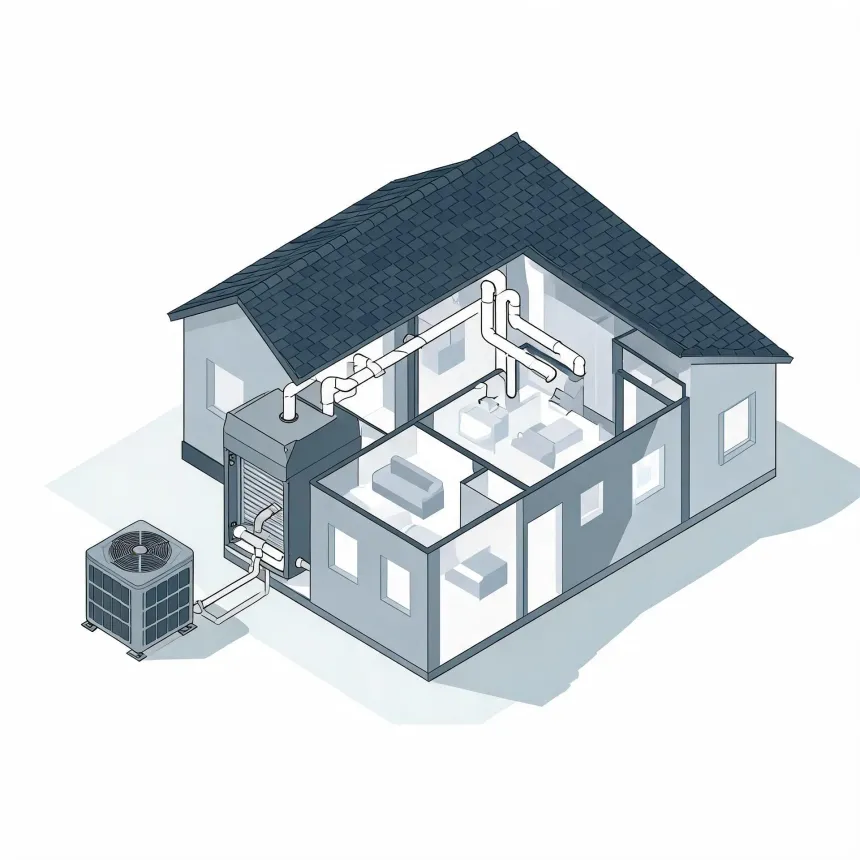
Isometric illustration of a cutaway single-story house showing interior rooms, ductwork running from an indoor air handler, and an outdoor condenser unit on a pad beside the building.
Your air conditioner works hardest from July through August.

NOAA nClimDiv, 1991–2020 normals

A quick tune-up checks that the system turns on and blows cold air.

A thorough one pulls the capacitor and tests it under load, because a weak one can still start the compressor and still fail next month.

Two months of real work a year, and parts still wear out on their own schedule

Cooling runs July through August
Summer afternoons average 86°F
Power costs 11.52 cents a kWh statewide
One visit a year covers itHalf the homes in Gooding County were built in 1976 or earlier, but age doesn't change what this check needs to find.

A yearly check before July makes sense here, since that is when the system has to actually perform. A technician testing the capacitor under load catches the weak one before it fails on a 90 degree afternoon instead of after. The same visit is the chance to clear the drain line while it is empty and easy to deal with, not after it has backed up. Since the compressor sits idle most of the year, spring is the one window to find a problem before the two months it matters.

Keep up the yearly check

Easy duty still wears parts. A yearly check keeps it going a long time.

Find a contractor
A man seen from behind, wearing a dark long-sleeved shirt and brown pants, carries a canvas tool bag as he steps up wooden porch stairs toward a green front door, with a potted plant beside the entry.
A gray cylindrical air conditioning condenser unit mounted on a concrete pad next to a light-colored vinyl-sided house exterior.

The warning comes before the failure, not with it

A system doesn't ask for a check. It keeps running on a weak part until that part gives out, and most of what fails gives some warning first if anyone's looking for it. A capacitor loses its charge slowly, not all at once, so the compressor starts a little harder each month before the morning it doesn't start at all. A coil losing airflow doesn't stop cooling, it just falls behind, and the system runs longer to make up the difference. By the time a homeowner notices the house isn't quite as cool as it should be, the part behind it has usually been wearing for a while. Checking ahead of the season catches the part that's degrading but still working, which is the only point where catching it makes a difference.

The refrigerant charge only shows up under a gauge

A system can be low on refrigerant and still blow air that feels cool at the vent. The only way to know the charge is right is to connect gauges and read the pressures. Run it low for a season and the compressor works harder than it should every time it cycles on.

The contactor pits a little more each year

Every time the compressor switches on, the contactor points arc a little. Over time they pit and burn, and a bad contactor can stick closed or fail to make contact at all. From outside the unit there's no way to see the wear building up on it.

Overhead view of a gray residential air conditioning condenser unit mounted on a concrete pad beside a house with asphalt shingle roofing.

Book your AC tune-up in June, before homes here start needing cooling in July.

  1. Jan
  2. Feb
  3. Mar
  4. Apr
  5. May
  6. Jun
  7. Jul
  8. Aug
  9. Sep
  10. Oct
  11. Nov
  12. Dec

A tune-up checks the refrigerant charge, cleans the coils, tests the capacitor and tightens the electrical connections.

A real tune-up covers more than the filter and the thermostat setting. The outdoor coil gets washed clean of the dirt and grass clippings that build up on the fins, because a dirty coil can't shed heat the way it needs to. The blower wheel gets looked at too, since dust cakes onto the blades over time and throws off the airflow even when the filter is clean. Electrical connections get tightened, since a loose wire at the contactor or the disconnect box heats up under load and that heat damages the connection further. The condensate drain gets flushed, and the refrigerant lines get checked for the oily residue that points to a slow leak. None of this shows up from the thermostat, which is the whole reason it has to be checked by hand.