A single-story black board-and-batten house with a dark metal gable roof, wood porch posts and stone bases, surrounded by pine trees, dry grass and a gravel foreground under an overcast sky.

AC Maintenance in Idaho Falls, ID

Tell us about the job

Takes about a minute. No obligation.

Tune-up, service, or cleaningCentral ACBonneville County, ID
Step 1 of 2

What ZIP code is the job in?

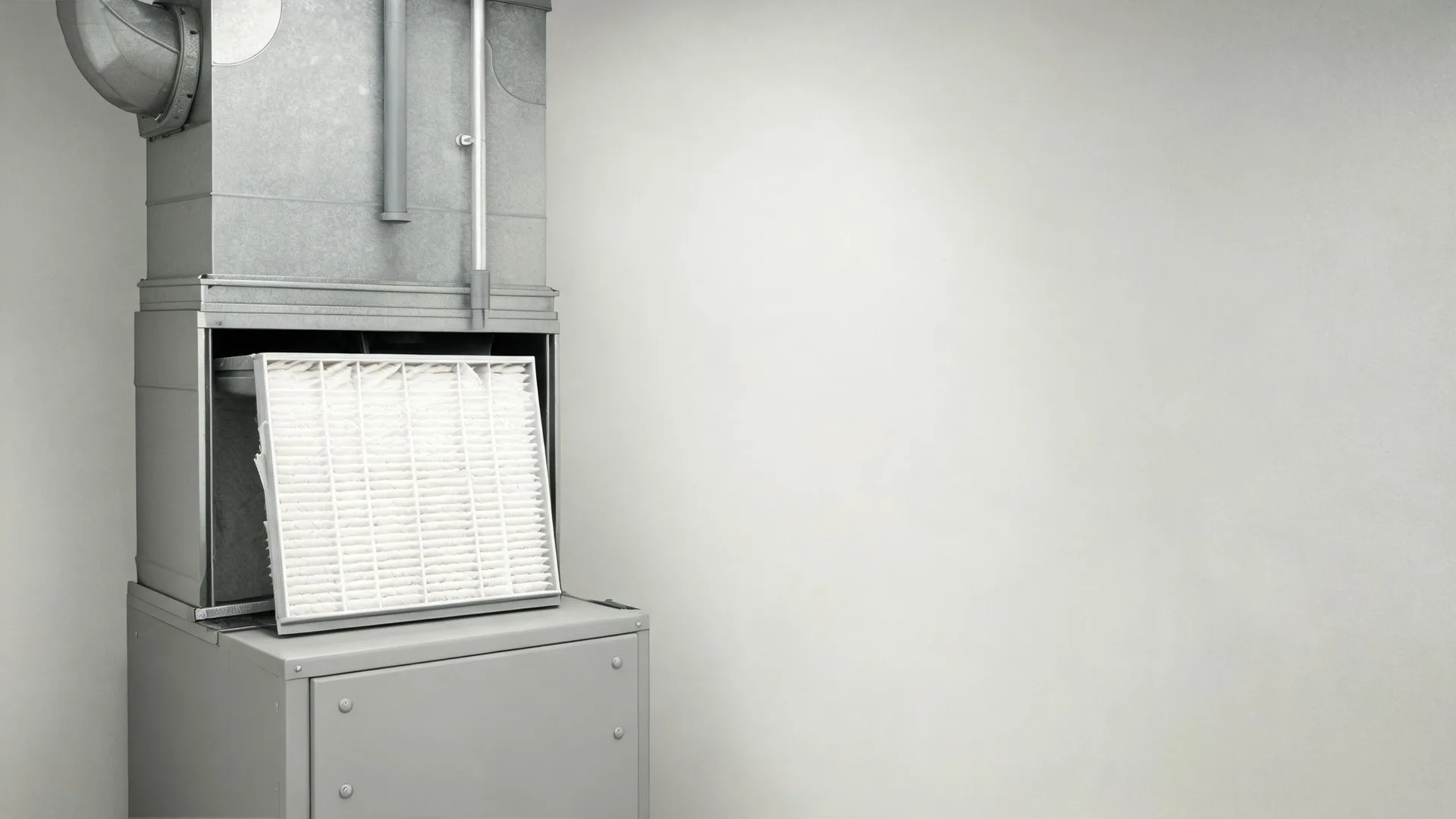
A dirty filter chokes the whole system

When the filter clogs, the blower has to pull harder to move air across the coil. The coil can get cold enough to ice over, and once that happens the system stops cooling the house at all until the ice melts. A filter changed on schedule is the cheapest insurance this machine gets.


The drain line decides where the water goes

Every pound of moisture pulled out of the air has to leave through the condensate drain. If that line clogs with algae or sludge, the water backs up into the pan and then into the ceiling or the closet floor below the air handler. A technician clearing that line during a maintenance visit is checking the one part that causes water damage, not cooling trouble.

77°F
the average summer afternoon it cools against
20 hail events
in ten years, and hail bends the fins on outdoor coils
118 wind events
in ten years, and wind drives debris into outdoor units
Isometric cutaway illustration of a single-story house showing interior rooms, ceiling ductwork connected to an indoor air handler, and an outdoor condenser unit beside the exterior wall.
Your air conditioner works hardest from July through August.

NOAA nClimDiv, 1991–2020 normals

Afternoon highs average just 77 through June, July and August here.

Your AC still needs a yearly check, since age and neglect wear it down even on light duty.

Winter storms, wind and hail test the house here. Your AC just needs one check a year

301 severe weather events from 2015 to 2024
11% of homes statewide lost power a day or more in 2024
118 damaging wind events from 2015 to 2024
A newer system still needs a yearly lookHalf the homes in Bonneville County were built in 1985 or later.

A tune-up checks the refrigerant charge, and that's not something you can see or guess at from the thermostat. Too little and the system struggles to cool the house. Too much and it strains the compressor. A technician also checks the capacitor, which starts the compressor and fan motor. A weak capacitor can let the system limp along for weeks before it fails outright, usually on the hottest day it has to work. Electrical connections loosen over time from the vibration of the unit running, and a loose connection builds heat at that spot every time the system cycles on. None of this shows up by looking at the outside of the unit.

Keep up the yearly check

Easy duty still wears parts. A yearly check keeps it going a long time.

Find a contractor
A gray residential air conditioning condenser unit mounted on a concrete pad outdoors, surrounded by green grass under a partly cloudy blue sky.

Skipped maintenance doesn't show up until it does

Skip a few years of checkups and nothing looks different at first. The system still turns on, the house still cools down. That's what makes it easy to put off. Underneath, a capacitor can be weakening or the refrigerant charge drifting low, and neither one gives a warning before it matters. The system just works harder to do the same job, cycling longer to reach the same temperature. That extra running time means more heat built up in the motor windings and more wear on the compressor, the part that does the most work and the one nothing else in the system can replace the job of. A yearly check catches a weak capacitor before it fails and catches a low charge before the compressor pays for it. Skip enough years and the first sign of trouble is the system not running at all.

Rinse the outdoor coil yourself

The outdoor unit sits outside pulling air through its coil all season, and grass clippings, cottonwood seed and dust settle into the fins. A garden hose sprayed through the coil from the inside out, with the power off at the disconnect, clears most of that without any tools. Skip the pressure washer. The fins bend easily, and bent fins block airflow the same way dirt does.

Keep the area around the unit clear

The outdoor unit needs open space on all sides to pull in air and release heat. Shrubs growing in close, a stack of firewood, or leaves piled against the cabinet all make the system work harder to do the same job. Walking past it once in a while to clear away whatever has collected is something any homeowner can do between visits.

A system that's cooling fine can still be heading for trouble, and there are a few signs worth paying attention to before the yearly check comes around. A warm room that used to cool down fine, a system that runs longer than it used to, or a smell when the air kicks on are all worth noting. So is a hissing or bubbling sound near the indoor coil, which points to a refrigerant leak rather than something a filter change will fix. Ice on the copper line running to the outdoor unit means airflow or refrigerant trouble, not something to just wipe off and ignore. None of these mean the system is about to quit, but they're the kind of thing a technician should hear about at the next visit instead of after it gets worse.

A tune-up covers more than the refrigerant and the electrical side. A technician checks the blower motor and wheel, since a blower caked with dust moves less air even when it sounds fine. The contactor gets inspected too, the switch that sends power to the compressor and outdoor fan. Contacts on that switch pit and burn with every cycle, and a pitted contactor eventually sticks or fails to close. The thermostat gets checked against the actual temperature in the house, since a thermostat reading a few degrees off makes the whole system run longer than it needs to. And the whole system gets run through a full cooling cycle, not just inspected while it sits off, because some problems only show up once the compressor is under load.