






An outdoor central air conditioning unit mounted on a concrete pad beside a blue-sided house at sunset.

AC Maintenance in Jerome, ID

Tell us about the job

Takes about a minute. No obligation.

Tune-up, service, or cleaningCentral ACJerome County, ID
Step 1 of 2

What ZIP code is the job in?

A dirty filter is where most trouble starts. Airflow drops, the evaporator coil gets less warm air moving across it, and the coil can ice over instead of pulling heat out of the house. Once that happens the system runs and runs without cooling much of anything. The outdoor coil has its own problem. It sits outside collecting dust, grass clippings and cottonwood, and a coated coil cannot shed heat the way it needs to. The condensate drain matters just as much and gets ignored more. Algae and dirt build up inside that line. When it clogs, water backs up into the pan and finds its way into the ceiling or the wall below the unit. Keeping the filter changed, the outdoor coil clear of debris, and the drain flowing is most of what keeps this system out of trouble.

2 months
July through August, your air conditioner is on duty
85°F
the average summer afternoon it cools against
2 hail events
in ten years, and hail bends the fins on outdoor coils
18 wind events
in ten years, and wind drives debris into outdoor units
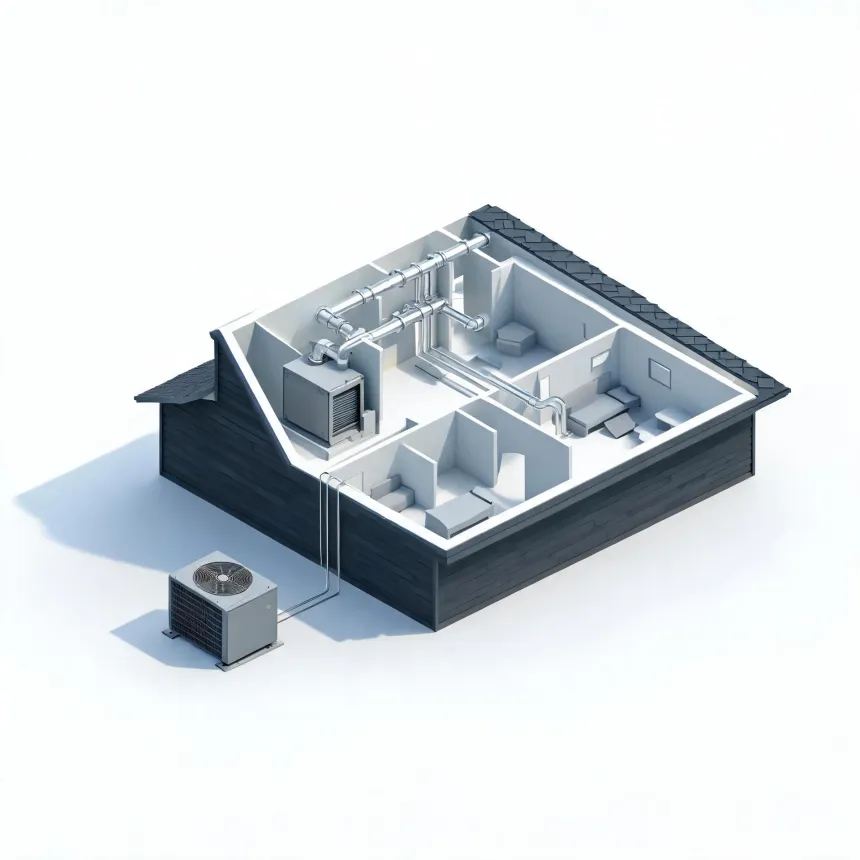
Isometric 3D cutaway render of a house with dark siding showing interior rooms, ductwork and an air handler, connected by lines to an outdoor condenser unit on a white background.
Your air conditioner works hardest from July through August.

NOAA nClimDiv, 1991–2020 normals

Half the homes in Jerome County were built in 1983 or later.

A system that age still has a lot of life in it, and a yearly check is what gets it there.

Two months of cooling, and July is the hard one. Get it checked in June.

Cooling runs July through August
Summer afternoons average 85°F
Power costs 11.52 cents a kWh statewide
A yearly check keeps a newer system that wayHalf the homes in Jerome County were built in 1983 or later.

Your AC only has to work July and August here. The rest of the year it sits idle. That's not much load on the compressor and the fan motor compared to what systems in hotter places deal with. Less run time does mean less wear. It doesn't mean no wear. Afternoons average 85°F across those summer months, and a system that sat idle for most of the year can have a weak capacitor or a dirty coil you won't notice until that first hot week asks it to work.

Keep it in good shape

If your system is fairly new, a yearly check keeps it in good shape for longer.

Find a contractor
A man in a cap, dark jacket and tan work pants carries a canvas tool bag up porch steps toward a green front door, with a potted shrub beside the entrance.
A gray residential air conditioner condenser unit mounted on a concrete pad in an open grass field.

What you can check yourself

Between visits, the filter is the one thing worth checking yourself. Pull it out and hold it up to a light. If you can't see light through it, swap it in. Outside, keep the area around the condenser clear. Grass clippings, leaves, anything piled against the cabinet blocks the airflow it needs to dump heat outdoors. A few feet of open space on every side is enough. Keep an eye on the condensate drain too. If you ever see water pooling near the indoor unit, that line is clogged and needs attention before it backs up further. Beyond that, leave the refrigerant, the electrical connections and the coil cleaning to a contractor. Opening the cabinet without the right gauges and training does more harm than good.

What a skipped year does to the compressor

The compressor is what gets hurt most by neglect. Low refrigerant from a slow leak makes it run hotter than it should, and it keeps running that way until someone checks the charge. A refrigerant level that's off also lets oil circulate poorly, so moving parts inside the compressor wear against each other instead of staying lubricated. None of this shows up as a sound or a smell. It just runs hot and wears, quietly, until it doesn't run at all.

Small faults don't stay small

A capacitor that's weak still starts the system, just slower, with the fan motor and compressor drawing more current to get moving. Left alone, that strain shortens the life of both. A contactor with pitted contacts still closes the circuit, until the day it doesn't and the outdoor unit won't start at all. Caught during a check, these are quick swaps. Caught after they fail, they take the system down on the day you need it most.

An outdoor air conditioning condenser unit positioned on a concrete pad next to a blue-sided house, surrounded by green shrubs and flowering hydrangeas at sunset.

Book your AC tune-up in June, before homes here start needing cooling in July.

  1. Jan
  2. Feb
  3. Mar
  4. Apr
  5. May
  6. Jun
  7. Jul
  8. Aug
  9. Sep
  10. Oct
  11. Nov
  12. Dec

A tune-up checks the refrigerant charge, cleans the coils, tests the capacitor and tightens the electrical connections.

A tune-up starts with readings, not guesses. The tech checks refrigerant pressure against what the system is supposed to run at and adjusts the charge if it's off. The capacitor gets tested under load, since a weak one can still start the system and still fail the test. Electrical connections get checked for looseness and corrosion, especially at the contactor, because a bad connection generates heat right at the point it happens. The condenser coil gets cleaned if it's coated, not just looked at. Blower components get inspected for wear, and the system gets run through a full cooling cycle to see that it actually brings the temperature down and shuts off the way it should. A tune-up that skips the readings and just eyeballs the unit isn't finding what's about to fail.