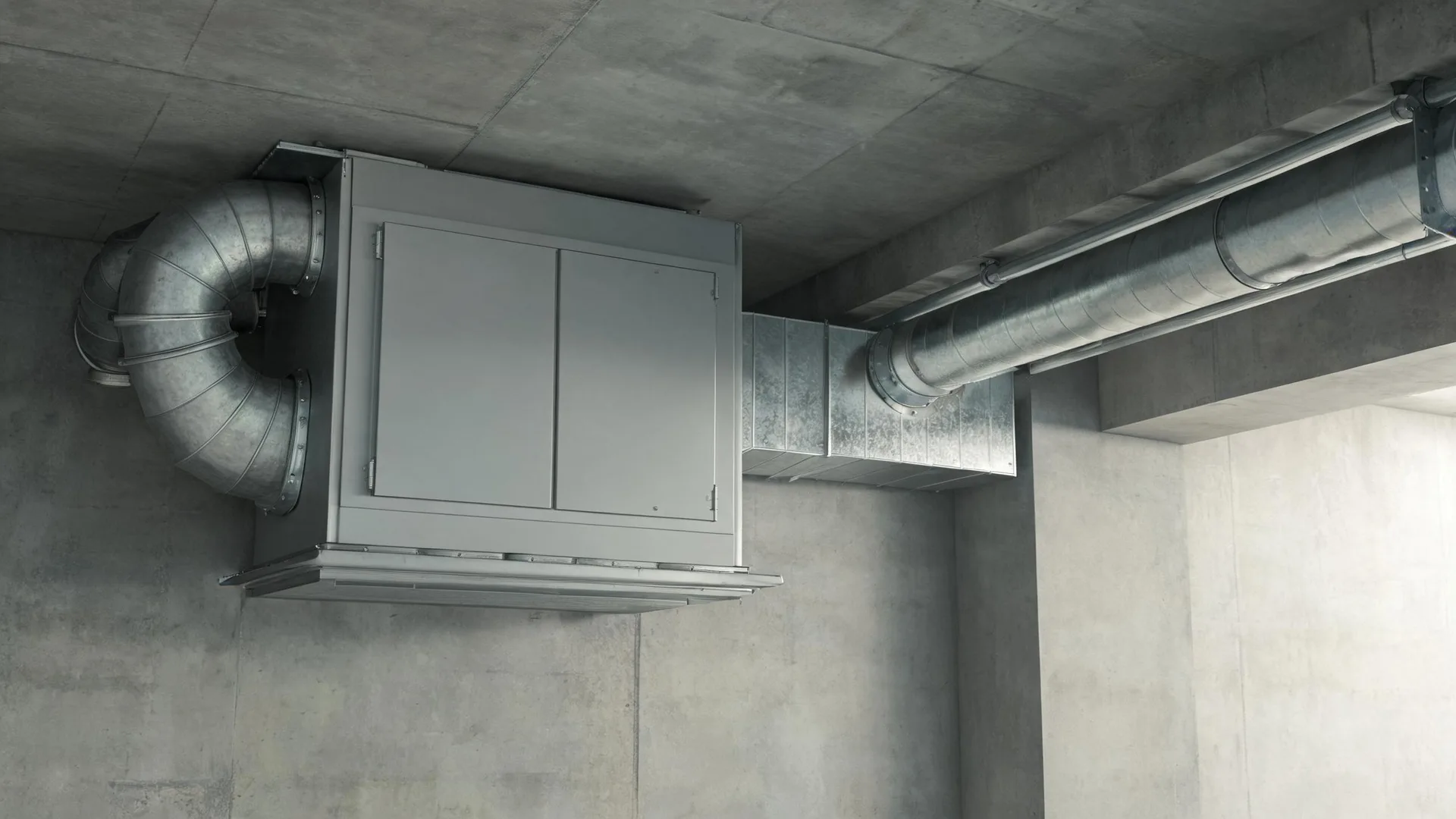
Change the filter
A dirty filter chokes airflow, and the coil behind it can ice over. Check the filter monthly during the months the system runs, and swap it when it looks gray or clogged. This is the one job that's actually yours between visits.

Takes about a minute. No obligation.
Afternoon highs around here average 78 degrees in summer, even in June, July and August. That's light work for an air conditioner. Nothing about the heat here pushes a compressor to its limit. Wind has hit Lewis County 19 times over the past ten years, and that kind of gust can bend a fin or knock a unit out of level without leaving any sign you'd notice from the yard. A yearly check catches that before it turns into a bigger repair. On a system that isn't straining against the heat, most trouble traces back to age or a part that got missed, not the weather.

NOAA nClimDiv, 1991–2020 normals
A capacitor can be weak months before it fails outright.
A tune-up catches that drop early, before the compressor is the thing that gives out.




If your AC isn't the original one, nobody alive in the house may know what year it got swapped, or why. A yearly check is how you find out what you've actually got. A tech can read the age and condition off the unit itself, and tell you whether it's nearing the end or good for years yet. That matters more here than in a newer neighborhood, where most systems are still the one the house came with. Worth doing before summer, not during it.
Easy duty still wears parts. A yearly check keeps it going a long time.
Find a contractorA system can run fine right up to the day it doesn't. The signs worth catching come before that day. Warm air from the vents when it's set to cool usually means the compressor is struggling or the refrigerant charge is low. Ice on the copper line means airflow is blocked, by a dirty filter or a failing blower, and running it that way can crack the compressor. A hard start, where the unit hesitates or clunks before it kicks on, points to a capacitor on its way out. Water pooling near the indoor unit means the drain line is clogged, and a backup like that can damage the pan or the floor under it. Short cycling, where it shuts off soon after starting and kicks back on, wears down the compressor fast. None of these mean the system is done. They mean it's asking for a look before the part that's struggling takes something bigger down with it.
A dirty filter chokes airflow, and the coil behind it can ice over. Check the filter monthly during the months the system runs, and swap it when it looks gray or clogged. This is the one job that's actually yours between visits.
Checking the refrigerant charge or testing a capacitor takes gauges and training most homeowners don't have. Opening the cabinet risks a shock, or a fin bent by accident that wasn't bent before. Watch for the warning signs instead, and let a tech handle what's inside.
A quick visit usually means a glance at the outside unit, a filter swap, and maybe a pressure reading taken through the service port with the system running as-is. That tells you the charge is in the right range that day, nothing more. A thorough one starts with the power cut, the capacitor pulled and tested under load rather than eyeballed, and the contactor checked for pitting since that's what sticks a unit on or keeps it from starting at all. The coil gets looked at close, not just glanced at, because a thin film of dirt across the fins cuts airflow before you'd ever see it from across the room. The condensate line gets flushed, not just checked for a drip, since a slow clog can take weeks to show up as standing water. The blower wheel comes out from behind the filter where dust actually builds up, somewhere a filter change alone never reaches. And the readings, the charge, the temperature split between the supply and return air, get written down and compared to what they were last year, not just checked against a chart. That comparison is what catches a slow decline before it becomes a breakdown. If nothing gets written down and nothing gets opened up, you've had a filter change with extra steps.
That split between a quick visit and a real one comes down to what gets tested versus what gets assumed. A capacitor can look fine sitting still and still fail under load, which is why it gets pulled and tested rather than eyeballed. The same goes for refrigerant. A gauge reading tells you the pressure that moment, but the temperature split between supply and return air tells you whether the system is actually moving heat the way it should. Contacts inside the contactor pit a little every time the unit cycles, and a pitted contact is what leaves a compressor humming but going nowhere on a hot afternoon. None of this shows up from the yard. It shows up on paper, compared against last year's numbers, or it doesn't show up until the day the system quits.