





Overhead view of a gray outdoor AC condenser unit on a concrete pad beside a mulched garden bed and a house with vinyl siding.

AC Maintenance in Lewiston, ID

Tell us about the job

Takes about a minute. No obligation.

Tune-up, service, or cleaningCentral ACNez Perce County, ID
Step 1 of 2

What ZIP code is the job in?

A tune-up starts with the capacitor, checked under load instead of just looked at. A capacitor can read fine sitting still and still fail the moment the compressor asks for a hard start. The tech also checks the refrigerant charge against what the system actually calls for, not just whether the lines feel cold. A unit can be low enough to strain the compressor and still blow air that feels cool at the vent. The condenser coil gets cleaned, since a coil caked with debris makes the whole system work harder to dump heat outside, and you'd never see that from the thermostat. None of this shows up as a problem until the day it does, usually on the hottest afternoon of the year.

2 months
July through August, your air conditioner is on duty
82°F
the average summer afternoon it cools against
37 wind events
in ten years, and wind drives debris into outdoor units
Isometric line illustration of a cutaway house showing interior rooms with ductwork, an indoor air handler, and an outdoor condenser unit connected by lines, on a white background.
Your air conditioner works hardest from July through August.

NOAA nClimDiv, 1991–2020 normals

Two months of real cooling load a year is light duty for a condenser.

Light duty still means a yearly check, since what wears here comes from age, not from the weather asking too much.

Half the homes here were built in 1973 or earlier. That's a lot of years on a system to skip a yearly look.

Half the homes here were built by 1973
Cooling runs July through August
Summer afternoons average 82°F

Cooling here starts in July, and it starts at full load, not a gradual ramp up. That's why June is the month to get the check done. A capacitor that's borderline or a charge that's drifted low won't show itself in a mild spring day, but the first hot week of July will find it. Booking in June means whatever's wrong gets caught on a technician's schedule, not on the first hot afternoon of the season. With only July and August as real cooling months here, June is the one window where checking ahead still means something.

If your system's been there since 1973, get it checked every year

A system that old has had a lot of years to develop small problems. An annual check in spring is how those get caught before summer puts any load on it.

Find a contractor
An outdoor air conditioning condenser unit mounted on a concrete pad beside a house, with electrical conduit running to a wall-mounted disconnect box.

Skipping a year doesn't show up as a problem. It shows up as less margin.

Skip the yearly check and the system doesn't fail right away. It fails slower than that. Dust keeps building on the condenser coil, so the unit keeps running longer to move the same heat outside. The compressor runs hotter than it should for longer than it should, every time it cycles. A capacitor that was already weak keeps getting asked for a hard start it can barely give, until the day it can't give one at all. None of this announces itself. The thermostat still says the house is cooling. The vents still blow cold air. What's missing is the margin, the part of the system's capacity that was there to handle a bad day, and it goes first, quietly, long before the system quits for good.

A quick visit checks that it runs

A short visit confirms the system starts, blows cold air, and the thermostat responds. That tells you it's working today. It doesn't tell you whether the capacitor is close to failing under a hard start, or whether the charge has drifted low enough to be costing you without ever feeling warm at the vent.

A thorough one checks how it's aging

A full tune-up pulls the condenser cover, tests the capacitor under load, checks the charge against the system's actual spec, and looks at the fan blade and wiring for anything a season of wind could have loosened. That's the difference between knowing it runs and knowing what's left in it before it doesn't.

An outdoor central air conditioning unit mounted on a concrete pad beside a blue-sided house at sunset.

Book your AC tune-up in June, before homes here start needing cooling in July.

  1. Jan
  2. Feb
  3. Mar
  4. Apr
  5. May
  6. Jun
  7. Jul
  8. Aug
  9. Sep
  10. Oct
  11. Nov
  12. Dec

A tune-up checks the refrigerant charge, cleans the coils, tests the capacitor and tightens the electrical connections.

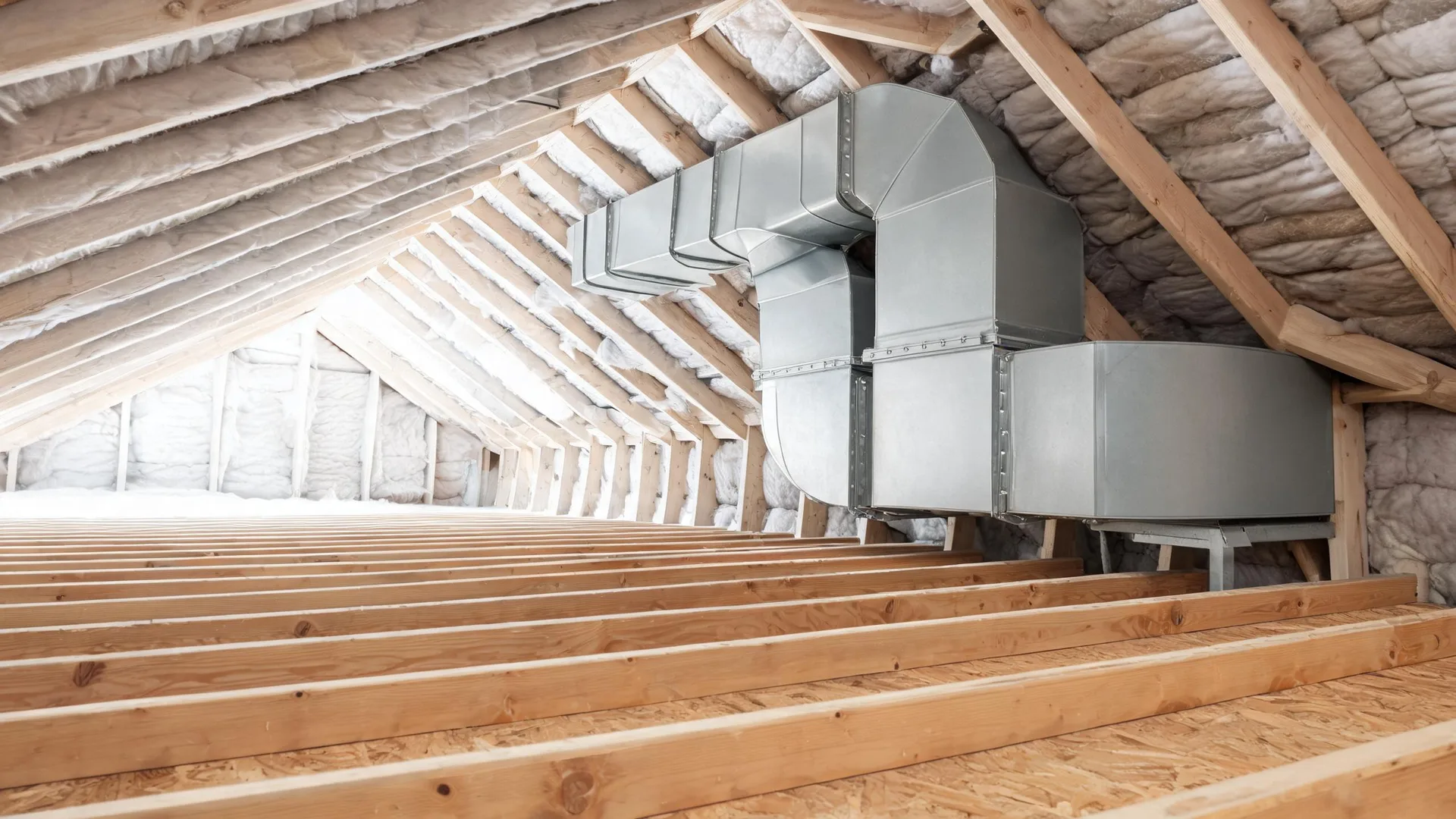
A tune-up also covers the airflow side, not just the refrigerant side. The tech pulls the blower filter and checks it, since a clogged filter starves the coil of air and can ice it over even on a hot day. The blower wheel gets a look too. Dust builds up on the blades over time and that buildup throws the wheel out of balance, which wears the motor bearing faster than it should wear. Drain lines get checked for algae and blockage, because a clogged drain backs up into the pan and some systems shut themselves down rather than overflow. Electrical connections at the disconnect and inside the unit get tightened, since a loose connection builds heat at that point every time the system runs.