






A row of illuminated timber-frame and stone houses photographed at dusk, with evergreen trees and a mountain range in the background.

AC Maintenance in Malad City, ID

Tell us about the job

Takes about a minute. No obligation.

Tune-up, service, or cleaningCentral ACOneida County, ID
Step 1 of 2

What ZIP code is the job in?

Your air conditioner only earns its keep here from July through August, with afternoon highs averaging around 82°F. That's two months of real work out of the year. Less run time means less wear on the compressor and the fan motor than a system in a hotter place would see. It doesn't mean no wear. A unit that sits idle most of the year can still lose refrigerant through a slow leak, or build up dirt on the coil, and you won't notice until the afternoon you actually need it. A check before July catches that while the fix is still simple.

2 months
July through August, your air conditioner is on duty
82°F
the average summer afternoon it cools against
1 hail events
in ten years, and hail bends the fins on outdoor coils
39 wind events
in ten years, and wind drives debris into outdoor units
Isometric line illustration of a cutaway house showing interior rooms with furniture and ceiling ductwork, connected to an outdoor condenser unit with a fan beside the building.
Your air conditioner works hardest from July through August.

NOAA nClimDiv, 1991–2020 normals

Your AC here runs July through August, nothing more.

Get it checked in June, so it's ready when July hits.

Half the homes here were built by 1971, old enough that a yearly check is worth it

Half the homes here were built by 1971
Climate zone 6B
Power costs 11.52 cents a kWh statewide

A tune-up starts with the refrigerant charge, checked against what the system calls for, because a unit can run low and still blow cold air for a while before anything seems wrong. The technician also checks the contactor, the part that switches the compressor on, since its contacts wear down and eventually stick or fail to close. The condenser coil gets cleaned if it's caked with dirt or grass clippings, because a dirty coil makes the compressor work harder to dump heat and shortens its life. They'll check the capacitor too, the part that gives the compressor and fan motor their starting kick, since a weak one can leave you with a fan that hums but doesn't spin. None of this shows up from the thermostat. It shows up as a compressor that fails years before it should, with no warning beforehand.

Keep up the yearly check

Easy duty still wears parts. A yearly check keeps it going a long time.

Find a contractor
A man in a cap, gray T-shirt and tan work pants carries a canvas tool bag up porch steps toward a green front door of a lap-sided house, with a potted shrub to the right.
A gray residential air conditioning condenser unit mounted on a concrete pad outdoors, surrounded by green grass under a partly cloudy blue sky.

Skipped checks don't show up right away

Skip a few years of checks and nothing happens at first. The system still cools. That's what makes it easy to put off. The wear happens in parts you can't see from the thermostat. Dirt builds slowly on the condenser coil, and the compressor has to run harder and longer to push the same heat out. A refrigerant leak so small it takes a year to matter will still be there next year, a little worse. A contactor with worn contacts still closes, until the day it sticks or doesn't close at all. A fan motor that's lost a little lubrication will keep spinning for a while before it starts dragging. None of this announces itself at the thermostat. It shows up later as a compressor that quits years before it should have, usually on the hottest afternoon of the year, with nothing beforehand to warn you it was coming.

A real check gets inside the unit

A thorough tune-up means the panel comes off. The technician checks refrigerant pressure with gauges, tests the capacitor's output against what it's rated for, and looks at the contactor's contacts for pitting. The condenser coil gets washed out, not just glanced at. Each reading gets compared to a number, not eyeballed.

A quick one only looks at what's easy to reach

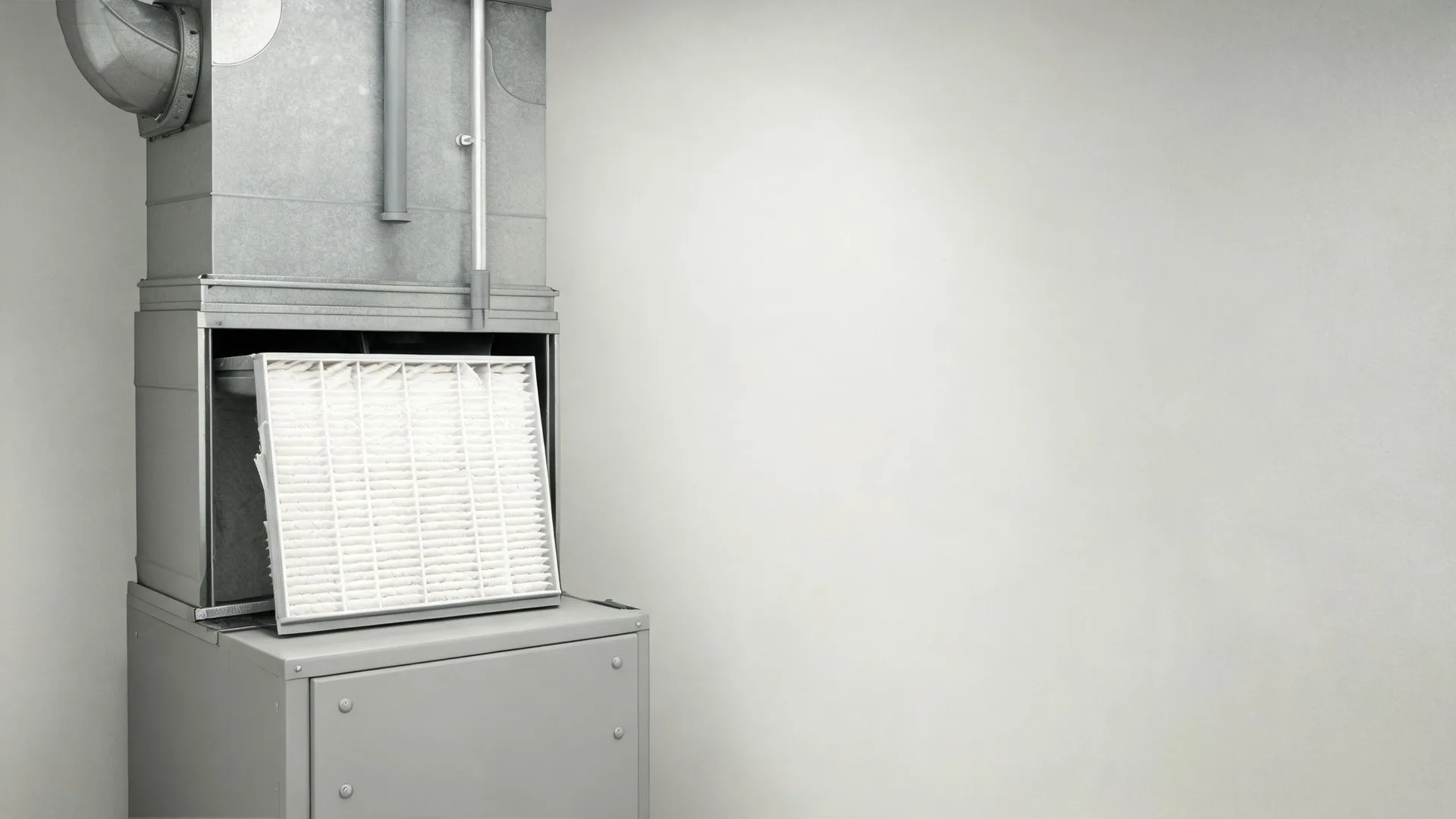
A fast visit checks that the unit powers on, the air coming off it feels cool, and maybe swaps the filter. Nothing gets tested against a spec, because the gauges never came out. That kind of check can miss a capacitor that's about to fail or a coil that's already restricting airflow, since none of that shows up just by listening to the unit run.

An overhead view of a residential air conditioning condenser unit mounted on a concrete pad next to a house with vinyl siding.

Book your AC tune-up in June, before homes here start needing cooling in July.

  1. Jan
  2. Feb
  3. Mar
  4. Apr
  5. May
  6. Jun
  7. Jul
  8. Aug
  9. Sep
  10. Oct
  11. Nov
  12. Dec

A tune-up checks the refrigerant charge, cleans the coils, tests the capacitor and tightens the electrical connections.

Airflow gets checked too, not just the refrigerant side. The technician measures the temperature drop across the evaporator coil, the one inside, to see whether the system is actually moving enough air to cool the house. A blower wheel caked with dust or a filter that's been in too long will choke that airflow down, and the coil behind it can ice over even on a hot day. The condensate drain gets checked as well, since it clogs with algae over time, and when it backs up the water has nowhere to go but into the house. The technician also checks that the outdoor unit has clearance on all sides, because grass and leaves pulled in against the coil block the airflow it needs to shed heat. A tune-up that skips these only caught part of the system.