





A lit mountain lodge-style home at night with evergreen trees, stone accents, and snow-capped mountains in the background.

AC Maintenance in Pocatello, ID

Tell us about the job

Takes about a minute. No obligation.

Tune-up, service, or cleaningCentral ACBannock County, ID
Step 1 of 2

What ZIP code is the job in?

A few things tell you the air conditioner wants a look before it quits outright. Warm air out of the vents when it's set to cool, short cycles where it kicks on and off instead of running a steady stretch, a hum from the outdoor unit with no fan turning, ice on the refrigerant line. Water pooled near the indoor unit means the drain line is clogged or the pan has rusted through. A smell like something burning when it starts up is never nothing. Any of these is worth a call, not a wait and see.

2 months
July through August, your air conditioner is on duty
81°F
the average summer afternoon it cools against
21 hail events
in ten years, and hail bends the fins on outdoor coils
46 wind events
in ten years, and wind drives debris into outdoor units
Isometric cutaway illustration of a single-story house showing interior rooms, ceiling ductwork connected to an indoor air handler, and an outdoor condenser unit beside the exterior wall.
Your air conditioner works hardest from July through August.

NOAA nClimDiv, 1991–2020 normals

July is when cooling starts in Pocatello, and the system goes straight into regular use.

Have it checked in June, before that first hard month.

Older half or newer half, the same tune-up covers your house

Half the homes here were built by 1976
Climate zone 6B
Power costs 11.52 cents a kWh statewide

Two months of real cooling, July and August, with afternoon highs around 81. That is not a hard season for a condenser to work through. A system here does not fight the kind of heat that wears one down fast. Most trouble that shows up in these units comes from a dirty coil, a weak capacitor, or a system that sat untouched for a year, not from the work itself. A yearly check catches that before it turns into a breakdown in the middle of August.

Book it before the season

It starts running hard in the first month of the season here. Book the check the month before.

Find a contractor
A gray residential air conditioning condenser unit mounted on a concrete pad outdoors, surrounded by green grass under a partly cloudy blue sky.

What wears first isn't the heat, it's what's clogging it

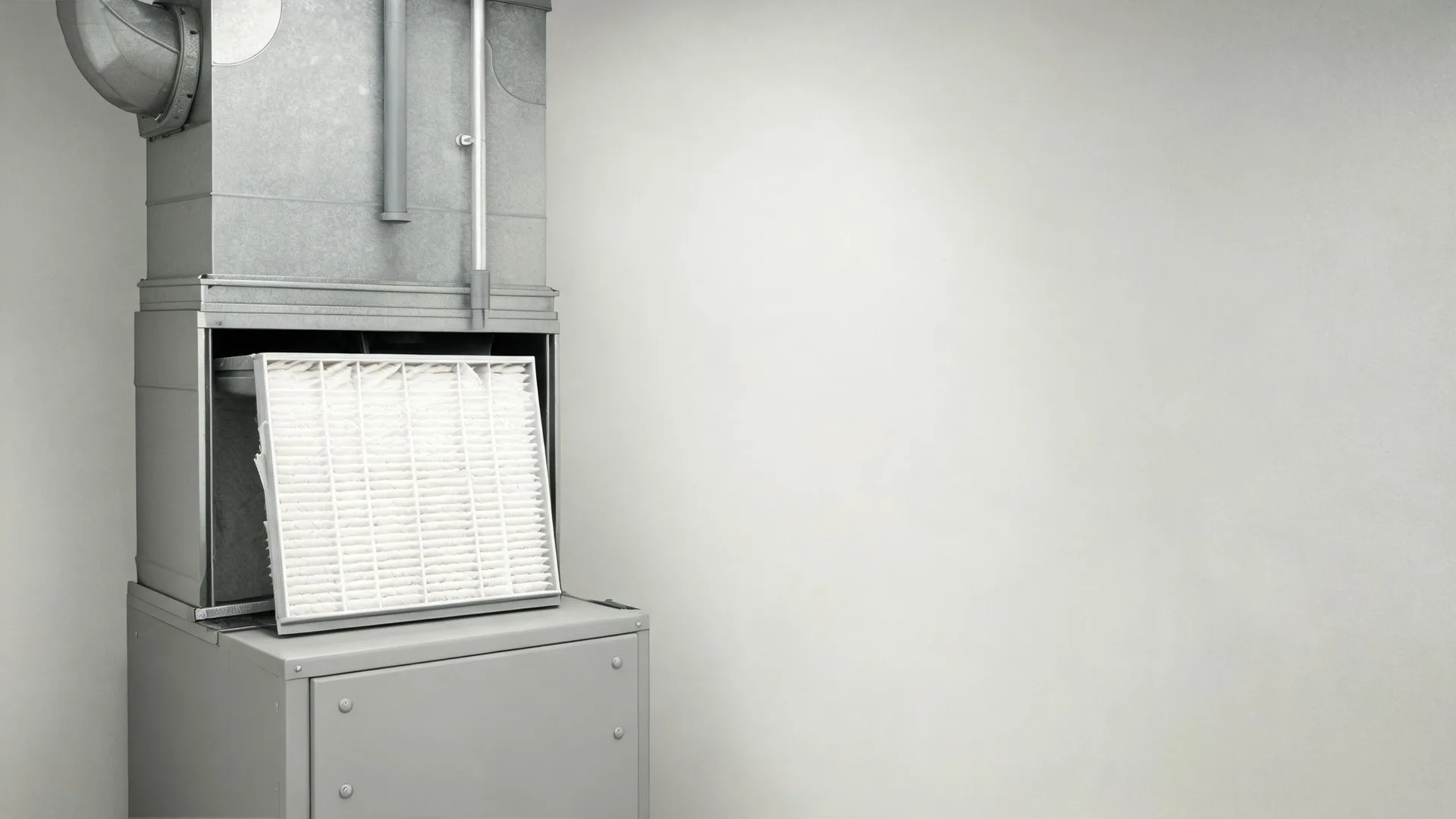
The filter is the first thing to check and the easiest to ignore. A clogged one starves the system of airflow, and the coil behind it has to work against that. Dirt on the coil itself acts like a blanket, holding heat against the metal instead of letting it release. Either one forces the compressor to run longer to move the same amount of heat, and either can end in a frozen line if nobody catches it. The drain line matters just as much, even though nobody thinks about it until water shows up where it shouldn't. Condensation has to go somewhere, and algae or dirt in that line will back it up into the pan, then onto the floor. None of this comes from a hot stretch outside. A filter loads up and a coil picks up a film of dirt just sitting there running its normal hours, season after season, whether the air outside is working it hard or not. That is what a yearly check is for, catching the buildup before it becomes the system's problem instead of the filter's.

The refrigerant charge only goes one way

A sealed system does not use up refrigerant doing its job. If the charge is low, it is leaking out somewhere, through a worn fitting or a rubbed-through line. Running it low makes the compressor work harder to move heat, and over time that heat is what kills the compressor. A gauge check during a tune-up catches a slow leak while it is still a small repair.

A capacitor fails without much warning

The capacitor gives the compressor and fan motor the jolt they need to start. It weakens slowly as it ages, and most of the time nothing seems different until the day it can't deliver that jolt at all. Then the outdoor unit hums but the fan doesn't turn, or the system doesn't start at all. A tune-up tests it under load and catches it while it's weak, not after it's dead.

An overhead view of a residential air conditioning condenser unit mounted on a concrete pad next to a house with vinyl siding.

Book your AC tune-up in June, before homes here start needing cooling in July.

  1. Jan
  2. Feb
  3. Mar
  4. Apr
  5. May
  6. Jun
  7. Jul
  8. Aug
  9. Sep
  10. Oct
  11. Nov
  12. Dec

A tune-up checks the refrigerant charge, cleans the coils, tests the capacitor and tightens the electrical connections.

A tune-up starts with the electrical side. The contactor and capacitor get tested under load, since both wear out slowly and give little warning before they quit. Refrigerant gets checked against the system's actual charge, not just topped off, because a low charge almost always points to a leak somewhere in the lines. The coil gets inspected and cleaned if dirt is holding heat against it. The drain line gets cleared so condensation has somewhere to go. Fan blades, blower wheel, and the electrical connections all get looked over while the panels are open, since that's the only time anyone sees them.