







Illuminated stone-and-timber mountain homes line a quiet street at dusk, with evergreen trees and a mountain range in the background.

AC Maintenance in Rupert, ID

Tell us about the job

Takes about a minute. No obligation.

Tune-up, service, or cleaningCentral ACMinidoka County, ID
Step 1 of 2

What ZIP code is the job in?

Your AC only runs two months a year here, July and August, but it has to work right from the first hot day. There's no easing into it. June is the month to have it looked at, while it's sitting idle, so a contractor can check the charge, the capacitor, and the condenser coil without you losing any cooling time if something needs fixing. Wait until July and a weak part has already been working against you in the heat. Two months is still enough time for a bad capacitor to fail or a low charge to freeze a coil.

2 months
July through August, your air conditioner is on duty
84°F
the average summer afternoon it cools against
7 hail events
in ten years, and hail bends the fins on outdoor coils
42 wind events
in ten years, and wind drives debris into outdoor units
Isometric grey illustration of a cutaway single-story house showing interior rooms, ceiling ductwork connected to an indoor air handler, and an outdoor condenser unit linked by lines outside the wall.
Your air conditioner works hardest from July through August.

NOAA nClimDiv, 1991–2020 normals

A quick visit checks if the AC turns on and blows cold.

A thorough one pulls the covers, checks refrigerant pressure against what the unit calls for, and tests the capacitor under load instead of just looking at it.

Two months of 84 degree afternoons doesn't ask much of a condenser

Cooling runs July through August
Summer afternoons average 84°F
42 damaging wind events from 2015 to 2024
Light duty, still worth a yearly look42 damaging winds hit this county between 2015 and 2024, and a loose connection or bent fin from one can sit there unnoticed until the check finds it.

A dirty filter is the most common reason an AC struggles, because it chokes off airflow before the air ever reaches the coil. The evaporator coil needs steady airflow across it to pull heat out of the house. Starve it and the coil can get cold enough to freeze over, and once it's iced up it stops cooling altogether until it thaws. Outside, the condenser coil has to shed that heat into the air, and a season of dust, grass clippings or cottonwood fluff packed into the fins makes it work harder to do it. The drain line carries away the water the coil pulls out of the air, and if it clogs with algae the pan backs up and overflows, sometimes right where it can reach the furnace underneath. A filter can be swapped and a coil can be rinsed clean. The machine runs the way it's supposed to when those stay clear.

Book it before the season

It starts running hard in the first month of the season here. Book the check the month before.

Find a contractor
A man in a dark long-sleeved shirt and brown work pants, seen from behind, carries a worn canvas duffel bag up porch steps toward a green front door of a house with horizontal siding and a potted shrub.
A gray cylindrical air conditioning condenser unit mounted on a concrete pad next to a light-colored vinyl-sided house exterior.

What's working and what's about to stop

A tune-up gets inside the parts a homeowner never opens. A gauge set on the service ports shows the actual refrigerant charge, not just whether air coming out feels cold. A unit can still blow cool with a charge that's low, right up until the day it can't. Pulling the capacitor and testing it under load shows whether it's still holding the charge that gets the compressor and fan motor started, something you can't tell by eye since a weak one looks just like a good one sitting on the shelf. Amp readings on the compressor show if it's pulling more than it should, often the first sign of a motor on its way out. None of this is visible from the thermostat, and none of it shows up as a problem until the day it does.

Skipped service doesn't show up right away

A neglected AC usually keeps running for a while. The capacitor weakens slowly. The coil loses a little airflow at a time. The charge drops a little each year if there's a slow leak. None of that trips a switch or shows up on the thermostat. The unit just works harder to do the same job, until the day one of those small problems finishes the compressor off.

The compressor is what's at stake

A weak capacitor makes the compressor strain every time it starts. A low charge makes it run hotter than it should. Either one left alone long enough can take the compressor down with it. A capacitor or a dirty coil gets swapped or cleaned in minutes. A failed compressor means replacing the unit it sits in.

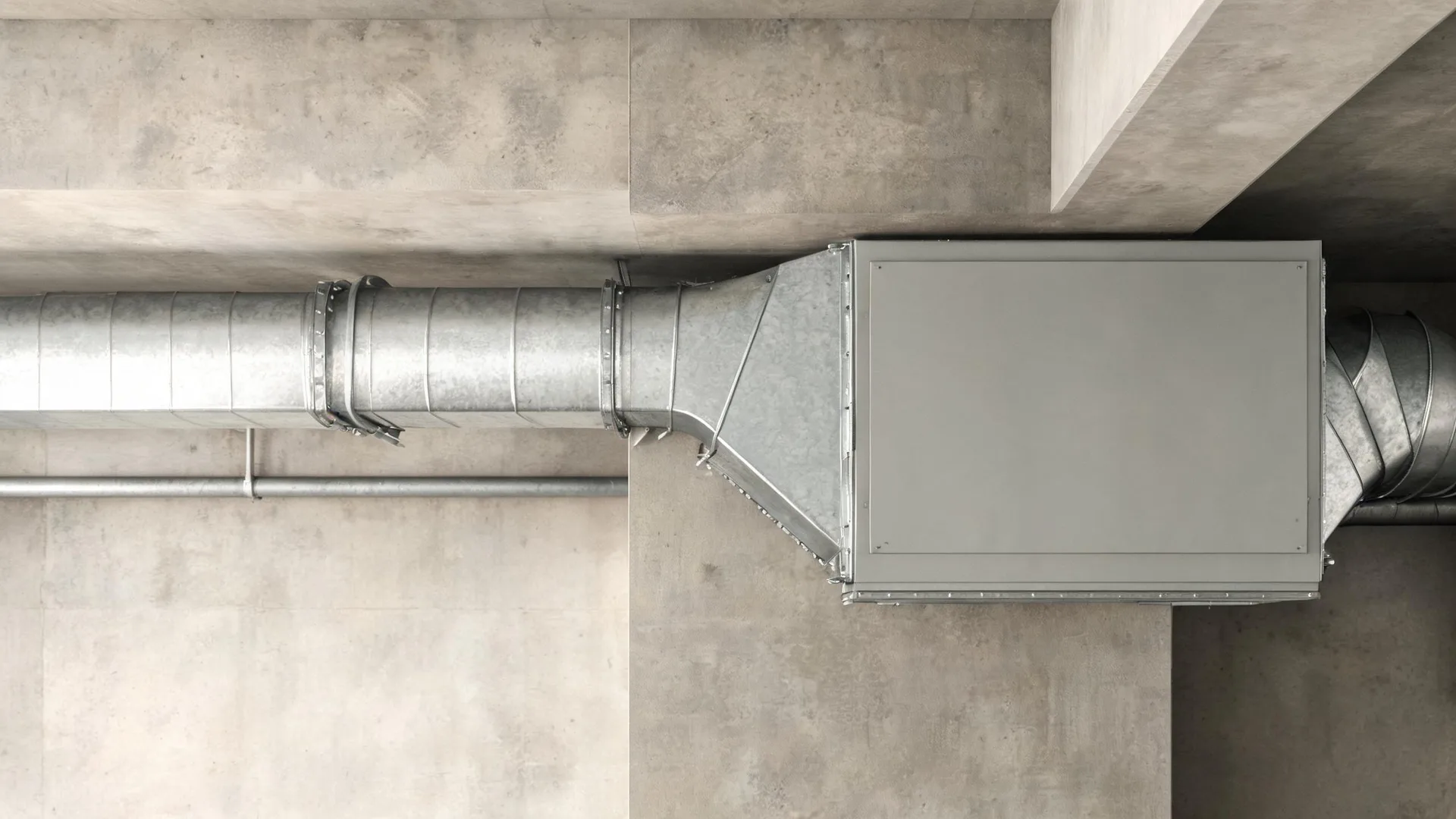
Overhead view of an air conditioning condenser unit on a concrete pad next to a house with asphalt shingle roofing and vinyl siding.

Book your AC tune-up in June, before homes here start needing cooling in July.

  1. Jan
  2. Feb
  3. Mar
  4. Apr
  5. May
  6. Jun
  7. Jul
  8. Aug
  9. Sep
  10. Oct
  11. Nov
  12. Dec

A tune-up checks the refrigerant charge, cleans the coils, tests the capacitor and tightens the electrical connections.

A tune-up starts outside, with the power off and the panel pulled. The condenser coil gets checked for bent fins and washed out if it's packed with debris, since airflow across it is what lets the unit shed heat at all. The fan blade gets looked at for a wobble, and the motor bearings for play that will turn into noise later. Refrigerant lines get checked for the oily residue that means a slow leak. Inside, the blower wheel gets a look too, since a wheel caked in dust moves less air no matter how strong the motor is. The condensate drain gets flushed so it isn't the thing that backs up first. Every electrical connection in the disconnect box and at the unit itself gets snugged down, because a loose one heats up under load and that heat is what eventually takes out the wire or the lug it's sitting in.