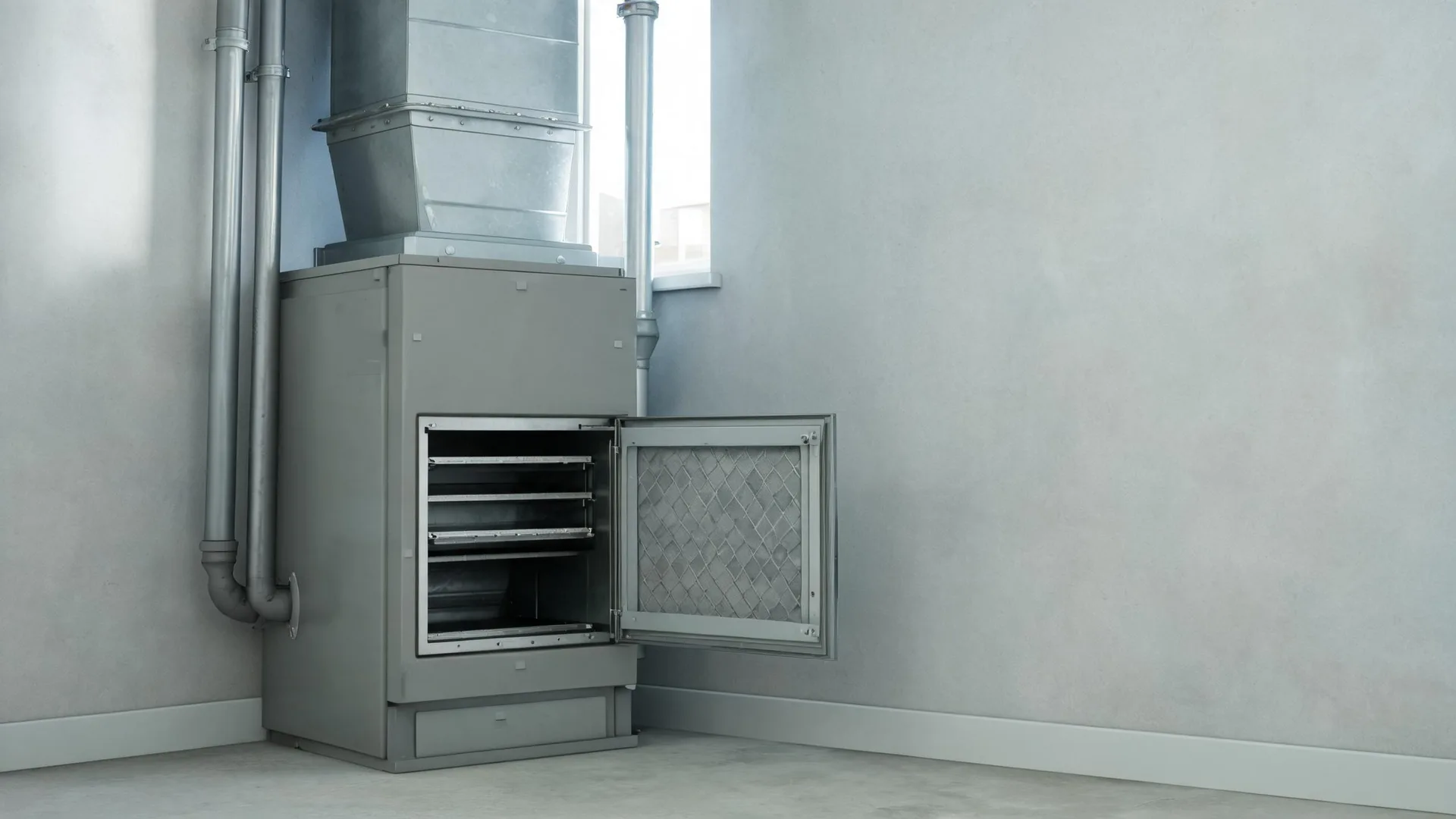
Skip a season of maintenance and the first thing to go is airflow. Dust builds up on the evaporator coil and acts like a blanket, so the system has to work harder to pull heat out of the air. Keep skipping it and that coil can ice over, especially if the filter behind it is clogged too. A dirty condenser outside does the same thing in reverse, trapping heat the system is trying to get rid of. None of this happens overnight. It shows up first as a system that runs longer to do the same job, then as a compressor working under more strain than it was built for.
73°F
the average summer afternoon it cools against
5 hail events
in ten years, and hail bends the fins on outdoor coils
15 wind events
in ten years, and wind drives debris into outdoor units
Your air conditioner works hardest from July through August.
Jan
Feb
Mar
Apr
May
Jun
Jul
Aug
Sep
Oct
Nov
Dec
NOAA nClimDiv, 1991–2020 normals
A clogged drain line backs up condensate until the pan overflows.
Overflow water stains ceilings and warps floors before the compressor ever shows a sign of trouble.
Mild summers here mean one visit a year is enough
Half the homes here were built by 1979Summer afternoons average 73°F15 damaging wind events from 2015 to 2024
Afternoon highs here average 73 degrees in June, July and August, and that's about as warm as it gets. A compressor that never has to push through real heat wears slower than one working a normal summer elsewhere. That doesn't mean skip the checkup, it means the reasons shift. Lemhi County has seen 15 damaging wind events and 5 hail events over the past decade, and an outdoor unit sitting through that can pick up damage a calmer location never would. A yearly visit catches a bent fin or a loose panel before it turns into a refrigerant leak or an electrical fault.
A glance at the filter is not the same job as an hour with the panels off
A quick visit gets you a glance at the filter and a pressure reading, maybe a hose rinsed off. A thorough one gets the panels off. The tech checks refrigerant charge against what the system actually needs, not just whether pressure looks close enough. They pull the blower wheel and look for caked-on dust, since a dirty wheel moves less air no matter how clean the coil is. They check capacitor readings against the rating on the part itself, because a capacitor can test weak long before it fails outright. They flush the drain line rather than just looking at it, and they tighten electrical connections that work loose from the unit vibrating all season. None of that shows up on the invoice as separate line items, so the only way to tell the difference is to ask what was actually touched, or watch what the tech spends time on.
A capacitor that passes a quick test but fails under load
A capacitor can hold enough charge to pass a glance and still not deliver what the compressor needs to start. A tech checks the reading against the rating stamped on the part itself, not just whether the needle moves. Catching a weak one at a tune-up means it gets replaced on a schedule instead of failing on its own.
Refrigerant low enough to matter, not low enough to notice
A system short on refrigerant still blows cold air, just not as cold as it should. Nothing in the house tells you this is happening. A tech connects gauges to the lines and checks the reading against what the system is built to run, which is the only way to know if the charge is right.
Between visits, the filter is the one thing worth checking yourself. Pull it out, hold it up to a light, and if you can't see through it, swap it in. A clogged filter starves the system of airflow no matter how well the rest of it was tuned. Keep the area around the outdoor unit clear too. Grass clippings, leaves and anything piled against the cabinet block the airflow it needs to dump heat outside. Beyond that, leave the panels alone. Checking refrigerant or capacitor readings means gauges and meters a homeowner doesn't carry, and opening the cabinet without knowing what you're looking at risks more than it fixes.
A tune-up has a sequence because each step depends on the one before it. Checking refrigerant charge first makes no sense if the coil behind the panel is caked in dust, since restricted airflow across the coil will throw the pressure readings off either way. That's why the coil gets cleaned before anything gets measured. Electrical readings come next, since a tech wants the system running under normal load when testing capacitor output, not during startup when the numbers spike. The thermostat gets checked last, confirming it calls for cooling correctly and shuts off when the temperature is met, because that's the one part that can mask every other fix if it's wired wrong or reading the room temperature incorrectly.