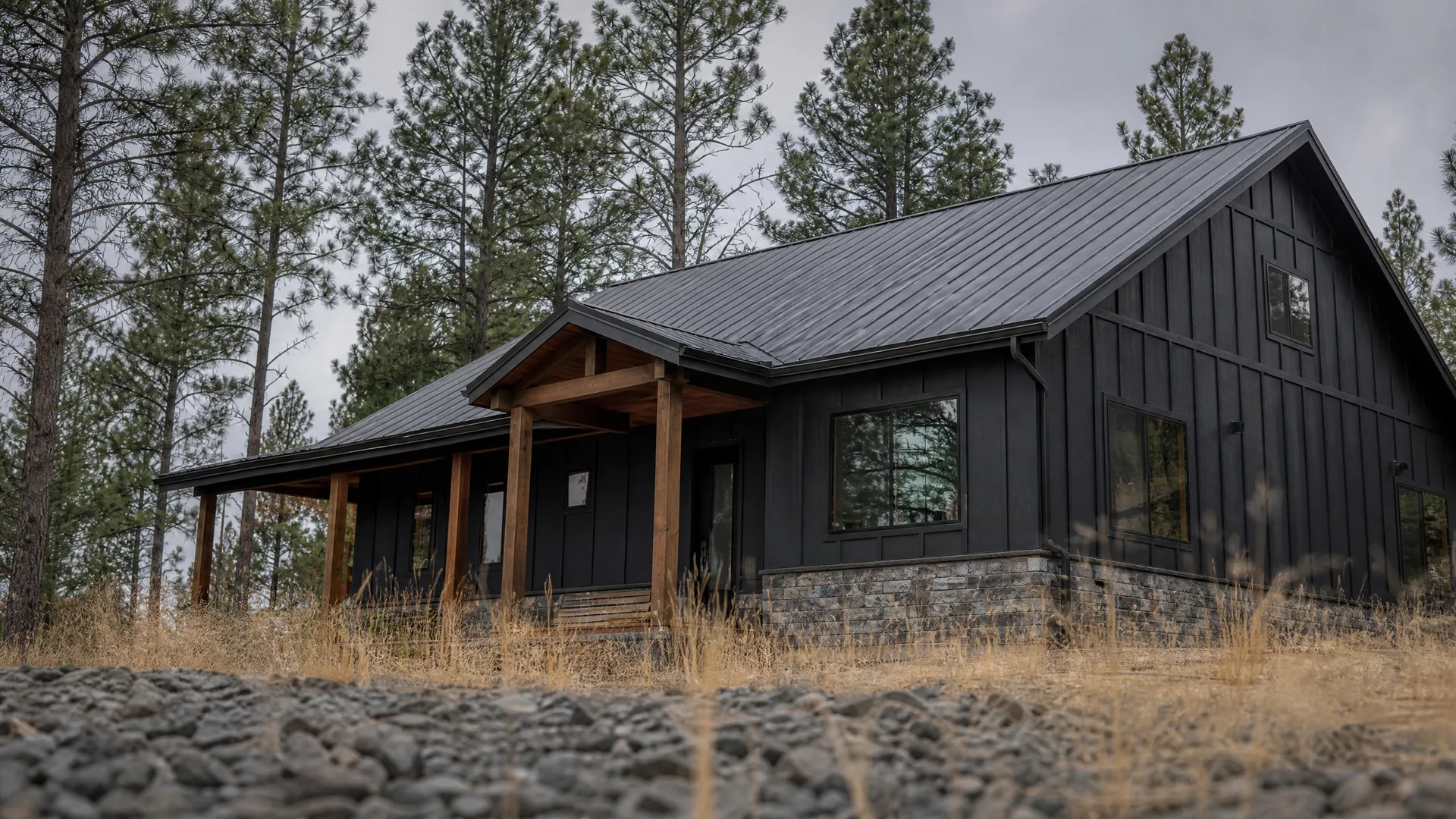





A black board-and-batten house with a metal roof, wooden porch posts and a stone foundation, surrounded by dry grass, gravel and tall pine trees under an overcast sky.

Heat Pump Repair in Moscow, ID

Tell us about the job

Takes about a minute. No obligation.

RepairHeat PumpLatah County, ID
Step 1 of 2

What ZIP code is the job in?

Winters here are cold, with overnight lows averaging 25°F through December, January and February, so your heat pump works for its keep in the cold months. But a heat pump's real enemy is short, hard cycling in extreme heat, and that almost never happens in Moscow. It doesn't run against the kind of summer load that wears out compressors in other parts of the country. So when one of these breaks down, the cause is usually a part that failed or a system that missed maintenance, not a unit worn out from strain. That makes most repairs here worth doing.

10 months
September through June, your system heats
25°F
the average winter night it heats against
79°F
the average summer afternoon it cools against
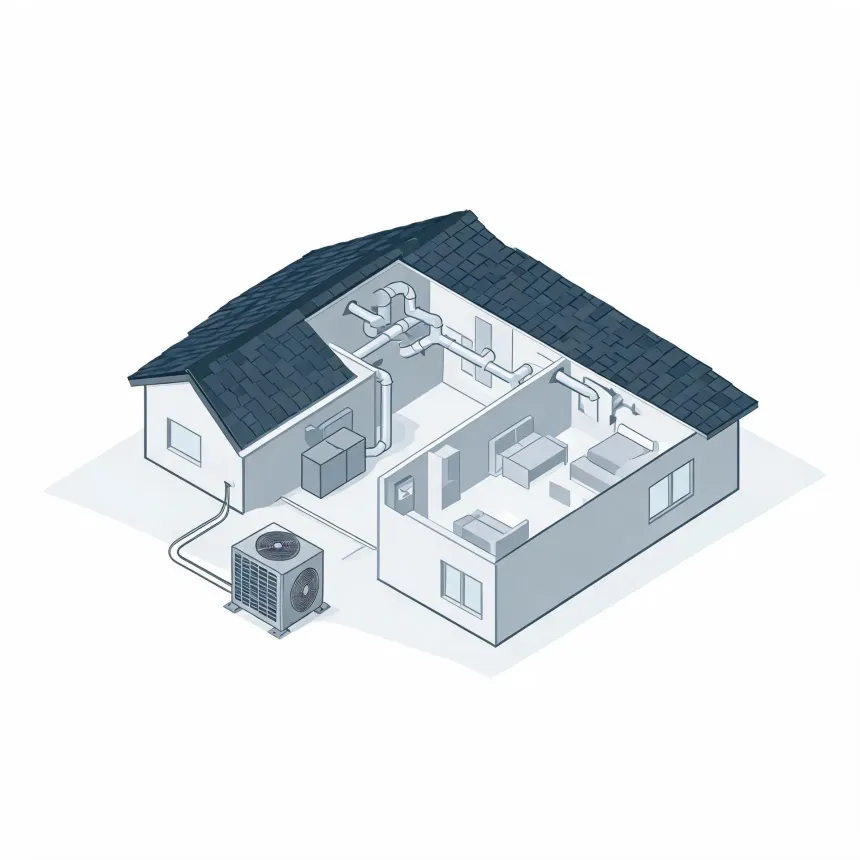
Isometric cutaway illustration of a single-story house showing interior rooms, ceiling ductwork, an indoor air handler, and an outdoor condenser unit connected by lines on the ground.

Half the homes in Latah County were built in 1980 or later.

A heat pump installed with a newer house still has working life ahead of it, which is why repair is usually the right call here.

Winter storms are the main event here, and your heat pump can still be the usual fix

278 severe weather events from 2015 to 2024
11% of homes statewide lost power a day or more in 2024
25 damaging wind events from 2015 to 2024

A diagnostic starts outside, at the unit itself. The technician checks refrigerant pressure with gauges, since that number says more about what's wrong than any sound the system makes. They'll check the reversing valve, since a valve stuck in one position explains a heat pump that runs but never gets warm. The compressor gets checked for amp draw, because a compressor pulling more current than it should is one that's working too hard for what it's producing. Inside, they'll pull the blower and look at the motor and the coil, since restricted airflow on either end shows up as the same weak heat at the vent. None of this takes guessing. Each check rules something in or out, and by the end there's a part named, not just a symptom.

Call someone before you write it off

If your heat pump came with the house, it's worth getting a second opinion before you replace it. Get it looked at and fixed.

Find a contractor
A man in a cap, dark jacket and brown pants, seen from behind, climbs stone steps toward a green front door while carrying a worn canvas tool bag.
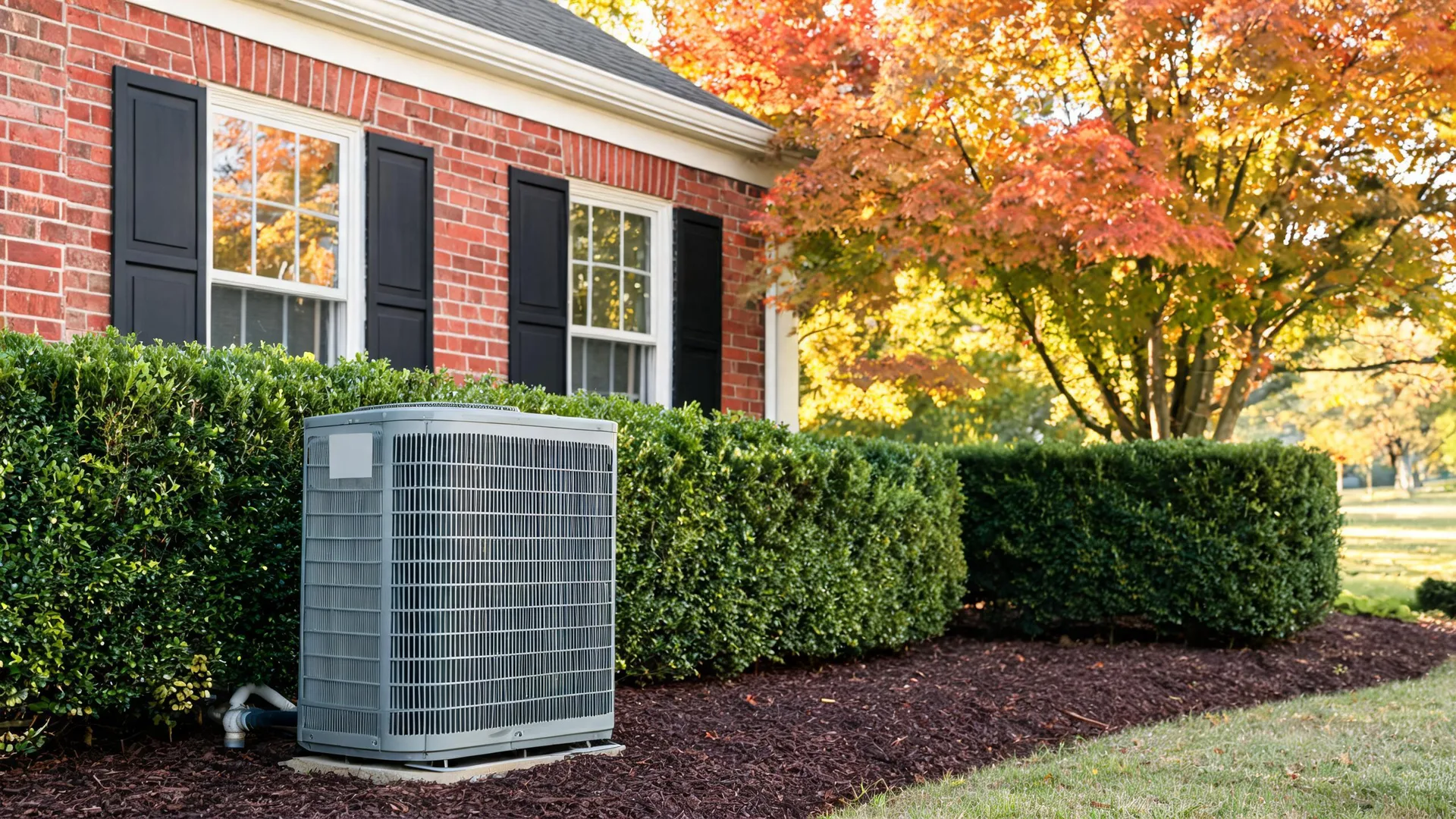
A gray heat pump outdoor unit mounted on a concrete pad next to a residential house with lap siding and stone accents.

What you can check yourself first

Before anyone comes out, check the thermostat is set to heat and the setpoint is above room temperature. Go outside and look at the unit. Ice or snow packed around the coil blocks airflow and stops heat transfer, that's different from the thin frost a heat pump normally clears on its own during a defrost cycle. Clear away any snowdrift, leaves or debris piled against the cabinet, it needs open air on all sides to pull heat from outside. Check the outdoor fan is actually spinning, not just running, a motor that hums but doesn't turn is a sign of a failed capacitor or seized bearing. Inside, pull the filter and hold it to the light. If you can't see through it, swap it, a clogged filter starves the system of airflow and can ice the coil from the inside. Listen for air coming out of the vents, if it's barely moving, the problem may be in the ductwork or the blower rather than the outdoor unit. None of this tells you exactly what's wrong, but it tells the contractor what you already ruled out, and that's worth something when they walk in the door.

The trouble is often not where you feel it

Air that comes out the vent lukewarm, a system that runs long stretches without shutting off, a room that won't come up to temperature. These usually trace back to low refrigerant, a failing reversing valve, or a compressor that's lost strength. The outdoor unit can look and sound completely normal while any of this is happening.
Noise and ice mean act now, not eventually

A grinding, clicking, or screeching sound from the outdoor unit means a motor bearing or fan blade is already failing. Ice that builds up and stays, instead of clearing off during a normal defrost cycle, means the unit can't shed cold the way it needs to. Running it in that state puts the load straight on the compressor, and that's the part you don't want to lose.

A heat pump that's struggling doesn't stop and wait for a repair, it keeps trying to do the job with whatever it has left. Low refrigerant means the compressor works harder to move the same heat, and that extra strain is what burns a compressor out early. A failing fan motor forces the system to run longer to make up for weak airflow, which wears the other parts around it. Ice that isn't clearing does the same thing from a different angle, it blocks the coil from doing its job, so the system leans on the compressor to compensate. None of this fixes itself by running more. Each cycle just spends a little more of the part that's already going bad.

Repair versus replacement usually comes down to what actually failed, not how old the unit looks. A capacitor, a contactor, a fan motor, a reversing valve, these are individual parts, and replacing one doesn't mean the rest of the system is going. A compressor is different. It's the part that's expensive and central enough that a failing compressor is often where someone decides to stop repairing and start over. Everything else is a judgment call, and it usually turns on whether the rest of the system is sound once that one part is fixed. A unit that's been running fine aside from the one failure is usually worth fixing. One where unrelated parts keep failing one after another is telling you something different.