Gas heats most homes here
Utility gas heats 68.9% of homes in Ada County. Most of this reader's neighbors have a furnace, not a heat pump, handling the cold months.
Takes about a minute. No obligation.
Utility gas heats 68.9% of homes in Ada County. Most of this reader's neighbors have a furnace, not a heat pump, handling the cold months.
Someone with a gas furnace is usually looking at a mini split for a room the ducts don't reach well, or for cooling without adding ductwork. The furnace keeps doing the heavy lifting in winter.
NOAA nClimDiv, 1991–2020 normals
Cooling runs three months here, June through August.
A mini split sized for an 88 degree afternoon spends most of the year barely working.



Ada County is in zone 5B under the energy code, a cool, dry zone where heating is the bigger job. Any mini split installed here has to meet the federal minimum for a split-system heat pump. That standard sets the bar at 14.3 SEER2 for cooling and 7.5 HSPF2 for heating, and it applies whether the system is ducted or ductless. It rules out equipment built just to handle a hot afternoon. A system that clears that bar may also qualify for the federal energy efficiency tax credit, worth checking against the model under consideration.
Cooling starts in June here. Get a mini split installed before May runs out and it's set up before the first hot afternoon, not in the middle of one.
Find a contractorA mini split is a long-term purchase, so comparing systems means comparing more than the number on the spec sheet. Ask what the warranty covers on the compressor. Ask separately what it covers on the labor to replace it, because those are often different lengths and sometimes different parties entirely. Ask whether the contractor is certified by the manufacturer to install that specific line. Some warranties are void without that certification, even if the install itself is sound. Ask about the sound rating on the outdoor unit if it will sit near a window or close to a neighbor's wall. Ask what happens when a part fails down the road. Some contractors keep common parts for the brands they install. Others have to order and wait. A system that costs less up front isn't the better deal if it sits broken for weeks waiting on a part.
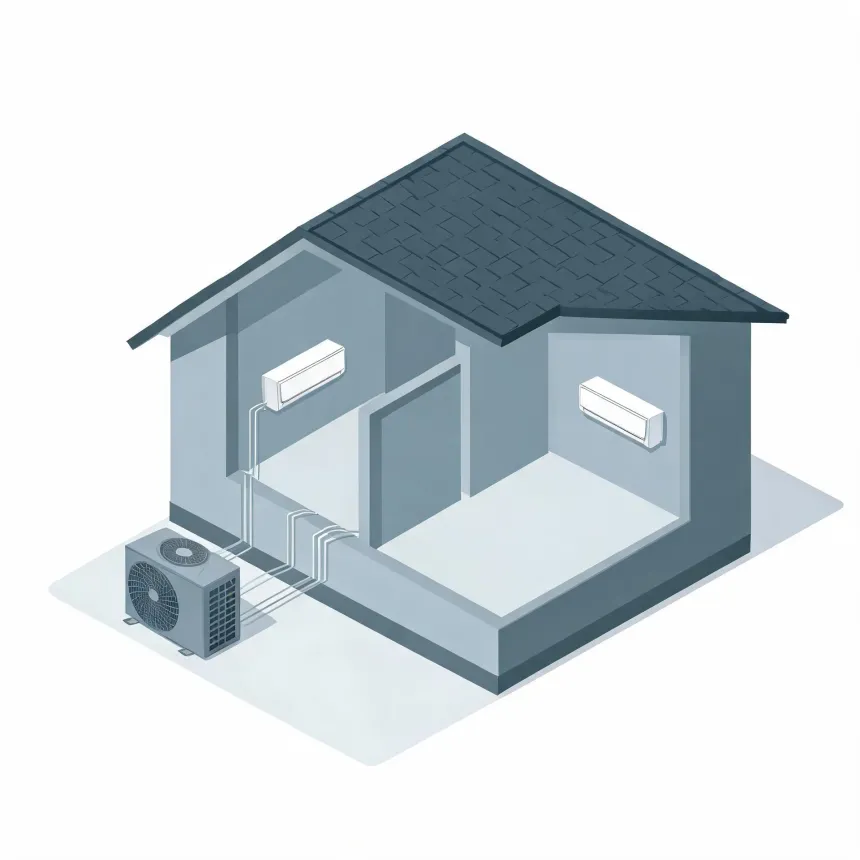
A single room needs one indoor head tied to one outdoor unit. Cover several rooms and the job moves to a multi-zone system, one outdoor unit running multiple heads, and each added head raises the cost of the whole job. The outdoor unit also has to be sized for the combined load of every head running at once, not just the biggest room.
The indoor head and outdoor unit connect through a line set carrying refrigerant, plus a power run and a condensate drain. A wall that backs straight up to an easy outdoor spot keeps that run short. Routing it through a floor, around a corner, or up several stories means more labor and more material, and that shows up in what the job takes to finish.
Sizing a mini split starts with a load calculation, not a tape measure. A contractor looks at the square footage, but also the ceiling height, how many windows face the sun, and what kind of insulation is behind the walls. A room over a garage needs a different size head than a room of the same footprint that isn't. Oversizing feels like it should help and it doesn't. A head too big for the room blasts cold air and shuts off before it pulls the moisture out, so the room ends up cold and damp instead of just comfortable. It also cycles on and off more than it should, and that short cycling wears on the compressor. Undersized has the opposite problem. The unit never catches up on the hardest days and runs flat out trying. The right size runs long, steady cycles and keeps up without strain.
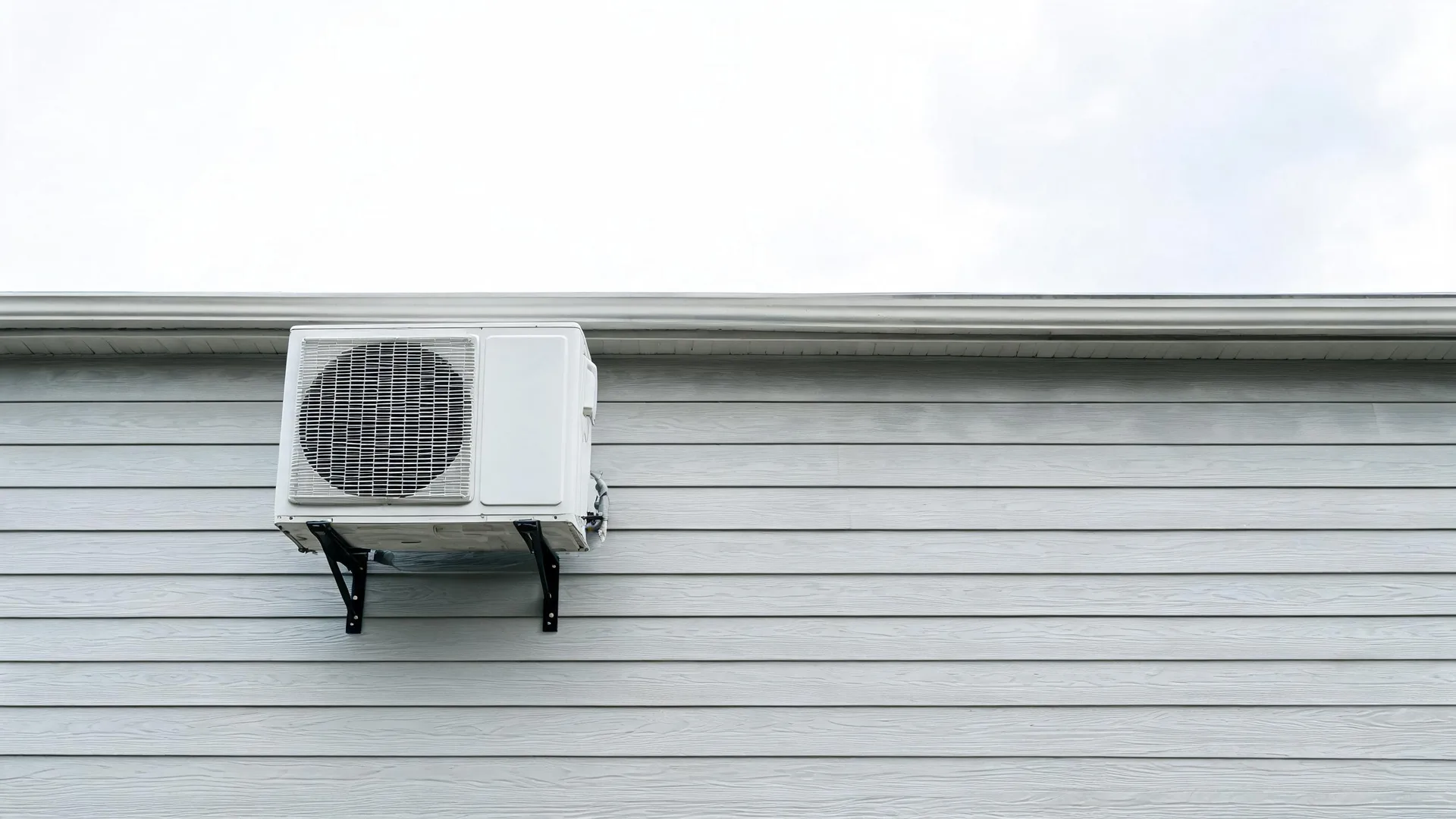
Installation day starts outside. The outdoor unit gets a pad or a wall bracket, set level, with clearance around it so air moves through the coil. Running the line set comes next. A hole gets drilled through the wall at a slight pitch, and the refrigerant lines, the power wire and the condensate drain all get pulled through together to the indoor head. Once the lines are connected, the system gets pulled into a vacuum before any refrigerant moves. That step clears out moisture and air that would otherwise damage the compressor. If the vacuum holds, the system gets charged and the indoor head gets mounted, leveled and wired in. Last comes the test, checking that the head calls for heat and cold correctly, that condensate drains the way it should, and that the line set holds pressure with no slow leak. None of that shows once the covers are on, but it decides whether the system runs quiet for years or gives trouble the first season.