




A row of illuminated timber-frame and stone houses photographed at dusk, with evergreen trees and a mountain range in the background.

Mini Split Installation in Rexburg, ID

Tell us about the job

Takes about a minute. No obligation.

New system or replacementMini-splitMadison County, ID
Step 1 of 2

What ZIP code is the job in?

Gas heats more than half the homes in Madison County, and electricity comes in well behind it at 34.8 percent. A mini split runs on electricity, so putting one in a gas-heated home isn't a like-for-like swap the way a new gas furnace would be. That doesn't rule it out. It does mean the house keeps its gas furnace or boiler for the coldest months in most cases, with the mini split handling cooling and the shoulder seasons. Worth asking a contractor how the two systems would work together before deciding.

10 months
September through June, your system heats
1 months
July through July, it cools
14°F
the average winter night it heats against
79°F
the average summer afternoon it cools against
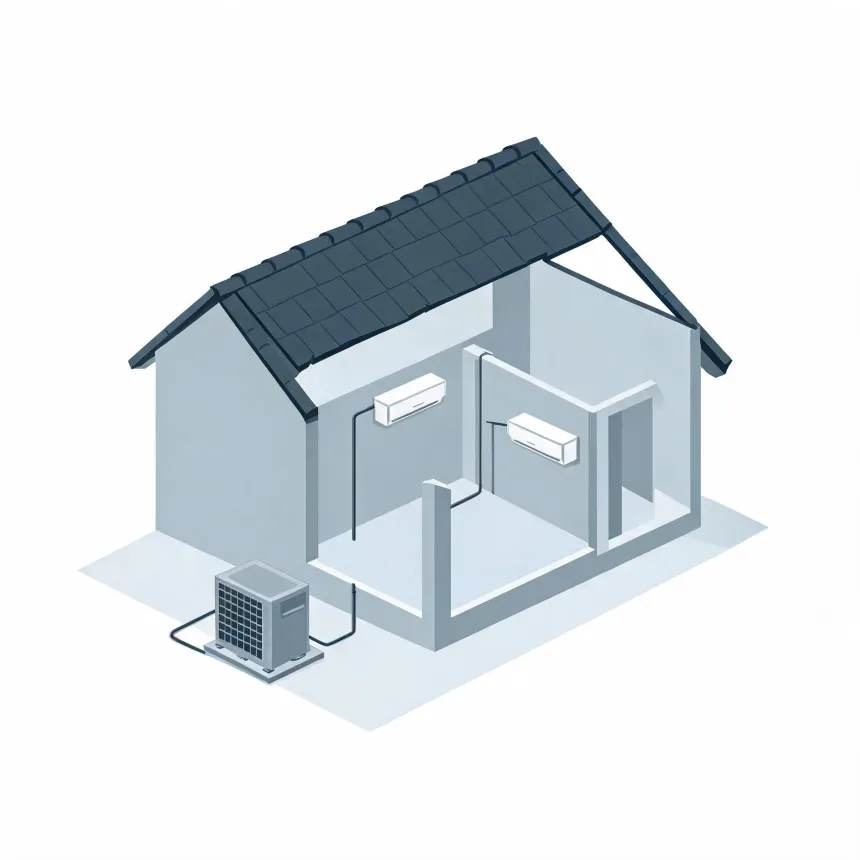
Isometric illustration of a cutaway house with a dark tiled gable roof, showing two wall-mounted indoor split air conditioning units connected by lines to an outdoor condenser unit on the ground outside.
Your system heats September through June and cools July through July.

NOAA nClimDiv, 1991–2020 normals

July is the only month Madison County homes need cooling, and afternoon highs average just 79 degrees all summer.

A mini split here isn't running hard for months on end, so a mid-range system holds up fine.

One month of cooling. Get it installed before July.

Cooling runs July through July
Summer afternoons average 79°F
60 damaging wind events from 2015 to 2024

Electricity in Idaho runs 11.52 cents per kilowatt-hour, well under what most of the country pays. That changes the math on which mini split to buy. The highest-efficiency models cost more upfront, and the monthly savings that justify that cost take longer to show up when power is already cheap. With one month of real cooling load here, a top-tier SEER2 rating has even less time to earn its keep. A mid-range unit from a brand with a good service record is worth more than a few extra efficiency points on paper. Ask the contractor what parts and warranty support look like locally before picking a model.

Any new system here has to clear 14.3 SEER2 and 7.5 HSPF2

Madison County falls under zone 6B. Any mini split installed here has to meet the federal minimum for a split-system heat pump, 14.3 SEER2 for cooling and 7.5 HSPF2 for heating. That's the floor, not a recommendation, so it narrows the field before you even start comparing brands. A system that clears it may also qualify for the federal tax credit, worth checking before you settle on a model.

Find a contractor
A man in a dark T-shirt and worn brown work pants, seen from behind, carries a canvas tool bag as he steps up onto a porch toward a green front door of a light-gray clapboard house, with a potted shrub to the right.
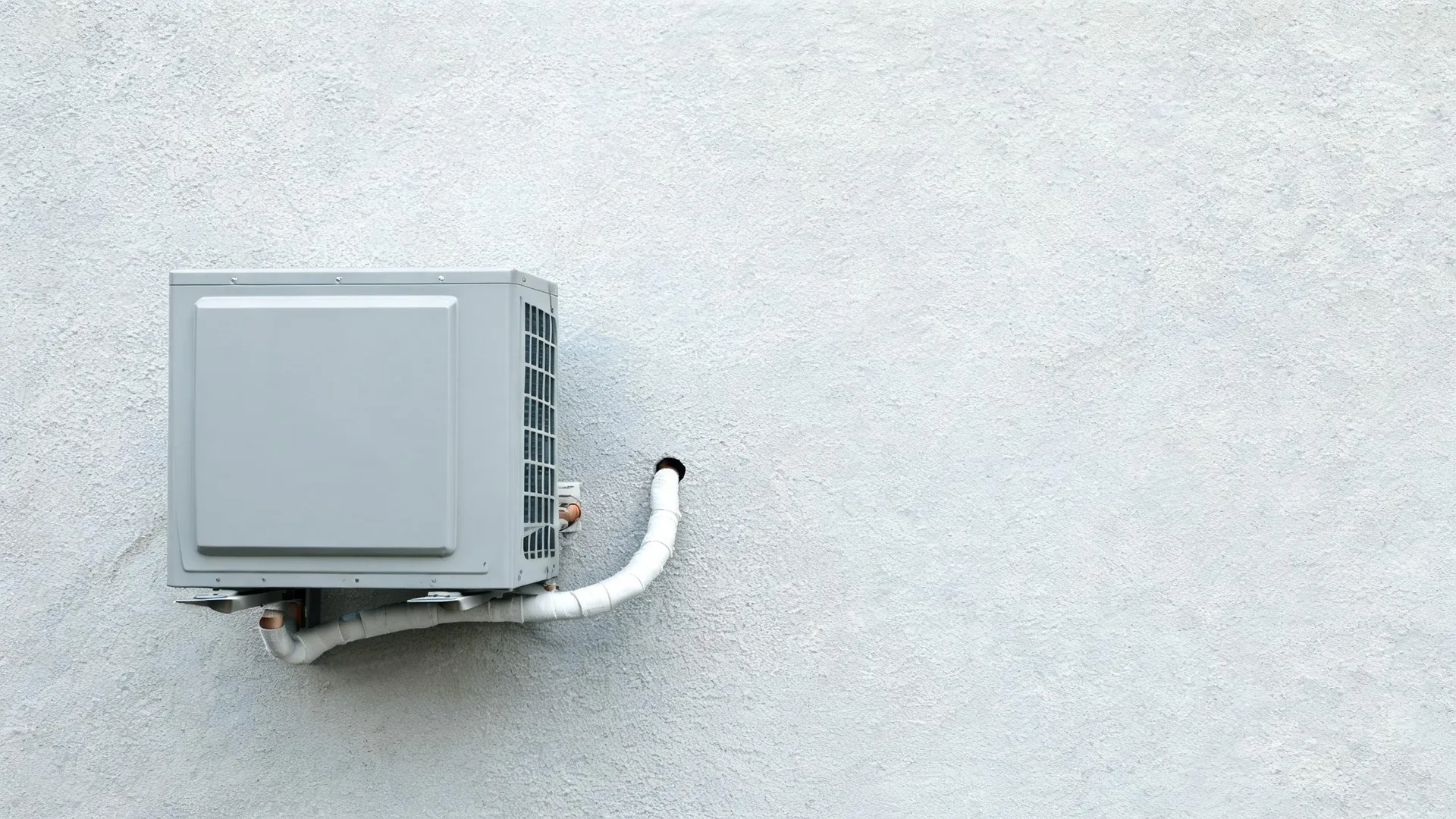
A white mini-split air conditioner outdoor condenser unit mounted on metal brackets against a beige stucco exterior wall, with a blue sky and scattered clouds in the background.

The label tells you how it was tested, not how it will run

The SEER2 number on the label is a cooling efficiency rating, and HSPF2 covers heating. Both are measured the same way every time, under the same lab conditions, so they're useful for comparing one model against another. What they don't tell you is what the unit will actually use in a specific room, because that depends on how the space holds heat and how the system gets installed, not just what's stamped on the label. A mini split installed with a sloppy line set or a bad refrigerant charge will run worse than its rating says, no matter how high that rating is. The number is a starting point for comparing models, not a promise about what happens once it's on the wall.

Sizing by heat loss and heat gain, not square footage

A mini split is sized by working out how much heat a room loses in winter and gains in summer, counting the windows, the insulation, and how the walls and ceiling are built. Square footage alone leaves out too much. Rooms the same size can need different sized units depending on how much afternoon sun comes through the windows or how well the attic above is insulated.
Oversized is its own problem

A unit too big for the room cools the air fast and shuts off before it pulls the moisture out, so the room ends up cold and damp instead of comfortable. It also cycles on and off more often, and the compressor sees more wear from all that starting and stopping than it would running steady at the right size. Bigger isn't a safety margin here. It's a different kind of mismatch.

What you're paying for with a mini split isn't just the indoor and outdoor units. It's the line set connecting them, the electrical work to bring power to the outdoor unit, and the labor to mount both pieces and run refrigerant lines between them cleanly. A single-zone system with a short, simple line run costs less to put in than a multi-zone setup feeding several rooms from one outdoor unit. Longer line sets, tricky routing through walls or floors, and any upgrade needed to the electrical panel all add to the job. The brand and efficiency rating matter too, but the layout of the home and how many rooms need their own head is usually what separates a straightforward install from a longer one.

Installation starts with the outdoor unit. It needs a spot with clear airflow on all sides and a solid, level pad to sit on, away from where snow slides off a roof or piles up from shoveling. Inside, the mounting plate for each head goes high on a wall, over a spot with clear access to the outside for the line set. A hole gets drilled through the wall, just big enough for the refrigerant lines, the electrical wire, and the condensate drain to pass through together. Once the lines are run and connected at both ends, the system gets evacuated with a vacuum pump to pull out all the air and moisture before the refrigerant is released into the lines. Any air or moisture left behind causes problems later, so this step isn't one to rush. After that, it's a matter of powering up the system, checking the refrigerant pressures, and testing each head on heat and cool before calling the job done.