9 months a year on the cold side
From September through May that mini split runs on heat, not cooling. A blinking code in the middle of winter means the house has no backup running.
Let someone else find the pro
A blinking light on your mini split is it telling you what's wrong, and the pattern of blinks points to a specific problem, whether that's icing on the coil, a sensor fault or something electrical. Below is what the blinking usually means and what fixes it. If you'd rather not sort through the pattern yourself, send your details and a local mini split contractor will take it from there.
Let a pro reach outThat blinking light is the mini split's way of flashing a fault code. The number of blinks, or the pattern of long and short flashes, corresponds to a specific problem the board has detected, and the exact meaning depends on the brand, so the manual or a sticker inside the cover panel will show what your blinks mean. A common cause through a Twin Falls winter is a frozen coil, usually from the unit running a defrost cycle it can't keep up with when it's cold outside, or from low refrigerant that makes ice build up on the indoor coil. Other blink patterns point to a failed sensor, a communication error between the indoor and outdoor units, or a drain line that's backed up and tripped a float switch. Some codes clear themselves once the unit defrosts or drains. Others mean the system will keep shutting itself off until the actual part gets fixed, which matters if you're counting on that mini split to keep a room warm right now.
Cooling runs July through August
Your mini split cools the house for about two months, July through August, then sits idle the rest of the year until the next blink shows up.
Heat runs September through May
September through May, nine months, that unit is running heat. A blinking light during that stretch means more days without warm air.
Power here costs 11.78 cents per kilowatt-hour
At 11.78 cents per kilowatt-hour, a mini split that's short on refrigerant or icing up runs longer to do the same job, and you pay for that extra runtime.
NOAA nClimDiv 1991-2020 · EIA-861 2025
Count the blinks and check the time. If it's daylight and someone is home, open the cover and find the manual sticker or the brand logo inside, then match the pattern against the brand's code list. Some units blink the fault on the indoor unit, some on the outdoor unit, and a few blink on both. Writing the pattern down before you call helps, even a phone video of the blinks. A code you can read is also a code a contractor can act on fast, instead of starting the visit by watching the unit blink for ten minutes to catch the pattern themselves.
Some patterns mean stop using the unit. A blink pattern tied to a refrigerant leak, a compressor fault or a short in the wiring is not one to run past to get a few more hours of cool air or heat. Running it anyway can turn a board or a sensor repair into a compressor replacement. If the pattern repeats as soon as you reset the breaker, or if you smell anything burnt near the indoor unit, leave it off. Twin Falls winters get cold enough that losing a mini split that's your only heat for a room is worth calling about the same day.




From September through May that mini split runs on heat, not cooling. A blinking code in the middle of winter means the house has no backup running.
Someone who services mini splits in Twin Falls County all year knows which fault codes show up most and what usually causes them on your brand.

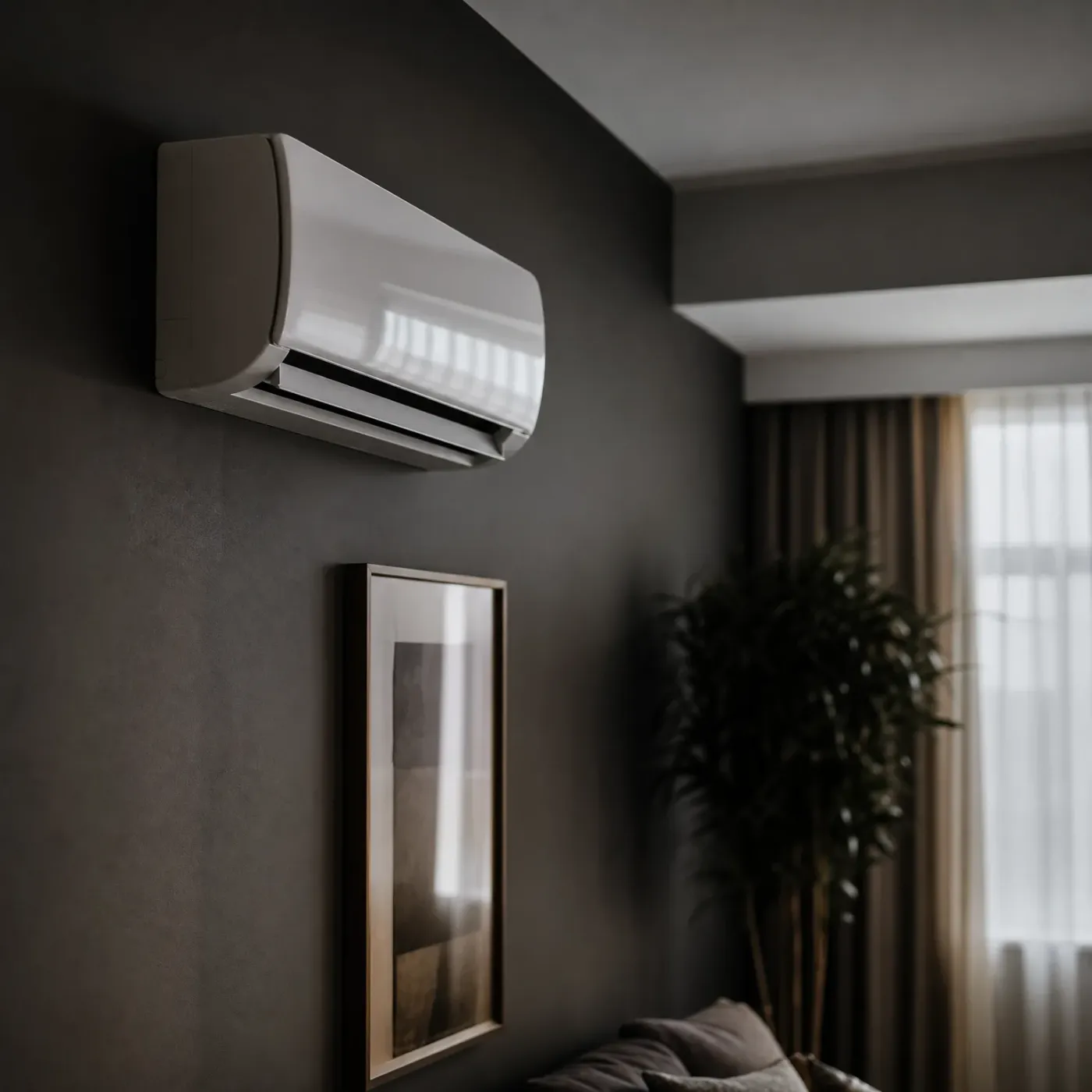
This is what a healthy mini split looks like on the wall, nothing more than that. Air moves through the vents without resistance. No blinking light, no blocked coil, just steady output into the room.

Dirt and mold along the vents and lower casing choke the airflow before it reaches the room. A coil in this state often throws the fault code before it fails outright, and the buildup you see here is usually part of why.
Walk up to the indoor unit and look at it straight on. The light might be steady, or it might be running through the same pattern over and over, a few quick flashes then a pause, then it repeats. You may notice the air coming out feels weaker than usual, or the unit is blowing but the room isn't changing temperature. Sometimes there's a thin layer of ice visible on the coil behind the front panel, or a smell like something's burning near the electrical connections. If this is happening in January and it's your only heat in that room, the house loses its backup fast, and a coil that's iced over or a board that's faulted out won't clear itself by waiting.
The control board senses a reading outside its normal range.
The board matches that reading to a stored fault code.
The indoor unit flashes that code through its light.
The outdoor unit shuts off to stop further strain.


You already know what the blinking means, or you have a guess from the pattern. Either way, a fault code on a mini split in Twin Falls carries real weight nine months of the year, since that unit is what keeps the house warm from September through May. A board that shuts the outdoor unit down over a sensor fault or an iced coil isn't going to reset itself because you wait another night. Someone who works on these units all season in Twin Falls sees the same handful of codes over and over and knows which ones mean a quick fix and which mean the compressor is at risk. Sending the request means one local contractor looks at your unit and your code, not a guess from a manual photo. You stop trying to match blink patterns to a chart and get someone who already knows what that pattern usually means on the ground here, in your winter.

This is what the wall unit looks like with nothing wrong. The casing is white, the vents sit open and even, and the light holds steady. Air moves out across the room without a sound worth noticing. No blinking, no buildup on the housing, just a unit doing its job.

Dust has settled into the plastic casing and worked its way into the vents, and the housing has gone from white to gray. A unit left like this is more likely to throw a code, since dirt on the coil behind that casing makes the board see readings it doesn't expect. That's often where the blinking starts.


A lot of these faults trace back to the indoor coil. Dust and mold build up on those fins over a season or two, airflow drops, and the coil runs colder than it should until it ices over. The board reads that as a problem and starts blinking. Cleaning the coil fixes some of these outright, and a contractor who works on mini splits in Twin Falls every week can tell from the pattern alone whether that's likely before they even pull the cover off.
Some faults have nothing to do with airflow or refrigerant. A sensor wire works loose, a connection corrodes, or the board itself starts failing, and the unit blinks a fault with a clean coil and a full charge. These don't clear on their own and they don't come back by cleaning anything. It takes a meter and the brand's service chart to tell a bad sensor from a bad board, which is why this one calls for someone who carries parts for the brand you have.
Two months of cooling means a short, hard stretch for that unit, then a long stretch in reserve. A blinking light in July or August is easy to notice, since the mini split is working flat out. Catch the code now and it won't sit broken when summer comes back around.
NOAA nClimDiv 1991-2020
A blinking light is the board telling you it found something wrong and shut the outdoor unit down rather than run it broken. Counting the blinks and checking them against the manual gets you a name for the problem. It doesn't clear the code or fix what caused it. That takes someone opening the unit, finding the actual cause, whether it's a dirty coil, a bad sensor, or a wiring fault, and correcting it.
In Twin Falls that matters more than it would somewhere mild, since this unit carries the house through nine months of cold, not just a couple months of summer. A code that sits unaddressed in October is still sitting there in January, and that's the month you can least afford a heating system stuck in shutdown.
A contractor who works on mini splits in this area all year has likely seen this exact pattern before, on a unit much like yours, and knows whether it usually traces back to a coil that needs cleaning or something electrical that needs testing. That's a shorter path to an answer than starting from the manual alone.
Sending the request connects you with one local contractor, not several. One visit to diagnose it, one person to talk to about what they found, instead of fielding calls from multiple companies while the light keeps blinking on the wall. The code has already told you something is wrong. What's left is getting someone there to read it in person and settle it.
It's off your list after this