
Mini split smells musty in Moscow, ID

Let a pro reach out

A musty smell from your mini split usually means something is growing in there, mold or mildew on the coil or in the drain pan. It is not something to live with until it airs out on its own, because it will not. Figuring out who in Moscow actually works on mini splits and has time this week is its own chore. Calling around, describing the smell three different times, waiting on quotes that come back days apart. You do not have to do any of that here. Send the form and the search part of this is off your plate. No more lining up contractors or sitting on hold to ask if they even service mini splits. Someone who knows these systems gets your information and takes it from there. That is the part this page can take care of for you, the finding, so you can stop chasing it down yourself.

Why does my mini split smell musty?

You turn on your mini split and get a musty smell in the first few seconds, maybe less once it's been running a while. It's not strong enough to be dust burning off, and it's not going away on its own. You want to know what's actually causing it before you decide whether it's something to deal with now or something that can wait.

It means mold or mildew has grown on the evaporator coil or in the drain pan

A mini split pulls moisture out of the air every time it runs, and that water has to go somewhere. Some of it sits on the coil, some drips into the drain pan and down the condensate line. If either one stays damp between cycles, mold and mildew grow there, and every time the blower turns on it pushes that smell into the room. Summers here are hot and dry, but the unit still produces condensation whenever it's cooling, and a clogged drain line or a dirty filter slows that water down enough to let something grow. The smell is the system telling you moisture isn't draining the way it should. It will keep coming back until the coil and drain pan are actually cleaned.

A white wall-mounted mini-split air conditioner installed high on a beige interior wall near the ceiling, with a white-framed window at the left edge.

Clean and running right

A clean mini split pushes air you don't notice, because there's nothing in it to notice. The coil is dry between cycles, the filter is clear, and the drain pan empties the way it should. No smell when it kicks on, none after it's been running an hour.

A dusty, stained wall-mounted mini-split air conditioner indoor unit near the ceiling on a plain beige wall, with visible lint buildup at its intake grille.

Mold growing inside

This is what a musty mini split looks like once you pull the cover off. Dust and grime built up on the filter, dark streaks across the casing, and mold working its way along the coil. The smell you're getting is this, pushed into the room every time the unit runs.

Is that musty smell something to worry about?

You notice it most when the unit first kicks on, a damp, closed-up smell like a basement after rain. Sometimes you catch it walking past the indoor head even when it's off. The filter looks fine when you check it, so it seems like it should be nothing. It isn't nothing. Mold and mildew growing on the coil or sitting in the drain pan don't go away because the unit keeps running, they spread. Left alone, that growth can work its way into the air the unit pushes into the room every time it cycles on, and it can start affecting how well the unit cools or heats your house at all.

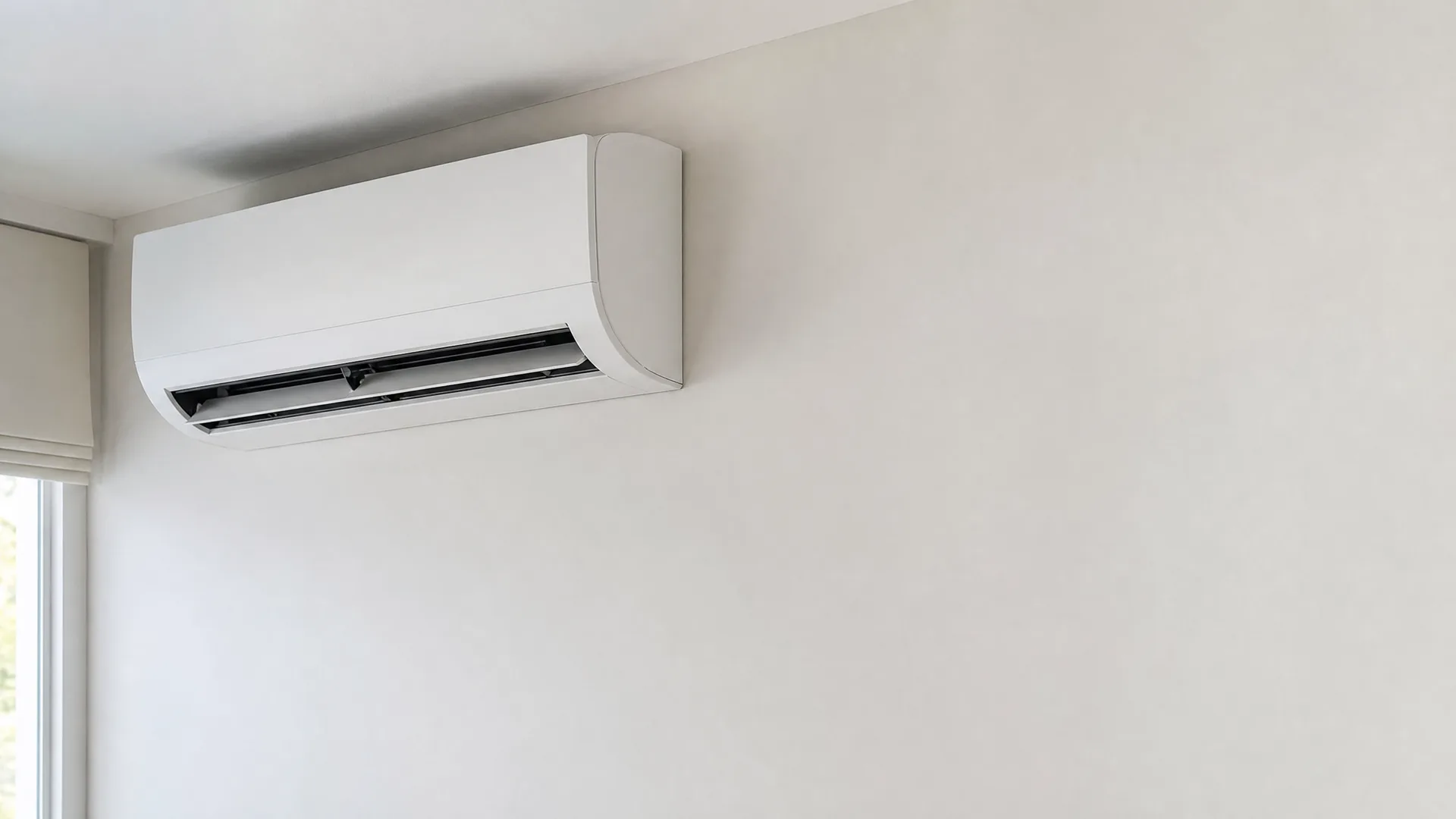
A white wall-mounted mini-split air conditioner unit installed near the ceiling on a plain light-colored interior wall, with a window edge at the far left.

Why the coil stays wet

A mini split pulls moisture out of the air every time it runs, and that water has to go somewhere. It drips off the coil into a small pan, then down a drain line. The coil itself stays damp for a while after the unit shuts off, especially in a Moscow summer when it's been cycling for hours. Dust that settles on a wet coil doesn't dry out and blow away. It sits there, and mold needs almost nothing else to take hold.

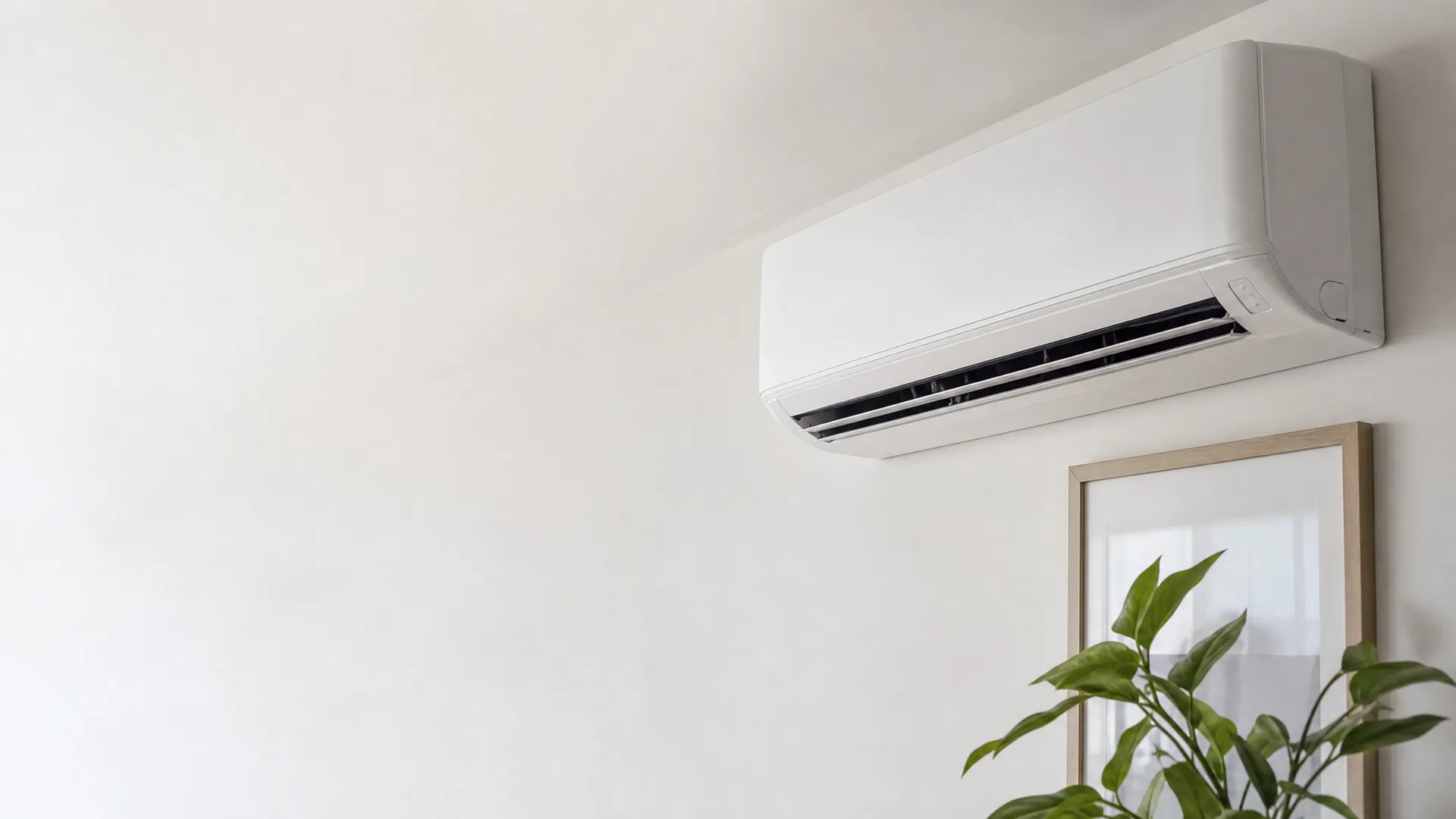
A white wall-mounted mini-split air conditioner near the ceiling of a white interior wall, with a framed picture and a green leafy houseplant in the lower right corner.

What a clogged drain does

The drain line is narrow, and algae or mold can build up inside it the same way it would in a shower drain nobody cleans. Once that line is partly blocked, water backs up into the pan instead of draining out. Standing water in a pan with no airflow is exactly where mold grows fastest. It can sit there through a whole Latah County winter if the unit barely runs, then greet you with that smell the first warm day you turn the cooling back on.

Heat runs September through June

Your mini split is working almost all year here, September through June, with only a short break in between. That coil stays damp through most of those months, and a damp coil that never gets a real dry stretch is exactly where mold settles in.

NOAA nClimDiv 1991-2020

A man in a blue denim shirt sits in an armchair with his eyes closed, beside a side table with a lamp and a folded newspaper, in a room with shelving and a window seat.
A bearded man in a blue sweatshirt sits in an armchair with his eyes closed and head tilted back, beside a side table with a mug and folded newspaper, with a potted plant, window and bookshelf behind him.
A bearded man in a gray pullover reclines with closed eyes on a brown leather sofa in a sunlit room with a window, framed picture, potted plant, and a wooden cabinet holding papers and a dark mug.
A man in a blue sweatshirt reclines with closed eyes in a brown leather armchair in a living room with a bookshelf, houseplant, sofa, window, and a side table holding newspapers and a dark mug.

One request and it's handed off

One form instead of hunting for a pro who does mini split tune-ups.

Asking costs nothing, and the choice to hire stays yours.

If you ignore it, the smell doesn't go away. It spreads. Mold on the coil sheds spores into every room the unit serves, and what started as a smell when the system kicked on turns into a smell in the house.

If you get the coil and drain pan cleaned, the smell goes with it. A technician who clears the pan, flushes the line, and treats the coil stops the mold where it's growing, not just the air coming off it.

A white wall-mounted mini-split air conditioner indoor unit installed near a textured ceiling on a plain beige wall, with visible dust and discoloration on its casing and vent.
Before you get your mini split maintenance
A white wall-mounted mini-split air conditioner indoor unit on a light gray wall above a white baseboard and wood-look floor.
After you get your mini split maintenance

There's no duct system to search. A mini split has one indoor head doing all the work for that room, so the smell is coming straight off it. Air gets pulled in, passes over the coil, and gets pushed back out by a blower wheel sitting right behind the filter. Anything growing on the coil or caked onto that wheel rides along with the air headed into your room. Underneath the coil is a drain pan, catching the water the coil pulls out of the air as it runs. That pan can grow mold on its own timeline, even if the coil gets cleaned, especially if it drains slow or holds water between cycles. Pay attention to when the smell shows up. If it hits hard right when the unit kicks on and fades after a few minutes, that's usually the coil drying out. If it stays steady the whole time the unit runs, the drain pan or the blower wheel is more likely the source. Running fan-only mode is a quick way to check, since without the compressor cooling the air, there's nothing to mask a stale, standing-water smell if one's there.

Where the smell is coming from

  • A mini split has no ducts, so the smell you're catching is coming straight off the indoor head in your room, not traveling from somewhere else in the house.
  • Air passes over the coil before it reaches you, so whatever is growing on that coil rides along with every cubic foot of air the unit pushes out.
  • The blower wheel behind the filter collects dust and moisture together, and that combination holds a mold smell even after the filter itself gets cleaned.
  • The drain pan sits under the coil to catch condensate, and if it drains slowly or holds standing water, it grows mold on its own schedule separate from the coil.
  • Running the fan-only mode without the compressor can push a stale, standing-water smell through the room without any cooling to mask it.
  • A musty smell that's worse right when the unit kicks on and fades after a few minutes usually points to the coil, while a steady smell the whole time points to the drain pan or blower wheel.
An older man with gray hair in a dark blue henley sweater leans back on a beige sofa with his eyes closed, beside houseplants and bright windows.
A woman with shoulder-length brown hair and a cream knit sweater sits with her eyes closed and a slight smile in a chair beside a window showing orange autumn foliage, with a gray mug on a wooden table and a lit lamp in the background.

The room that head serves is where you'll feel this. Maybe it's the bedroom, maybe the main living space, whichever one that indoor unit is mounted in. Every time it kicks on, that musty air is going straight into the room you're sitting in or sleeping in. Guests notice it before you do sometimes, because you've gotten used to it. Leave it long enough and it's not just a smell anymore. Mold spores from that coil are landing on your furniture, your bedding, whatever's in that room's path of airflow. Anyone in the house with allergies or asthma is breathing that in every time the unit runs, and with your mini split working most of the year here, that's a lot of hours. The fix doesn't get harder the longer you wait, but the exposure keeps stacking up, day after day, in the one room you probably spend the most time in.

A white wall-mounted mini-split air conditioner installed near the ceiling on a beige interior wall, with a window and bamboo blind at the left edge showing green foliage outside.
A dry coil and a clear filter, no smell when the head kicks on and none while it runs.
A wall-mounted mini-split air conditioner indoor unit with discolored casing and dusty vents, installed near the ceiling on a plain light-colored wall.
Dust and grime built up on the panel and louvers, a sign of what's likely sitting on the coil behind it.
A two-story house with light gray horizontal siding and white-trimmed windows, set behind a mown lawn with shrubs, flanked by large green trees, with a sidewalk and wet street in the foreground.

Summer air in Latah County holds a dew point around 48°F, figured from county weather averages. That's dry air, nothing like the Gulf Coast or the Midwest, and it means your mini split isn't pulling much moisture out of the house during July and August the way it does in spring and fall. But the coil still gets wet every time the unit runs, and dry outside air does nothing to dry out the inside of the unit itself. The coil holds its dampness on its own schedule, regardless of what the dew point is doing outside, and that's where the smell starts.

NASA POWER T2MDEW

A wooden table holding a closed silver laptop, a cup of coffee on a saucer, and a glass vase with leafy branches, with a marble-backed counter, potted plant, and window in the background.

A musty mini split means something growing on the coil

The smell is the coil or the drain pan, not something you imagined or something that'll pass. The unit runs most of the year here, so that coil rarely gets a long dry stretch to stop it. That's the whole answer. What changes the smell is getting the coil and pan cleaned, not running the fan more or buying a filter.

Right now that probably means searching Moscow for someone who services mini splits, calling a few, explaining the same musty smell each time, then weighing quotes against each other to figure out who actually knows this equipment. Send the form once and that part is off your plate. Someone qualified gets in touch, and from there it's about getting the coil clean, not about finding who can do it.

Living room interior with a light sofa holding a dark green cushion and a brown knit throw, a tall leafy plant by a black-framed window, a wooden coffee table with a round tray, and wooden shelves holding vases and books.
A white wall-mounted mini-split air conditioner on a dark gray interior wall, with a plant and low cabinet dimly visible at the lower left.

Done looking for a mini split pro

Tune-up, service, or cleaningMini-splitLatah County, ID
Step 1 of 2

What ZIP code is the job in?