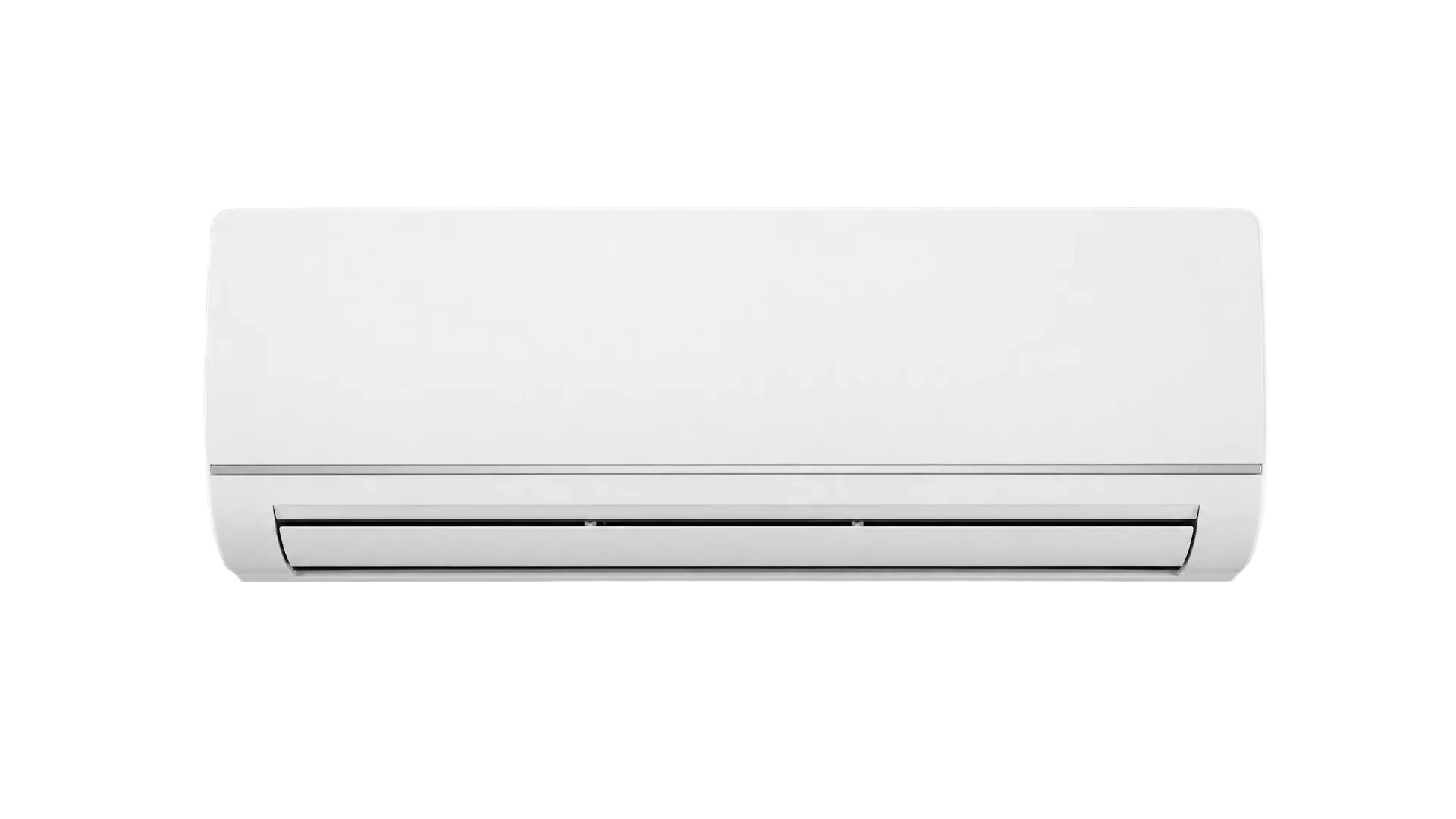
Clean the filters on your mini split about once a month during the stretch you run it hardest, which in Idaho means summer, when the system runs for hours most days pulling dust and pollen out of dry air. A dirty filter blocks airflow across the indoor coil, so the unit works harder to move the same amount of cool air and your power bill climbs even though power here is cheap. Beyond the filters, the indoor coil and blower wheel need a real cleaning once a year, usually before summer starts, since that's what gets the heaviest use. If your mini split also handles some of your heating alongside a gas furnace, it still deserves that yearly check even though it isn't working as hard those months. Skip it for a couple of years and dust builds up on the coil fins where you can't reach it with a rag, cutting airflow and efficiency in a way filter changes alone won't fix.


The filter is the part you see, but it's not the only part that gets dirty. Behind it sits the indoor coil, and anything that slips past the filter settles there, cutting into how well the unit pulls heat out of the air. Idaho's dry summers add another layer to this. A mini split pulls moisture out of the air every time it cools, and that water needs a clear path out through the drain pan and condensate line. Let that line clog and the water backs up into the unit itself. Outside, the compressor depends on airflow across its own coil, and dry season dust and cottonwood fluff will cake across those fins if nothing clears them. Inside the head, a blower wheel sits behind the coil, and dust buildup there throws it off balance, which is often why a unit gets louder before it loses capacity. A contractor doing real maintenance opens the housing and washes the coil and wheel directly, usually once a year before summer runs start, catching what monthly filter care can't reach.
What's Behind the Filter
- Behind the filter sits the indoor coil, and dust that gets past a dirty filter settles there and cuts how well it absorbs heat.
- A mini split pulls moisture out of dry Idaho air whenever it cools, and that water has to clear the drain pan and condensate line or it backs up into the unit.
- The outdoor unit has its own coil and fan, and dry season dust and cottonwood fluff can cake across the fins and choke airflow the compressor depends on.
- Most indoor heads have a blower wheel behind the coil, and caked dust there throws it out of balance and makes the unit louder over time.
- A contractor doing a real cleaning opens the housing to wash the coil and wheel directly, not just swap or rinse the filter.
- Once a year, usually before summer runs start, is when that deeper cleaning catches what monthly filter care never reaches.


Signs Your Mini Split Needs Attention
- A film of dust across the filter shows up as a bedroom or living room that stays warmer than the setting says it should.
- The outdoor unit sits exposed to dry summer wind, and grass clippings or cottonwood fluff can block the coil fins from the outside in.
- A clogged condensate line backs up and drips from the indoor unit onto the wall or floor below it.
- Ignoring the filter for months straight pushes the compressor to run longer for the same cooling, and that shows up on your power bill even with cheap rates.
- A musty smell when the unit kicks on usually means moisture sitting somewhere it shouldn't, often the drain pan or the coil behind the filter.
- Since most homes here heat with gas, the mini split often sits idle all winter, and dust and debris from summer stay put until someone checks it.
You don't need to pull the cover off to know when a mini split is overdue for a look. Watch the room it serves. If it's running but the house won't quite reach the temperature you set, that's airflow fighting its way through a clogged filter before it ever reaches the coil. Step outside too. The outdoor unit takes the brunt of a dry Idaho summer, and wind-blown grass clippings or cottonwood fluff settle into the coil fins from the outside, which chokes it the same way dust chokes the filter indoors. Inside, check the wall or floor under the unit for any dampness. That's the condensate line backing up, and once it starts dripping it won't stop on its own. A musty smell when the system kicks on points to the same kind of moisture problem, usually sitting in the drain pan or on the coil just behind the filter. None of this fixes itself, and a compressor working against a dirty filter month after month runs longer to do the same job, which lands on your power bill whether rates are cheap or not. It's easy to lose track of all this because most homes here heat with gas, so the mini split goes quiet for the winter and whatever built up over the summer just sits there until someone opens it back up in spring.



Slide out the front panel to reach the filters
Pull both filters and rinse off the dust
Wipe the exposed coil fins with a soft brush
Check the drain pan and line for standing water
Why does one room never feel right?
You might notice the air coming out feels weak, or the room it's supposed to cool still feels warm by late afternoon even with the unit running. Sometimes there's a musty smell when it first kicks on, or you hear it cycling more than it used to. A water stain under the indoor unit, or a drip you didn't expect, usually means the drain line is backing up instead of clearing outside like it should. None of this means the system is failing. It usually means dust or grime has built up somewhere it shouldn't, and the unit is working harder to do less. Left alone through enough Idaho summers, that extra strain is what shortens how long the equipment lasts.





Idaho's summer air sits at a dew point of 42°F on average across June, July and August, a number from NOAA climate data, and that's dry air by any measure. A mini split working in dry air sheds heat and pulls moisture out faster than one working in a humid state, which is part of why the coil and filter load up with dust rather than staying damp and sluggish. You'll notice it as fine grit on the filter screen more than any musty smell. Someone who services mini splits around Idaho all summer sees this same pattern house after house, dry dust, not mildew, and knows to check the coil fins and filter before anything else. That's the kind of call this page connects you to: one local contractor who already knows what this climate does to your system, not a list of names to sort through yourself.
NASA POWER T2MDEW county cells weighted by homes
Skip the calls to every shop
You can pull the filters yourself and still end up needing someone to check the coil, the drain line, and the outdoor fins once a summer, because those parts are harder to reach and easier to miss. Finding that person usually means searching around, calling a few HVAC companies, explaining the same thing about your mini split three times, then sitting with quotes trying to guess which one actually knows this equipment. A request here goes to one contractor, not a handful, and it's someone local who works on mini splits all summer in this dry heat and knows what tends to fail first, whether that's a clogged drain line or fins packed with cottonwood fluff. That's the part worth handing off. You've still got a system that needs looking after before the hottest months, and knowing what to check is only half of it.
The outdoor unit works too
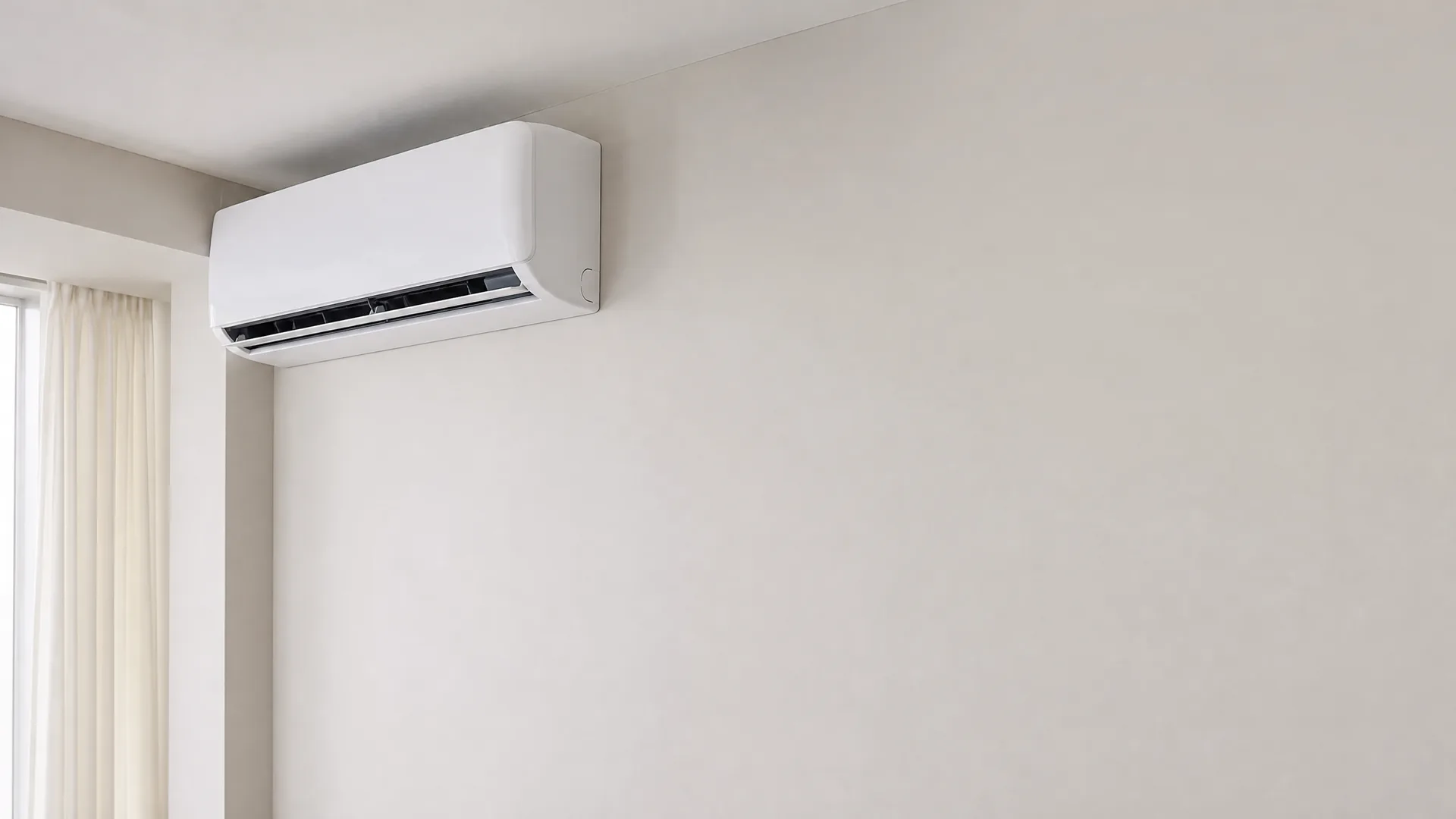
The indoor coil and filter get the attention because they're easy to reach, but the outdoor unit is doing just as much work. Its fan pulls air across a set of coil fins, and in Idaho that air is dry and often carries dust straight off dead lawns or gravel. Those fins bend easily, and once enough are packed with grit, the unit can't shed heat the way it should, no matter how clean the filter inside stays.
Refrigerant lines don't get cleaned
The line set running between the indoor and outdoor units carries refrigerant under pressure, and cleaning never touches it. If that charge drops from a slow leak, the symptoms look like a dirty filter: weak airflow, a room that won't hold its temperature. A contractor checks pressure at the same visit, because a system that's clean but low on refrigerant still won't cool your house right.
Power costs 11.83 cents per kilowatt-hour statewide
At under 12 cents a kilowatt-hour, running your mini split through a hot Idaho summer costs less here than in most states. That's not a reason to skip maintenance. A clogged filter or dirty coil still makes the unit work harder and run longer to hit the same temperature, so you lose some of that cheap power to a system that isn't moving air the way it should.
EIA-861 2025 statewide residential average
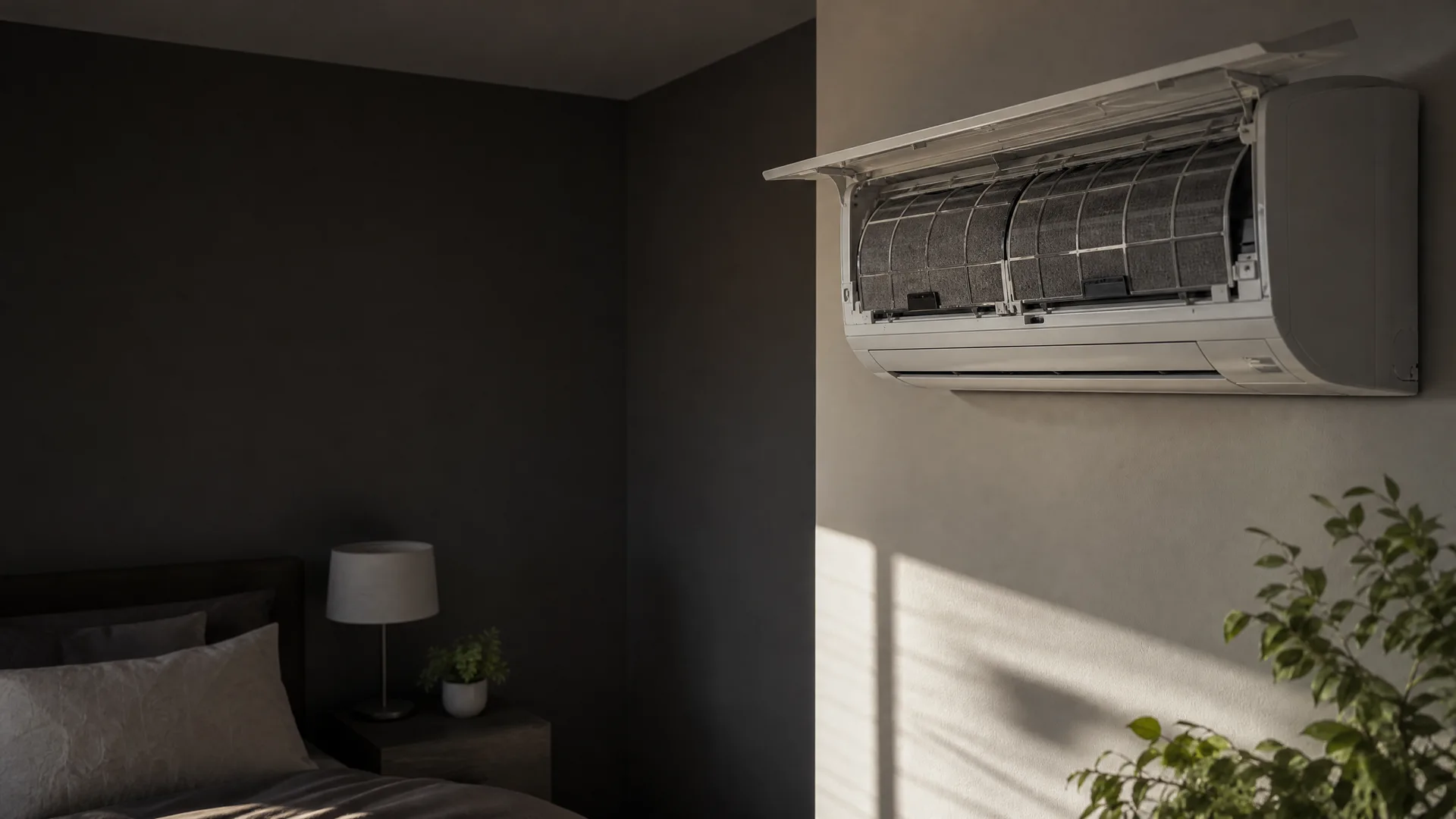
It's late afternoon in early spring, light still strong through the blinds. You finally got around to the filters, something you'd been meaning to do since the weekend. The front cover is tilted up on its hinge and the filter screen is sitting half out, gray with a season's worth of dust packed into the mesh. You hadn't run the unit much yet, just a few warm afternoons, but you can already feel how much harder it would have had to work pulling air through that. You wipe your thumb across it and the dust comes off in a line. The room still smells faintly like the inside of the unit. Outside, the light is starting to go gold, and you've got maybe twenty more minutes before you lose it.

Clean the filters monthly through summer, check the rest once a season
That's the answer. Filters monthly from June through September, and the coil, drain line, and outdoor fins looked at once before the heat sets in. Skip it and you get a room that won't hold its temperature and a unit that runs longer than it should to get there.
Finding someone to do the parts you can't easily reach yourself is usually the slow part: searching, calling a few places, explaining the same system twice, then sorting through quotes that don't quite match. This connects you with one licensed contractor in Idaho who works on mini splits all summer and knows which parts fail first in dry heat. No list of companies calling you back, just the one who can actually do the work.


Mini Split Maintenance
Skip calling around

- A local pro who services mini splits gets in touch about the tune-up.
- A local pro who knows mini splits gets your details and gets in touch.

- Send the form, and lining up the mini split tune-up stops being yours to chase.
- Send the form and the mini split tune-up stops being something to remember.

- Fill out one short form instead of calling around.
- Explain the job once and skip repeating it on every call.

- The pro who reaches out is licensed in Idaho.
- Only one pro gets your request, so you hear from one company.