Clean filters, checked once a year
Air moves freely through the head, the coil pulls heat the way it should, and the compressor isn't working harder than it needs to all summer or winter.
Stop chasing a mini split pro
Dust and pollen build up fast on a mini split's filters, especially with summers here as dry as they are. How often to clean yours depends on how many heads you have, whether you run it through winter too, and what's been getting into the filters. This page covers what a cleaning involves and how often it should happen. If you'd rather hand it off, a local contractor who services these units year-round can take it from here.
Hand it offClean the filters on your mini split every two to four weeks when you're running it, and have the coils and condensate drain checked once a year. The filters catch dust and pollen before the air crosses the coil, and with Coeur d'Alene summers staying dry for months, that dust builds up in the filter mesh faster than it would somewhere damp. A clogged filter forces the unit to pull harder to move the same air, and that strain is what drives up your power bill and shortens how long the system lasts. If you run the mini split through winter for supplemental heat too, it's working closer to year round, so the filters need checking more often, not less. A multi-head system multiplies this: each indoor head has its own filter, and they don't all get dirty at the same rate depending on which room sees more traffic or more open windows. A yearly check catches a coil that's lost its airflow or a drain line that's started to clog before either one turns into a repair.
Cooling runs July through July
Cooling runs for one month, so the filters only face that heavy summer dust load through July before the system shifts over to heat.
Heat runs September through June
Heat runs September through June, so the filters are working nearly ten months straight, which is most of why they need checking that often.
Power here costs 12.31 cents per kilowatt-hour
At 12.31 cents per kilowatt-hour, power here is cheap enough that clean coils and filters matter more for comfort and lifespan than for the bill.
NOAA nClimDiv 1991-2020 · EIA-861 2025
Skip the filters for a couple months and you won't see a breakdown right away. The head just works harder to push air through, your power bill climbs a little, and the room takes longer to cool or heat.
Keep to a cleaning every two to four weeks and the coil behind that filter stays clear too. That's the part that actually moves the heat, and a clean coil is what keeps the system running the way it did on day one.




Every indoor head in your system has its own filters tucked behind the front cover. Pull them out, rinse them under water, and let them dry all the way before they go back in. They're mesh, built to be washed, not replaced. Behind them is the evaporator coil, and whatever dust gets past the filters lands there instead, on fins that block airflow once enough builds up. The moisture that coil pulls out of the air has to go somewhere, and that's the condensate drain line. Dust that slips past the filter is usually what clogs it. Outside, the unit has its own coil sitting out in the weather year round. A contractor checks that during the annual visit, along with the refrigerant lines, since that's not something you can rinse off yourself. If one head in your house seems to be working harder than the others, or putting out air that's not as cool as it should be, check its filter before you think about refrigerant. Nine times out of ten that's the difference, not a leak.


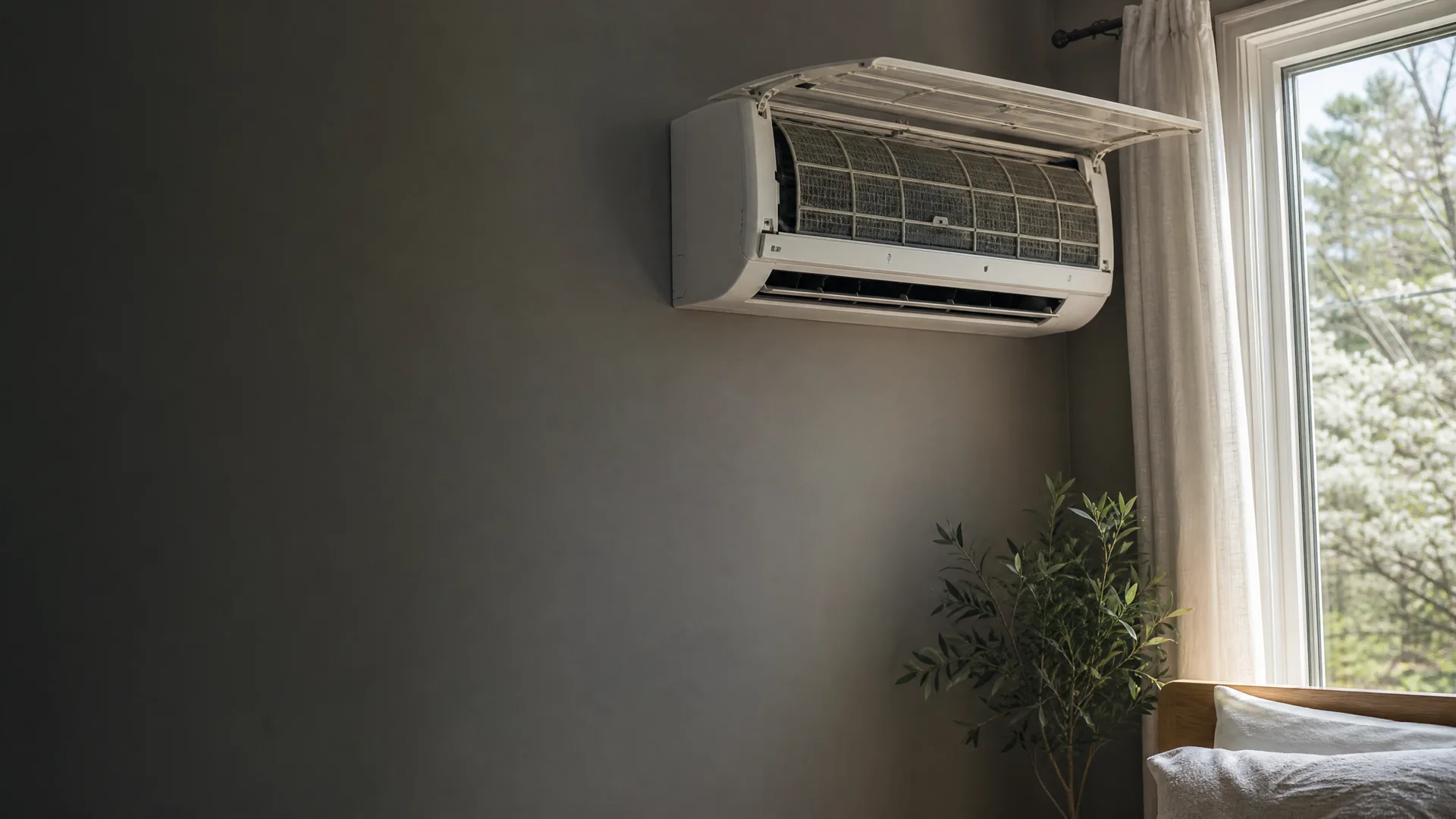
You pull the stepstool over to the bedroom unit on a Saturday in April, windows cracked for the first time since winter. The front cover lifts easy enough, and the filter screen behind it is gray, matted down with a winter's worth of dust. You hadn't thought about it since the heat was running back in January. Outside, the air coming through the window still carries that early Kootenai County pollen, the kind that settles on the windowsill overnight. You carry the screen to the bathroom sink, turn the water on, and watch the gray run off in streaks until it finally rinses clear. It sits propped against the tub to dry while you check the other head down the hall.
A licensed local pro takes the request for your mini split tune-up.
You're not committing to anything by asking.
A mini split pulls air through the filter before it ever reaches the coil behind it. When the filter is clean, that coil stays exposed to moving air and pulls heat out of the room the way it's supposed to. When the filter is packed with dust, less air gets through, and what does get through carries fine particles that settle on the coil fins themselves. Once dust is sitting on the coil instead of caught in the filter, rinsing a filter won't fix it. The coil needs a cleaning that reaches between the fins, which is the kind of job worth having checked once a year rather than guessed at.
Every mini split head pulls moisture out of the air as it cools, and that water has to leave through the condensate drain line. Dust that gets past the filter doesn't just land on the coil. Some of it washes down into the drain pan and the line with the condensate, and over time it builds into a film that slows the water moving out. A slow drain backs up into the pan, and from there it can overflow onto the wall below the head or drip inside it. A yearly check catches that buildup before it turns into standing water somewhere it shouldn't be.


Air moves freely through the head, the coil pulls heat the way it should, and the compressor isn't working harder than it needs to all summer or winter.
The head struggles to push air, rooms take longer to reach temperature, and dust works its way into the coil where rinsing a filter won't reach it anymore.
Stand under the head and the air feels thinner than it did last year, or it takes longer than it should to bring the room down in July or warm it up in January. You might notice a musty smell when it first kicks on, or a thin gray ring of dust settling on the wall just below the unit. Some rooms run warmer or colder than others even though the thermostat hasn't changed. None of this happens overnight. It builds up over a season of the filter trapping dust and pollen it was never cleaned of, and left long enough, the coil behind it starts working harder than it should to keep up.

The dew point around Kootenai County averages 47°F across June, July and August, according to NOAA climate data, which is low as these things go. Dry air like that doesn't make the filters sweat, but it does mean the dust and pollen drifting around aren't sticking to anything damp before they hit the filter screen. Instead they just pile up dry and loose, and a dry filter can look fine from the front while it's actually packed behind the mesh. You won't see water stains or mildew on a mini split here the way you might somewhere muggier. What you'll notice instead is weaker airflow creeping in before anything looks dirty enough to explain it.
NASA POWER T2MDEW


Clean the filters every two to four weeks while the system is running, and get the coils and condensate drain looked at once a year. That's the whole answer, and nothing about your setup changes it, whether you've got one head or three. What changes is how much work those filters are doing and when. Here, heat runs September through June, so a filter that only gets cleaned in summer is missing most of its job. The dust and pollen that build up through a dry Kootenai County summer are still there waiting in the heads come fall, and a filter left through a full winter is pushing air through caked dust instead of catching it.
Once you're on a regular schedule, the head keeps moving air the way it did when it was new. The coil stays exposed, the compressor isn't straining, and you're not standing under a vent in July wondering why the room won't cool down. Getting there is easier with someone who already knows this equipment and this area, rather than someone learning both on your system. A contractor who services mini splits across Kootenai County all year has seen which heads clog fastest and why, whether that's a bedroom unit running through a dusty spring or a living room head that never gets a break from October to June. You're matched with one contractor, local and licensed, who takes the whole picture of your system rather than a dozen different guesses from a handful of companies. That's someone working from what they already know about homes like yours, not starting from zero.

Let someone else find the pro