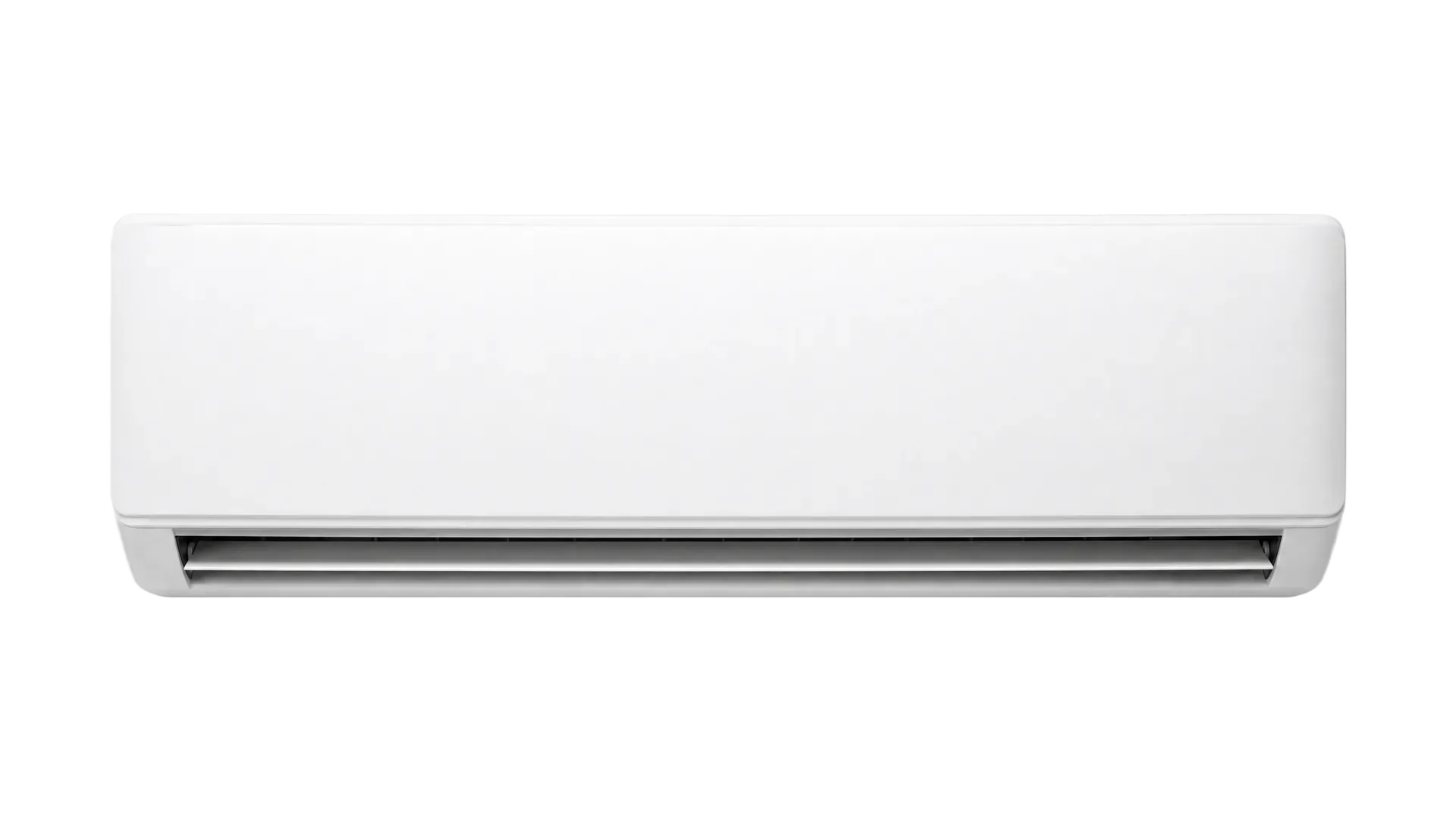
A mini split that won't cool in dry Idaho heat is usually short on refrigerant or choked on airflow. Dry air carries dust, and that dust packs into the indoor unit's filter and the outdoor condenser coils faster than people expect. Once airflow drops, the coil can't pull enough heat out of the air passing over it, and the air coming out feels warm or barely cool even though the unit is running. A low refrigerant charge does the same thing from the other direction, there isn't enough refrigerant moving through the system to carry heat away at all. Idaho summers push these units hard for months at a time, and a system that was cooling fine in June can fall behind by August as coils get dirtier and any small leak gets worse. Either problem needs a contractor to check the charge and clean or clear the airflow path. Running it longer or turning the temperature down lower won't fix either one.


Why the cooling stops
- The indoor unit's fan pulls room air across a cold coil, and a clogged filter starves that coil of airflow.
- A dirty outdoor condenser coil can't shed the heat the refrigerant is carrying, so the whole cycle backs up.
- Low refrigerant shows up as ice on the indoor coil even when the house is hot, not as a dry unit running fine.
- The outdoor unit needs clear space on all sides to pull air through the coil, and dust or debris packed against it blocks that.
- A mini split set to a temperature below what the outdoor unit can handle at peak heat will run constantly without catching up.
- The line set connecting the two units carries both refrigerant lines, and a kink or a slow leak anywhere along it cuts cooling capacity.
The indoor unit is a fan and a cold coil. Room air moves across that coil, gives up its heat, and comes back out cool. Idaho's dry summer air carries fine dust that most climates don't, and that dust loads up the filter fast. Once the filter is packed, less air crosses the coil, and the unit cools less of it no matter how long it runs. Outside, the condenser has the opposite job. It needs to throw off the heat the refrigerant picked up inside, and it does that by pulling outdoor air through its coil. Dust, cottonwood, grass clippings, anything packed against those fins or piled against the cabinet cuts that airflow the same way a dirty filter does indoors, and the unit struggles to let go of heat it already collected. Refrigerant is the part people guess wrong on. A system low on charge doesn't just run weak, it often ices the indoor coil over, so you get a unit that looks fine, sounds fine, and still leaves the house warm. That refrigerant travels between the two units through a line set, and anywhere that line is kinked, crushed, or slowly leaking, the system loses capacity before the air ever reaches your living room. Set the thermostat below what the outdoor unit can manage on the hottest afternoons and it will run nonstop chasing a number it can't hit, which can look like a broken unit when it's really just an undersized target.





Hand off the search today
Fill out one short form instead of calling around.
Send the request today and let a mini split pro reach out to you.
No fee to send it, and nothing to sign.


Power costs 11.83 cents per kilowatt-hour statewide
At that rate, running your mini split hard all summer doesn't punish your bill the way it might elsewhere. So if it's cycling for hours and the room still isn't cooling, the cost isn't telling you something's wrong. The weak airflow or low refrigerant is.
EIA-861 2025 statewide residential average
Idaho's dry air also means dust moves easily, and a mini split's filter and coil are the first things it settles on. A unit running hard through a hot, dry summer builds that layer faster than most people check for.
Once that layer is thick enough, the indoor coil can't pull heat out of the air no matter how long the unit runs. That's a blocked path, not a broken one, and it's why cleaning or repair brings the cooling back fast.



A summer dew point of 42°F is low. That's dry air, the kind that feels manageable even at 95 degrees, which is why a mini split struggling to cool a room here is easy to misread as normal summer heat. Dry air doesn't need much moisture pulled out of it, so a healthy mini split should drop a room's temperature fast and hold it there without running constantly. If yours is running for hours and the room still feels warm, the dryness isn't the problem. The unit is working harder than this air should ever require, which points straight at the airflow or the refrigerant charge. (Source: regional climate averages for Idaho)
NASA POWER T2MDEW county cells weighted by homes

A mini split that isn't cooling needs a look, not a guess
Dry air, a dusty filter, a coil losing refrigerant. Whatever it is, the fix is the same first step: someone has to open the unit and see what's actually going on inside it. The thermostat setting won't tell you, and neither will another night of pointing the vent straight at the couch.
Once you send the form, you're done hunting. No scrolling through reviews, no calling three companies and repeating the same description of what your mini split is and isn't doing, no sitting with quotes trying to guess which one is fair. That part becomes someone else's job, and you get to spend the evening on something other than your cooling problem.


Mini Split Repair
Stop chasing a mini split pro

- Tell a local repair pro what your mini split is doing.
- A local pro who knows mini splits gets your details and gets in touch.

- Once you send the form, finding a pro is off your list.
- After you send the request, you're done searching.

- Skip searching for a mini split pro and answer a few questions instead.
- One form replaces the calls you'd make to find a mini split pro.

- Only one pro gets your request, so you hear from one company.
- Your request stays with one local pro.