
Why your heat pump isn't cooling in Idaho summers
A heat pump that won't cool in Idaho summer usually comes down to the same thing: low refrigerant charge. Dry heat puts a steady load on the system, and if there's a leak, the unit loses capacity fast and the air coming out of the vents goes from cool to lukewarm to nothing. A dirty outdoor coil does the same thing from the other direction, since it can't shed heat fast enough when the air outside is hot and bone dry. Check the outdoor unit. If the fan runs but the coil is caked with dust or cottonwood, that's your answer. If the coil is clean and it's still not cooling, the system is likely low on charge, and that means a leak somewhere that needs to be found and sealed, not just topped off. Either way, the fix is a repair, not a new thermostat setting.




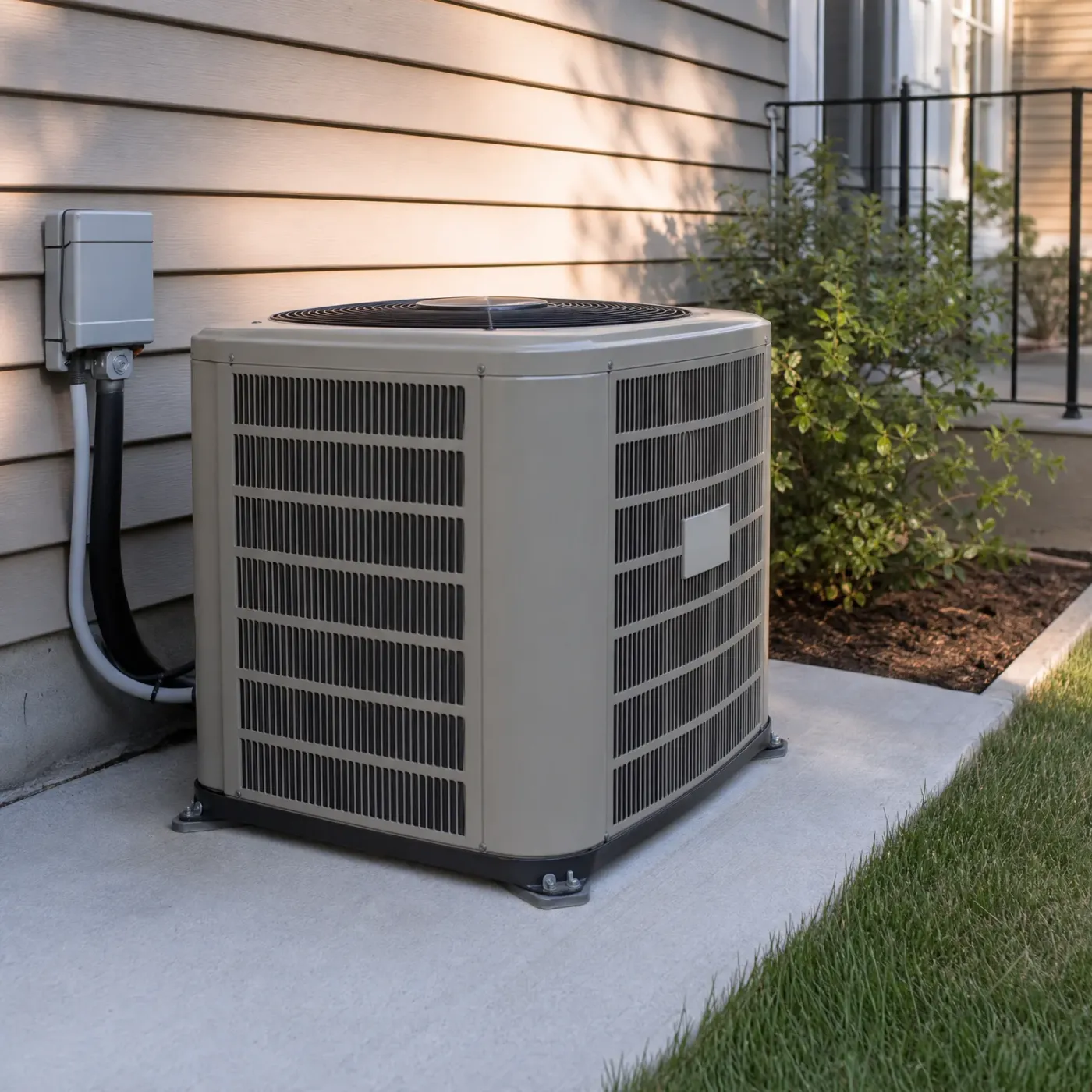
In summer your heat pump runs backward from how it heats in winter. It pulls heat out of the house and pushes it outside through the outdoor unit, and a part called the reversing valve is what tells the system which direction to run. When that valve sticks in heating mode, you get warm air blowing no matter how low you set the thermostat. Idaho's dry heat adds its own problem. The outdoor coil has to dump heat into the outside air, and once it's 95 degrees or hotter out there, the coil has a much smaller gap to push that heat across. A system low on refrigerant still runs, but it moves less heat with every cycle, so the air coming out of the vents gets weaker well before anything shuts down. A dirty outdoor coil makes the same problem worse, since it can't release heat as fast as the compressor is producing it. And if the indoor coil ices over from low airflow or low charge, the unit can run all day and never bring the house down to temperature.
How a Heat Pump Cools
- A heat pump cools by pulling heat out of your house and dumping it outside, the opposite of what it does in winter.
- A reversing valve switches the flow of refrigerant between summer and winter mode, and a valve stuck in heating mode will blow warm air even in July.
- The outdoor unit has to shed heat into the air, so when it's 95 degrees or more outside, the coil has less of a temperature gap to work with.
- Low refrigerant charge means the system is still running but moving less heat per cycle, which shows up as weak cooling long before the unit stops altogether.
- A dirty outdoor coil can't release heat as fast as the compressor produces it, so the system works harder and cools less.
- If the indoor coil ices over from low airflow or low charge, the unit may run constantly and still never bring the house down to temperature.



It's past eleven and you're still on top of the sheets, not under them. The window unit in the hallway hums but the vent above the bed is barely moving air, and what comes out isn't cold. Outside, the valley air is dry enough that you can see the fuzz of dust still hanging over the driveway, lit by the neighbor's porch light. You've turned the thermostat down to 68 twice now. The number on the display hasn't moved in an hour. Your phone is at 40 percent on the nightstand, and you've already decided you're not spending tomorrow calling around to find out who can come look at this.
It's off your list after this

Fill out one short form instead of calling around.
It costs nothing to send, and you don't have to hire anyone.
In Idaho's dry heat, a heat pump already runs closer to its limit than it would in a humid climate, so it has less room to absorb a drop in refrigerant before it stops cooling.
That's why a leak that would just dent performance somewhere humid can knock a system here from cold air to room-temperature air in a matter of days.
Power costs 11.83 cents per kilowatt-hour statewide
At eleven and a half cents a kilowatt-hour, running your heat pump hard doesn't hit your wallet the way it might elsewhere. That's good news, but it also means a struggling unit won't announce itself through the power bill. If it's not cooling, the fix is the system, not the cost of running it.
EIA-861 2025 statewide residential average
Keep running it as is
You can leave the thermostat where it is and let the heat pump keep trying. It won't shut itself off from a low charge or a stuck reversing valve. It'll keep drawing power at that cheap eleven and a half cents a kilowatt-hour, keep blowing air that's warm or barely cool, and keep losing whatever capacity it has left as the summer goes on. The house stays hot through the afternoons and doesn't cool down much overnight either, since dry air gives it less help than humid air would. Nothing gets worse on its own in an hour, but nothing gets better either, and a refrigerant leak doesn't seal itself up.
Get a contractor out this week
A technician can gauge the refrigerant charge, check the reversing valve, and look at the coil in under an hour, and most of what's wrong with a heat pump in summer shows up in that first look. Instead of calling around to find someone free, checking licenses, and explaining the same symptoms to three different shops, you send one form and the search is off your plate. You still wait on the repair itself, same as anyone would, but you're not the one tracking down who can do it. That part is done once you hit send.


What's Actually Going On
- A heat pump blowing warm air in an Idaho summer almost always traces back to low refrigerant charge or a reversing valve stuck in heating mode.
- Dry heat already pushes the system close to its limit, so a leak that would barely dent performance elsewhere here can stop cooling outright.
- Dirty coils or blocked airflow around the outdoor unit make the same low-charge problem worse by giving heat nowhere to go.
- Cheap power at eleven and a half cents a kilowatt-hour means a struggling unit keeps running without showing up on the bill, so the thermostat setting won't tell you what's wrong.
- None of these problems clear up on their own, and the unit won't shut itself off to protect you from the cost of running it broken.
- Diagnosing the actual cause means a licensed contractor checking refrigerant charge, the reversing valve, and the coils in person.
A heat pump that stops cooling in an Idaho summer is telling you something specific, not just that it's old or overworked. The refrigerant charge is low, or the reversing valve is stuck in heating mode, or the coils are too dirty to shed heat, or some combination of the three. Dry heat means the system had little room to spare before any of this started, which is why the air can go from cool to warm faster than you'd expect. None of that fixes itself. The unit will keep running, keep drawing power at eleven and a half cents a kilowatt-hour, and keep blowing air that isn't cold, because nothing about a low charge or a stuck valve makes it shut off. The only way to know which of these is actually happening in your system is to have someone check the charge, test the valve, and look at the coils directly.
That's usually where this stalls out for people. You'd be looking up contractors, calling a few, explaining the same symptoms each time, then trying to compare quotes from people you've never worked with, all while the house stays hot. Sending the form here skips that part. You're not left searching on your own or repeating yourself to every contractor you call. Someone licensed to actually diagnose and fix an Idaho heat pump gets your situation once, and the finding-help part of this stops being something you have to manage.
Hand off the search today
Explain the job once and skip repeating it on every call.
No charge to send it. You decide if you hire them.