Why your heat pump won't turn on in Idaho

Tell a local repair pro what your heat pump is doing.

RepairHeat PumpIdaho
Step 1 of 2

What ZIP code is the job in?

Why won't my heat pump turn on?

A heat pump that won't turn on in the middle of a hot Idaho summer is no small thing, especially with gas heat as the backup most of the year and the heat pump carrying the cooling load on its own. You check the thermostat, flip the breaker, and nothing changes. Before calling anyone, it helps to know what actually stops a heat pump from starting in the first place.

Usually a tripped breaker, a bad capacitor, or a thermostat not calling for cool

Most of the time it's one of three things. The breaker or a disconnect switch near the outdoor unit has tripped and cut power to it. The capacitor that gets the compressor and fan motor started has failed, which is common on units that run hard through a hot, dry Idaho summer. Or the thermostat itself isn't sending the signal, whether that's a dead battery, a wiring issue, or a setting that's off. Since power here is cheap, a lot of homes run the heat pump for cooling for months straight, and that steady runtime is exactly what wears out a capacitor or strains a motor over time. A unit that's otherwise fine can simply have one failed part keeping it from starting.

A gray outdoor condenser unit on a concrete pad beside a light-green sided house, surrounded by mulch, ornamental grasses and a shrub, with mowed lawn in the foreground.

Running the way it should

The outdoor unit hums along, fan turning, air moving across the coil. A well-kept yard around it means nothing is blocking airflow, and the disconnect box nearby is doing its job sitting quiet. This is what keeps your house cool through an Idaho summer without a fuss.

An outdoor condenser unit on a concrete pad beside a horizontal-sided house, with insulated refrigerant lines running to a wall-mounted box, surrounded by bare dirt.

Showing its age

Weathering on the cabinet, a conduit running stiff into the disconnect box. A unit like this has had years to develop a bad capacitor, worn contactor, or a connection gone loose. When it won't start, this is usually where a local tech starts looking first.

Check It Yourself or Call It In

Call a contractor now

  • A dead unit in July heat means the cooling load has nowhere else to go since gas only covers winter.
  • A licensed tech who works on heat pumps all season knows whether a tripped breaker, a bad capacitor, or a control board is the likely cause before opening the panel.
  • Idaho's dry heat puts real strain on the outdoor unit's fan motor and compressor, and a no-start can point to either one.
  • One local contractor gets matched to your situation, so you're not fielding calls from five companies trying to win the job.
  • Waiting through a few more 100-degree afternoons risks the compressor if the problem is electrical and it's cycling partially.

Try a few checks first

  • Confirm the thermostat is set to cool and the temperature is actually below room temperature, not just close to it.
  • Check the breaker panel for the outdoor unit since a tripped breaker is the simplest reason a heat pump won't start.
  • Look at the disconnect box next to the outdoor unit and make sure the pull-out block is seated all the way in.
  • Replace the thermostat batteries if it uses them, since a dead thermostat display can look like a dead system.
  • If the outdoor fan is spinning but no cold air comes through the vents, that's a different problem than a unit that's fully silent, and worth noting before anyone comes out.
A gray-haired bearded man in a dark knit sweater sits on a light gray sofa in a sunlit living room, looking to his left, with a framed artwork, a potted palm, and a curtained glass door behind him.
A middle-aged man in a dark green sweater sits on a light grey sofa looking toward a sunlit window, with a wooden shelving unit, lamp and potted plants in the background.
A man in a dark green sweater sits on a light grey sofa in a sunlit living room, looking to his left, with a shelving unit, houseplants, framed art and a large window behind him.
A gray-haired bearded man in a dark green sweater sits on a light gray sofa in a sunlit living room with a potted plant, framed picture, and dark shelving in the background.
A woman in a long cream cardigan and jeans stands at an open wooden front door of a gray shingled house with stone-based porch columns, with a second person visible inside, and potted flowers and shrubs beside the entry.

What a dead heat pump means for your house

With gas carrying your heat most of the year, the heat pump only has one job through an Idaho summer, and that's keeping the house cool when it's hot and dry outside. When it won't turn on, there's nothing else picking up that load. The house starts warming up room by room, and it keeps going until the unit runs again.

A heat pump that stops working outright usually traces back to one of a short list of things: a tripped breaker, a failed capacitor, a bad control board, or a thermostat that isn't sending the signal it should. Guessing at which one wastes a day you don't have in July. A contractor who works on heat pumps all season in this area has likely seen your exact symptom before and knows where to look first. Getting matched with one means someone local looks at your unit specifically, not a rotation of different companies calling about the same job.

A large weathered ceramic vase and a shallow wooden bowl sit on a rustic wooden table beside a window with linen curtains, with a blurred sofa with cushions and a hanging fabric panel in the background.
A gray outdoor heat pump unit on a concrete pad beside a house with horizontal lap siding, connected by conduit and a flexible line to a wall-mounted disconnect box, with low shrubs and mulch nearby.

The unit on a clean pad

This is a heat pump set up right. The pad is level, the shrubs around it are trimmed back, and the disconnect box on the wall is within easy reach. Nothing here blocks airflow or hides a problem from view.

An outdoor air conditioner condenser unit on a concrete pad beside a house with horizontal siding above a concrete block foundation, with insulated refrigerant lines and a vertical white pipe on the wall.

The unit showing its age

Weathering like this on the cabinet doesn't stop a heat pump from running, but it's worth a second look alongside whatever symptom brought you here. Lines running along a cinder block foundation can pick up wear over the years that's easy to miss from a few feet away.

What are you noticing right now in your house

The thermostat might show a set temperature well below the actual room temperature and nothing changes. You press buttons and hear no click, no fan, no hum from outside. Maybe the outdoor unit was running fine yesterday and this morning it's silent. Rooms farthest from the thermostat heat up first, and by afternoon the whole house is holding the heat from outside with no way to push it back out. Dry summer air means that heat builds fast once the cooling stops, and a house that sits closed up all day can climb several degrees by evening. Left alone through a hot stretch, that's uncomfortable for anyone home, and harder on anyone who doesn't do well in the heat.

An outdoor condenser unit beside a horizontally sided house, encased in thick ice with hanging icicles, on a snow-dusted ground at sunset with bare trees in the background.

Dawn comes up gray in the side yard, and the outdoor unit sits under a shell of ice, thick across the coil and down over the fan blades. It's January, the heat pump's quiet season since gas is doing the work of keeping the house warm, but it still should have cycled into defrost on its own hours ago. It didn't. Frost has crept up the refrigerant lines and across the top panel. Nothing moves, no fan turning, no hum. By the time you're out there in your coat looking at it, it's already a job for someone who knows what froze it and why, a licensed tech who works on these year-round and can look at this exact unit before the ice does more damage underneath.


The right pro for this job

A heat pump that won't start is a different problem to run down than one that clicks on and does nothing. It could be a tripped breaker, a failed capacitor, a control board that's lost its signal, or a disconnect that got bumped and left half engaged. Some of those a homeowner can check in five minutes. Others need a meter and a reason to look where you wouldn't think to. In July, with gas not covering the house at all until fall, guessing wrong costs you hours in a hot house while the actual fix sits untouched. A local contractor who works on heat pumps through every Idaho summer has seen most of what fails on this equipment and in what order to check it. One request goes to one licensed tech in your area, not a handful of companies competing for the job, so the person who calls you back is the one who'll actually come look at it.

How the Startup Sequence Works

  • A heat pump needs 24-volt control power from the thermostat wire before the contactor in the outdoor unit will ever pull in.
  • The contactor is the small switch that closes to send line voltage to the compressor and fan, and a pitted or stuck one kills power before the unit ever starts.
  • A run capacitor stores the charge that kicks the compressor and fan motor into motion, and a weak one leaves the unit humming or silent.
  • Many outdoor units have a low-pressure or high-pressure safety switch that locks out the compressor if the refrigerant charge is off.
  • The reversing valve solenoid tells the system whether to run in cooling or heating mode, and a failure there can stop the call from reaching the compressor at all.
  • Inside the house, a float switch on the air handler's drain pan can cut power to the whole system the moment condensate backs up.

A heat pump starting up is really a chain of small handoffs, and any broken link stops the whole thing cold. It starts at the thermostat, which sends a low-voltage signal down the control wire to the outdoor unit. That signal has to reach the contactor before anything else happens. The contactor is a small switch, and when it closes, it sends full line voltage to the compressor and the fan motor at once. If the contacts inside are pitted or the switch is stuck open, the unit gets no power no matter what the thermostat says. Once the contactor closes, the compressor and fan need a jolt to get spinning, and that jolt comes from the run capacitor. A weak capacitor can leave you with a unit that hums but never starts, or one that does nothing at all. Past that point, safety switches come into play. Most outdoor units have a low-pressure or high-pressure switch that will lock out the compressor if the refrigerant charge isn't right, and the reversing valve solenoid has to set the system to cooling mode before the compressor call goes through. Even the air handler inside your house can stop the sequence. If the drain pan under it fills up, a float switch there cuts power to protect against an overflow, and the whole system shuts down until that water clears.

A gray outdoor heat pump unit on a concrete pad beside a house with horizontal lap siding, with a conduit running to a wall-mounted disconnect box and a green shrub to the left.
The pad is clean, the shrub is trimmed back, and the conduit runs straight to a disconnect box that's easy to reach.
An outdoor air conditioning condenser unit with dusty coils sits on a concrete pad against light horizontal siding, with an electrical disconnect box and refrigerant lines on the wall and a shrub and mulch at left.
Years of dirt and old growth around the base make it harder to spot the loose wire or tripped switch underneath.
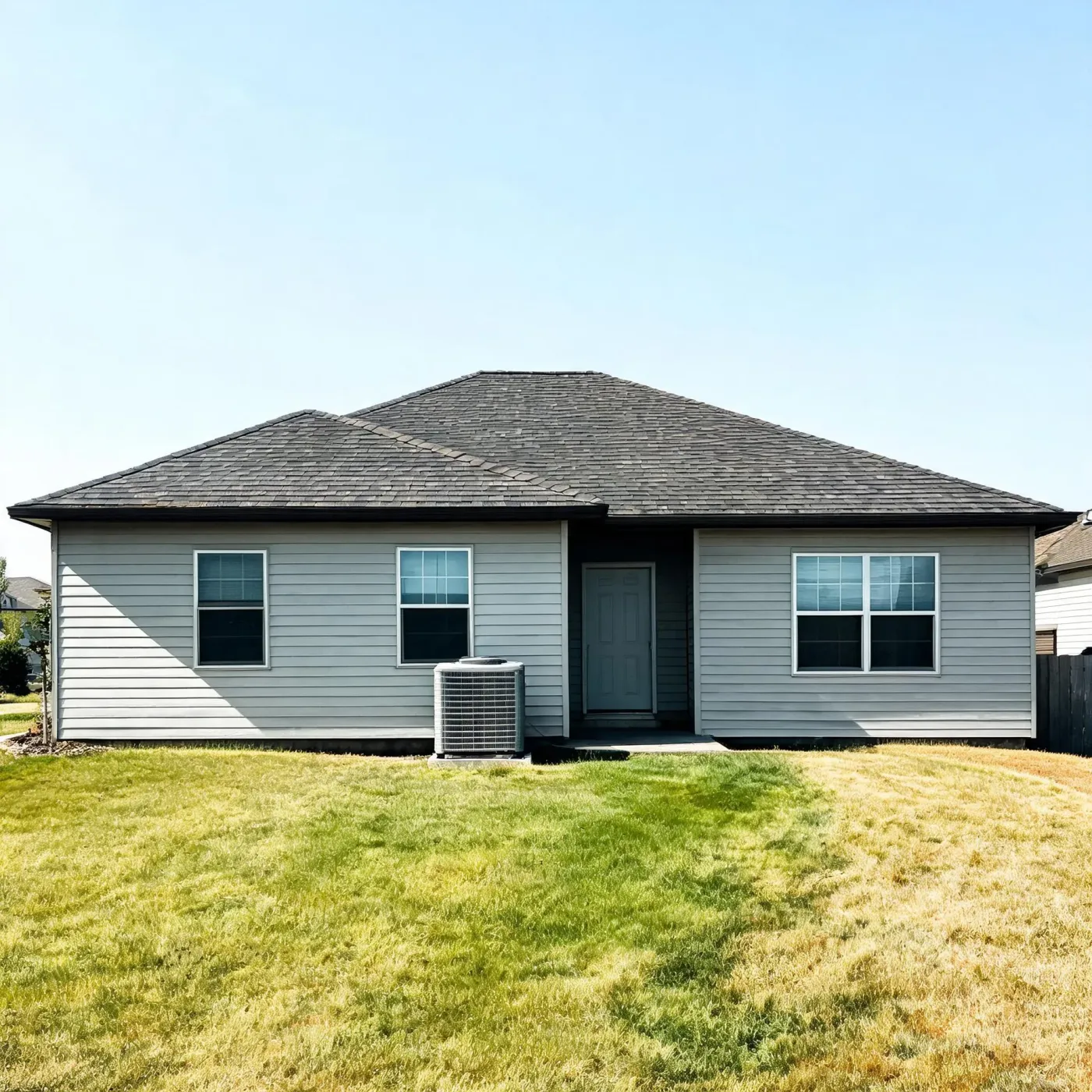
Rear view of a single-story gray vinyl-sided house with a dark shingled hip roof, three windows, a center door, an outdoor air conditioning unit, and a patchy green and brown lawn under a clear sky.

Idaho summers run dry, and that's the whole point of a heat pump here. Averaged across June, July and August, the dew point sits around 42°F, figures from NOAA climate data. That's dry air, the kind that cools fast once a system is actually moving it. It also means your heat pump isn't fighting humidity the way one would in a wetter state, so when it's working right, a short run gets the house comfortable. That's exactly why a unit that won't turn on feels so wrong so fast. There's no humidity buffering the heat, nothing softening the gap between inside and outside, just hot dry air building up in a house with no cooling at all.

NASA POWER T2MDEW county cells weighted by homes

A woman with shoulder-length dark brown hair in a cream knit cardigan sits in an upholstered armchair beside a window, looking off to the side, with a white bookshelf and potted plant blurred behind her.
A woman and a child wrapped together in a thick knitted blanket on a sofa, both with eyes closed, with a lit table lamp and houseplant in the dim background.

Power costs 11.83 cents per kilowatt-hour statewide

At 11.83 cents a kilowatt-hour, running the heat pump to cool your house all summer doesn't carry a steep price. That's worth knowing when a repair comes up, since getting it fixed and back on duty matters more here than finding a cheaper way to cool the place down.

EIA-861 2025 statewide residential average

  1. Thermostat sends a 24-volt signal to the outdoor unit

  2. That signal pulls in the contactor inside the outdoor unit

  3. The contactor closes and sends full power to the compressor and fan

  4. The compressor starts and the fan spins to move air across the coil

A heat pump that won't turn on comes down to a short list of things: a tripped breaker, a failed capacitor, a stuck contactor, a control board not getting its signal. Finding which one it is takes someone who opens up the outdoor unit and checks each in order, not a guess. A contractor who works on heat pumps all summer in Idaho has seen these same failures enough times to know where to look first, and because you're matched with one licensed local contractor instead of several, you're dealing with a single tech who takes the time to get it right, not a string of calls competing for the job. Cheap power here means running the unit isn't the worry. The worry is a house with no cooling while the heat pump sits dead in the middle of a hot, dry summer with nowhere else for that load to go. Getting it diagnosed and fixed is what gets the air moving across that coil again.

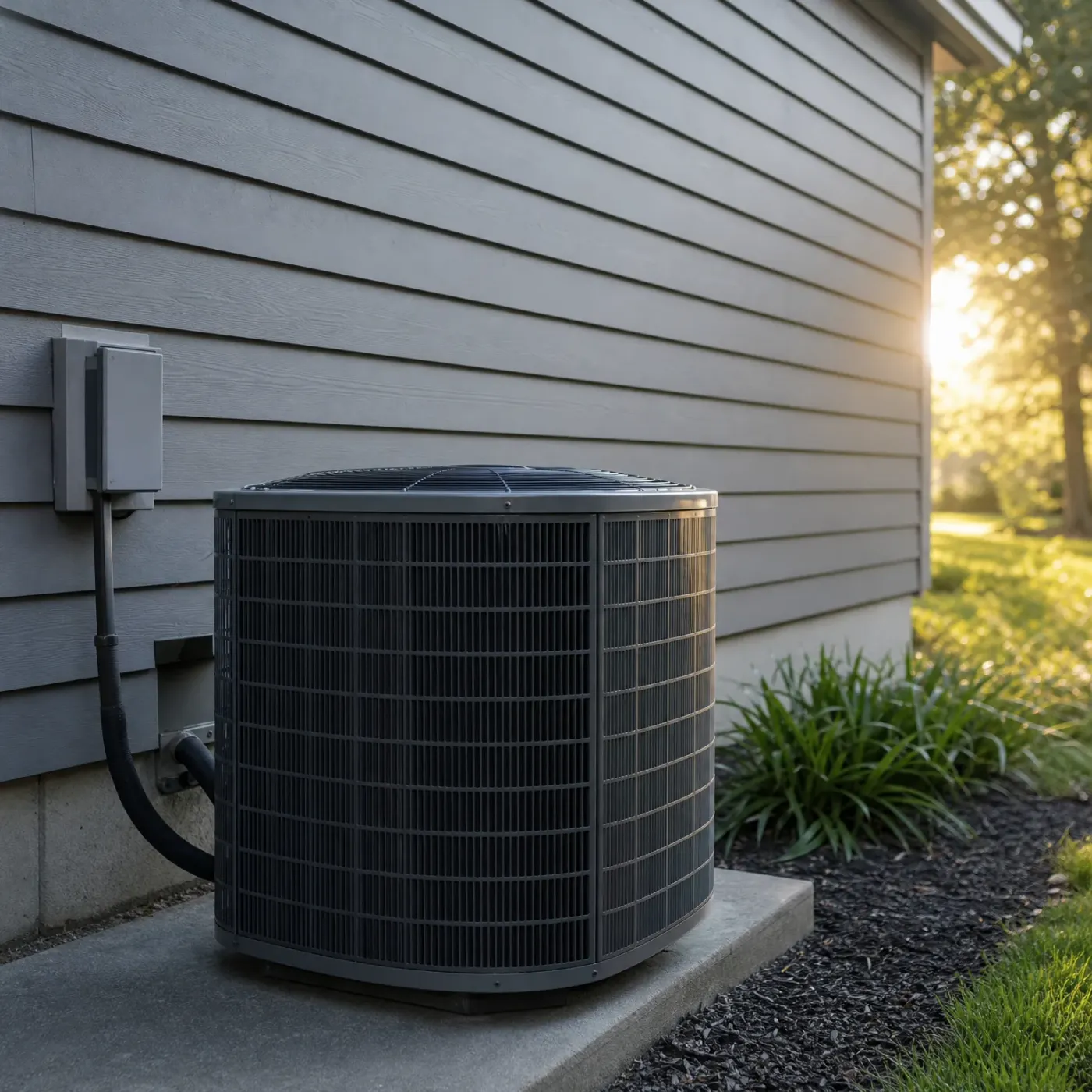
An outdoor air conditioner condenser unit on a concrete pad beside a gray horizontal-lap-sided house, with an electrical disconnect box and refrigerant line on the wall, grass, shrubs and a tree with low sun behind.

Matched to your heat pump job

Find a local pro

The pro who reaches out is licensed in Idaho.

It costs nothing to send, and you don't have to hire anyone.