Dry heat, hard-working compressor
Idaho's dry summer heat pushes the compressor to run long stretches in the afternoon, and that steady draw is what trips a breaker that's already marginal.

A thermostat set low won't start a system that has no power getting to it, and that's the most common reason an AC stays dead in Idaho's heat. Check the breaker first. A compressor working hard against 90-plus degree afternoons draws enough current to trip a weak breaker, especially if the outdoor unit is older. If the breaker holds, the problem is likely a failed capacitor or a bad contactor, parts that wear out from the exact kind of daily cycling a hot, dry summer here demands. Sometimes it's simpler: a clogged filter can make the system shut itself off to protect against freezing coils. None of these are things to diagnose by guessing. A unit that won't turn on at all, rather than one that runs poorly, usually points to an electrical fault, and that's worth getting a contractor to look at before you try restarting it again.




Idaho's dry summer heat pushes the compressor to run long stretches in the afternoon, and that steady draw is what trips a breaker that's already marginal.
No calling around, no re-explaining the problem to every contractor you reach. Get matched with one who handles AC repair in your area and let them call you.
Idaho's dry heat climbs fast once the sun's up, and a house that won't cool down by afternoon stays that way until something changes. The air gets still and heavy indoors, worse than outside because there's no breeze through the windows. Food in the fridge is fine, but a house holding 85 degrees at 4 p.m. with no system running is a long, uncomfortable stretch to sit through, especially for anyone older or sensitive to heat.
If the breaker keeps tripping instead of holding, that's not something to keep resetting and hoping it sticks. Each trip means the compressor tried to start and couldn't finish, and doing that over and over wears on the motor and the wiring behind the panel. A breaker that trips once might be a fluke. One that trips every afternoon this week is telling you the system is struggling against something, and it won't fix itself when the weather cools for a day.
At 11.83 cents a kilowatt-hour, running your AC hard through a 95-degree afternoon doesn't punish your bill the way it would in a lot of other states. That's worth knowing before you start skipping repairs to save money. A tripped breaker or a dead capacitor costs you comfort, not cheap power.
EIA-861 2025 statewide residential average

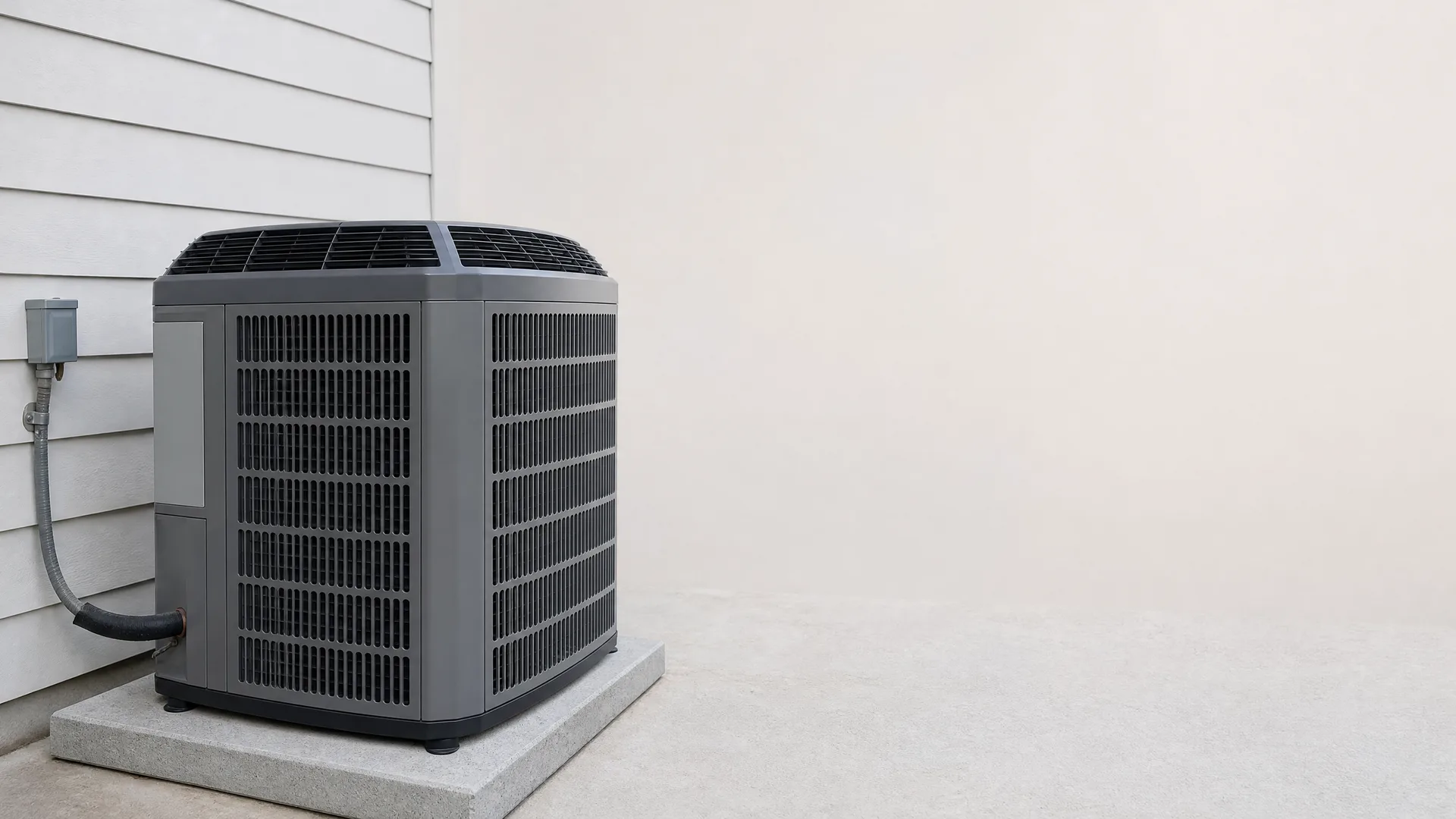
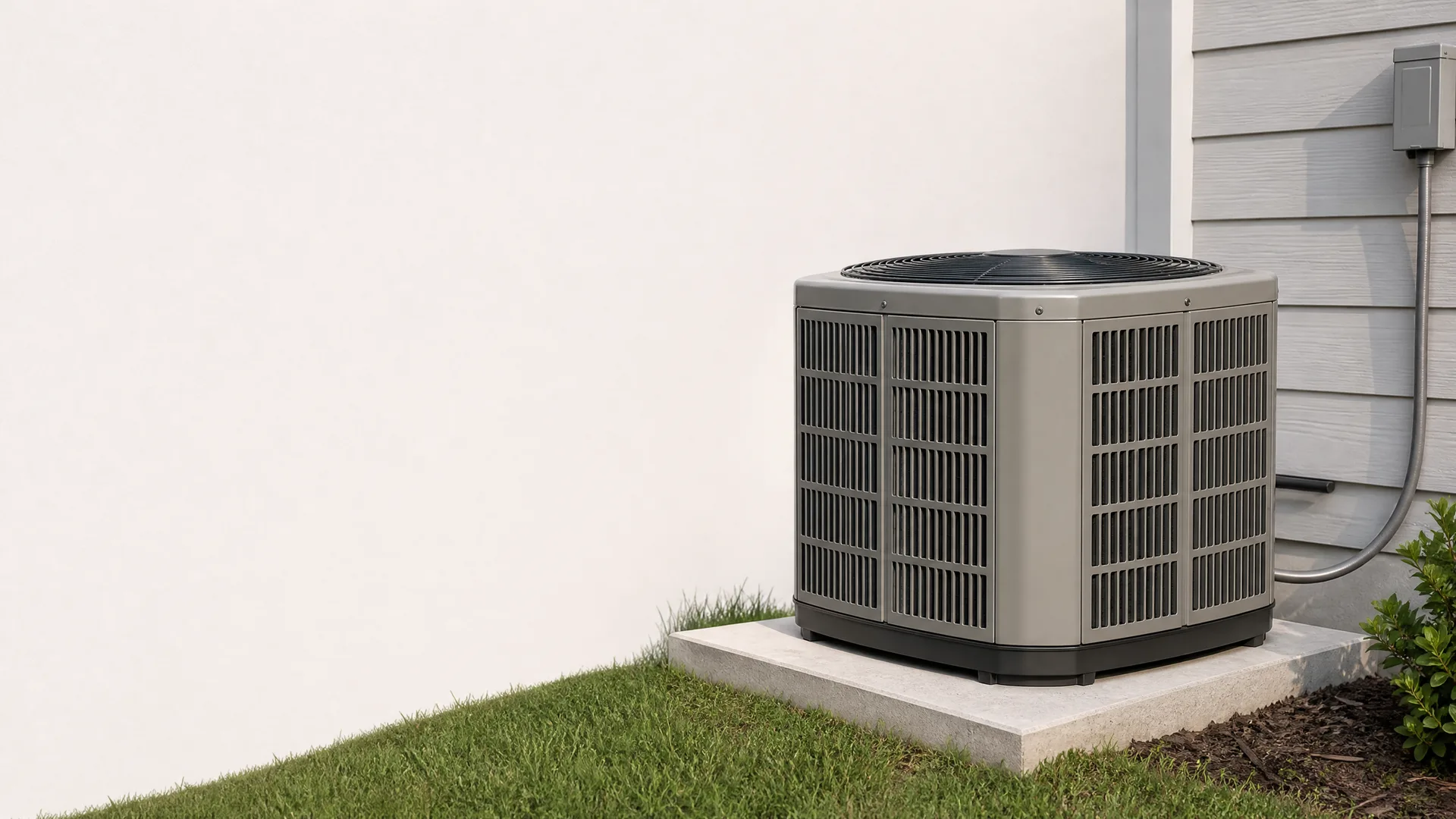
This is a system drawing power and cycling on when the thermostat calls for it. The pad is clean, the fins aren't caked with dust, and the lines running into the wall are doing their job. Nothing here is forcing the compressor to work harder than the afternoon already does.

Years of dust built up on the fins choke off airflow across the coil, and a unit that's run that way long enough starts drawing more current to do the same job. That's the kind of wear that ends in a tripped breaker or a compressor that won't start at all.


Answer a few questions instead of calling shop after shop.
No charge to send it. You decide if you hire them.

This condenser sits on its pad with the fins open and the grass trimmed back. Air moves through it the way it was built to. Nothing around it is blocking the airflow the compressor depends on to shed heat on a 95-degree afternoon.

Dirt and debris cover the coil fins and the cage around them. A unit working this hard to pull air through caked grime draws more current than it should, and that's another way to land on a tripped breaker in Idaho's dry heat.

A capacitor is a small cylinder bolted near the compressor, and its job is to give the motor a hard push when it starts. A weak one still lets the outdoor fan spin, but the compressor hums and never kicks in. You'll hear that hum through the wall, then it stops, then it tries again a minute later. That's the system protecting itself, not fixing itself. A contactor can fail the same way, by sticking or pitting until it won't close the circuit even when the thermostat is calling.
None of this is something to diagnose by ear from the patio. A contractor who works on the make and size of unit you have can tell in a few minutes whether it's the capacitor, the contactor, or something further down the line, and reach out once they know your situation instead of you having to describe the hum, the breaker, and the age of the unit to three different companies before one of them can even schedule a look.

Thermostat calls for cooling and sends power to the contactor.
The contactor closes and sends power out to the compressor and fan.
A weak capacitor can't give the compressor's motor the push it needs to start.
Without that push, the outdoor fan may spin but the compressor stays silent.


An AC that won't start in Idaho's dry heat usually comes down to one of three things. The breaker trips because the compressor is drawing hard against a 95-degree afternoon. The capacitor is too weak to give the compressor's motor the push it needs, even though the fan still spins. Or the condenser is caked with dust or hemmed in by grass, and the whole system is working harder than it should to shed heat. Each one looks different once you know what to check. A breaker that resets clean points away from wiring and toward the compressor's load. A fan spinning with no compressor hum points straight at the capacitor. A unit running hot to the touch with poor airflow around it points at the condenser itself.
Telling these apart means someone standing at the panel, then at the unit, checking one thing at a time. That's not a guess you make from the thermostat inside the house. It's why homeowners who deal with small problems before they turn into bigger ones don't sit on a dead AC through a hot stretch.
What ends once you're matched with a contractor is the part that has nothing to do with the repair itself: calling around to find someone who'll answer, explaining the same symptoms to a second and third contractor after the first one doesn't pan out, sorting through quotes that don't line up because nobody looked at the same thing. You're matched with someone who already knows what a tripped breaker, a weak capacitor, and a blocked condenser each look like, and the finding-help part is done.





Describe your air conditioner job once, to one pro.
There's no charge for the request.