Why your AC keeps tripping the breaker in Idaho

RepairCentral ACIdaho
Step 1 of 2

What ZIP code is the job in?

Why does my AC keep tripping the breaker?

It's the middle of summer, the AC shuts off, and when you go check the panel, that breaker has flipped again. Resetting it works for a while, then it happens again, usually on the hottest part of the afternoon when you need the thing running most. You want to know what's actually wrong before it becomes a bigger repair, or before it quits for good during a 95 degree stretch.

Your AC is pulling more current than it should

A breaker trips to protect the wiring, not the air conditioner. Something inside the unit is forcing the compressor or the fan motor to draw more power than the circuit is rated for. A dirty condenser coil outside makes the compressor work harder to move heat, since it can't dump heat into the air the way it should. A weak capacitor can't give the compressor the jolt it needs to start, so it strains and pulls extra current every time it tries. A failing compressor does the same thing as it wears out. With Idaho summers running hot and dry for months, outdoor units work close to their limit most afternoons, and a system that's already struggling has less room before it trips. It won't fix itself, and running it on a reset breaker risks the compressor.

A dimly lit living room with a black pedestal fan on a wood floor beside a gray sofa with a patterned pillow, a wooden coffee table in the foreground, potted plants at left, and a curtained window with blinds behind.

By two in the afternoon the sun is flat against the blinds and you've already pulled them shut, the way you do most July days here. The floor fan is running next to the couch, turning on its base, doing what it can. Then the hum from the hallway vents cuts out. You know before you check that it's the breaker again. You walk to the panel in the garage, feel the heat coming off the wall, and flip it back. The house stays quiet a minute, waiting to see if it holds. Outside, the compressor ticks as it tries to start again on the hottest stretch of the day.


Reset It Again, or Find the Cause

Keep Resetting It

  • The breaker is doing its job by cutting power before a bad part pulls more current than the wiring can handle.
  • Resetting it gets you cool air again for a while, but it doesn't tell you whether the compressor or the capacitor is the reason it tripped.
  • Each time it trips under load, the motor that caused it takes another hit, and a weak start can turn into one that won't start at all.
  • On a 100 degree afternoon the unit runs longest and hardest, which is exactly when a failing part is most likely to pull too much power.
  • If the panel itself is warm to the touch or the breaker trips the instant you flip it back, that's a wiring issue, not just the AC.

Get It Looked At

  • A licensed contractor who works on AC units in Idaho all summer can test the compressor, capacitor and wiring to find which one is pulling the extra current.
  • Finding the actual part that's failing stops the guessing and the repeated trips to the breaker panel.
  • A local contractor already knows what tends to fail on units running through a dry Idaho summer, which narrows down the diagnosis faster.
  • One contractor means one visit and one diagnosis, not several companies calling about the same job.
  • Fixing the part that's overloading the circuit protects the rest of the system from damage the repeated trips are causing.
  1. The compressor draws a hard surge of current to start

  2. A weak capacitor forces the motor to pull even more

  3. That extra draw pushes current past the breaker's rated limit

  4. The breaker trips to stop the wiring from overheating

An outdoor air conditioner condenser unit on a concrete pad beside a house with beige horizontal siding and a stone-veneer base, with refrigerant lines running to a gray wall-mounted electrical box, surrounded by dark mulch, a flowering shrub and an evergreen on the left.
An AC like this starts, cools the house, and the breaker holds through the hottest part of the day without complaint.
An outdoor air conditioning condenser unit on a concrete pad beside a house with light vinyl siding, an electrical disconnect box and conduit on the wall, bare shrubs and mulch to the right, and a concrete walkway in the foreground.
A unit tripping the breaker over and over is losing a part's fight against the current, and a local contractor who works on these every summer knows which one.

The outdoor unit has two things sharing one breaker, the compressor and the fan, and either one can be the reason it trips. Timing tells you something. If the AC holds up fine in the morning and trips once the afternoon heat sets in, a part is struggling under load, not a wire. If it trips the second the unit kicks on, that's usually the hard start, the capacitor that's supposed to give the compressor its initial push and isn't doing the job anymore. Low refrigerant does something similar from a different angle. The compressor has to work longer and harder to cool the same house, and that extra effort pulls more amps than the circuit is built for. A coil caked with dust outside does the same thing by making it harder for the unit to shed heat. None of these show up by looking at the breaker itself. A new breaker will hold for a while, maybe longer than you'd expect, but the part driving the extra draw is still there, and it trips again once it's worked hard enough.

What's Actually Pulling That Current

  • The outdoor unit's compressor and fan share the same breaker, so a short in either one trips it just as fast as a bad start capacitor does.
  • A breaker that holds on a cool morning and trips by mid afternoon points to a part failing under heat and load, not a wiring fault.
  • Refrigerant running low makes the compressor work harder to hit the same cooling, and that extra strain shows up as extra amps at the panel.
  • A dirty condenser coil outside makes the compressor run hotter and pull more current to move the same heat off the refrigerant.
  • If the breaker trips the instant the unit starts rather than minutes in, the problem is almost always the hard start, not something that builds up with runtime.
  • Swapping in a new breaker without finding which part is overdrawing current just buys a little more time before the same trip happens again.
A man with grey hair and stubble in a dark sweater sits on a grey sofa indoors, looking off to the side, with a potted plant and a sunlit window behind him.
A man with gray hair, a beard and glasses, wearing a dark green sweater, sits on a gray sofa in a sunlit living room with a potted plant, table lamp and wooden sideboard behind him.
A middle-aged man with graying hair and a short beard sits on a blue sofa in a living room, looking toward a window, with a bookshelf, lamp and framed picture in the background.
A man with graying curly hair and a dark green sweater sits on a gray sofa in a sunlit living room, looking off to the side, with a framed picture, shelving, an armchair and a window with sheer curtains behind him.
A gray outdoor air conditioning condenser unit on a concrete pad beside a house with horizontal vinyl siding, with mulch, a shrub, and lawn nearby.

Finding a pro stops being your job

Your request goes to one pro, not a list of companies.

Send it once and finding someone is no longer on you.

I'm done searching

No charge to send it. You decide if you hire them.

An outdoor air conditioner condenser unit on a concrete pad beside a house with light horizontal lap siding, with an electrical disconnect box and conduit on the wall behind it.
Before you get your air conditioner repair
An outdoor air conditioning condenser unit on a concrete pad beside a house with white horizontal lap siding, with an electrical disconnect box and insulated refrigerant line on the wall and a shrub over mulch to the right.
After you get your air conditioner repair
A gray outdoor air conditioner condenser unit on a concrete pad beside a house with white horizontal siding and a brick foundation, with a wall-mounted disconnect box and conduit, and a green shrub with mulch at left.

Running clean

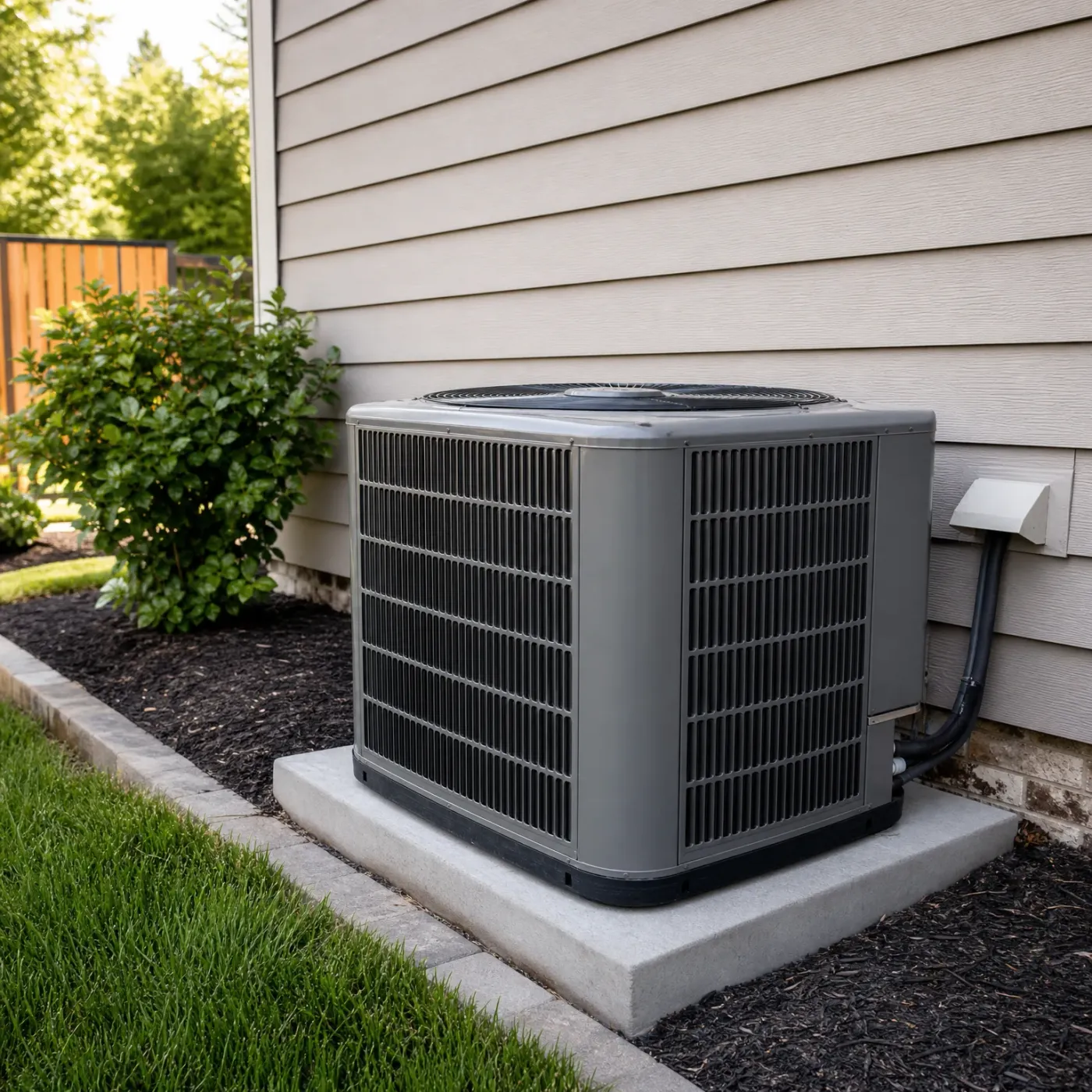
This is what a healthy unit looks like outside your house: clear grille, steady hum, the breaker holding all afternoon. Air moves through it the way it's supposed to, and the compressor starts without pulling more than the panel can handle.

An outdoor air conditioning condenser unit on a concrete pad beside a house with white horizontal vinyl siding, with a gray electrical disconnect box and refrigerant lines on the wall behind it.

Working against itself

Dirt packed into the grille and top cover blocks the airflow this unit needs to shed heat. The compressor runs hotter and pulls harder to keep up, and that extra draw is often what's sending the breaker past its limit.

What are you noticing in your own house

You've probably stopped being surprised by it. The air shuts off, the house starts warming up fast because it's dry heat and the sun is doing real work on the windows, and you walk to the panel knowing which breaker it's going to be. Maybe you hear a click or a hum from outside right before it trips, or the unit sounds like it's straining before it quits. Each reset buys you less time than the last one. Left alone, a breaker tripping from a failing part doesn't fix itself, and running it this way stresses the compressor further, which is the most expensive part of the whole system to replace.

An outdoor air conditioner condenser unit on a concrete pad beside a house wall, with a gray electrical disconnect box and conduit above it and grass in the foreground.

Why afternoon heat matters most

A capacitor loses strength as it gets hot, and the outdoor unit sits in direct sun all day. In the morning it might still kick the compressor over fine. By three or four in the afternoon, with the metal cabinet baking and the refrigerant pressure up, that same weak capacitor can't give the motor the push it needs. The motor pulls harder to start, the draw climbs past what the breaker allows, and it trips.

A gray outdoor air conditioner condenser unit on a concrete pad beside a house with horizontal lap siding, surrounded by white gravel and a lawn, with a white wall at left.

What a contractor checks first

A licensed contractor working on your unit will test the capacitor's output against what it's rated for, not just look at it. A capacitor can read weak on a meter well before it fails outright, and a reading like that explains a breaker that holds some days and trips on others. They'll also check the wiring at the disconnect box and the compressor's amp draw while it's running, since a short in either one trips the same breaker a bad capacitor does.

Power costs 11.83 cents per kilowatt-hour statewide

At under 12 cents a kilowatt-hour, running your AC hard through a hot afternoon isn't what's driving the bill up. A breaker that keeps tripping is a sign a part is struggling, and leaving it alone costs you a working compressor, not cheap power.

EIA-861 2025 statewide residential average

A gray outdoor air conditioner condenser unit on a concrete pad beside a house with horizontal siding and a stucco foundation, with a disconnect box and conduit on the wall, decorative gravel, mulch, and a shrub nearby.

Clean coil, holding breaker

The grille is clear, so air pulls through the coil the way it should and the compressor starts without a fight. Gravel and the shrub bed around the pad keep debris off it. A unit like this holds its breaker through the hottest part of the day.

An outdoor air conditioning condenser unit on a concrete pad beside a house with horizontal lap siding, with an electrical disconnect box and conduit on the wall, mulch and a green shrub to the right, and a concrete walkway in the foreground.

Dirty coil, tripping breaker

Dirt packed into the grille blocks airflow across the coil, so the compressor works harder and pulls more current to do the same job. That extra draw is what pushes it past the breaker's limit. The disconnect box still looks fine, the trouble is already inside the cabinet.

A woman with shoulder-length brown hair wearing a beige knit cardigan sits in a gray upholstered armchair near a window, looking off to the side with a slight smile, with bookshelves blurred in the background.
A woman and a sleeping child wrapped together in a cream knitted blanket on a couch, with a potted plant, framed photo and lit lamp in the background.
A single-story house with gray vinyl siding, dark shingled gable roofs, and white-trimmed windows, set behind a partly dry green lawn under a clear blue sky.

Idaho air is dry, and the summer dew point here averages 42°F across June, July and August, measured from local weather data. That dryness is why the heat feels manageable standing outside, but it also means your outdoor unit is working against raw temperature rather than humidity. There's no moisture load helping the air give up heat easily, so the compressor leans harder on amperage to move it, especially once the sun has been on that cabinet for hours. A capacitor already losing strength has less room to spare in that kind of heat. You'll notice it as the trip that always seems to happen in the afternoon, never in the cool of the morning.

NASA POWER T2MDEW county cells weighted by homes

A breaker that keeps tripping isn't asking for a new switch, it's telling you a part inside the unit is losing the fight against the afternoon heat. Most of the time that's a capacitor that's weakened or a compressor pulling more current than it should, and neither one gets better by itself. A contractor who works on these systems all summer, in this same dry heat, has seen this exact pattern more times than you have, and knows which part to check first on a unit that holds fine in the morning and trips by three. That's who gets matched to you, one licensed contractor local to you, not a list of companies competing for the job. Once you send the request, the search for someone qualified is off your plate. You'll know the breaker is tripping for a reason, and you'll know who's coming to deal with it.

Dark standing-seam metal roofs of wood-sided buildings in the foreground, with a single spruce tree, grassy hills, conifer forest, and snow-streaked mountain peaks behind.

Let someone else find the pro

Hand it over

There's no charge for the request.

A breaker that trips once a day now will trip more as the summer goes on, not less. Getting a local contractor to look at it while it's still a capacitor and not a burned-out compressor is the difference between a quick fix and a replacement unit in August.