An outdoor air conditioner condenser unit on a concrete pad beside a house with horizontal lap siding, with a wall-mounted disconnect box, conduit and refrigerant lines, gravel and plants nearby.

Get matched with an air conditioner pro in Bonner County

AC keeps tripping the breaker in Sandpoint, ID

A breaker that trips every time your AC kicks on usually points to something specific, a start capacitor giving out, a compressor pulling too much current, or wiring that's not sized for the load. This page walks through what tends to cause it and what to check first. Get matched with a local contractor who works on Sandpoint systems and can track down which one it is.

Get a local pro

A breaker that trips when your AC starts is almost always the compressor drawing more current than the circuit can handle for a moment. That surge is normal on startup, but a weak start capacitor, a compressor that's wearing out, or a dirty condenser coil making the unit work harder can push the draw past what the breaker allows. Loose wiring or a breaker that's aged out and gotten more sensitive than it used to be can do the same thing. If it trips once and holds after that, the system may just be working through a hot afternoon. If it trips every time or trips again as soon as you reset it, something is actually drawing too much power, and running the unit that way can damage the compressor. A technician can test the capacitor, check the compressor's amp draw, and see whether the breaker itself is still rated for what it needs to carry.

A woman wrapped in a knit blanket sits on a gray sofa in a living room, looking toward a bright window with houseplants and an armchair in the background.
A woman with long dark hair in a green knit sweater sits on a couch indoors, smiling and looking toward a window with a blurred room behind her.
A woman with dark hair in a bun wearing a cream knit sweater sits on a gray sofa in a bright living room, looking off to the side.
A woman in a gray cowl-neck sweater sits on a light sofa with cushions, smiling and looking to the side, with a kitchen and window visible behind her.

Trips Every Time or Just Sometimes

Keeps tripping right away

  • The breaker trips within seconds of the compressor starting, which usually points to the start capacitor or the compressor itself.
  • A failing start capacitor can't deliver the jolt the compressor needs to get moving, so the motor draws too much current and the breaker cuts it off.
  • If the compressor windings are shorting out, it will pull high current every single time, not just on hot afternoons.
  • Resetting the breaker and having it trip again on the very next start is a sign the problem is in the unit, not the circuit.
  • A contractor who checks the capacitor's readings against its rating can usually tell in a few minutes whether that's the cause.

Trips only sometimes

  • If it trips on the hottest days or after the unit has run for a while, the condenser coil may be dirty and making the compressor work harder than it should.
  • A breaker that's undersized or weakened with age can trip under a normal startup surge it used to handle fine.
  • Loose or corroded wiring connections add resistance, and that shows up as nuisance trips that come and go.
  • A unit that's low on refrigerant makes the compressor run longer and pull more current trying to reach the set temperature.
  • Intermittent trips are harder to diagnose from a single visit, so a contractor familiar with this equipment may need to see it happen or check conditions that match when it trips.
An outdoor air conditioning condenser unit on a concrete pad beside a house with white horizontal lap siding, with an electrical disconnect box and insulated refrigerant line on the wall and a shrub over mulch to the right.

Running fine

This is what a healthy condenser looks like, sitting on its pad with the lines running clean to the disconnect box. It starts, the breaker holds, and it keeps your house cool through the hot, dry stretch out here without any drama.
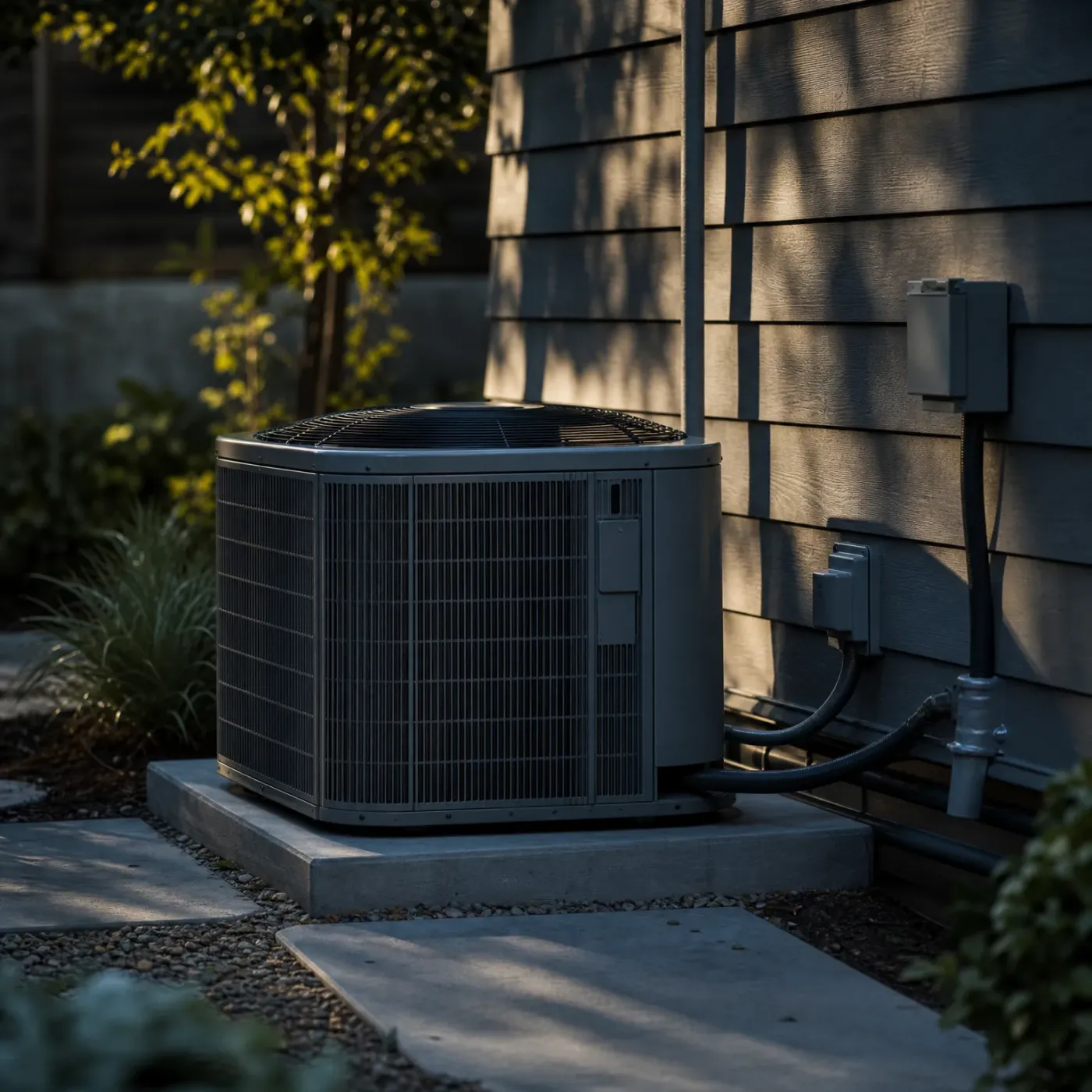
An outdoor air conditioner condenser unit on a concrete pad beside a house with light horizontal lap siding, with an electrical disconnect box and conduit on the wall behind it.

Weathered and tripping

An older unit like this one has had years of Bonner County summers to wear down its start capacitor or let dust build up on the coil. Once the compressor can't get the jolt it needs to start clean, it pulls extra current and the breaker trips to protect the wiring.


An older woman with short blonde hair in a cream knit sweater smiles while looking to the side in a kitchen, with a round loaf of bread on a wooden board in the foreground and a snow-covered window behind her.
A woman with her hair in a bun sits on a couch with a sleeping child resting against her, both wrapped in a cream knit blanket, with a lit floor lamp, houseplant and dark window behind them.

Why the surge happens at all

A compressor needs several times its running current just to get moving, for about a second before it settles down. The start capacitor's job is to deliver that jolt so the surge is brief. A breaker sized for the running current can usually ride out a surge that short. It can't ride out one that stretches longer because the capacitor is weak or the compressor is dragging, and that's the difference between a breaker that holds every summer and one that trips.

What a dirty coil adds to it

The condenser coil outside sheds the heat your AC pulls out of the house, and it needs airflow to do it. Dust and cottonwood fluff built up on the fins make the compressor work harder to push heat into the air, which raises the current it draws the whole time it runs, not just at startup. A coil that's been hosed off a couple times this summer draws less current than one that hasn't been touched since spring.


An outdoor air conditioning condenser unit on a concrete pad beside a house with white horizontal vinyl siding, with a gray electrical disconnect box and refrigerant lines on the wall behind it.
Before you get your air conditioner repair
A gray outdoor air conditioner condenser unit on a concrete pad beside a house with white horizontal siding and a brick foundation, with a wall-mounted disconnect box and conduit, and a green shrub with mulch at left.
After you get your air conditioner repair

A local pro for your air conditioner repair

A licensed pro who repairs air conditioners in Bonner County gets your request.

You're not committing to anything by asking.
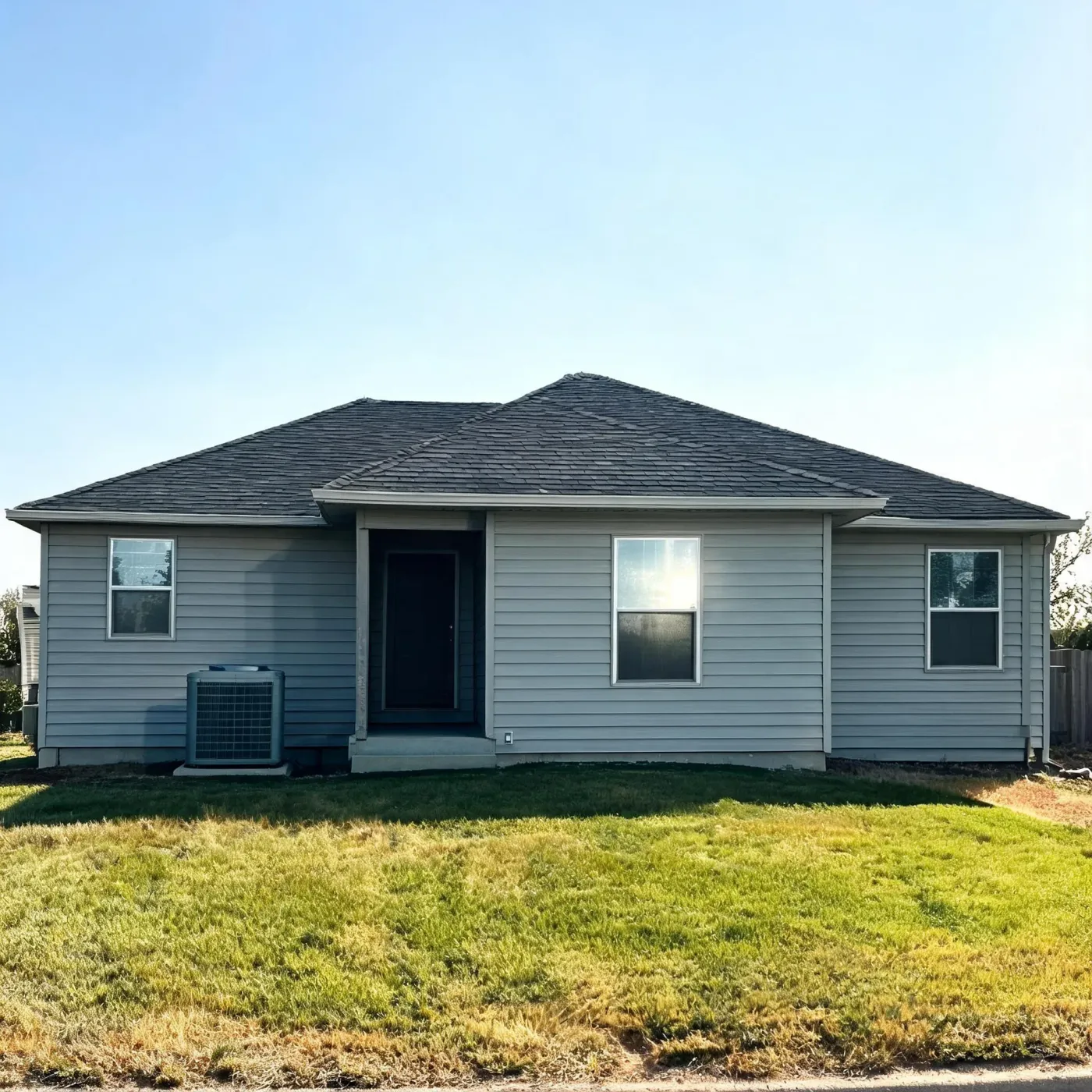
Single-story house with light gray horizontal siding, dark shingled hip roof, a dark front door with a small concrete stoop, three windows, and an air conditioning condenser unit at left, fronted by a grass lawn under a clear sky.

Summer air in Bonner County holds a dew point around 47°F, according to NOAA climate records, which is dry as these things go. Dry air sheds heat fast, so the condenser outside isn't fighting moisture the way units do in muggier places. That actually works against you when something's already wrong. A compressor with a weak start capacitor or a coil caked in dust still has to push hard in a dry 90-degree afternoon, and without humidity to blame, a breaker that trips in this weather is telling you the problem is in the equipment, not the air.

NASA POWER T2MDEW

A gray outdoor air conditioner condenser unit on a concrete pad beside a house with horizontal siding and a stucco foundation, with a disconnect box and conduit on the wall, decorative gravel, mulch, and a shrub nearby.
A clean coil lets the compressor start and settle without pulling extra current through the breaker.
An outdoor air conditioning condenser unit on a concrete pad beside a house with horizontal lap siding, with an electrical disconnect box and conduit on the wall, mulch and a green shrub to the right, and a concrete walkway in the foreground.
Caked dirt on the coil grilles makes the compressor work harder to start, and that's often what trips the breaker.

What's actually pulling that current

  • A locked rotor amp draw happens when the compressor can't turn at all and pulls far more current than normal until the breaker trips.
  • A breaker that holds for several minutes before tripping often points to a run capacitor weakening rather than a start capacitor failing outright.
  • Contactor points that have pitted or burned can arc instead of closing cleanly, which spikes current for an instant and trips the breaker.
  • A breaker itself can wear out after years of repeated heat cycling, tripping below its rated load even when the AC draws normal current.
  • Low refrigerant charge makes the compressor work against the wrong pressures, raising the current it draws every time it starts.
  • A disconnect box with a loose or corroded connection adds resistance that shows up as heat and extra current draw at startup.

A compressor that can't turn at all is the clearest case. Something inside has seized or the bearings have gone, and instead of starting it just sits there pulling locked rotor amps, which is several times its normal draw, until the breaker gives out. That's different from a breaker that holds for a few minutes first. That delay usually means the run capacitor is still working but losing strength, so the compressor runs harder than it should before something finally trips.

The contactor is worth a look too. It's the switch that closes to send power to the compressor, and after enough cycles the points on it pit and burn. A pitted contactor doesn't close clean, it arcs for an instant, and that spike is enough to trip the breaker even though nothing else is wrong.

Sometimes the breaker is the problem. After years of heating up and cooling down every time the AC cycles, the metal inside it fatigues, and it starts tripping under a load it used to hold.

Refrigerant charge matters here too. When it's low, the compressor is working against pressures it wasn't built for, and that shows up as higher current on every single start, not just the first one.

A loose connection in the disconnect box does the same thing from a different angle. Loose or corroded contacts add resistance, resistance makes heat, and heat shows up as higher amp draw right when the compressor kicks on.

Power here costs 11.98 cents per kilowatt-hour

At 11.98 cents per kilowatt-hour, running your AC here doesn't cost much even on the hottest days. That's worth knowing because a breaker that keeps tripping isn't a cost problem, it's a compressor or wiring problem that needs fixing before it causes real damage.

EIA-861 2025

A woman stands in the open front doorway of a single-story house with stone and wood siding while a man in a dark polo shirt and cap walks toward it along a concrete path.

A tripping breaker is the AC telling you something, not asking to be ignored

A breaker that trips once might be a fluke. One that trips every time the compressor starts is telling you the current draw at startup is higher than it should be, or the circuit was never sized right for it. Either way, resetting it and hoping isn't a fix. The compressor keeps pulling that same surge every time it tries to start, and the breaker keeps doing its job.

A local contractor who works on these systems through the hot stretch here knows the difference between a capacitor that's given out and a compressor that's on its way out, usually by checking the amp draw rather than guessing. Asking for a repair through this page puts you in touch with one contractor who takes calls in Bonner County, not a handful of companies competing for your number. They'll reach out, look at what's actually drawing the extra current, and tell you what it'll take to stop the breaker from tripping for good.


Interior corner of a room with a window and sheer curtain at left, a gray upholstered sofa with a cushion at right, and a round wooden table holding stacked books and a round vase with an olive branch.
At dusk, a white clapboard house with black shutters and a dark front door is lit from within, with a wet stone walkway leading to the steps past low path lights, hydrangeas, and a clipped hedge beside a lawn.

Air Conditioner Repair

Get the right pro for your air conditioner

RepairCentral ACBonner County, ID
Step 1 of 2

What ZIP code is the job in?

  • A beige upholstered armchair with a green throw pillow and cream knit blanket sits on a shag rug beside a lit table lamp, a potted plant, and a woven basket.
    • Get matched with a pro who works on air conditioners in Bonner County.
    • Your request goes to a Bonner County pro who takes air conditioner jobs.
  • A ceramic table lamp with a round speckled base and tapered linen shade sits on a wooden table beside a small shallow bowl holding pine cones, with a leafy plant and bright window to the left and a framed picture on the wall behind.
    • Send the request today and let an air conditioner pro reach out to you.
    • Once you send the form, finding a pro is off your list.
  • Interior corner with a light wood built-in shelving unit holding a woven basket, a plant in a stone bowl and a dark vase, beside a window showing green trees, a beige upholstered sofa with a textured pillow and cream throw, a stone wall, and a large stone vase in the foreground.
    • Answer a few questions instead of calling shop after shop.
    • Describe your air conditioner job once, to one pro.
  • A large matte ceramic vase holding leafy green branches stands on a wood floor beside a light upholstered sofa, with a window and gray wall in the background.
    • The pro who gets in touch is licensed in Idaho and works in Bonner County.
    • Your request goes to one pro, not a list of companies.