R-22 phase-out and older AC units in Idaho

After you send the request, you're done searching.

New system or replacementCentral ACIdaho
Step 1 of 2

What ZIP code is the job in?

R-22, the refrigerant older air conditioners use, stopped being made or imported into the country in 2020. If your AC is old enough to run on it, usually units installed before 2010, a low charge or a leak means the repair gets expensive fast, because any R-22 left for sale is reclaimed from old systems and priced like it. Idaho summers run hot and dry, so an AC that struggles or quits in July isn't something to put off. Some repair shops can still find R-22, but what they charge for it often costs more than the repair itself would with a newer system. At some point the math stops favoring the fix. A lot of homeowners with an R-22 unit end up replacing it with one that runs on current refrigerant rather than keep paying to patch the old one. If your outdoor unit's nameplate says R-22, that's worth checking before the next hot stretch.

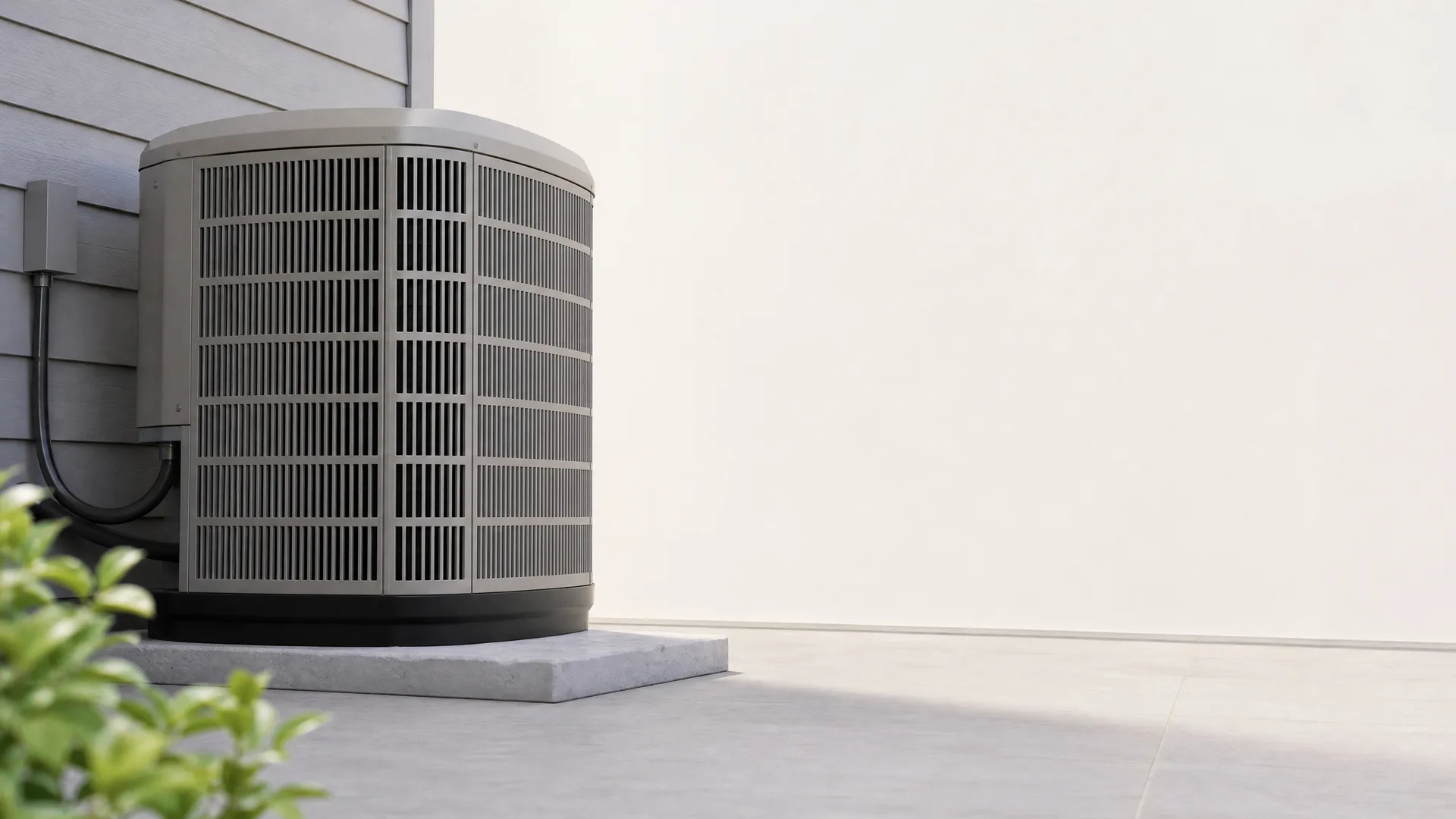
An outdoor air conditioning condenser unit on a concrete pad beside a house with horizontal lap siding, with an electrical disconnect box and conduit on the wall and a green shrub in the lower left foreground.

Why the leak is the real problem

R-22 doesn't wear out and it doesn't get used up by running the system. If the level is low, it's because it's leaking out somewhere in the coil or the lines. Adding more R-22 without finding and sealing that leak just means paying for the same refrigerant twice, since it will work its way back out the same opening.

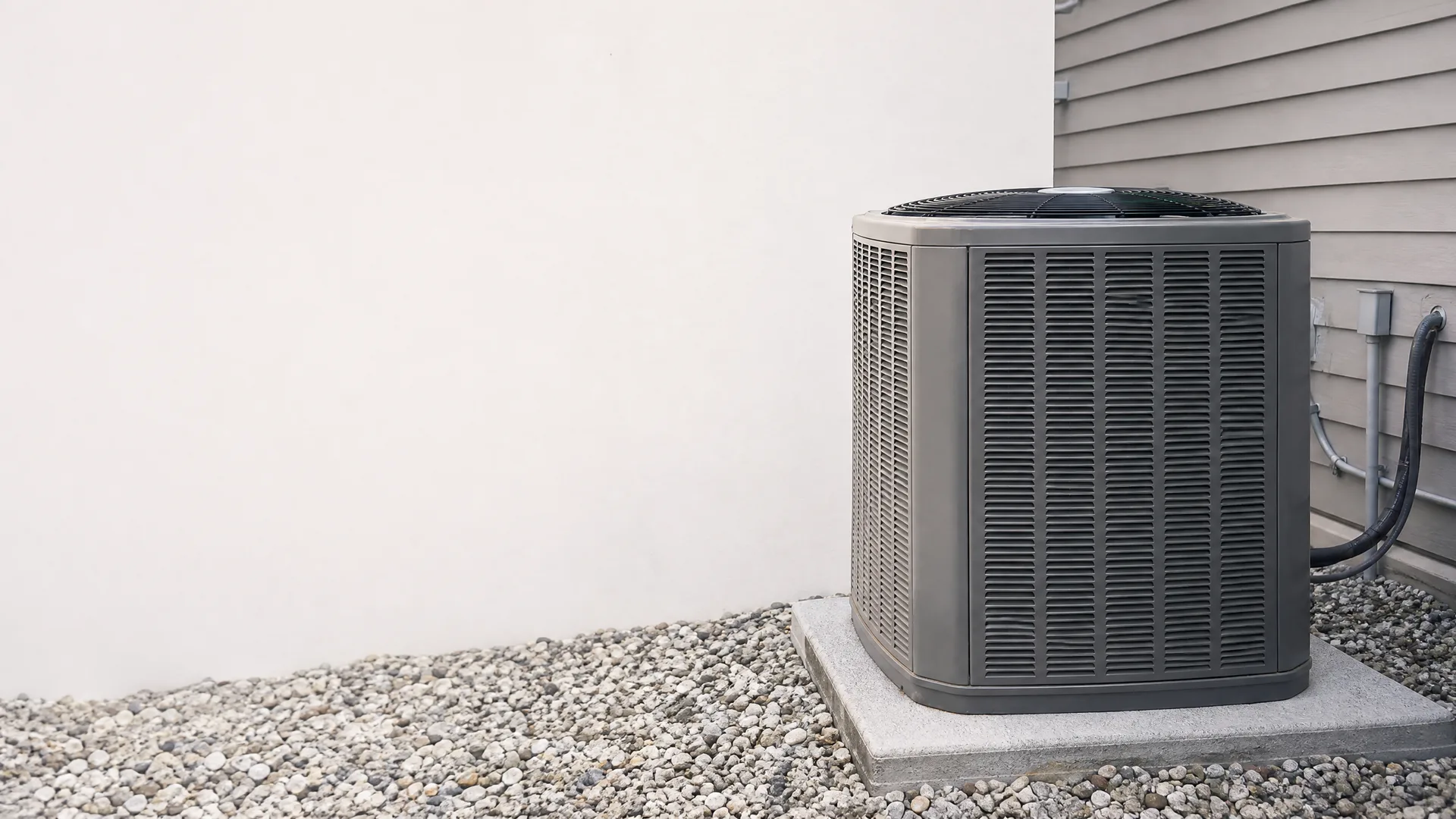
An outdoor air conditioner condenser unit on a concrete pad beside a light stucco wall and vinyl-sided wall, surrounded by gravel.

What's left is old stock

Any R-22 a contractor puts in your system now came from before 2020, since none has been made or brought into the country since. That stock keeps shrinking and nobody is replacing it. A pound that cost little a few years back costs a lot more now, and a system that needs several pounds to run right can turn a small leak into a large bill.

A closed silver laptop and a light ceramic mug of dark coffee sit on a wooden table, with a window showing a sunset at left and a kitchen counter with a cutting board and potted plant in the background.

What this means for your house

If your outdoor unit is old enough to run on R-22, a leak doesn't fix itself and it doesn't stay small. You'll notice the house taking longer to cool on the hot, dry afternoons here, then the unit running longer to get there, then a repair bill for refrigerant that costs far more than it used to because almost nobody makes it anymore. Some homes end up paying for a recharge twice in the same summer because the leak was never sealed, only topped off.

Power is cheap in Idaho, which usually hides a struggling system for a while. A unit low on R-22 still runs and still cools some, so it's easy to let it ride until the day it doesn't. At that point you're not weighing a recharge against a repair anymore, you're looking at replacing the unit, and doing it while your house is already hot. Sending the form here means you're not the one calling around for quotes or explaining the same problem to three different companies before someone can even look at it.

Interior corner of a living room with a beige upholstered sofa and dark cushion in the foreground, a ceramic vase of leafy branches on a dark side table by a curtained window, a framed picture on the wall, and a wood-surround fireplace at right.
A gray outdoor air conditioner condenser unit on a concrete pad beside a house with horizontal lap siding, with a wall-mounted disconnect box and conduit at left and a green shrub and mulch bed at right.

Running on R-22 now

If your unit still has a full charge, it cools the way it always has. Nothing about R-22 itself shortens its life. The risk isn't the gas, it's what happens the day the charge runs low and there's no way to legally top it off at a price that makes sense.

An outdoor air conditioner condenser unit on a concrete pad beside a house with horizontal lap siding, with a conduit running to a gray electrical disconnect box on the wall.

Low charge, no fix

A unit low on R-22 struggles to keep up on a hot, dry Idaho afternoon, then runs longer trying. Topping off a system that uses R-22 is scarce and priced for it now. At that point replacing the unit is usually the straighter path.

How do I know if my AC still uses R-22?

It's a fair question, since nothing in the house tells you outright what's running through the lines outside. You don't want to call around asking before you know what you're even asking about. There's a way to check it yourself in a few minutes, on the unit itself, before you decide whether this is a conversation about a top-off or about something bigger.

Check the nameplate on the outdoor unit

Look at the metal nameplate on the side of your outdoor unit, usually near the bottom or behind an access panel. It lists the refrigerant type along with the model and serial number. If it says R-22 or HCFC-22, that's what's in it. If it says R-410A or R-32, you're not affected by the phase-out. The nameplate also gives you the manufacture date, which is a faster check if the print is worn, since R-22 almost always points to a unit installed before 2010. If you can't find or read the plate, a contractor can confirm the refrigerant type during a service visit without needing to guess.

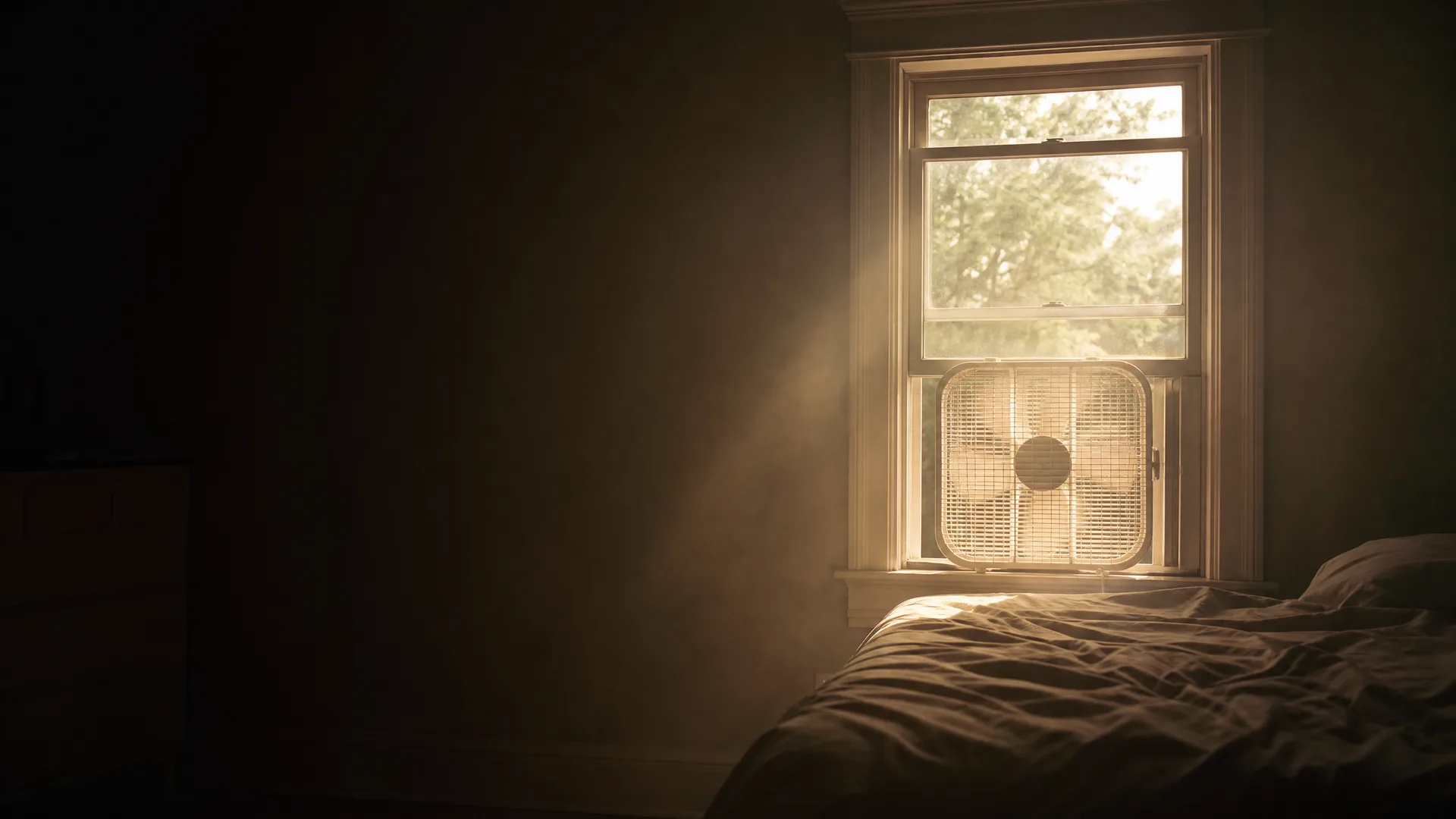
A dim bedroom with a box fan sitting in an open double-hung window, sunlight streaming through the hazy air onto an unmade bed in the foreground.

Nine o'clock and the upstairs bedroom still hasn't let go of the day. The box fan sits in the open window, pulling in air that isn't much cooler than what's already in the room. You can see the haze of it under the lamp, that thick, dry heat that settles in Idaho in June and doesn't leave with the sun. You've checked the thermostat twice. It says the unit's running. You can hear it outside, working. The room doesn't believe it. Somewhere between the attic and the vents, the cold air is losing the fight, and you're lying on top of the sheets doing the math on how many hours until it's light out again.
Done looking for an air conditioner pro

If your outdoor unit is one of the older ones running on R-22, you already know where this goes. The charge is low, or it will be, and when it is, a licensed installer is the only path forward, since R-22 itself isn't made anymore. Finding that installer is usually its own chore on top of the actual problem: searching listings, calling two or three companies, explaining the same thing about your unit's age and your symptoms each time, then sitting with quotes that don't quite compare because nobody looked at the same information. Idaho summers don't leave much room for that back and forth once the house stops cooling down in the afternoon. Send the request through this page and that search becomes someone else's job instead of yours. You get a contractor who already knows what you're dealing with, without the round of calls it would have taken to find them.

Repair the old unit

If a shop still has R-22 on hand, topping off the charge or patching a leak keeps the unit running a while longer. But that supply is whatever's left in the country, nothing new is coming, and the price reflects that. A small leak repaired today can need the same fix again next summer, and each time the charge drops, the house takes longer to cool on the hot, dry afternoons here before the unit catches up.

Replace with new system

A new system runs on a refrigerant that's still being made, so a low charge or a slow leak down the road is an ordinary repair instead of a search for a shrinking supply. It also means the house cools the way it used to on the worst afternoons, without the unit running long and still falling behind. The work is the same either way, finding a licensed installer, except now it's a job you do once instead of one you might face again.

A woman with wavy brown hair sits on a beige couch with her eyes closed and a slight smile, a knit blanket over her lap and a closed dark-covered book resting on it, with a lit lamp and plant in the dim background.
A smiling man with dark wavy hair and a short beard, wearing a navy crewneck sweater, sits at a candlelit dinner table with a bowl of food, wine glass and a lamp and framed art behind him.
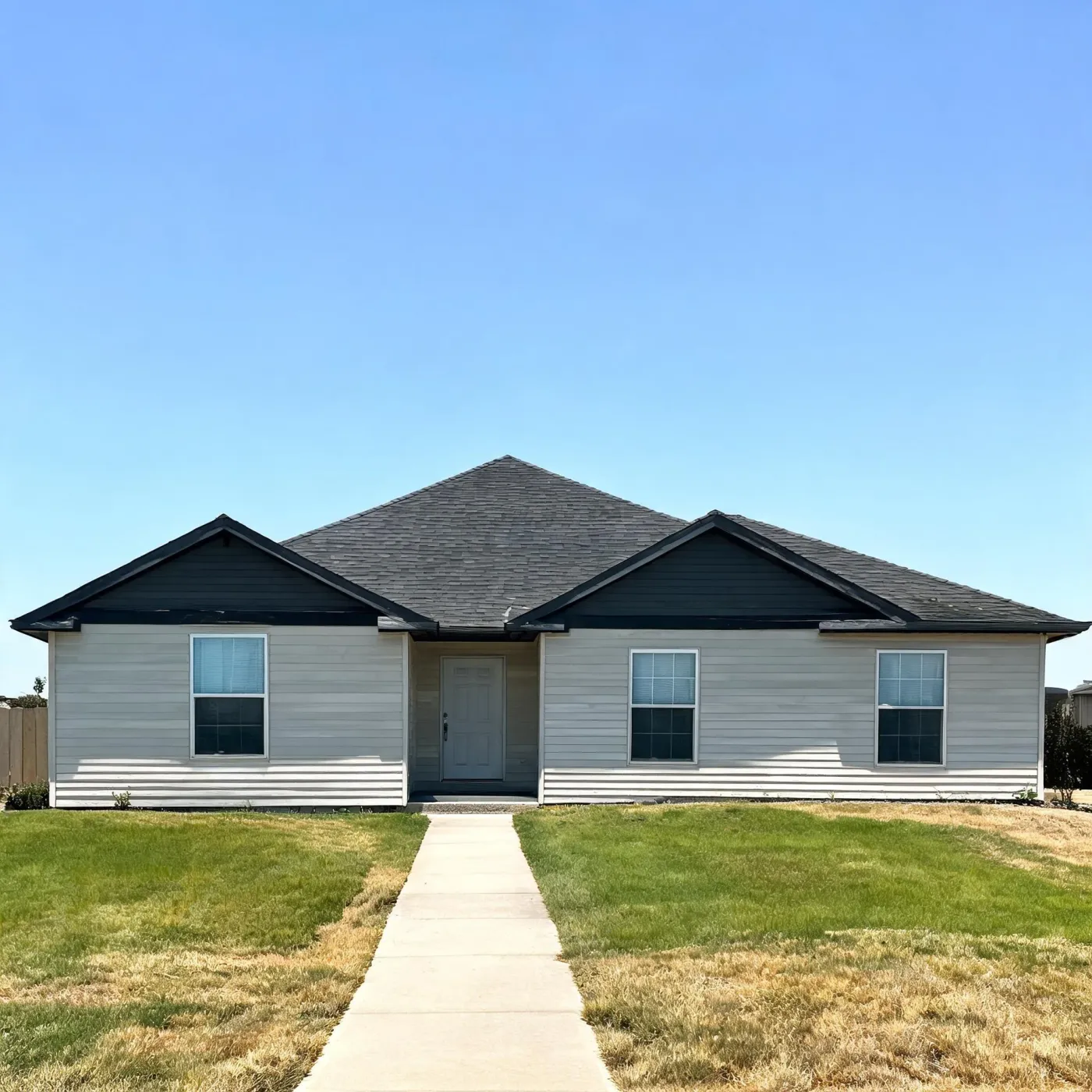
Single-story house with light gray horizontal siding, dark gray shingled roof with two front gables, a white front door, and three windows, fronted by a concrete walkway and patchy green and brown lawn under a clear blue sky.

Idaho summers are dry, so a dew point around 42°F on average across June, July and August is low. The air itself doesn't carry much moisture for your AC to pull out, which is part of why the heat here feels different from a muggy place, that number comes from regional weather averages, not your house specifically. For an R-22 unit running low on charge, this matters: dry air means the system spends more of its energy just moving heat out, not wringing water out of the air too. If the charge drops, you'll feel it mainly as the house losing its grip on the heat, not as stickiness indoors.

NASA POWER T2MDEW county cells weighted by homes

Is your AC running longer and cooling less?

You turn it down a couple degrees and it still takes until evening to feel it. The unit outside runs almost the whole afternoon instead of cycling off like it used to. Some rooms cool fine, others stay warm no matter how long it runs. You might hear it kick on more in a day than it ever did, or notice the air coming out of the vents feels less cold than you remember. None of this fixes itself. A unit low on R-22 keeps losing what charge it has left, and the longer it runs trying to make up for it, the harder the compressor works to do a job it can't finish.

A smiling bearded man in a navy long-sleeve shirt sits on a gray sofa in a living room, with a bowl of popcorn in the foreground and shelves and a window behind him.
A smiling bearded man in a dark sweatshirt sits on a sofa in a living room with a bowl of popcorn and a mug in the foreground, a potted plant and large window behind him.
A bearded man in a dark green shirt over a white tee sits smiling on a gray sofa in a living room, with a patterned cushion and a bowl of popcorn nearby and a kitchen with pendant lights blurred in the background.
A smiling man in a dark long-sleeved henley shirt reclines on an olive-green sofa in a living room, with a wooden bowl of popcorn in the foreground and shelving and a large potted plant behind him.

Power costs 11.83 cents per kilowatt-hour statewide

At 11.83 cents a kilowatt-hour, running your AC hard through a dry Idaho summer doesn't punish your bill the way it would somewhere else. That's worth knowing before you spend money chasing an R-22 leak instead of replacing the unit. A new system costs more up front, but it won't cost you more to run it.

EIA-861 2025 statewide residential average

Where this leaves you

  • R-22 is not made or imported anymore, so a leaking unit built for it has no cheap way back to a full charge.
  • A full charge still cools fine, since the gas itself doesn't wear out or break down sitting in the lines.
  • A longer afternoon runtime with weaker cooling in some rooms usually points to a slow leak, not a failing thermostat.
  • Cheap power here means the bill isn't what pushes the decision, the leak and its repair cost are.
  • Checking the nameplate on the outdoor unit tells you in minutes whether any of this applies to your house at all.
  • Once you know your unit runs on R-22, the choice is between a patch that may not hold and a replacement that ends the question for good.

The nameplate on your outdoor unit settles it. If it lists R-22, everything above applies to your house. If it doesn't, none of it does, and you can stop reading here.

For the units that do run on R-22, the facts are plain. The gas doesn't go bad sitting in the lines, so a full charge still cools the way it did the day it was installed. What changes is the leak. Once it starts, the charge drops, the afternoons get longer, and some rooms stop cooling the way they used to. That's not a thermostat problem. A low charge can be patched if a shop still has R-22 to sell, but nothing new is being made, and the price for what's left reflects that. Idaho's cheap power doesn't change this math. A hard-running AC through a dry summer here doesn't hit the bill the way it would somewhere else, so the bill was never the reason to act. The leak is.

What's left is a choice between two paths, not a mystery. Patch it and watch the same leak again later, or replace the unit and stop checking the nameplate every summer. Either way, the work starts with finding a licensed installer, instead of spending an afternoon calling around, repeating the same story to each one, and sorting through quotes that don't line up. Once that part is handled, the decision in front of you is just the one above: patch or replace.

A beige upholstered armchair with a dark green pillow sits beside a woven basket holding a cream fringed throw, with a potted leafy plant in a second basket near a window.
Sunlit living room corner with a beige upholstered sofa and striped linen cushion, a potted small-leaved tree in a woven basket beside sheer curtains, a framed artwork on the wall, and a jute rug on a wood floor.
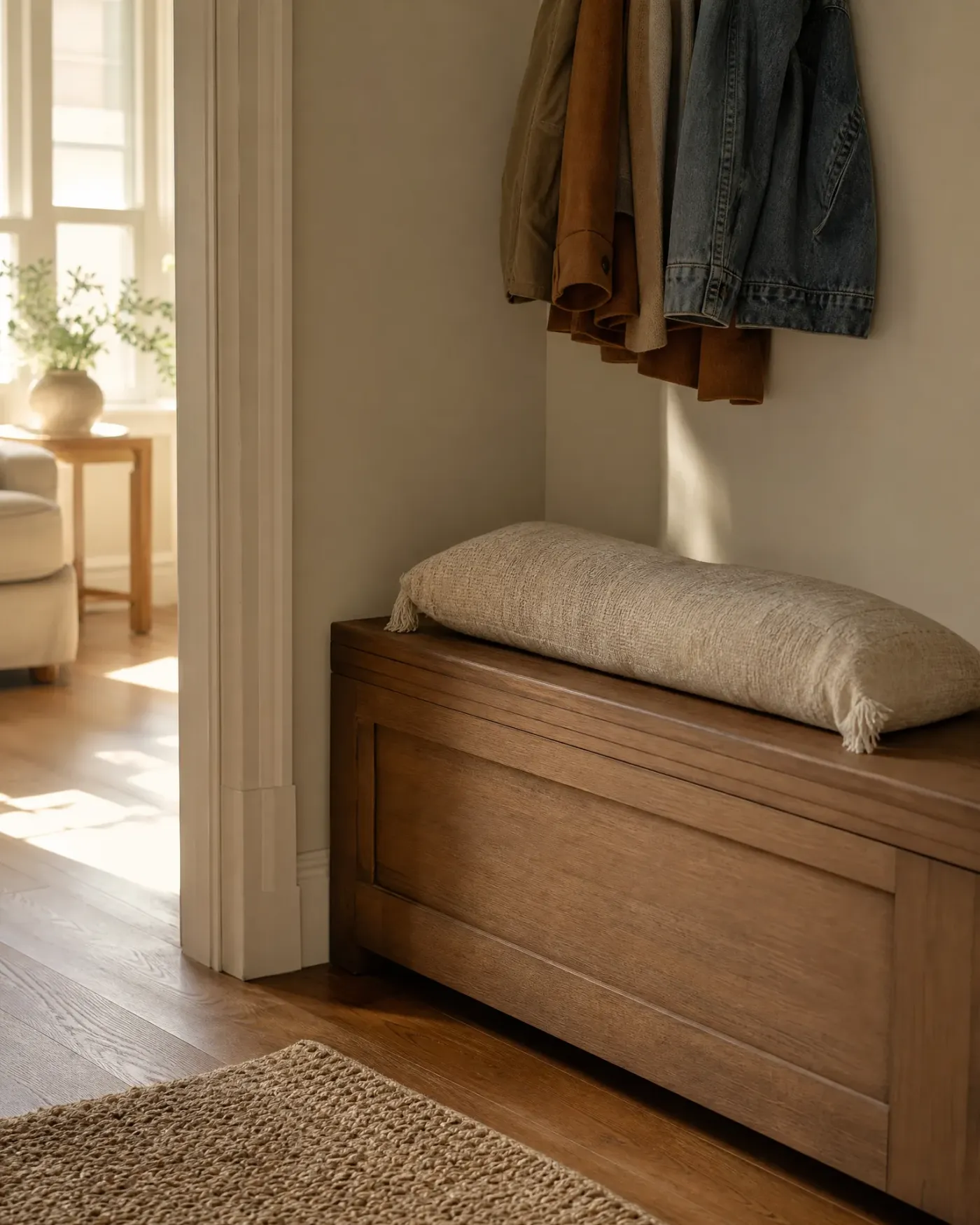
A wooden storage bench with a long linen bolster cushion sits against a pale wall beneath hanging jackets, beside a doorway showing a plant and chair in sunlight, with a woven rug on the wood floor.
A dark wood sideboard holding a shallow wooden bowl and a pale ceramic vase with leafy branches, against a beige wall with a framed artwork and a window showing a sunset sky and trees.
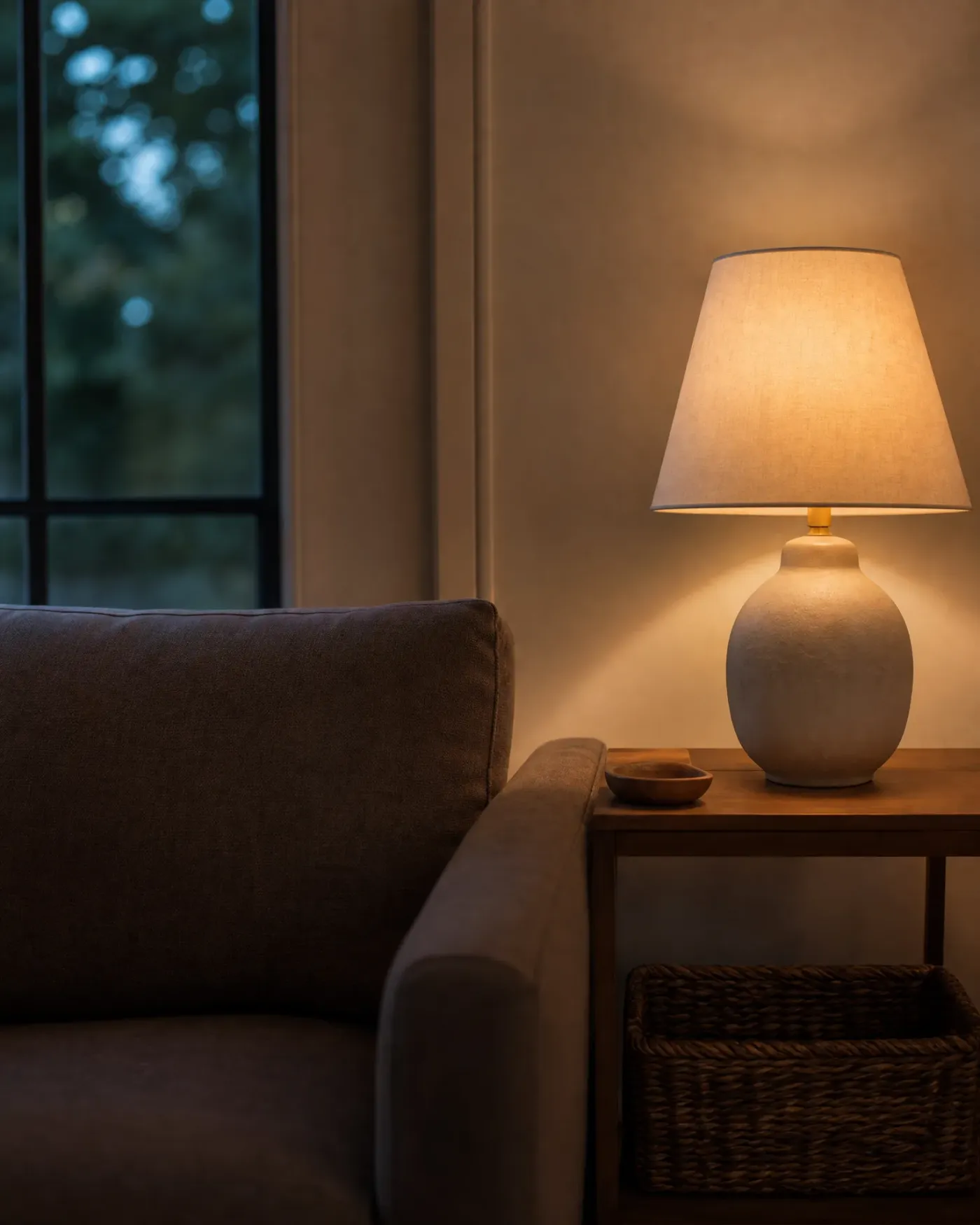
A lit ceramic table lamp with a tapered fabric shade sits on a wooden side table beside a small wooden bowl, with a woven basket on the shelf below, next to a gray upholstered sofa and a dark-framed window at dusk.

It's off your list after this

Describe the project once instead of to every installer.

Describe it once

Sending the form costs nothing.