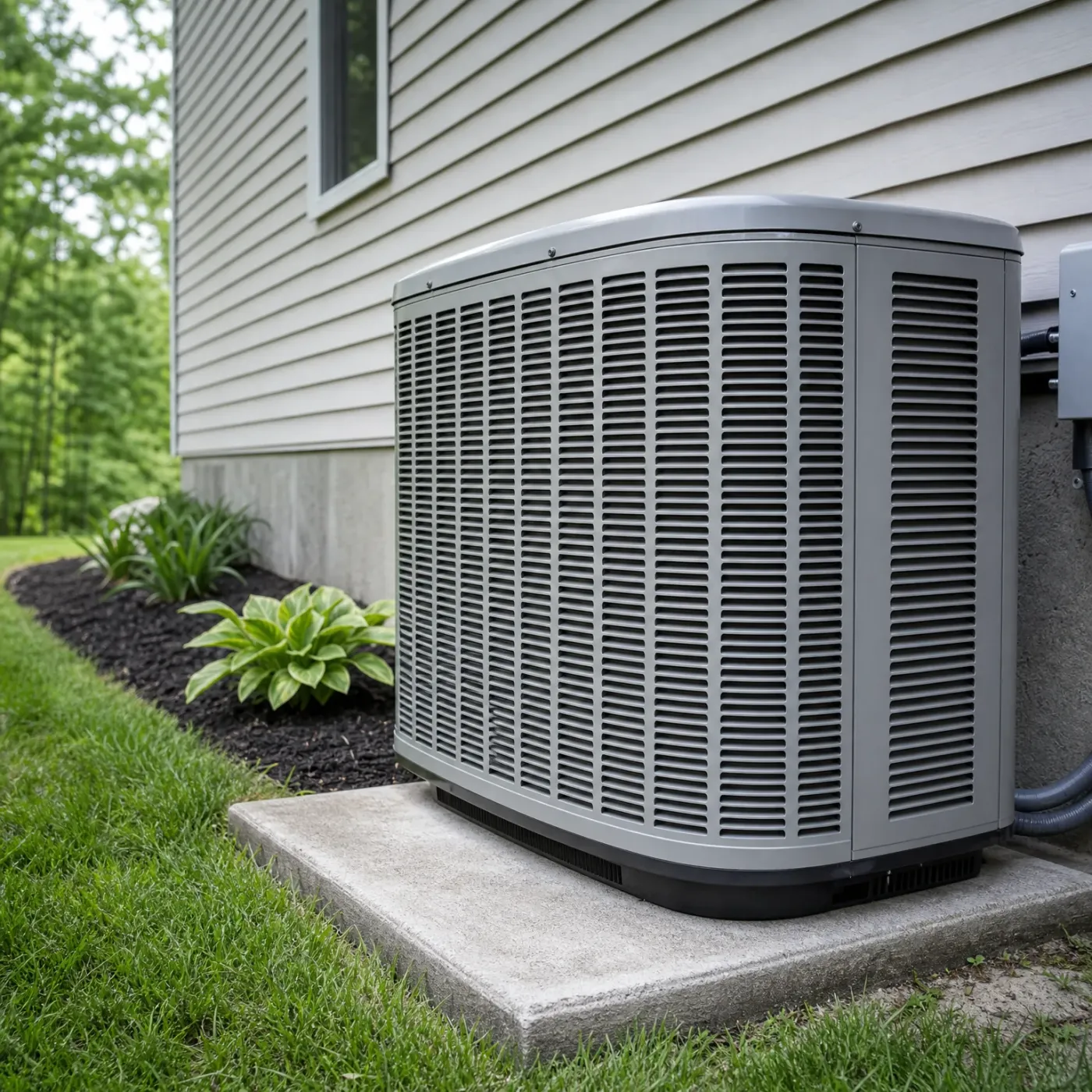

An outdoor air conditioning condenser unit on a concrete pad beside a house with horizontal siding, with an electrical disconnect box on the wall and shrubs to the right in low evening light.

Explain it one time

What size AC an Idaho home needs

Getting the size right matters more in Idaho's dry heat than the sticker on your old unit might suggest. Too big and it cools the air fast without pulling out the heat soak from the walls. Too small and it runs flat out all July and August. This page gets into what actually sets the right size for your home. Finding someone to size and install it is the part you can skip, instead of calling around to a handful of contractors and repeating your details to each one.

Start one form

There's no single tonnage that fits every Idaho house. The right size comes from a room by room heat load calculation that counts your square footage, your windows, how much sun hits the west side of the house, and how much insulation is in the attic. A home that's 1,800 square feet in Boise might need anywhere from 2.5 to 3.5 tons depending on those details. Idaho's dry heat changes the math too, because low humidity means an oversized unit won't just short cycle, it'll leave the house feeling clammy even while the thermostat reads cool, since a unit that cools too fast never runs long enough to pull moisture out of the air. Guessing based on the old unit's size just repeats whatever mistake was made when that one got installed. A contractor who runs the actual calculation on your house gets you a system that matches the load instead of overshooting or falling short of it.

A gray outdoor air conditioner condenser unit sits on a concrete pad beside a house with horizontal lap siding, with conduit and an electrical disconnect box on the wall, dark mulch and a shrub to the left, and a concrete walkway in the foreground.
A unit sized to the house keeps a steady load through the afternoon heat, no straining, no short cycling.
An outdoor air conditioning condenser unit on a concrete pad beside a house with horizontal lap siding, with a shrub and mulch bed to the left and conduit and a small electrical box on the wall to the right.
A unit that's aged or mismatched runs dirty and hard, and a dirty coil has to work harder to move the same heat.
A woman in a cream sweater with her hair in a bun laughs while seated at a stone counter holding a glass of red wine, in a dimly lit interior with a sofa, houseplants and a large window at night.
A woman with long dark hair in a cream knit sweater laughs while looking off to the side, seated in front of a dimly lit kitchen with an island, stools, open shelving and a potted plant, with a glass of red wine in the foreground.
A smiling woman with long dark wavy hair in a light knit sweater sits at a marble counter with a glass of red wine, with a dimly lit living room and kitchen in the background.
A smiling woman with long wavy brown hair in a beige sweater sits at a white marble counter with a glass of red wine, with a living room, dining table and kitchen cabinets behind her.

Is your AC struggling on the hottest afternoons?

If your AC is the wrong size, you've probably noticed it already. An oversized unit cools the house fast, shuts off, then kicks back on twenty minutes later because it never ran long enough to pull the humidity and heat soak out of the walls. The air feels cool but not dry. An undersized unit does the opposite. It runs straight through the afternoon and into the evening without the house ever catching up, and some rooms, usually the ones on the west side, stay warmer than the rest. Either way the unit is working harder than it should, and a system that short cycles or runs nonstop wears out its parts faster than one sized right for the house.

  1. A contractor measures every room, window, and wall facing west

  2. That math produces a heat load number in BTUs per hour

  3. The BTU load gets matched to a condenser and coil size

  4. Idaho's dry air means less load from humidity than other states

Square Footage Guess vs. Room by Room Math

Guess by square footage

  • A rule of thumb gives one tonnage for every house of that size, no matter what the walls or windows are doing.
  • West facing glass that bakes all afternoon gets treated the same as a shaded north wall.
  • An attic with six inches of insulation gets sized the same as one with twelve.
  • Idaho's dry air doesn't factor in, so the unit may be sized for humidity loads the house never carries.
  • The number comes off a chart, not off your house.

Room by room load calculation

  • Every room gets measured on its own, with its own windows, walls, and sun exposure counted separately.
  • A wall of west facing glass adds load that a contractor accounts for by hand, not by averaging it out.
  • Attic insulation gets checked, since a thin layer lets more heat soak into the rooms below by afternoon.
  • The dry Idaho air lowers the humidity side of the load, so the number reflects heat, not moisture, the house actually has to shed.
  • The result is a BTU figure tied to your house, not to a range that covers every house its size.
A gray outdoor air conditioning condenser unit on a concrete pad beside a house with horizontal lap siding and a stone veneer base, with a disconnect box and conduit on the wall, mulch bed and shrub to the right, and mowed grass in the foreground.

Running the way it should

This condenser is sized to the house it cools. It sits on its pad, clear of the shrub beside it, and runs long steady cycles through the afternoon heat. The disconnect box is easy to reach if a contractor ever needs to work on it.


An outdoor air conditioner condenser unit on a gray composite pad beside a house with horizontal siding, a concrete foundation, a basement window, and a conduit and disconnect box on the wall.

Signs of a unit under strain

Dust and dirt have built up across the mesh cabinet, and a coil caked like this has to work harder to pull the same heat out of the air. If the unit is also the wrong size for the house, that strain shows up on the hottest afternoons first.

A bearded man in a dark navy sweater over a collared shirt smiles and looks off to the side while seated at a dinner table with a glass of red wine, a lit candle, and a plate of food in the foreground of a dimly lit room.
A woman in a dark gray sweater reclines on a couch with her eyes closed and a knit blanket over her lap, an open book resting face-down in front of her, with a lit table lamp and shelving blurred in the background.
A gray outdoor air conditioning condenser unit on a concrete pad beside a house with light horizontal siding, with a mulched planting bed and lawn to the left.

No quotes to chase

The pro who reaches out is licensed in Idaho.

Skip searching for an air conditioner pro and answer a few questions instead.

Get a licensed local pro

There's no charge for the request.

Why does a bigger AC not just mean more cooling?

It seems logical that a bigger unit would just mean colder air, faster. But a contractor sizing a system for an Idaho home isn't chasing cold air. They're matching the machine to how fast your house gains heat through the afternoon, and a unit that outpaces that gain in the wrong way ends up costing you comfort, not buying it.

A bigger AC cools the room before it pulls the moisture out of the air

An air conditioner does two jobs at once. It drops the air temperature, and it pulls moisture out as air passes over the cold coil. That second part takes time, longer than the first. A unit that's too big for the house satisfies the thermostat in a few minutes and shuts off, so the coil never runs long enough to wring the humidity out. The room feels cold but clammy. It also means more starts and stops over a day, and each start pulls a surge of power and puts more wear on the compressor than a long steady run does. Idaho's dry air keeps the humidity problem smaller than it would be elsewhere, but the short cycling and the extra wear on the compressor happen either way.

A two-story house with cream horizontal siding, a dark gabled roof, and a white front door, fronted by a lawn, shrubs, and a concrete walkway leading to a sidewalk and street, with large leafy trees on both sides.

The weather service puts the summer dew point across Idaho at an average of 42°F, which is dry. That's the number a contractor is working against when they size your system. A properly sized AC still needs to run long enough to pull moisture out of the air, but with a dew point that low, your house gains heat mostly from the sun on the walls and roof, not from humidity hanging around. That's why an oversized unit is the bigger risk here. It cools the air fast and shuts off before it's run long enough to handle that heat soak, so rooms feel cold then warm again within the hour.

NASA POWER T2MDEW county cells weighted by homes

A gray outdoor air conditioner condenser unit on a concrete pad beside a house with beige horizontal siding, with an electrical disconnect box and insulated refrigerant lines on the wall and dry leaves on the ground.
Before you get your air conditioner installation
A gray outdoor air conditioning condenser unit on a concrete pad beside a house with horizontal gray siding, with a wall-mounted electrical disconnect box and insulated refrigerant lines, and blue hydrangeas in a mulched bed to the left.
After you get your air conditioner installation
A gray outdoor air conditioner condenser unit on a concrete pad beside a house with light vinyl siding, with an electrical disconnect box and conduit on the wall and a leafy shrub with dark mulch to the right.

Clean and clear

This condenser sits on its pad with nothing crowding it, the grille clean enough to see through. Air moves through the coil the way it was designed to, so the unit pulls heat out of the house without straining to do it. The disconnect box on the siding stays easy to reach too.

An outdoor air conditioner condenser unit on a concrete pad beside a house with horizontal lap siding, with a gray electrical disconnect box and conduit on the wall and a green shrub over pine-needle mulch at left.

Dirty and weathered

Pine needles and mulch sit right up against this one, and the grille has gone dark with buildup. A coil caked like this can't move air the way it should, so the unit runs longer to do the same job. Over a few summers that wear adds up, sized right or not.

Power costs 11.83 cents per kilowatt-hour statewide

At 11.83 cents a kilowatt-hour, running an oversized or mismatched AC all afternoon costs more than it should, since a unit fighting its own size draws power without finishing the job of pulling moisture out of the house. Get the tonnage right and the system earns that rate back in steady, efficient cycles instead of short, hard ones.

EIA-861 2025 statewide residential average

A closed silver laptop and a glazed ceramic mug on a wooden table, with a blurred kitchen counter, potted plant, cutting board and window in the background.

The right size comes from your house, not a chart

Your Idaho home needs the tonnage that matches its own heat load. That number comes from a room by room calculation, not a guess from square footage, and it's the only way an AC runs long steady cycles through July and August instead of fighting its own size.

Getting there usually means calling around for contractors, explaining your house and your old unit's quirks to each one, then sitting with a stack of quotes trying to tell a real heat load calculation from a rule of thumb dressed up as one. A local contractor who sizes systems for Idaho's dry heat every summer already knows what the west wall and the attic insulation are going to do to the math. You get that one call, not five, and an answer sized to your house.

Interior corner of a living room with a beige upholstered sofa and dark cushion in the foreground, a ceramic vase of leafy branches on a dark side table by a curtained window, a framed picture on the wall, and a wood-surround fireplace at right.
An outdoor air conditioner condenser unit on a concrete pad beside a dark horizontal-lap sided house, with mulch beds, shrubs and ornamental grasses nearby.

Skip the calls to every shop

Only one pro gets your request, so you hear from one company.

New system or replacementCentral ACIdaho
Step 1 of 2

What ZIP code is the job in?