






Illuminated timber-and-stone luxury homes photographed at twilight with snow-capped mountains visible in the background.

AC Maintenance in Moscow, ID

Tell us about the job

Takes about a minute. No obligation.

Tune-up, service, or cleaningCentral ACLatah County, ID
Step 1 of 2

What ZIP code is the job in?

Half the homes in Latah County were built in 1980 or later. If your AC came with a newer house, you're not dealing with a machine someone else already wore out. A system like that still has most of its life ahead of it, and a yearly check is what keeps it on track. Skip the checks for a few years and small things, a dirty coil, a low charge, get the chance to turn into a compressor replacement. Catch them early instead and that same unit can keep running for years without surprises.

79°F
the average summer afternoon it cools against
2 hail events
in ten years, and hail bends the fins on outdoor coils
25 wind events
in ten years, and wind drives debris into outdoor units
Isometric line illustration of a cutaway house showing interior rooms with ductwork, an indoor air handler, and an outdoor condenser unit connected by lines, on a white background.
Your air conditioner works hardest from July through August.

NOAA nClimDiv, 1991–2020 normals

Summer afternoons in Moscow average 79 degrees, and some months don't even call for cooling.

Mild duty like that doesn't wear out a compressor. Skipped checkups do, so a yearly visit is what keeps this AC running long.

Latah County's weather tests the system, not the heat

278 severe weather events from 2015 to 2024
11% of homes statewide lost power a day or more in 2024
25 damaging wind events from 2015 to 2024

A yearly check on a newer system is a short visit. The tech clears the condensate line, checks refrigerant charge against the manufacturer spec, and looks at the capacitor before it has a chance to fail. None of that takes long when the unit hasn't had years of neglect to make up for. If your AC came with the house, ask whoever built it what's installed, since that tells the tech what parts and refrigerant to expect before they arrive.

Book the yearly check before next summer

Your AC isn't fighting Moscow heat to earn its keep. One visit a year is enough to catch a low charge or a weak capacitor before it turns into a bigger repair. Put it on the schedule now.

Find a contractor
A man in a cap, olive shirt and dark pants walks up wooden porch steps toward a green door, carrying a waxed canvas tool bag.
An outdoor air conditioning condenser unit mounted on a concrete pad surrounded by gravel, photographed against a partly cloudy blue sky.

What skipping the check does to the compressor

A compressor wears from running dirty or low on charge, not from running. Dust builds up on the outdoor coil until the system can't shed heat the way it was designed to. So it runs longer to do the same job. A slow refrigerant leak drops the charge a little at a time, and a compressor built to pump a full charge strains to make do with less. Either one left alone wears the compressor down a season at a time. A yearly check catches both while the fix is still simple.

Keep the area around the outdoor unit clear

The outdoor unit needs open air on all sides to shed heat. Grass clippings, leaves, and anything stacked against it block that airflow and make the system work harder than it should. Keep a couple feet clear on every side and skip the mulch or plantings right up against the cabinet.
Change the filter on a schedule, not when you remember

A dirty filter chokes airflow across the indoor coil, and that coil can ice over when air can't move past it fast enough. Check it monthly and swap it when it looks gray or clogged. This is the one thing between visits that actually prevents a breakdown instead of just catching one early.

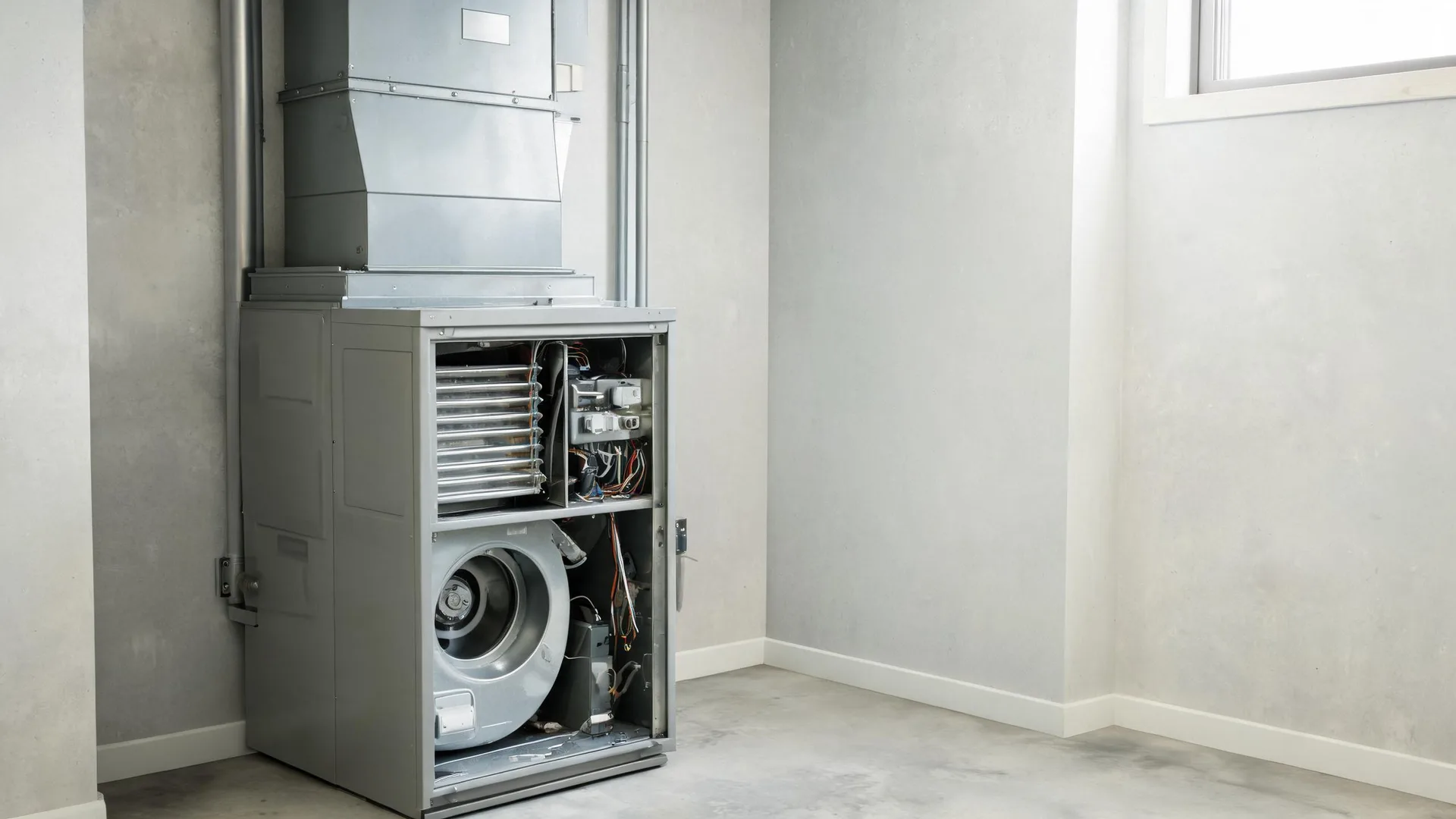
A lot of what a tune-up finds, you'd never spot from inside the house. The tech pulls the panel and checks the capacitor's actual output against its rating, since a weak one can still start the system and still fail next week. They'll check the contactor for pitting, because that's a part that arcs a little every time it cycles and nobody sees it wear. Refrigerant charge gets checked against the manufacturer's number, not just topped off by feel. And the blower wheel gets a look, since dust builds up on the blades in a way that cuts airflow long before it's visible anywhere else in the system.

A tune-up is more than a filter swap and a glance at the thermostat. The tech checks static pressure across the system, since airflow that's too low or too high points to a duct problem or a blower that's working harder than it should. They check the temperature split between the air going into the system and the air coming out, which tells them whether the system is actually moving heat the way it's supposed to. The condensate drain gets flushed so it can't back up and overflow once the system is running hard. Electrical connections get checked for anything loose, since a loose connection generates heat and that heat damages the parts around it over time. None of this shows up as a problem yet. That's the point of doing it now instead of waiting for it to.