





Overhead view of an air conditioning condenser unit on a concrete pad next to a house with asphalt shingle roofing and vinyl siding.

AC Repair in Burley, ID

Tell us about the job

Takes about a minute. No obligation.

RepairCentral ACCassia County, ID
Step 1 of 2

What ZIP code is the job in?

Cooling in Burley only runs two months, July through August, so June is the month to get your AC checked. The unit sits idle most of the year, then gets asked to run hard as soon as that first stretch of heat hits. Whatever was already weak, a failing capacitor or a slow refrigerant leak, tends to give out right then. Have it looked at in June and a contractor can catch that before it fails. Wait until the house is already hot and you're fixing the same problem under worse conditions.

2 months
July through August, your air conditioner is on duty
81°F
the average summer afternoon it cools against
9 hail events
in ten years, and hail bends the fins on outdoor coils
85 wind events
in ten years, and wind drives debris into outdoor units
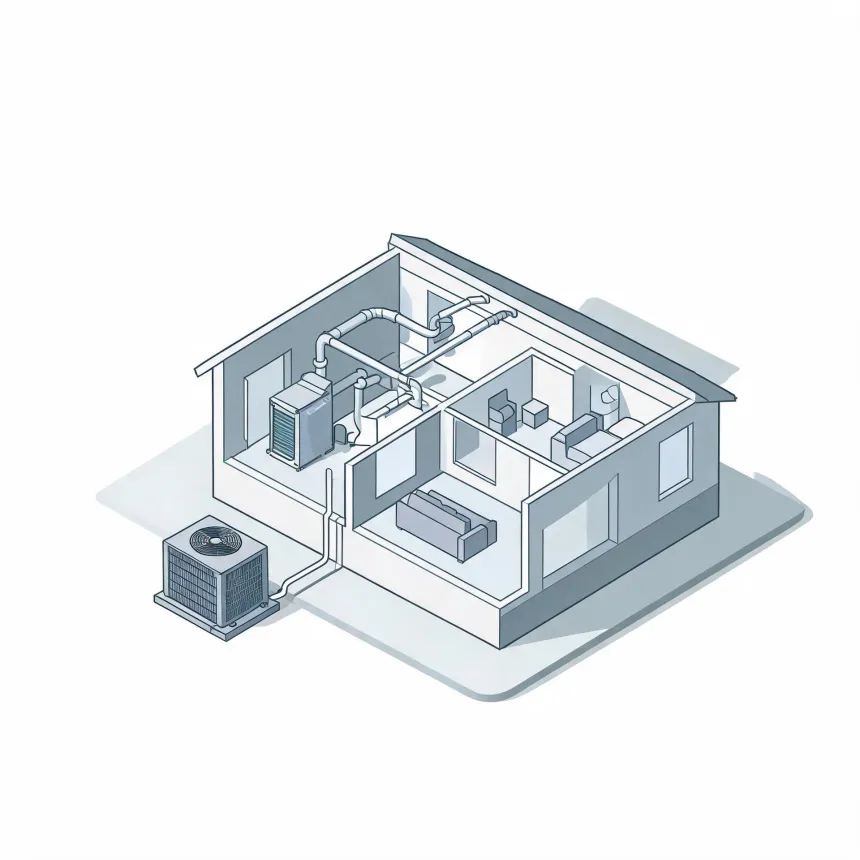
Isometric line illustration of a cutaway house showing interior rooms, a furnace or air handler with ductwork, and an outdoor condenser unit beside the building.
Your air conditioner works hardest from July through August.

NOAA nClimDiv, 1991–2020 normals

A capacitor that sat idle all year is the part most likely to fail the first week the AC has to work hard.

The first hot stretch of summer is when a weak capacitor gives out, not some random afternoon later on.

Two months of real work a year is not much to ask of a compressor

Cooling runs July through August
Summer afternoons average 81°F
85 damaging wind events from 2015 to 2024
Your AC's age matters more than your house'sHalf the homes in Cassia County were built in 1975 or earlier, half later. Either way, it's the usual parts that fail.

At some point a contractor will tell you the repair isn't worth it, and age isn't really what that decision comes down to. What matters is whether the compressor itself is still good. A bad capacitor, a failed contactor, a leak in the line, those get fixed and the unit runs on. But if the compressor is grounded out or seized, there's no part to swap that fixes that, and a new compressor costs enough that most people put that money toward a new system instead. The other thing that pushes toward replacement is a unit that keeps coming back with a different problem every year. That's not one failure anymore, that's a system telling you it's done.

Get it looked at early

Problems tend to show up in the first weeks of the season, when the load hits a part that was already weak.

Find a contractor
An outdoor air conditioning condenser unit mounted on a concrete pad beside a house, with electrical conduit running to a wall-mounted disconnect box.

What to check yourself first

Before anyone comes out, check the thermostat batteries and make sure it's set to cool, below room temperature. Look at the breaker panel for a tripped breaker, AC units have their own circuit and a tripped breaker will kill it dead. Go outside and look at the condenser. If the fan isn't spinning and you don't hear a hum, that's worth noting. If it's humming but not spinning, don't touch it, that usually means a bad capacitor or a seized motor and poking at it can hurt you. Check the air filter. A filter clogged with dust chokes airflow and can ice up the coil, and a frozen coil will stop the system from cooling no matter what else is working. If you see ice on the indoor coil or the refrigerant lines, turn the system off and let it thaw completely before anyone diagnoses it, running it iced up can damage the compressor. Clear any grass, leaves or debris from around the outdoor unit so air can move through it. None of this tells you exactly what's wrong, but it rules out the simple stuff and gives the contractor a head start.

A frozen coil keeps freezing until the system shuts down

Once ice starts forming on the indoor coil, airflow gets worse, so more moisture freezes, so airflow gets worse still. Left running, the whole coil can ice over and the system stops cooling altogether. Running it longer in that state doesn't fix anything, it just adds to the ice.

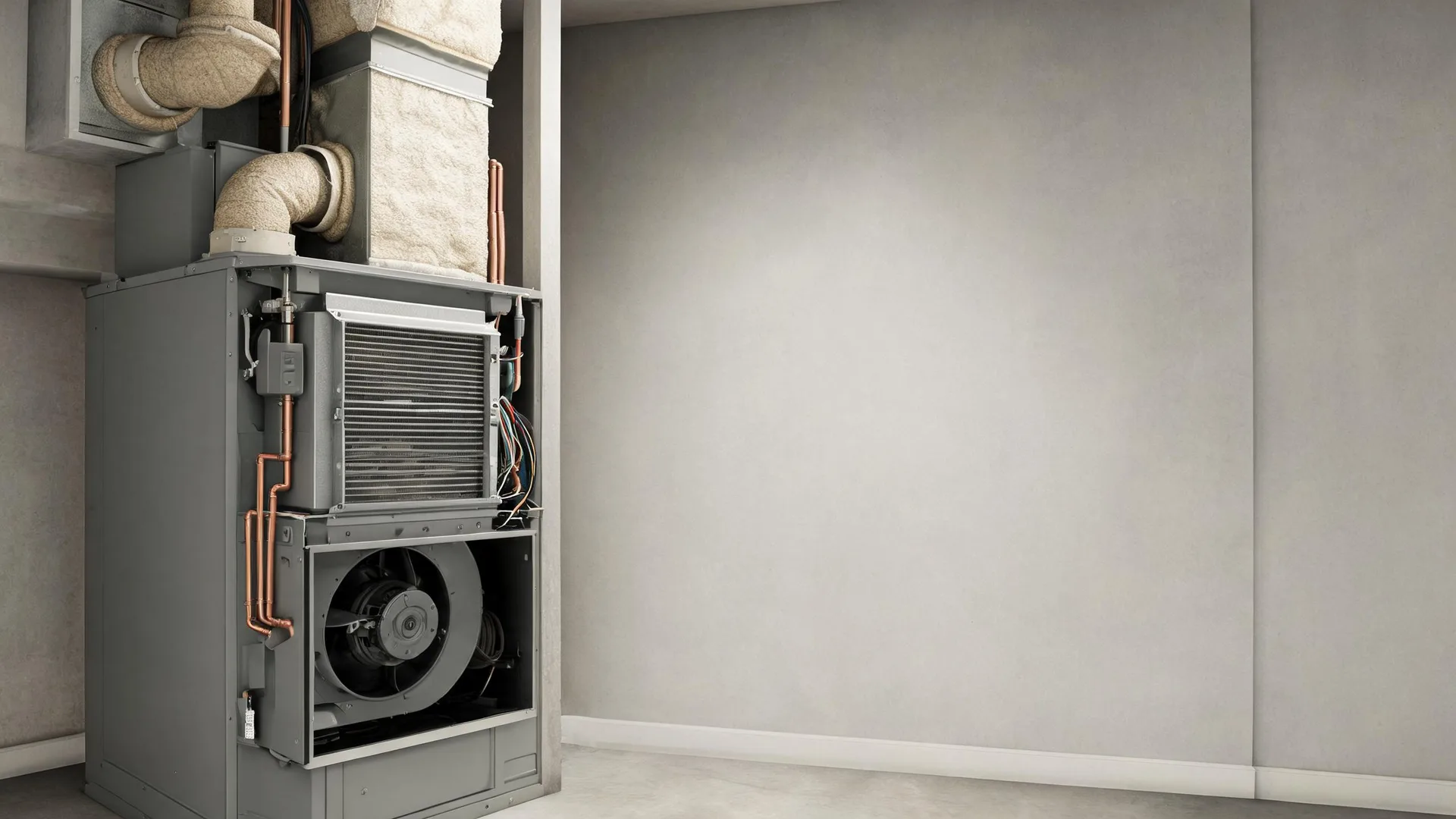
A low refrigerant charge wears on the compressor

A compressor is built to pump refrigerant, not run without enough of it. A slow leak means less refrigerant to move, so it works harder and runs hotter to do the job. Keep running it that way and the compressor itself can fail, not just the line that was leaking.

Overhead view of a gray outdoor AC condenser unit on a concrete pad beside a mulched garden bed and a house with vinyl siding.

A new air conditioner would save little on running costs in Cassia County, so the repair decision comes down to the unit's condition.

  • A new one at the federal minimum, 13.4 SEER2$110 a year
  • An older air conditioner$120 a year

Estimates for a typical Cassia County home, compared with an older unit built to the previous federal minimum, from EIA household energy data, Idaho fuel prices and NOAA climate normals. Your home will differ.

Repair makes sense when a part like a capacitor or contactor has failed.

Replacement makes sense when the compressor has failed or the system uses R-22 refrigerant, which is no longer made.

A diagnostic visit starts with questions. When it cuts out, whether it's blowing warm, any noise before it stopped. Then a contractor checks pressures on the refrigerant lines, tests the capacitor, and watches the contactor pull in under load. Electrical readings catch a weak part before it fails outright, not just after. They'll check the coil for ice or dirt and the airflow coming off the vents, since a system can have good pressures and still fail to cool if air isn't moving through it. Most of this is done with the system running, because a part that tests fine sitting still can fail the moment it's under load.