

Running the way it should
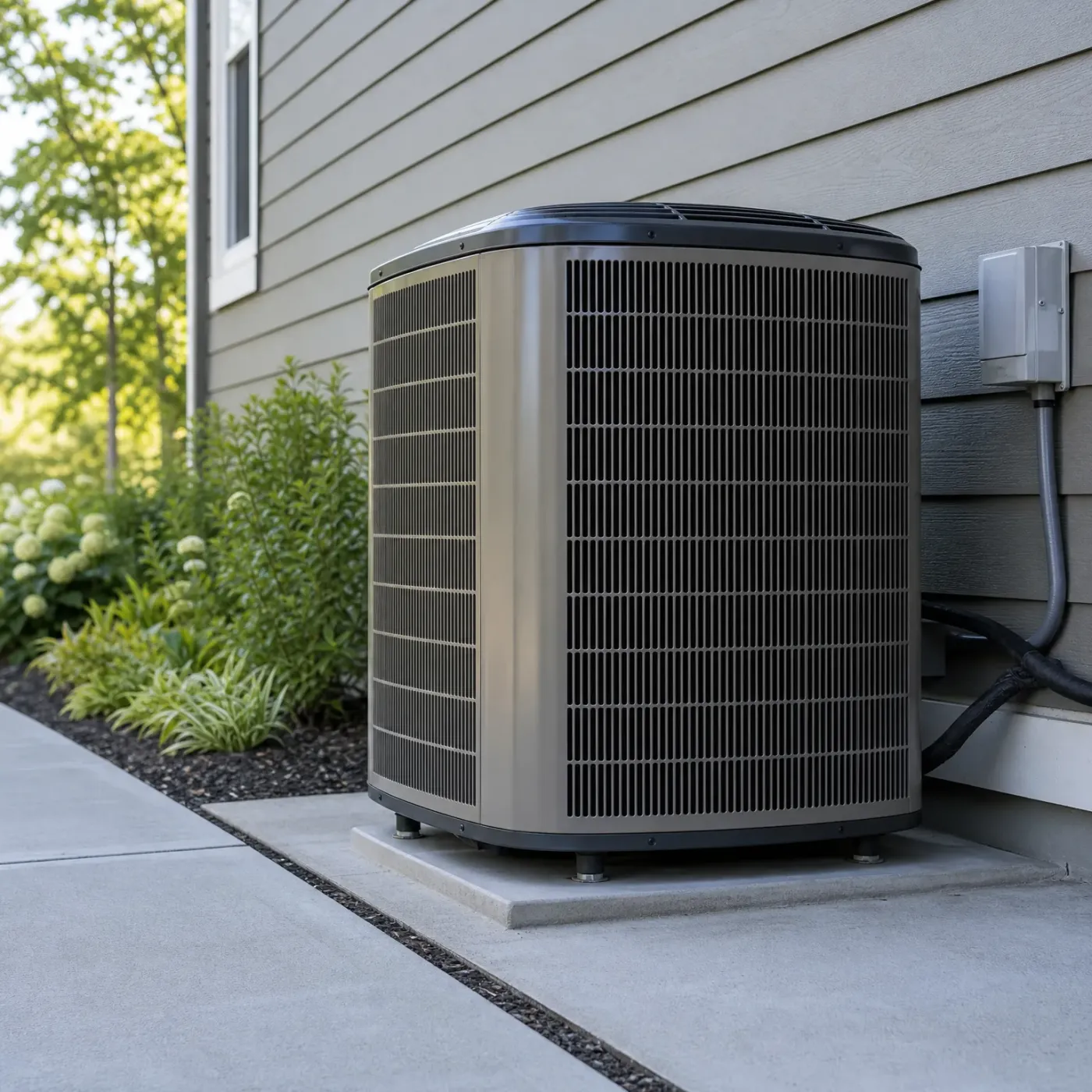
This is what a healthy system looks like. The condenser sits clear on its pad, the line set runs clean to the disconnect, and nothing is piled against the grille. Air moves through it the way it was built to.
Send the request today and stop worrying about who to call.
Hand it offYour AC quit cooling or won't turn on, and before you pick up the phone, you want to rule out the simple stuff. Idaho summers get hot and dry, and a system that's struggling matters now, not next week. A few checks take five minutes and can tell you whether this is something small or something that needs a licensed contractor out to look at it.
Make sure the thermostat is set to cool and a few degrees below the room temperature. Check the breaker box for a tripped breaker, since AC units pull a lot of current and can trip one on a hot afternoon. Pull the filter and hold it up to light. If you can't see through it, it's choking off airflow and the system may be icing up behind it. Walk outside and look at the condenser unit. Clear away any leaves, grass clippings or debris piled against it, and listen for whether the fan inside is spinning. If all of that checks out and the air still isn't cold, the problem is inside the system and it's time to get a contractor to look at it.

Set it below the room temperature and listen for the system to kick on. If nothing happens, check that it's set to cool, not just on, and that batteries aren't dead if it runs on them. A thermostat reading wrong by a few degrees can keep a perfectly good AC from ever starting, and it costs nothing to rule out before anyone comes out.

Walk out to the condenser and check if the fan is spinning and air is moving through it. Idaho's dry summers mean dust and cottonwood seed build up fast on the coil fins, and a unit caked with debris can't shed heat right. Clear leaves or grass clippings away from the sides, but leave the panels alone. If the fan isn't turning at all, that's worth mentioning when you call.
Walk through the house and feel the vents. If warm air is still moving, the blower is running but the system isn't cooling it, which usually points to the compressor or the refrigerant charge. If nothing is coming out at all, airflow itself is the problem, maybe a clogged filter choking the system or a blower that's not turning on. Listen outside too. The outdoor unit should hum steadily when the system is running. Clicking, buzzing, or a unit that's silent while the thermostat calls for cooling are all worth noting before you call. On a hot, dry Idaho afternoon, a system that's run dry on airflow or refrigerant can also ice up its coil, which only makes the problem worse the longer it sits.

This is what a healthy system looks like. The condenser sits clear on its pad, the line set runs clean to the disconnect, and nothing is piled against the grille. Air moves through it the way it was built to.

Leaves and dirt packed around the base and caked on the grille block airflow the unit needs to cool. If yours looks like this, that alone can explain warm air or a system that won't keep up on a hot Idaho afternoon.


Skip searching for an air conditioner pro and answer a few questions instead.
Send the request and finding a pro stops being your problem.
You're not committing to anything by asking.


Air conditioning is a loop, and each part depends on the one before it. Return air carries dust into the filter first, so everything downstream suffers when that filter is packed. Once airflow drops, the evaporator coil gets colder than it was built to run, and ice forms on it fast. From there warm air stalls out in the house, or the unit shuts itself down trying to protect the compressor. Outside, the condenser needs clear air on every side to push the heat back out of your home. Grass clippings against the coil or furniture stacked next to it block that, and the unit works harder for less cooling. The capacitor sits inside the condenser and gives both the compressor and fan motor the push to start spinning. When it weakens, you hear a hum but nothing turns over, because the motor can't get moving on its own. Next to the condenser, the disconnect box has its own breaker separate from your home's panel, and it's worth checking if the unit seems dead. Low refrigerant means a leak somewhere in the line set, since the system is sealed and doesn't burn through it over time. A tech can check the charge and find the leak, but topping it off without finding the leak just means doing it again. Each of these points to a different fix, and knowing which one you're looking at saves a wasted call.




Check the filter before anything else
If it's gray with dust or you can't remember the last time it was changed, swap it and give the system a few minutes before you decide it's broken.
At 11.83 cents per kilowatt-hour, running your AC here doesn't punish your bill the way it might elsewhere. That's worth knowing before you call, because if the unit is struggling, it's more likely a repair issue than one you can budget your way around by babying the thermostat.
EIA-861 2025 statewide residential average
A thermostat set wrong, a filter packed with dust, a breaker that tripped. Those are worth ten minutes before anyone comes out, and if one of them was the problem, you just saved yourself the wait. If you checked all three and the air is still warm, or still not moving, that's not something to keep testing on your own. It's the compressor, the charge, or the capacitor, and those need a gauge set and a license, not another hour of guessing. Idaho heat doesn't let a bad system coast, and the longer it runs wrong, the more it can cost you in a part that failed trying to keep up. You've done the part that was yours to do. What's left is getting someone qualified to look at it, and that part doesn't have to sit on your evening too.


Send one request and you're done looking
One form replaces the calls you'd make to find an air conditioner pro.
