






An outdoor air conditioning condenser unit positioned on a concrete pad next to a blue-sided house, surrounded by green shrubs and flowering hydrangeas at sunset.

AC Repair in Council, ID

Tell us about the job

Takes about a minute. No obligation.

RepairCentral ACAdams County, ID
Step 1 of 2

What ZIP code is the job in?

Half the homes in Adams County were built in 1986 or later. If yours is one of them, the AC in it probably hasn't put in the years you'd think. A compressor or condenser fan that's acting up in a system that age is usually a repair, not a sign it's done. Check what came with the house against what's failing now before you assume the worst.

1 months
July through July, your air conditioner is on duty
78°F
the average summer afternoon it cools against
2 hail events
in ten years, and hail bends the fins on outdoor coils
10 wind events
in ten years, and wind drives debris into outdoor units
Isometric cutaway illustration of a single-story house showing interior rooms with furniture, attic ductwork connected to an indoor air handler, and an outdoor condenser unit on a pad linked by refrigerant lines.
Your air conditioner works hardest from July through July.

NOAA nClimDiv, 1991–2020 normals

July is the only month cooling runs in Adams County.

A compressor that only works one month a year doesn't wear out fast, so a repair is usually the right call.

July is the only month your AC has to prove itself

Cooling runs July through July
Summer afternoons average 78°F
Power costs 11.52 cents a kWh statewide
A newer home usually means a repair, not a replacementHalf of Adams County was built in 1986 or later.

So when something does go wrong, it's worth getting looked at rather than replaced. A system that only runs through July has had the easiest possible run the rest of the year. The afternoon highs here average 78°F even at the peak of summer, which isn't a hard ask for a compressor or a fan motor in decent shape. If yours is cutting out or blowing warm air, that points to a specific part failing, not a system worn down from overwork. Have the contractor check that part first before talking about a new unit.

Repair it

If your system came with a newer house, it likely has plenty of life left. Repair is usually the right call.

Find a contractor
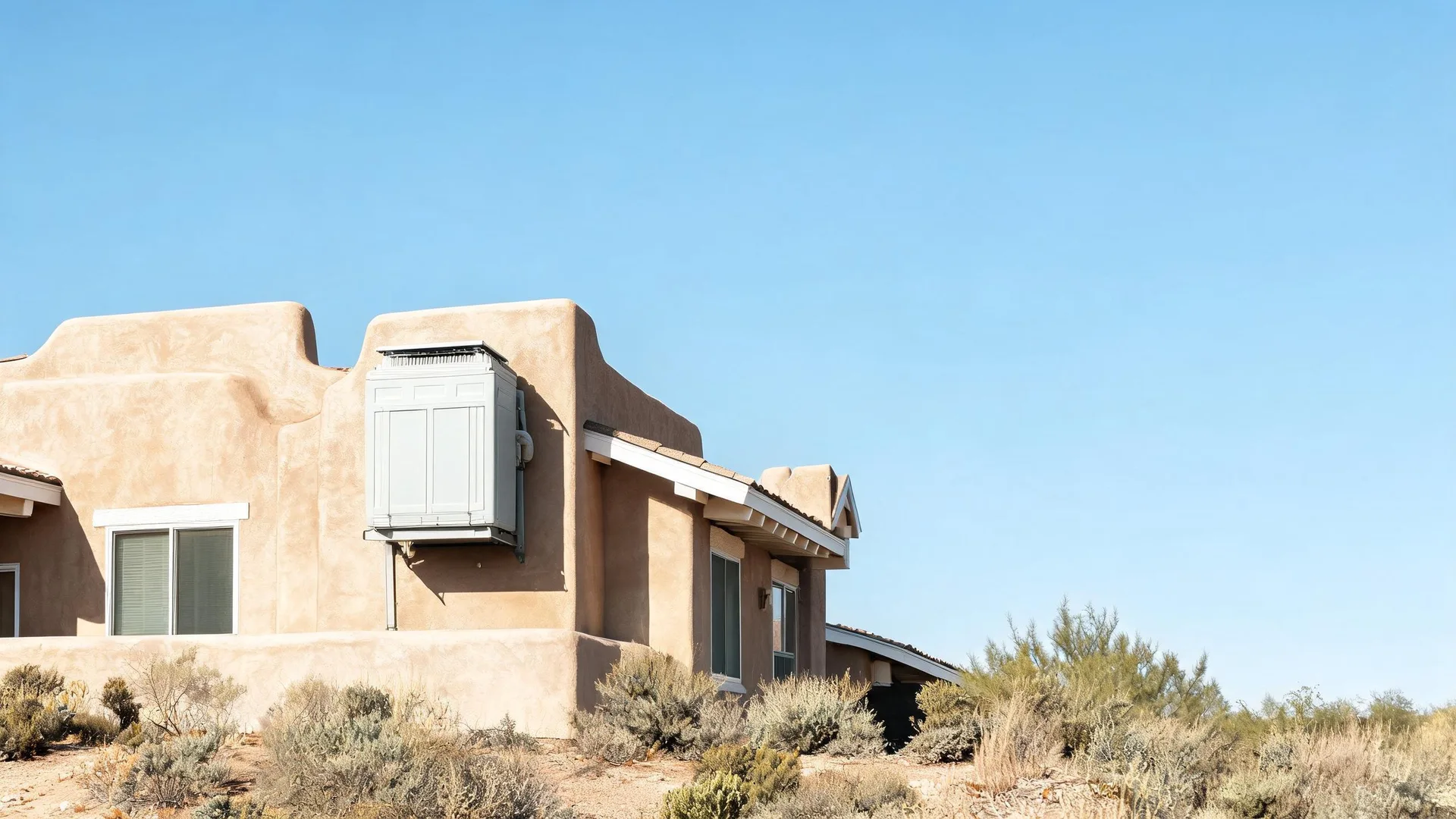
An outdoor residential air conditioning condenser unit mounted on a concrete pad, surrounded by gravel with a blue sky in the background.

What a failing AC actually sounds and feels like

A unit that's starting to fail doesn't usually just quit. It gives you something to notice first. Warm air coming through the vents while the thermostat says it's cooling points to a problem with the compressor or a refrigerant leak. Short cycling, where the system kicks on and off every few minutes instead of running a full cycle, strains the compressor every time it restarts. Ice on the refrigerant lines usually means airflow is restricted, often from a dirty filter or a failing blower motor. A fan that's loud or grinding is telling you a motor bearing is wearing out, not something to wait on. Water pooling near the indoor unit means a clogged condensate line or a cracked drain pan, and that water damages the floor or the unit itself if it sits. None of these mean the system is finished. They mean one part is asking for attention before it takes others down with it.

A refrigerant leak gets worse while it runs

A system low on refrigerant still tries to hit the temperature on the thermostat, so the compressor keeps working past the point where it can actually cool. Running it that way heats the compressor beyond what it's built for and can kill it outright, turning a leak repair into a compressor replacement.

A restricted airflow problem feeds on itself

When airflow is blocked, the evaporator coil gets cold enough to ice over. Once ice forms, it blocks even more airflow, so more ice builds up. Left running, that cycle ends with a solid block of ice on the coil and water going where it shouldn't as it melts.

Aerial view of a gray outdoor air conditioning condenser unit mounted on a concrete pad next to a house with vinyl siding.

A new air conditioner would save little on running costs in Adams County, so the repair decision comes down to the unit's condition.

  • An older air conditioner$70 a year
  • A new one at the federal minimum, 13.4 SEER2$70 a year

Estimates for a typical Adams County home, compared with an older unit built to the previous federal minimum, from EIA household energy data, Idaho fuel prices and NOAA climate normals. Your home will differ.

Repair makes sense when a part like a capacitor or contactor has failed.

Replacement makes sense when the compressor has failed or the system uses R-22 refrigerant, which is no longer made.

A diagnostic visit starts with the thermostat and works outward. The tech checks what it's calling for against what the system is actually doing, then moves to the condenser outside and the air handler inside. Gauges go on the refrigerant lines to check pressure, since too little or too much points to different problems. Electrical components get tested too, the capacitor and contactor especially, since a weak capacitor can look like a dead compressor if you don't check it first. Airflow gets checked at the vents and at the coil itself, because restricted airflow shows up as symptoms that mimic other failures entirely. By the end the tech can usually point to one part and tell you straight whether it's worth fixing.