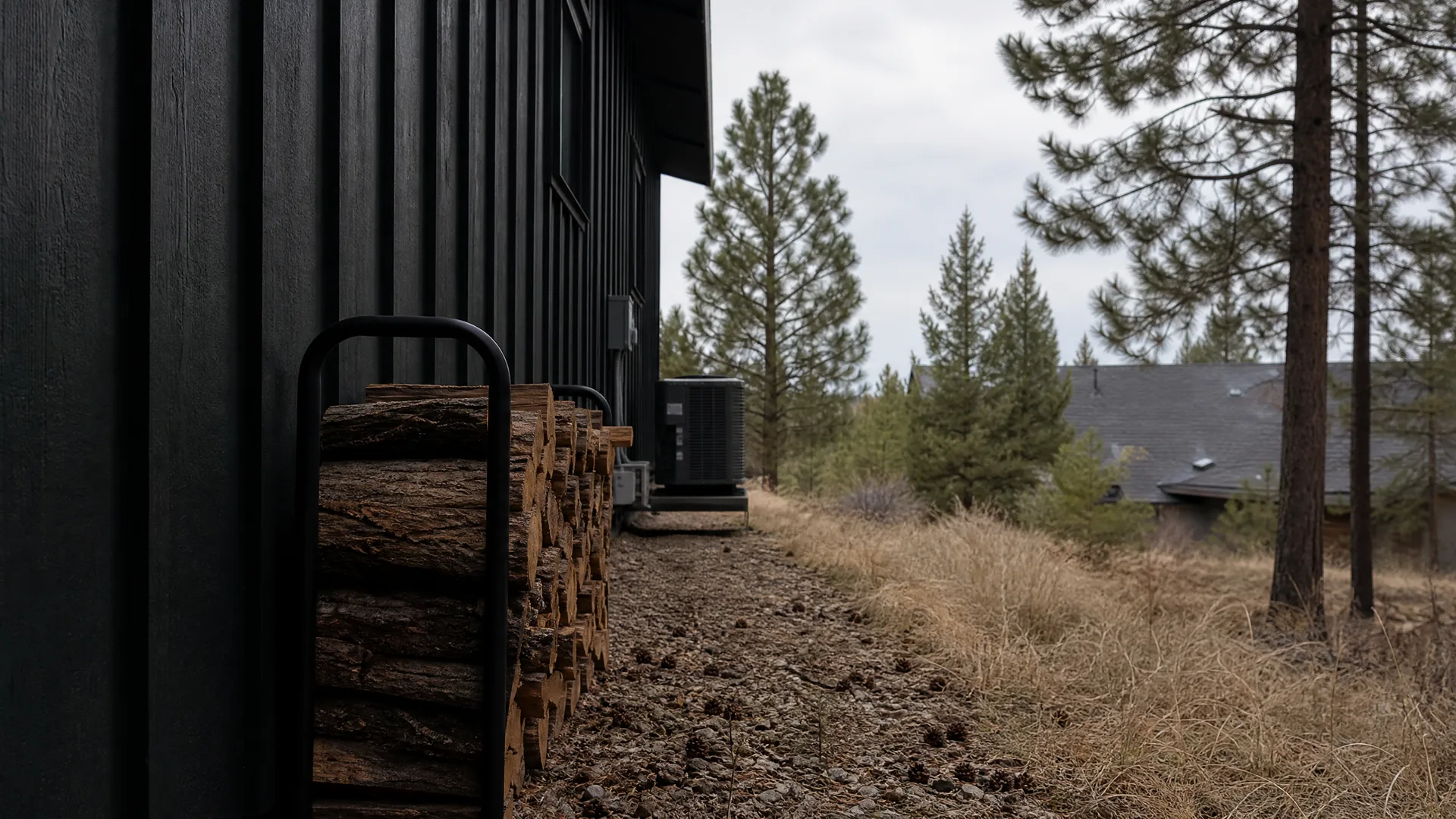





A black vertical-board exterior wall with a metal rack of stacked firewood, an air-conditioning condenser unit beyond, and dry grass, gravel and pine trees with a neighboring roof in the background.

AC Repair in Horseshoe Bend, ID

Tell us about the job

Takes about a minute. No obligation.

RepairCentral ACBoise County, ID
Step 1 of 2

What ZIP code is the job in?

Half the homes in Boise County were built in 1991 or later. That's a newer system than you'd find in most places, and newer usually means fewer of the problems that come with age, like a compressor on its last stretch or a coil worn thin from years of cycles. If your AC came with the house, there's a good chance it's still well within its working life. That's worth knowing before anyone talks about replacing it instead of fixing what's wrong.

1 months
July through July, your air conditioner is on duty
78°F
the average summer afternoon it cools against
2 hail events
in ten years, and hail bends the fins on outdoor coils
8 wind events
in ten years, and wind drives debris into outdoor units
Isometric grayscale illustration of a cutaway house showing interior rooms, ceiling ductwork connected to an indoor air handler, and an outdoor condenser unit linked by lines along the exterior wall.
Your air conditioner works hardest from July through July.

NOAA nClimDiv, 1991–2020 normals

Your AC only has to work one month a year here, July.

A system that runs that little usually has a lot of life left, so fixing what's wrong is almost always worth it.

One month of work a year, and July is when a weak part finally shows it

Cooling runs July through July
Summer afternoons average 78°F
Power costs 11.52 cents a kWh statewide

So when something quits in July, it's worth calling someone out before you call it done. A capacitor that's gotten weak, a contactor with pitted contacts, a low charge from a slow leak, none of that means the system's worn out. It means one part needs attention on a machine that's barely worked all year. Get a tech to find the actual part and fix that part, rather than treating the whole unit as suspect just because it picked this month to act up.

If your AC came with the house, fix what broke

Get the actual problem looked at before anyone brings up replacement. A system that's still within its working life is worth repairing, and the part that's failing now is usually a small one next to the system around it.

Find a contractor
A gray residential air conditioner condenser unit mounted on a concrete pad in an open grass field.

Before you call, check these

A few things are worth checking before anyone comes out. Start with the thermostat. Make sure it's set to cool and the set point is actually below room temperature, since a setting bumped by accident looks exactly like a system that won't respond. Next, go look at the filter. Pull it out and hold it up to a light. If you can't see light through it, that's airflow the system isn't getting, and it's the one fix you can do yourself in a few minutes. Check the outdoor unit too. Walk out and see if the fan is spinning and if anything, leaves, grass clippings, a fallen branch, is blocking the sides. Inside, check that supply vents are open and nothing's been pushed in front of one. Last, check the breaker. If the outdoor unit is dead quiet, not even a hum, a tripped breaker is worth ruling out before assuming the worst. None of this fixes a bad capacitor or a refrigerant leak, but it rules out the simple stuff fast, so the tech can start on the part that's actually failing.

What you'll actually notice first

The air coming out isn't cold, or it's cold for a while then quits. The system short cycles, shutting off before the room ever gets comfortable. Sometimes it's a sound instead. A hum from outside with no fan turning. A click that repeats without the compressor kicking in. A hiss near the lines. Any of these points to one specific part struggling, not the whole unit failing.

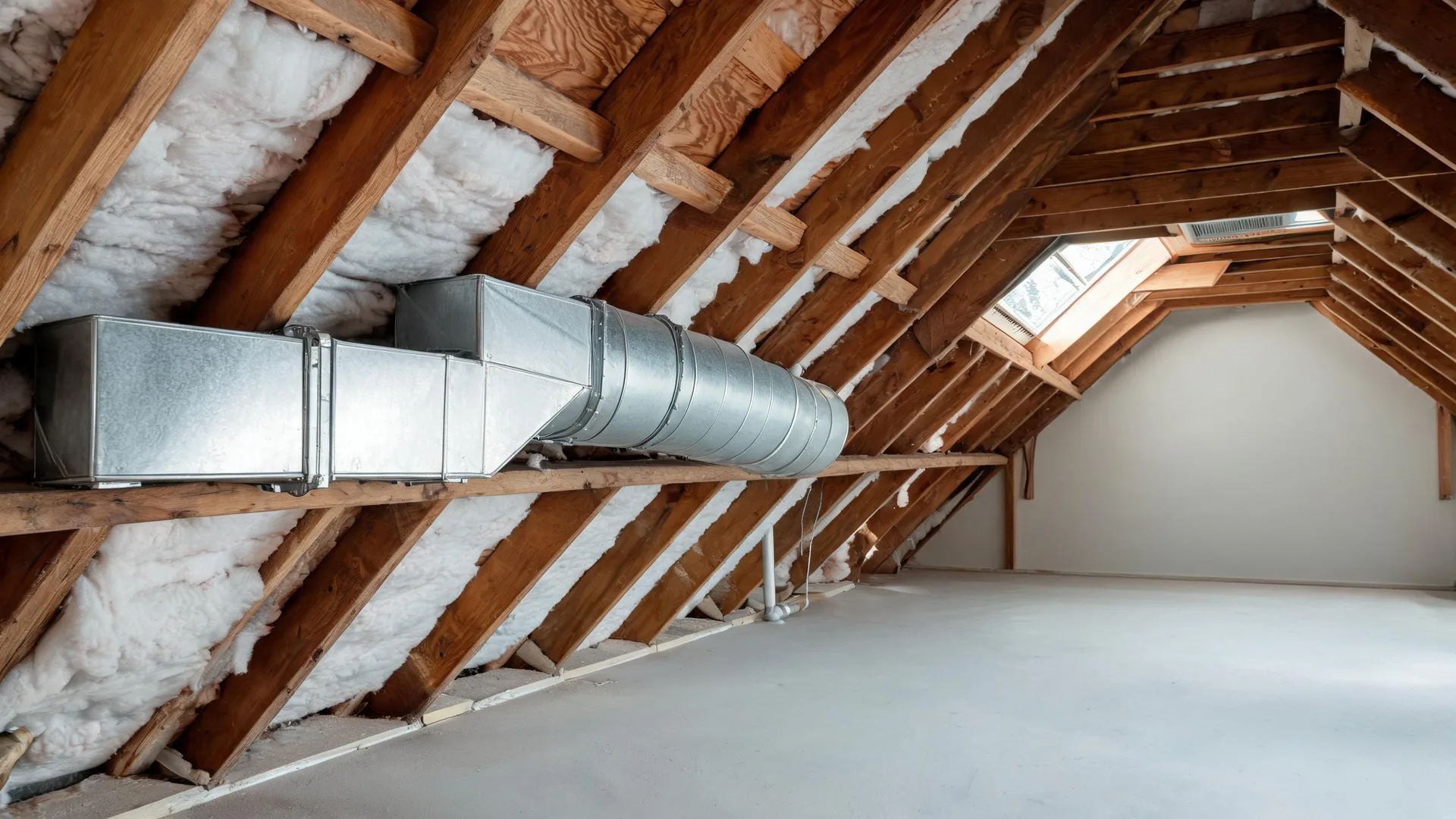
Why waiting makes the diagnosis harder

A system cycling on a bad part gives a tech a clear signal to trace. Let it keep running that way and the signs blur together. A starved compressor can trip its overload protection and shut the whole unit down, and by the time someone looks at it, the small original problem is buried under a bigger one. Calling as soon as something sounds or feels off gives the tech the clearest read on what's actually wrong.

An outdoor air conditioning condenser unit positioned on a concrete pad next to a blue-sided house, surrounded by green shrubs and flowering hydrangeas at sunset.

A new air conditioner would save little on running costs in Boise County, so the repair decision comes down to the unit's condition.

  • An older air conditioner$60 a year
  • A new one at the federal minimum, 13.4 SEER2$60 a year

Estimates for a typical Boise County home, compared with an older unit built to the previous federal minimum, from EIA household energy data, Idaho fuel prices and NOAA climate normals. Your home will differ.

Repair makes sense when a part like a capacitor or contactor has failed.

Replacement makes sense when the compressor has failed or the system uses R-22 refrigerant, which is no longer made.

A diagnostic visit starts outside, at the condenser. A tech checks whether the fan spins freely and whether the compressor is drawing the current it should. From there it's the refrigerant lines, checked with gauges for a charge that's low or a pressure that's off, either one pointing to a leak somewhere in the system. Inside, the coil and the filter get a look too, since airflow problems show up as cooling complaints even when the compressor is fine. A capacitor gets tested under load, not just eyeballed, because a weak one can still look fine sitting still. The goal is to find the one part actually causing the trouble, not to start swapping parts and see what helps.