Half the homes here were built in 1983 or later
Jerome County splits down the middle. Half the homes were built in 1983 or earlier, half in 1983 or later. A system in one of the newer houses still has a reasonable amount of life built into it.
Takes about a minute. No obligation.
Jerome County splits down the middle. Half the homes were built in 1983 or earlier, half in 1983 or later. A system in one of the newer houses still has a reasonable amount of life built into it.
When the house itself isn't old, a broken AC is more likely a single bad part than a system on its way out. A capacitor, a contactor, a low charge, something a tech can fix without replacing the whole unit.

NOAA nClimDiv, 1991–2020 normals
A warm compressor running low on refrigerant keeps pulling current it can't put to work.
Left alone that same compressor overheats and seizes, turning a repair into a replacement.




If your AC came with the house and the house is newer, get the part fixed rather than jump to replacing the unit. A tech can check the capacitor, the contactor, and the refrigerant charge in one visit and tell you which one is the problem. Mobile homes are a small share of the housing here, so most of these calls are for a system tied to a standard house and a standard duct setup. That's a simpler job to diagnose. Ask the tech what they found before they tell you what they want to replace.
If your system came with a newer house, it likely has plenty of life left. Repair is usually the right call.
Find a contractor
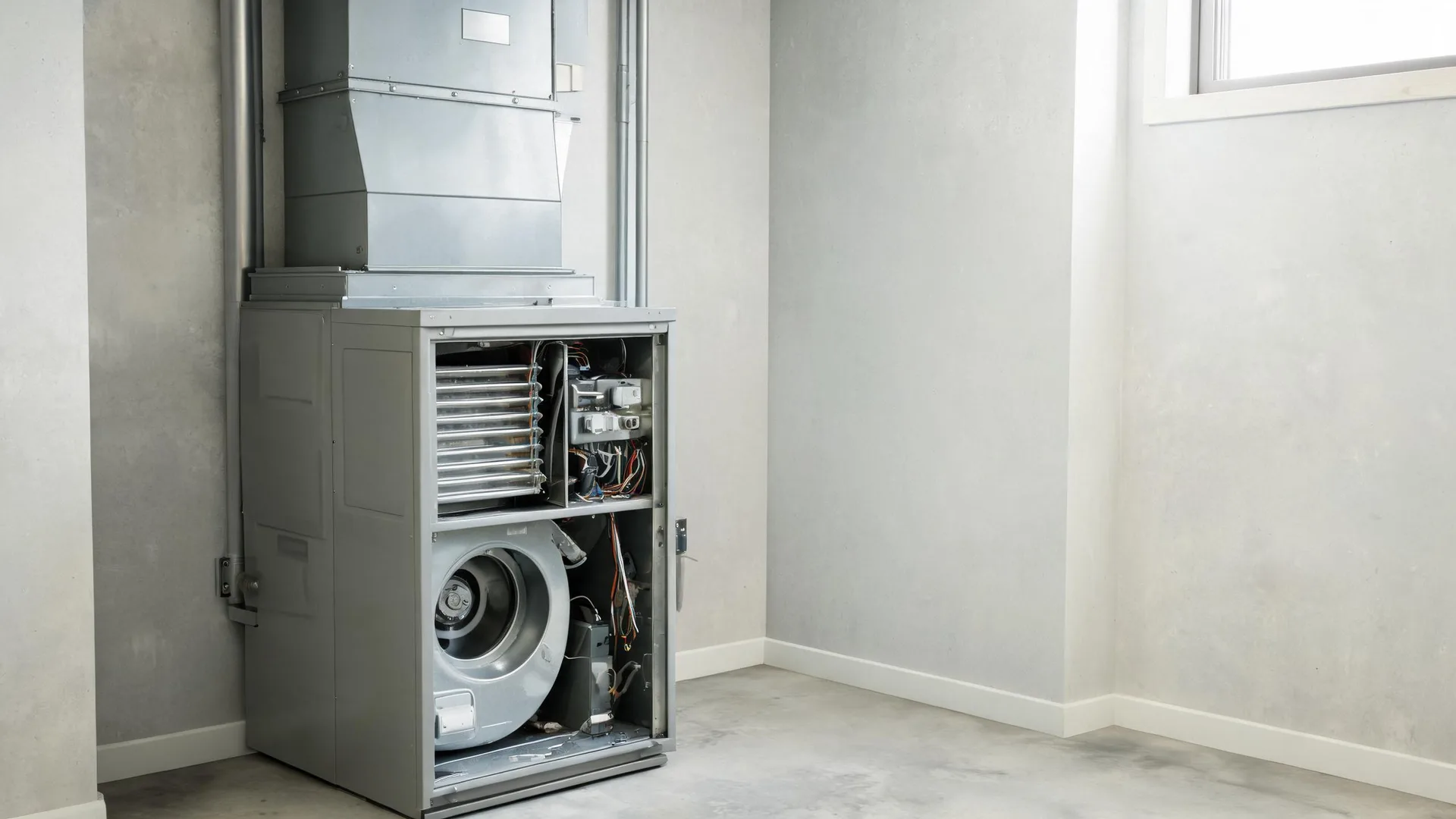
A diagnostic visit starts outside at the condenser, checking that the fan spins freely and the coil isn't caked with debris. From there the tech hooks up gauges to read the refrigerant charge, since a system low on charge behaves differently than one with plenty of refrigerant but a failing part. They'll test the capacitor and contactor directly rather than guess from symptoms, because a hard start can come from either one. Inside, they check the evaporator coil for ice and the condensate line for a clog, since either one can mimic a refrigerant problem without being one. The point of the visit is narrowing down which single part quit, so the fix matches the actual failure instead of replacing parts that were working fine.
A clogged filter starves the system of airflow, and the coil behind it can ice over. If the filter is gray and stiff rather than light and bendable, replace it before you do anything else. This alone fixes a surprising number of warm-air complaints.
Walk outside and check the condenser. Leaves, grass clippings, or a fence line pressed too close can block airflow across the coil and make the whole system work harder than it should. Clear anything within a couple feet of it and make sure the fan on top spins freely.
Estimates for a typical Jerome County home, compared with an older unit built to the previous federal minimum, from EIA household energy data, Idaho fuel prices and NOAA climate normals. Your home will differ.
Repair makes sense when a part like a capacitor or contactor has failed.
Replacement makes sense when the compressor has failed or the system uses R-22 refrigerant, which is no longer made.
Age of the unit matters more than age of the breakdown. A compressor that's running fine after a decade of summers has earned some trust, and a failed capacitor or contactor on that same system is still worth fixing. What changes the math is a compressor itself going bad, or a system that's needed a repair every season for a few years running. At that point you're paying to keep patching the same weak link. A tech can tell you which situation you're in by what's actually failed, not by guessing from the outside. Ask what part quit and whether it's the kind of part that tends to take others down with it.