





Illuminated timber-and-stone houses line a residential street at dusk, with evergreen trees in the foreground and a silhouetted mountain range behind them.

AC Repair in Malad City, ID

Tell us about the job

Takes about a minute. No obligation.

RepairCentral ACOneida County, ID
Step 1 of 2

What ZIP code is the job in?

A repair call is also a chance to ask whether the unit is worth fixing at all. Age matters less than what's failing. A compressor or a coil that's leaking refrigerant is often the end of the road, since replacing either one costs close to a new system. A bad capacitor, a worn contactor, a dead fan motor, those are normal wear parts and fixing them brings the unit back to full working order. If a system has needed several repairs in the past couple of years, that pattern says more than any single breakdown does. A tech who's honest with you will tell you which kind of problem you have before any work starts.

2 months
July through August, your air conditioner is on duty
82°F
the average summer afternoon it cools against
1 hail events
in ten years, and hail bends the fins on outdoor coils
39 wind events
in ten years, and wind drives debris into outdoor units
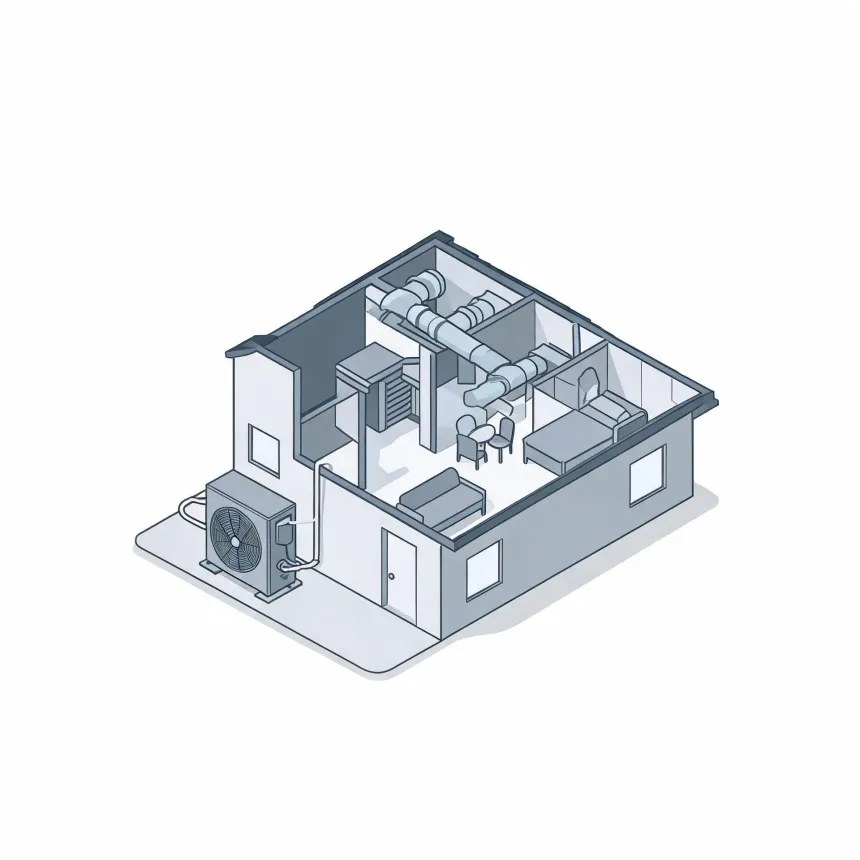
Isometric line illustration of a cutaway house showing interior rooms with furniture and ceiling ductwork, connected to an outdoor condenser unit with a fan beside the building.
Your air conditioner works hardest from July through August.

NOAA nClimDiv, 1991–2020 normals

AC gets turned on in July here.

Whatever part was already weak usually gives out in that first week of heat.

Half the homes in Oneida County were built by 1971, old enough that the AC is not the original one

Half the homes here were built by 1971
Cooling runs July through August
Summer afternoons average 82°F
Two months of work a yearAfternoon highs average 82°F here in June, July and August.

Before you call anyone, check a few things yourself. Go look at the thermostat and make sure it's set to cool and set lower than the room temperature, not just on. Then find the outdoor unit and listen. If it's humming but the fan isn't spinning, that's not something to poke at, shut it off at the breaker and leave it for a tech. Check the air filter next. A filter clogged with dust chokes the airflow, and the system can ice up the coil trying to pull air through it. If you see ice on the copper lines or the indoor coil, turn the system off and let it thaw completely before anyone touches it. Last, check the breaker panel. A tripped breaker that resets and trips again is telling you something is drawing too much power, and that one's for a tech to chase down, not you.

Get it looked at early

Problems tend to show up in the first weeks of the season, when the load hits a part that was already weak.

Find a contractor
A man in a dark shirt and tan work pants, seen from behind, climbs porch steps toward a green front door while carrying a waxed canvas tool bag, with a potted evergreen shrub to the left.
A gray metal air conditioning condenser unit mounted on a concrete pad in a flat grassy field under a partly cloudy sky.

What actually gives out

The parts that fail most are the ones that move or carry a charge. The capacitor stores the kick that starts the compressor and the fan motor, and it weakens with age until one day it can't get either one spinning. The contactor is the switch that sends power to the outdoor unit, and its contacts pit and burn from years of making and breaking that connection until they stop closing all the way. Fan motor bearings wear out the same way any motor's do, running hotter and louder until the motor seizes. The compressor is the one part you don't want to see fail, since it's sealed and isn't something a tech opens up and fixes. Refrigerant doesn't get used up, so a system low on charge has a leak somewhere in the coil or the lines, and that leak only gets worse with time, not better.

What you'll notice first

Warm air out of the vents when the thermostat is set to cool, or air moving but not getting cold. Sometimes it's weak airflow instead, just a trickle out of the registers even with the fan running strong. Short cycling is another one, the unit kicks on, runs a few minutes, shuts off, then starts again before the house has cooled at all.

Noise and smell tell you something too

A new rattle, squeal, or grinding sound from the outdoor unit usually means a part is wearing out before it fails outright. A musty smell from the vents points to moisture sitting somewhere it shouldn't, and a burning smell means stop and shut the system off at the breaker rather than waiting to see what happens next.

Aerial view of a residential air conditioning condenser unit mounted on a concrete pad next to a house with vinyl siding and a sliding glass door.

A new air conditioner would save little on running costs in Oneida County, so the repair decision comes down to the unit's condition.

  • A new one at the federal minimum, 13.4 SEER2$120 a year
  • An older air conditioner$130 a year

Estimates for a typical Oneida County home, compared with an older unit built to the previous federal minimum, from EIA household energy data, Idaho fuel prices and NOAA climate normals. Your home will differ.

Repair makes sense when a part like a capacitor or contactor has failed.

Replacement makes sense when the compressor has failed or the system uses R-22 refrigerant, which is no longer made.

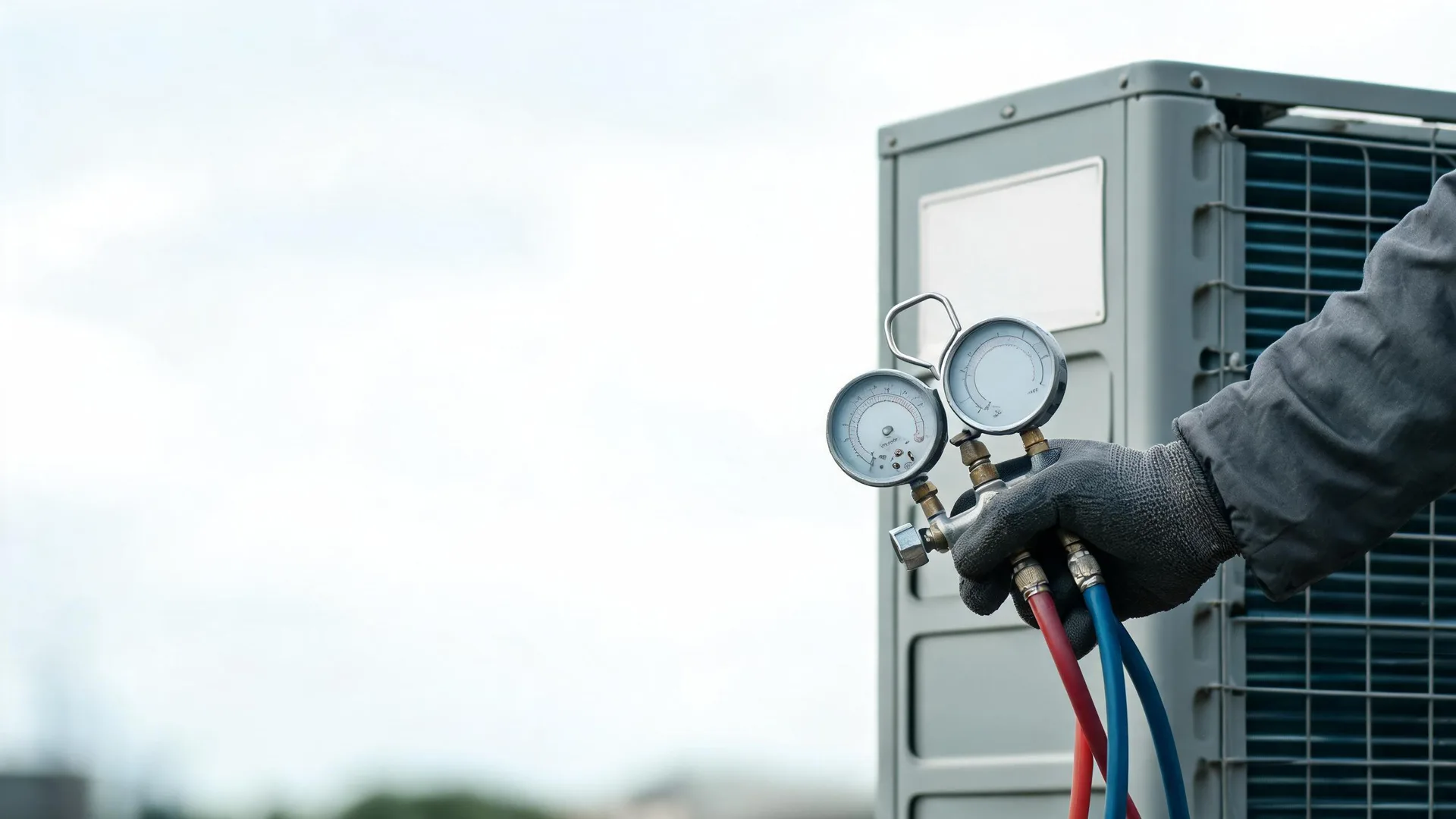
A diagnostic visit starts outside at the condenser, not inside at the thermostat. A tech will pull the panel and check the capacitor and contactor first, since those fail more than anything else out there. Gauges go on next to check refrigerant pressure, which tells them whether the charge is right or whether there's a leak to track down. Inside, they'll check the air handler or furnace coil for ice and check airflow off the vents. Electrical readings matter as much as pressure readings. A tech measures the amp draw on the compressor and fan motor, since a motor pulling more current than it should is a motor on its way out even if it's still spinning fine today.