






A single-story black board-and-batten house with a dark metal gable roof, wood porch posts and stone bases, surrounded by pine trees, dry grass and a gravel foreground under an overcast sky.

AC Repair in Mountain Home, ID

Tell us about the job

Takes about a minute. No obligation.

RepairCentral ACElmore County, ID
Step 1 of 2

What ZIP code is the job in?

Your air conditioner only has to work two months out of the year here, July and August. The rest of the year it sits idle. Afternoon highs in those months average 83 degrees, which is not the kind of heat that pushes a system to its limit day after day. So if your AC is acting up, it's less likely the unit just wore itself out and more likely a part failed or something got neglected. That usually makes it worth fixing rather than replacing.

2 months
July through August, your air conditioner is on duty
83°F
the average summer afternoon it cools against
4 hail events
in ten years, and hail bends the fins on outdoor coils
36 wind events
in ten years, and wind drives debris into outdoor units
Isometric cutaway illustration of a single-story house showing interior rooms, ceiling ductwork connected to an indoor air handler, and an outdoor condenser unit beside the exterior wall.
Your air conditioner works hardest from July through August.

NOAA nClimDiv, 1991–2020 normals

Half the homes in Elmore County were built in 1988 or later.

A system that came with a newer house here still has years left in it, which is why repair is usually the right call.

June is when a weak part gets found out

Cooling runs July through August
Climate zone 5B
Power costs 11.52 cents a kWh statewide
If it's acting up, get it looked atA failed part is worth fixing. Wind damage is worth checking for first.

If your AC came with the house, get the model and serial number before the tech shows up. They're usually on a sticker on the side of the outdoor unit. That tells the tech what parts fit your system and whether any are still under manufacturer warranty. Mobile homes here are a different story. If yours is on one, say so when you call, since those units often take different equipment and not every tech stocks parts for them.

It's usually worth repairing

It has an easier job here than in most places, so your air conditioner is often in decent shape. Repair is usually worth it.

Find a contractor
A man in a cap, gray T-shirt and tan work pants carries a canvas tool bag up porch steps toward a green front door of a lap-sided house, with a potted shrub to the right.
A gray residential air conditioning condenser unit mounted on a concrete pad outdoors, surrounded by green grass under a partly cloudy blue sky.

A bad part gets worse the longer it runs

A system with a bad part does not shut itself off. The compressor keeps firing and the blower keeps pushing air, and whatever is wrong gets worked instead of rested. A refrigerant leak is a good example. Run it low on charge long enough and the compressor starts pulling liquid it was never built to handle, which turns a leak repair into a compressor replacement. A failing capacitor works the same way. It makes the compressor and fan motor draw more current just to start up, and that extra draw is what burns a motor out. A dirty coil does it too, just slower. Restricted airflow makes the system run longer to cool the same space, and that extra runtime wears on everything downstream of the coil. None of this means every rattle or short cycle is urgent. But once something is clearly wrong, running it on the theory that it still cools the house is usually how a small repair turns into a much bigger one.

Check the simple things first

Look at the thermostat before anything else. Make sure it's set to cool and the temperature is actually below room temperature. Then check the breaker box. A tripped breaker will shut the whole system down and flipping it back on is free. Last, look at the outdoor unit. If leaves or grass clippings are packed against the side of it, clearing them away might be all it needs.

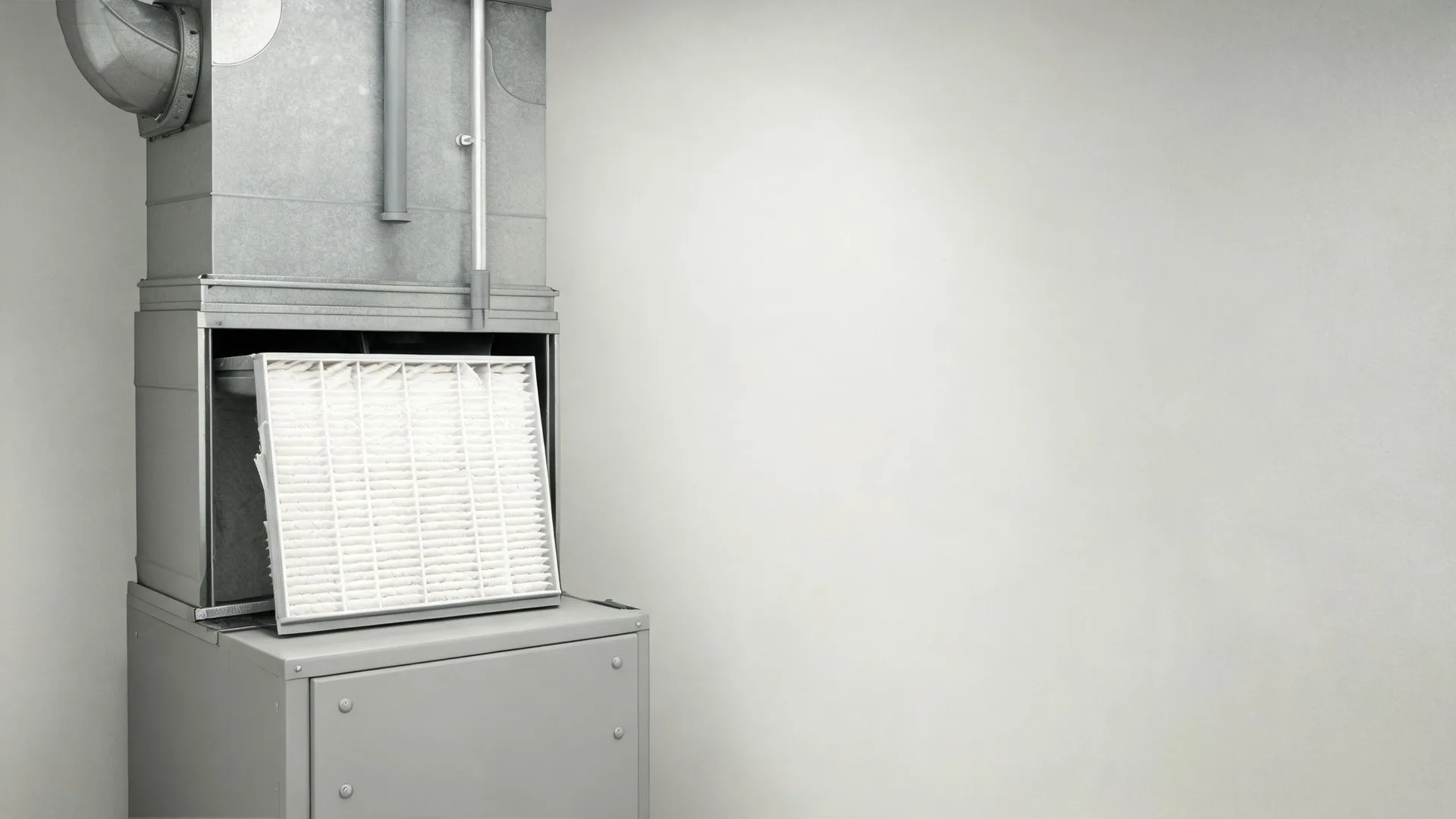
What to check, and what to leave alone

The air filter is worth pulling and looking at. A filter clogged with dust chokes airflow and can ice up the coil, and swapping it is something any homeowner can do. Past that, step back. Opening the outdoor unit or touching refrigerant lines means working around a capacitor that holds a charge and refrigerant that isn't safe to handle. Those checks are for a tech, not for you.

An overhead view of a residential air conditioning condenser unit mounted on a concrete pad next to a house with vinyl siding.

A new air conditioner would save little on running costs in Elmore County, so the repair decision comes down to the unit's condition.

  • A new one at the federal minimum, 13.4 SEER2$120 a year
  • An older air conditioner$130 a year

Estimates for a typical Elmore County home, compared with an older unit built to the previous federal minimum, from EIA household energy data, Idaho fuel prices and NOAA climate normals. Your home will differ.

Repair makes sense when a part like a capacitor or contactor has failed.

Replacement makes sense when the compressor has failed or the system uses R-22 refrigerant, which is no longer made.

Not every repair is worth the same answer, and the part that failed usually tells you which kind you're dealing with. A capacitor or a contactor is a small, contained failure. It does one job, it does it alone, and swapping it brings the system back to exactly what it was. A compressor is a different question. It's the most expensive part in the unit, and a tech will usually weigh its condition, not just its failure, before recommending work on it. Age matters less here than how the system got used. A unit that ran clean and got looked at when something seemed off tends to fail in these small, fixable ways. One that got ignored through a few warning signs is more likely to hand you a bigger failure when it finally quits.