Side profile of a bearded man wearing a dark brown baseball cap and a dark gray t-shirt against a plain light background.

Heat pump frozen over in Sandpoint, ID

RepairHeat PumpBonner County, ID
Step 1 of 2

What ZIP code is the job in?

A frozen outdoor unit usually means the heat pump is stuck in a defrost cycle it can't finish, or it's not defrosting at all. These units pull heat from outside air even when it's cold out, and that moisture in the air turns to frost on the coil. A normal defrost cycle clears that off every so often. When it doesn't, the cause is often a stuck reversing valve, a bad defrost sensor or timer, a fan that's not running, or a refrigerant charge that's too low. Around Sandpoint, with winters cold enough to run the heat pump hard for months, a unit that can't shed frost properly loses heat output fast and can ice up solid within a day. It won't damage itself right away, but it will stop heating your house and will keep drawing power while doing little good. This is a repair job, not something to chip away at with a hose or a hair dryer. A local contractor who works on heat pumps through the winter here can tell you which part failed and get it running again.

A gray-haired bearded man in a dark green sweater sits on a light sofa indoors, looking to the side, with a houseplant, framed picture, table lamp and sunlit window behind him.
A middle-aged man in a dark denim shirt sits on a light beige sofa in a living room with wooden shelving and a potted plant, looking off to the side.
A gray-haired man in a dark navy sweater sits on a light sofa in a living room, looking toward a sunlit window with a houseplant and wooden cabinet behind him.
A man with greying hair in a dark green sweater sits on a light sofa in a sunlit living room, looking off to the side, with a large window, table lamp, framed art and white built-in shelves behind him.

Why does frost keep building back up on your unit?

  • Winter nights average 22°F

    Nights here average 22°F in December, January and February, cold enough that your coil is working to pull heat from thin, dry air for hours at a stretch.

  • Heat runs September through June

    Your heat pump runs from September through June in Bonner County, so a defrost problem does not show up once. It shows up most mornings for months.

  • Power here costs 11.98 cents per kilowatt-hour

    Power here runs 11.98 cents per kilowatt-hour, cheap enough that a unit stuck heating through a frozen coil keeps running anyway instead of shutting off.

NOAA nClimDiv 1991-2020 · EIA-861 2025

How Defrost Mode Actually Works

  • The outdoor unit runs a defrost cycle by briefly reversing itself to push hot refrigerant through the outdoor coil.
  • A reversing valve switches the refrigerant flow, and a timer or sensor board decides when defrost starts and stops.
  • During defrost the outdoor fan shuts off so the coil heats up instead of losing that warmth to the cold air.
  • Once the coil sensor reads a set temperature, the board ends defrost and sends the system back to heating.
  • A stuck reversing valve, a failed defrost sensor, or a fan that won't stop can all leave the coil frozen instead of clear.
  • Some frost on the coil in cold weather is normal; a solid sheet of ice over the coil or fan is not.

Your heat pump handles frost on its own, most of the time. The outdoor coil picks up a layer of frost during normal heating, the same way a cold glass picks up condensation. Every so often the system reverses itself for a few minutes, sending hot refrigerant out to the coil instead of into your house. That's the defrost cycle, and it's controlled by a reversing valve and a board that reads a sensor on the coil. The outdoor fan stops running during this time. That's deliberate. If the fan kept spinning, it would blow the cold outside air across the coil and cancel out the heat being sent to melt the frost. Once the sensor reads that the coil has warmed up past freezing, the board switches the valve back and the fan kicks on again, and your system goes back to heating your house like normal. The whole thing usually takes a few minutes and you'd never notice it happened.

What you're dealing with is different. When the reversing valve sticks, or the defrost sensor fails, or the fan doesn't shut off when it should, that cycle never finishes, or never starts. The coil keeps losing heat to the cold air outside instead of gaining it, and frost that should melt off every so often just keeps building. A thin white coating on the coil in January is nothing. A block of ice covering the coil or jamming the fan means one of those parts isn't doing its job.

A gray outdoor condenser unit on a concrete pad beside a white horizontal-siding house, with refrigerant lines and conduit running to a wall-mounted disconnect box, bare soil in front and a green shrub at left.
Clean coil, clear airflow, and a defrost cycle that ends on its own in a few minutes.
A weathered outdoor condenser unit on a concrete pad beside a house with light horizontal siding, surrounded by bare dirt and a shrub.
A grimy coil can't shed heat well, so frost builds faster than a weak defrost cycle can clear it.
  1. The defrost sensor or timer calls for a defrost cycle to start.

  2. The reversing valve switches so hot refrigerant flows outside.

  3. The outdoor fan shuts off while the coil heats up.

  4. Hot refrigerant melts the frost off the coil.

Winter nights average 22°F

At 22°F the coil sits below freezing most of the night, so it needs those defrost cycles to run on schedule and finish clean. Miss a few in a row and the frost has all night to build before sunrise ever gets a chance to help it along.

NOAA nClimDiv 1991-2020

A woman with shoulder-length brown hair, wearing a beige knit cardigan, white top and a small gold pendant necklace, sits in a light upholstered armchair and looks toward a window with green foliage outside; shelves with framed photos are behind her.
A woman with her hair in a bun holds a sleeping child against her chest while both are wrapped in a grey knit blanket on a couch, with a lit lamp and potted plant blurred in the background.

Matched to your heat pump job

A heat pump that won't shed its frost on its own, night after night through a Sandpoint winter, usually points to a failed part: a defrost sensor that isn't calling for the cycle, a reversing valve stuck in one position, or a control board that lost its timing. None of those clear up on their own, and running the system iced over stresses the compressor. Someone local who works on these units all winter has seen which part tends to go first in weather like this and can usually tell from a few questions which one you're dealing with before ever touching the unit. That matters more here than it would somewhere milder, since your heat pump is carrying the house through real cold for months, not just taking the edge off. One contractor who knows Bonner County winters, looking at your specific unit, beats guessing at it yourself or waiting to see if the next defrost cycle finally catches up.

Snow-covered gable roof of a dark brown vertical board-and-batten house during falling snow, with snow-laden conifers behind it under a pale gray sky.

Bonner County winter nights average 22°F across December, January and February, according to NOAA climate records. At that temperature your heat pump's outdoor coil spends most of the night below freezing, so it depends on defrost cycles to keep running clean. When one of those cycles fails to finish, the frost it left behind doesn't melt before the next cycle starts, and it just adds to what's already there. By morning you might find the coil solid white, or ice built up around the base of the unit where water has been dripping and refreezing instead of draining away.

NOAA nClimDiv 1991-2020

What does this look like at your house

Look at the outdoor unit and you'll likely see ice on the coil itself, sometimes thick enough to cover the fins completely, and maybe a slab of it at the base where melted frost refroze. Inside, the house can't keep up: rooms stay a few degrees cooler than the thermostat setting, or the air coming from the vents feels barely warm. You might hear the outdoor fan straining against ice, or notice the system running almost constantly without catching up. Left alone through a cold stretch, a frozen coil blocks the airflow the unit needs to pull heat from outside at all, and the compressor can end up working against ice instead of moving heat into your house.

A gray outdoor condenser unit on a concrete pad beside a beige vinyl-sided house, with a wall-mounted disconnect box, flexible conduit, mulch bed, shrubs and a concrete walkway in front.

Defrosting the way it should

The coil here is clean and the fins are open, so heat moves off the unit the way it's built to. Frost forms overnight like it does on every heat pump in Bonner County, then clears on its own in a few minutes once the defrost cycle kicks in.

An outdoor air conditioner condenser unit on a gray composite pad beside a house with horizontal lap siding, with refrigerant lines and a conduit running to a wall-mounted disconnect box, and a shrub at left.

Caked in grime, losing the fight

Dirt and debris coat this coil, so it can't shed heat the way the clean one does. Frost builds faster than a weak defrost cycle can keep up with, and what should melt off in minutes sticks around until ice covers the fins.

A woman stands in the open black front door of a white-sided house with a dark shingled roof while a man in a navy jacket approaches along the walkway, with lantern wall lights, a potted shrub, and flowering garden beds nearby.

What to do about a unit that won't clear

A heat pump that stays frozen through a Bonner County winter isn't going to fix itself by morning. Something in the defrost cycle has failed, and the part behind it, a sensor, a reversing valve, a control board, needs a hand on it to find out which. That's a job for someone who opens up these units all season long and already has a good guess before the panel comes off.

A local contractor who works on heat pumps through Sandpoint winters has seen this same ice build up on other units nearby and knows what usually causes it in this cold. You'll be matched with one contractor, not several, so you're dealing with a single licensed pro who takes the time to look at your system and reaches out to you directly about what they find.

A living room corner with a light beige sofa holding a textured taupe cushion, a large ceramic vase of olive branches by a window, a framed neutral artwork on the wall, and a dark bowl with stacked books in the foreground.
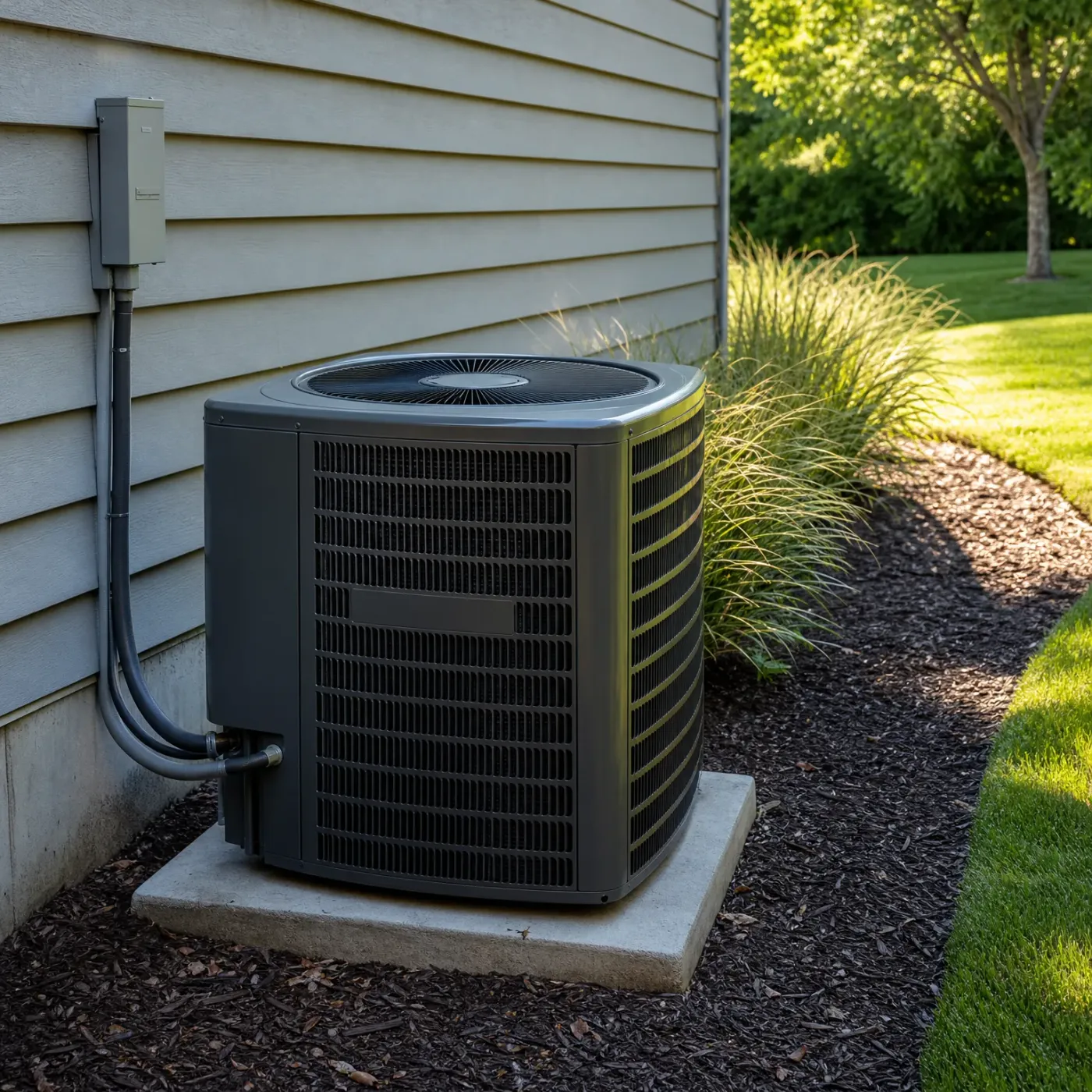
An outdoor air-conditioning condenser unit on a concrete pad beside a house with pale horizontal siding, with a gray electrical disconnect box and conduit on the wall and ornamental grasses and mulch nearby.

A heat pump pro near you

Find a licensed heat pump pro

The pro who gets in touch is licensed in Idaho and works in Bonner County.

Sending the form costs nothing.