Heat pump running all the time in Sandpoint, ID

RepairHeat PumpBonner County, ID
Step 1 of 2

What ZIP code is the job in?

A heat pump that runs nonstop in cold weather is often doing exactly what it should. Below a certain outdoor temperature, a heat pump has to run longer and more often to pull enough heat from the air, and on the coldest days around Sandpoint it may run almost continuously just to hold the house at temperature. That alone isn't a breakdown. But if the house isn't actually warming up, or if you see ice building on the outdoor unit that doesn't clear during its defrost cycles, something is working against the system: a refrigerant charge that's low, a defrost control that isn't cycling right, or a unit that's simply undersized for how cold it gets here. The difference matters, because one of these just means a cold night, and the other means the system is straining and your power use is climbing while the house still doesn't feel warm.

Why does your heat pump run so much here?

  • Winter nights average 22°F

    Nights near 22°F sit well below where a heat pump works easily, so it has to run long stretches just to keep up.

  • Heat runs September through June

    Ten months of heat a year means the system gets little rest, so steady runtime is normal, not a sign something's wrong.

  • Power here costs 11.98 cents per kilowatt-hour

    At 11.98 cents a kilowatt-hour, that extra runtime doesn't run up the bill the way it would somewhere with pricier power.

NOAA nClimDiv 1991-2020 · EIA-861 2025

Running long but keeping up

If your house holds close to the temperature you set it, the heat pump is doing its job. A unit that runs for long stretches but still gets you to 68 or 70 and stays there is working the way it's supposed to on a cold night. The long runtime is the cost of pulling heat out of 20 degree air. As long as the air coming out of the vents feels warm and the house isn't losing ground, this is normal operation for the climate around Sandpoint, not a problem to fix.


Running long but losing ground

If the house keeps drifting below the set temperature even with the system running constantly, or the air from the vents feels cool instead of warm, that's different. That points to the system struggling rather than just working hard: a refrigerant charge that's low, a defrost cycle that isn't clearing frost off the outdoor coil, or a unit that was sized too small for the house. A heat pump that can't catch up no matter how long it runs is worth having a contractor look at, especially before the next cold snap.

A smiling woman with long brown hair in a cream sweater sits at a stone counter with a glass of red wine, with a dimly lit living room, beamed ceiling and glass doors behind her.
A woman with shoulder-length dark wavy hair in a beige sweater laughs while looking off to the side, seated at a white marble counter with a glass of red wine, in a dimly lit home interior with a kitchen and sofa in the background.
A smiling woman with long dark hair in a black sweater sits at a white marble counter with a glass of red wine, in a dimly lit kitchen and living area with pendant lights, a potted plant, and flowers.
A smiling woman with long brown hair in a light knit sweater sits at a stone-topped counter with a glass of white wine, with a dimly lit living room, sofa, fireplace and round mirror behind her.

A heat pump moves heat, it doesn't burn fuel to make it, so as the air outside gets colder there's less heat to pull in and the system has to run longer to deliver the same warmth.

That's why a unit that barely cycles in October can run nearly nonstop once nights drop near 22°F, with no part failing and nothing wrong with the installation.

A smiling bearded man in a dark green sweater sits at a dinner table with a glass of red wine, plates of food and a lit candle, with a lamp and houseplant in the dim background.
A woman with dark hair tied up reclines on a sofa with her eyes closed under a gray blanket, with a lit floor lamp, framed picture, and a book beside her in a dim room.

The compressor is doing the work of moving heat out of cold outdoor air, and the colder that air gets, the longer it takes to pull enough of it indoors. Every so often the system reverses itself on purpose, running a defrost cycle to clear frost off the outdoor coil, and that time counts as runtime even though no warm air is coming through your vents. If frost builds up faster than the defrost cycle clears it, the coil stays iced over and the unit has to work even harder to catch up. Most homes around Sandpoint have electric strips built in as backup heat, and those kick on below a certain outdoor temperature to carry the load the heat pump can't handle alone. A thermostat that drops back a few degrees overnight and then has to recover in the morning will run the system straight through until it closes that gap, sometimes for hours. And if a filter is clogged or a return is blocked, the system has to run longer just to push the same warm air through the house.

What's Actually Happening Inside the Unit

  • Defrost cycles reverse the system to melt frost off the outdoor coil, and they add to total runtime without heating your house during that span.
  • A heat pump moves heat through refrigerant, so the compressor has to run longer at low outdoor temperatures to move the same amount of heat indoors.
  • Most systems in Bonner County rely on backup electric resistance heat strips that kick in below a set outdoor temperature to cover the gap.
  • A thermostat set to recover a few degrees after a setback makes the heat pump run continuously until it closes that gap, which can take hours.
  • If the outdoor coil stays caked with frost or ice beyond a normal defrost cycle, the unit works harder and longer to deliver the same heat.
  • Airflow restricted by a dirty filter or blocked return forces the system to run longer to push the same amount of warm air through the house.
An outdoor air conditioning or heat pump condenser unit on a concrete pad beside a house with horizontal vinyl siding, a gray electrical disconnect box and conduit on the wall, and a concrete walkway in the foreground.
Before you get your heat pump repair
A dark gray outdoor condenser unit on a concrete pad beside a house with beige horizontal siding, with a gray electrical disconnect box and conduit on the wall, mulch beds, a hosta plant, a shrub, and mowed lawn in front.
After you get your heat pump repair
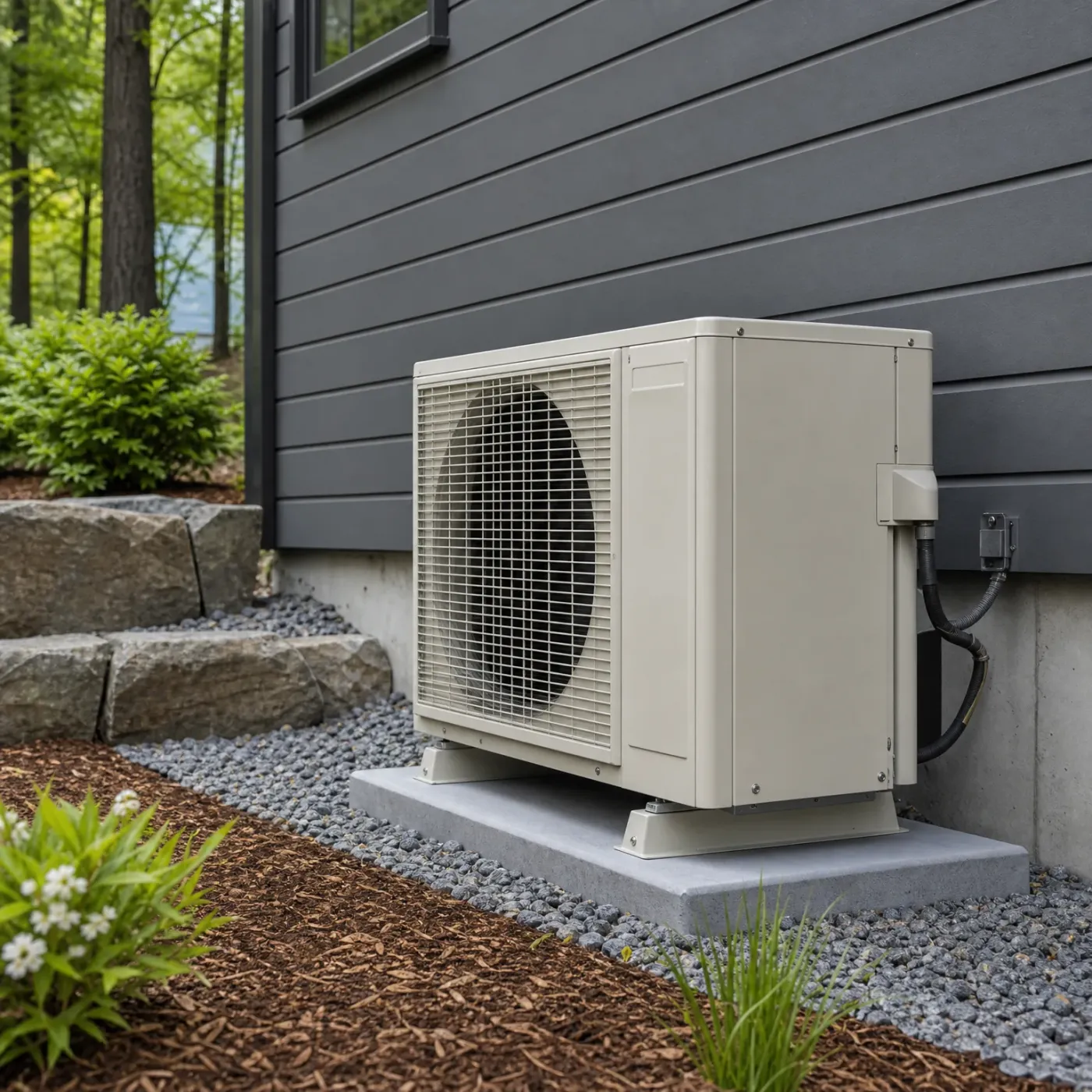
A beige outdoor heat pump unit on a concrete pad beside a gray horizontal-siding house, with refrigerant lines and an electrical disconnect box on the wall, surrounded by gravel, mulch and green plants.

Explain it one time

A licensed pro who repairs heat pumps in Bonner County gets your request.

Explain the job once and skip repeating it on every call.

Skip calling around

It costs nothing to send, and you don't have to hire anyone.

Running Nonstop: Normal or Not

Normal for this weather

  • The house holds 68 or 70 and stays there, even when the unit runs most of the hour.
  • Runtime climbs as the outdoor temperature drops, and nights near 22°F call for long stretches by design.
  • Defrost cycles kick in on their own and add runtime without any change in comfort inside.
  • Airflow at the vents stays steady and warm enough to feel, even if the unit never seems to shut off.
  • Energy bills move with the cold snap and settle back down once temperatures climb again.

Signs it needs a look

  • Indoor temperature keeps falling behind the thermostat setting no matter how long the unit runs.
  • Air coming from the vents feels cool or barely warm instead of comfortably warm.
  • Frost or ice builds up on the outdoor unit and doesn't clear during defrost.
  • The system short cycles, turning off and on in quick bursts rather than running a steady stretch.
  • A sharp jump in the power bill shows up with no matching jump in how cold it's been outside.
  • Unusual noise, like grinding or a loud click on startup, shows up along with the constant running.
A gray outdoor condenser unit on a raised pad beside a house with horizontal lap siding, with refrigerant lines, conduit and an electrical disconnect box on the wall, and shrubs on a mulch bed to the left.

Running long, house staying warm

A clean unit like this one cycles air through a grille free of dust, so it can pull in outdoor heat without extra strain. It may run most of the hour on a cold night and still hold 68 or 70 without trouble.

An outdoor air conditioning condenser unit on a concrete pad beside a house with horizontal siding and a concrete foundation, with refrigerant lines running to a wall-mounted disconnect box and shrubs at left.

Running long, and struggling to keep up

A grille clogged with dust and debris blocks airflow the unit needs to pull heat from the outside air. When it's this dirty, the compressor works harder for less heat, and the house falls behind even with the system running nonstop.

Is it normal for my heat pump to never shut off?

Is it normal for my heat pump to never shut off?

Yes, if your house is holding temperature

A heat pump works by moving refrigerant through a cycle, compressing it to raise its temperature, then releasing that heat inside your house. It doesn't have a flame or a heating element doing the work in bursts, so there's no reason for it to cycle off the way a furnace might. On a cold night near Sandpoint, the compressor can run continuously for hours and still be operating correctly. What tells you something is wrong isn't runtime, it's whether the house actually reaches 68 or 70 and stays there. If the thermostat keeps calling and the rooms stay cold, that's when a contractor who works on these units every winter should take a look.

A dimly lit bedroom with an unmade bed and pillows beside a window with sheer curtains, showing trees and a hill under a dusky sky outside.

It's past eleven and the thermostat still reads 63. You've got a sweater on over your pajamas and the dog curled against your leg on the couch, both of you facing the floor vent like it owes you something. Outside it's 21 degrees and still dropping. The heat pump out back has been running since before dinner, that low steady hum you can hear through the wall if the house is quiet enough, and it hasn't once gone silent. You keep checking the display, half expecting it to climb. It doesn't. You pull the sweater tighter and wonder how long a unit is supposed to run before something's actually wrong with it.

Winter nights average 22°F

Twenty-two degrees is the average overnight low here, not the occasional cold snap. Your heat pump is built around that number, which is why it leans on long runtimes most winter nights rather than just a handful. Expect that stretch of runtime from December through February as normal operation, not a sign something's off.

NOAA nClimDiv 1991-2020

A gray outdoor heat pump unit with a large fan grille sits on a concrete pad beside a house with horizontal lap siding, next to a green shrub, mulch bed, and lawn.

Working the way it should

A clean unit like this one sits on its pad with the grille clear, pulling in outside air without a fight. It can run long on a cold Sandpoint night and still bring the house to 68 or 70 and hold it there. The conduit and connections stay simple to check because nothing is buried under grime.

An outdoor air conditioner condenser unit on a concrete pad beside a house with horizontal lap siding, with a gray electrical disconnect box and conduit on the wall and bare dirt and mulch in the foreground.

Running long and losing ground

Dust and grime packed into the grille block the airflow the unit needs to pull heat from the air, so it runs longer for less result. If the house still falls short of your setting no matter how long it runs, that buildup is likely part of why. A local contractor who services these units every winter can tell you from a look whether that's the problem.

A kitchen interior with a wooden table in the foreground holding a closed laptop, a ceramic mug and a potted plant, with a wood-fronted counter, sink with black faucet, bowl of green fruit, vase of branches and a window showing a sunset sky behind.

Long runtime, warm house: that's the system working

If your heat pump runs long and your house still holds 68 or 70, it's doing what Sandpoint winters ask of it. If it runs that long and the house still falls short, or you're hearing new noises or seeing ice that won't clear on its own, that's a repair call, not a weather call.

Either way, you don't have to sort out which one it is by yourself, or spend an evening calling around Bonner County to find someone who'll look at it this week. One licensed local contractor who works on heat pumps all winter gets the call, looks at your system, and tells you straight whether it needs work or just cold weather.

A gray upholstered sofa with a textured cushion sits beside a dark round side table holding a vase of green foliage, with a table lamp and sheer-curtained window behind.
A dark standing-seam metal roof with a stone-clad chimney in the foreground, overlooking conifer-covered hills and a mountain range under a partly cloudy sky.

Skip the calls to every shop

Fill out one form

No charge to send it. You decide if you hire them.

A heat pump that runs long but can't hold 68 or 70 is costing you more than the runtime itself. One request gets a licensed local contractor who knows Bonner County winters out to look at it, instead of you calling around and explaining the same problem more than once.