
Heat pump leaking water in Rexburg, ID

RepairHeat PumpMadison County, ID
Step 1 of 2

What ZIP code is the job in?

Why is my heat pump leaking water?

You've noticed water pooling around your indoor unit or dripping from the outdoor unit, and you're trying to figure out if this is normal or something that needs attention. A heat pump running in Rexburg's cold winters or hot, dry summers does different things with water depending on the season, and it helps to know which one you're looking at before you decide what to do.

It's draining condensation, or defrosting ice, depending on the season

A heat pump pulls moisture out of the air as it runs, and that water has to go somewhere. In summer it drips from the indoor coil into a drain line, and a little water at the outdoor unit is normal too. In winter, Madison County's cold pushes the outdoor unit into frequent defrost cycles, melting frost off the coil, and that meltwater runs out the bottom. Water becomes a problem when it shows up where it shouldn't: pooling inside on the floor, backing up through the drain pan, or freezing into ice around the outdoor unit instead of draining away. That usually points to a clogged drain line, a cracked pan, or a defrost cycle that isn't completing the way it should.

A gray outdoor condenser unit on a concrete pad beside a house with horizontal lap siding, a conduit and disconnect box on the wall, a shrub with white flowers at right and evergreen foliage at left.

Water draining the way it should

A little condensation on the pad or a drip from the outdoor unit during a thaw is normal. The condenser sits clean, the lines run straight to the wall, and water finds its way off the pad instead of pooling against the house.


A weathered outdoor condenser unit on a concrete pad beside a house with white horizontal vinyl siding, with refrigerant lines and conduit running to a wall-mounted electrical box.

Water that means a problem

Grime and buildup on the grilles slow airflow and ice forms where it shouldn't. Once that ice melts, it can send more water than the drain line or pad was ever meant to handle, and it ends up where it doesn't belong.

Why does my heat pump work so hard here, and for how long?

  • Winter nights average 14°F

    Nights this cold mean long defrost cycles, and every defrost cycle drains water that has to go somewhere.

  • Heat runs September through June

    Ten months of heat means the drain line and pan get far more use here than in most places, with more chances for a clog.

  • Cooling runs July through July

    July is the only month cooling runs, so a leak you see then is almost always the indoor unit, not frost from heating.

NOAA nClimDiv 1991-2020

A heat pump that keeps draining wrong does more than leave a puddle. Water sitting against the pad or the house foundation through a Madison County winter will freeze solid on the next hard night, and ice around the outdoor unit can crack the base pan or push against the cabinet. Indoors, a clogged drain backs up into the pan and from there onto the floor or the ceiling below it, depending on where the unit sits. Left alone through a full winter of defrost cycles, that water finds drywall, subfloor, or whatever is underneath, and by the time you see a stain the damage is already done. None of this means the heat pump itself is failing. It usually means a line or a pan needs clearing or repair before the next freeze. Catching it now, while it is still just water on the pad, costs you a lot less than catching it after a hard freeze turns it into cracked plastic or a soaked ceiling.

An outdoor air conditioning condenser unit on a concrete pad beside a house with light horizontal siding and a concrete block foundation, with bare soil and small green plants around it.
Before you get your heat pump repair
A beige outdoor air conditioning condenser unit on a concrete pad beside a house with horizontal vinyl siding, with refrigerant lines and a disconnect box on the wall, surrounded by dark mulch and a green shrub at left.
After you get your heat pump repair

What a clogged drain does

The condensate drain line carries water away from the indoor coil, and it's a narrow line, so it doesn't take much to block it. Algae, dust, or a kink in the line will back water up until it has nowhere to go but out of the pan and onto your floor or down the outside of the unit. In a Rexburg winter, that same blockage sends water toward the foundation instead of away from it, where it sits and freezes instead of draining off.

Why the pan matters too

Under the indoor coil sits a drain pan built to catch what the coil sheds as it runs. That pan rusts through or cracks after enough winters of use, and once it does, water passes straight through instead of reaching the drain line at all. A pan like that won't show a problem on a warm day. It shows up the first hard freeze, when water that should have drained off instead sits against the unit and turns to ice overnight.

A woman with shoulder-length brown hair in a gray knit cardigan sits in an upholstered armchair indoors, looking toward a window with sunlit trees outside, with a bookshelf behind her.
A woman with her hair in a bun holds a sleeping child, both wrapped in a cream knitted blanket on a gray sofa, with a lit lamp, framed photos, and a window behind them.

Skip calling around

A licensed pro who repairs heat pumps in Madison County gets your request.

You only hire the pro if you want to.

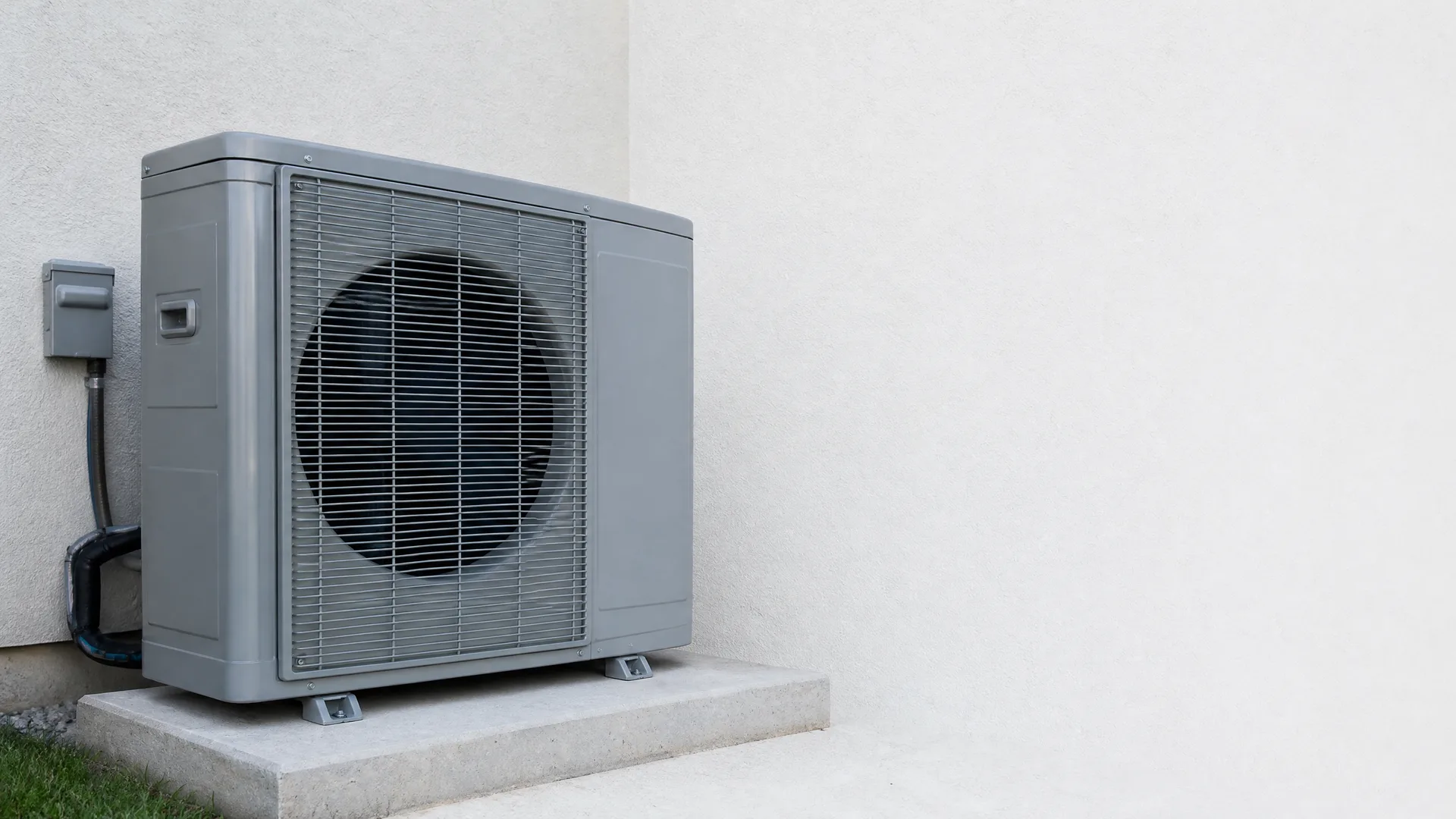
A gray outdoor heat pump unit on a concrete pad against a light stucco wall, with an electrical disconnect box and conduit on the wall to its left.

Indoors, where the leak shows first

Water around the indoor unit usually means the drain line or the pan underneath it. If the line is clogged, water backs up and spills over the pan edge onto the floor or into the closet or attic space around the unit. A cracked pan does the same thing even with a clear line. Either way, the water is appearing somewhere other than where it's supposed to drain, and it keeps showing up until the actual path is fixed.

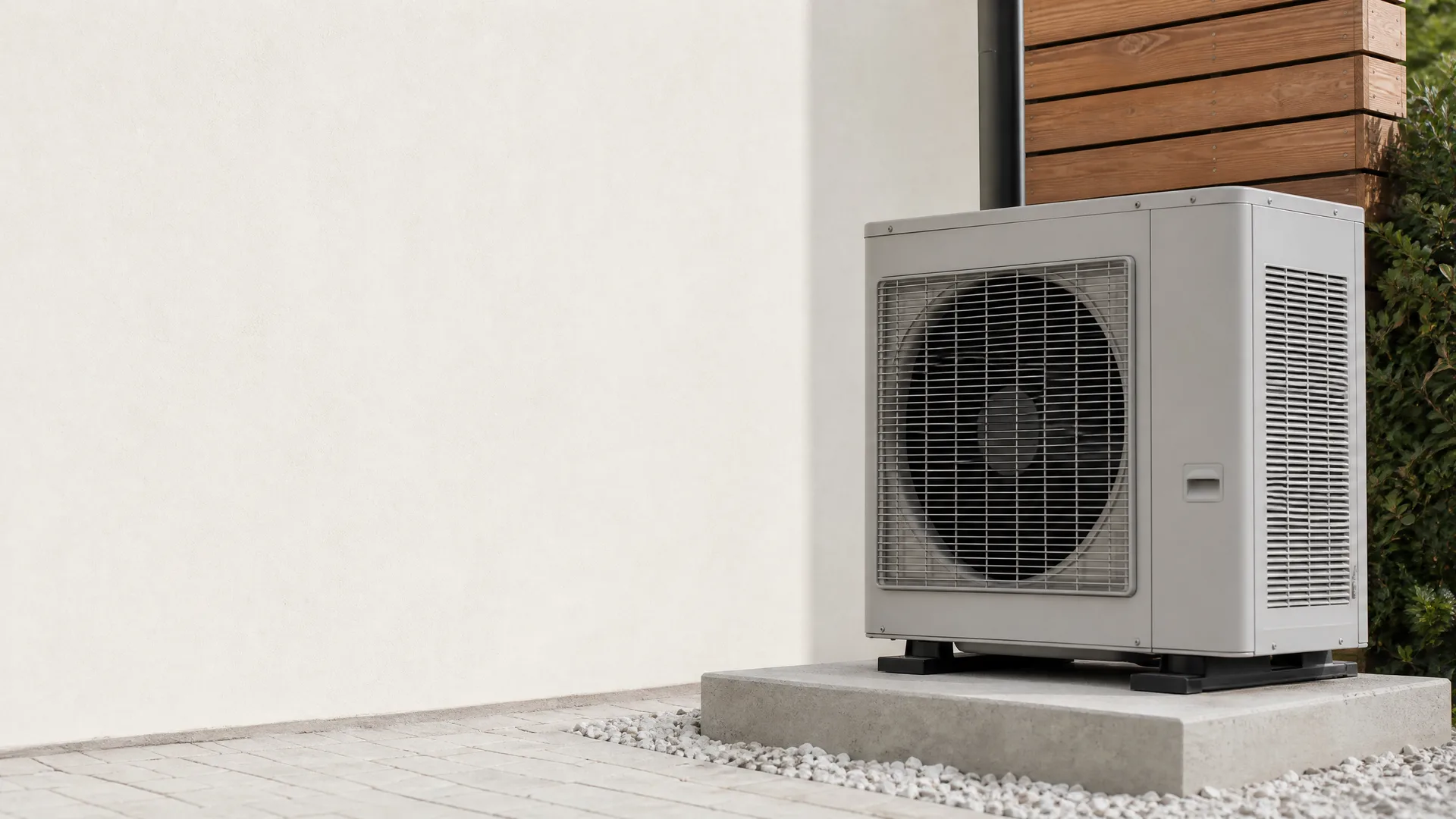
A gray outdoor heat pump unit with a large fan grille sits on a concrete pad beside a pale stucco wall, with horizontal wood cladding and a green shrub behind it and paving stones and gravel in front.

Outdoors, where ice does the damage

Water at the outdoor unit during a Madison County thaw is normal. Water that freezes into a sheet across the pad or climbs up the cabinet is not. A heat pump defrosting through a long winter night sends melted frost down through the base pan, and if that pan or its drain is blocked, the water has nowhere to go but out and down, freezing against the unit and the ground around it.

Call It Now Or Wait It Out

Call it now

  • Water stops at the pan edge or the line clears before anything reaches your floor or wall.
  • A frozen base pan in January thaws out and drains clean instead of cracking under the ice.
  • A clogged line gets flushed before algae or dust pack it solid, so the fix is quick work, not a rebuilt drain.
  • The outdoor unit's coil and fan stay free of the ice that a backed-up pan can build around them.
  • You catch a cracked pan or a pulled-loose line while it's still one part, not a unit that needs replacing.

Wait it out

  • Water keeps finding the same low spot on your floor, in your closet, or against the foundation.
  • Every hard freeze this winter turns that standing water to ice around the base pan or the pad.
  • A small crack in the pan from one freeze becomes a bigger one the next cold night it happens again.
  • The clog that's backing up the line now gets denser with algae and dust the longer it sits.
  • What would have been a cleared line or a resealed pan turns into a pan or coil that has to be replaced.
A middle-aged man with gray hair and a beard, wearing a dark green sweater, sits on a light sofa in a sunlit living room with large windows, a potted plant, and a dining area in the background.
A gray-haired man in a dark green ribbed sweater sits on a light sofa in a living room, looking toward a sunlit curtained window with a potted plant and lamp nearby.
A gray-haired man in a navy button-up shirt over a white tee sits on a light gray sofa in a living room, looking off to the side, with a window, houseplant, framed picture and shelving behind him.
A man with gray hair and a beard wearing a dark green shirt jacket over a navy top sits on a gray sofa in a living room, looking to the side, with a window, potted plant and shelving in the background.

What are you noticing right now

Maybe it's a wet spot on the closet floor under the indoor unit, or a stain spreading across the ceiling below it. Maybe the outdoor unit has ice building up around the base, or water running out across the pad toward the foundation instead of away from it. You might hear a drip you didn't hear before, or notice the drywall near the unit feels soft. None of that is something to watch for a few more weeks. Water that keeps finding a new path into your house will soak insulation, warp flooring, and feed mold behind the wall before you see it on the surface, and ice against the outdoor unit through a Madison County winter only gets heavier the longer it sits.

  1. A contractor pulls the drain line apart at the clog point.

  2. A wet vacuum or line brush clears algae and debris from inside.

  3. Water flows out freely again and the pan drains down.

  4. The pan and float switch get checked for cracks or buildup.

A closed laptop and a light ceramic mug sit on a round wooden table in a dim kitchen, with a chair at left and a window showing a sunset behind trees at right.

What a leak like this costs you if it sits

A wet spot under the indoor unit turns into a stained ceiling or a warped closet floor if it runs for a few weeks before anyone looks at it. Drywall holds water longer than you'd think, and by the time you see a stain the moisture has usually been there a while. Outside, water pooling against the pad or the foundation through a Madison County winter freezes on the next cold night, and ice built up around the base pan can crack it or push the unit off level.

None of that means you need to start calling around. You already know what that looks like: searching for a contractor who actually works on heat pumps, calling two or three, explaining the same leak and the same ice buildup to each one, then trying to compare quotes from people who never saw your unit. A request through this page goes to one licensed contractor in the Rexburg area who works on this equipment all winter and knows what a clogged line or a cracked pan looks like before they get there.

A gray upholstered sofa with a matching cushion sits beside a potted plant and a wooden table holding a small green plant in a stone pot, near a curtained window.

Power here costs 13.44 cents per kilowatt-hour

At 13.44 cents a kilowatt-hour, running your heat pump hard through a defrost cycle or two doesn't hit your bill the way it would somewhere with pricier power. That's one more reason to get a leak fixed properly instead of shutting the system off to stop the drip.

EIA-861 2025

Where this leaves you

  • Water around a heat pump means a drain line, a pan, or a frozen base, and a contractor can tell which from a look at where it's pooling.
  • Left alone through a Madison County winter, a small leak turns into a cracked pan or a stained ceiling instead of a quick fix.
  • A contractor who works on heat pumps all year in this area knows how hard the defrost cycle runs here and what usually clogs or cracks first.
  • You give the details once to a licensed local contractor, not to a string of companies working the same lead.
  • Fixed now, the system drains the way it was built to, pan clear and line open, through the rest of the cold months.
  • You end up with one contractor who already knows the local winters, not a pile of callbacks to sort through.

A leaking heat pump almost always comes down to one of three things: a clogged drain line, a cracked or overflowing pan, or ice building up around the outdoor unit during a hard freeze. None of them fix themselves, and none of them get better with time. The water you're seeing now is the easy part to deal with. Wait through a few more defrost cycles and you're looking at a warped closet floor, a stained ceiling, or a base pan split by ice instead of a line that just needed clearing.

What you're choosing when you call is a contractor who already knows what Madison County winters do to this equipment, not someone learning it on your dime. Someone who works on heat pumps through ten months of heating season here has seen this exact leak before, knows whether it's the line or the pan or the defrost cycle, and shows up with that answer already worked out. You explain the problem once, to one licensed local contractor, instead of repeating it to company after company while you compare quotes and wait for callbacks.

Fixed properly, the drain runs clear, the pan holds, and the system handles the next cold snap the way it's supposed to. That's the whole point of sorting it now instead of watching the puddle and hoping it stops on its own.

The gabled roof peak of a dark-clad house with a timber-framed window in the foreground, backed by conifer trees, rolling grassy hills, and a snow-streaked mountain range under a pale sky.

Describe it once

Describe it once

Asking costs nothing, and the choice to hire stays yours.

One contractor local to Madison County looking at your unit beats explaining the same drip and the same wet spot to three different companies before you get a straight answer about what's actually wrong.