Is a mini split worth it in an Idaho home

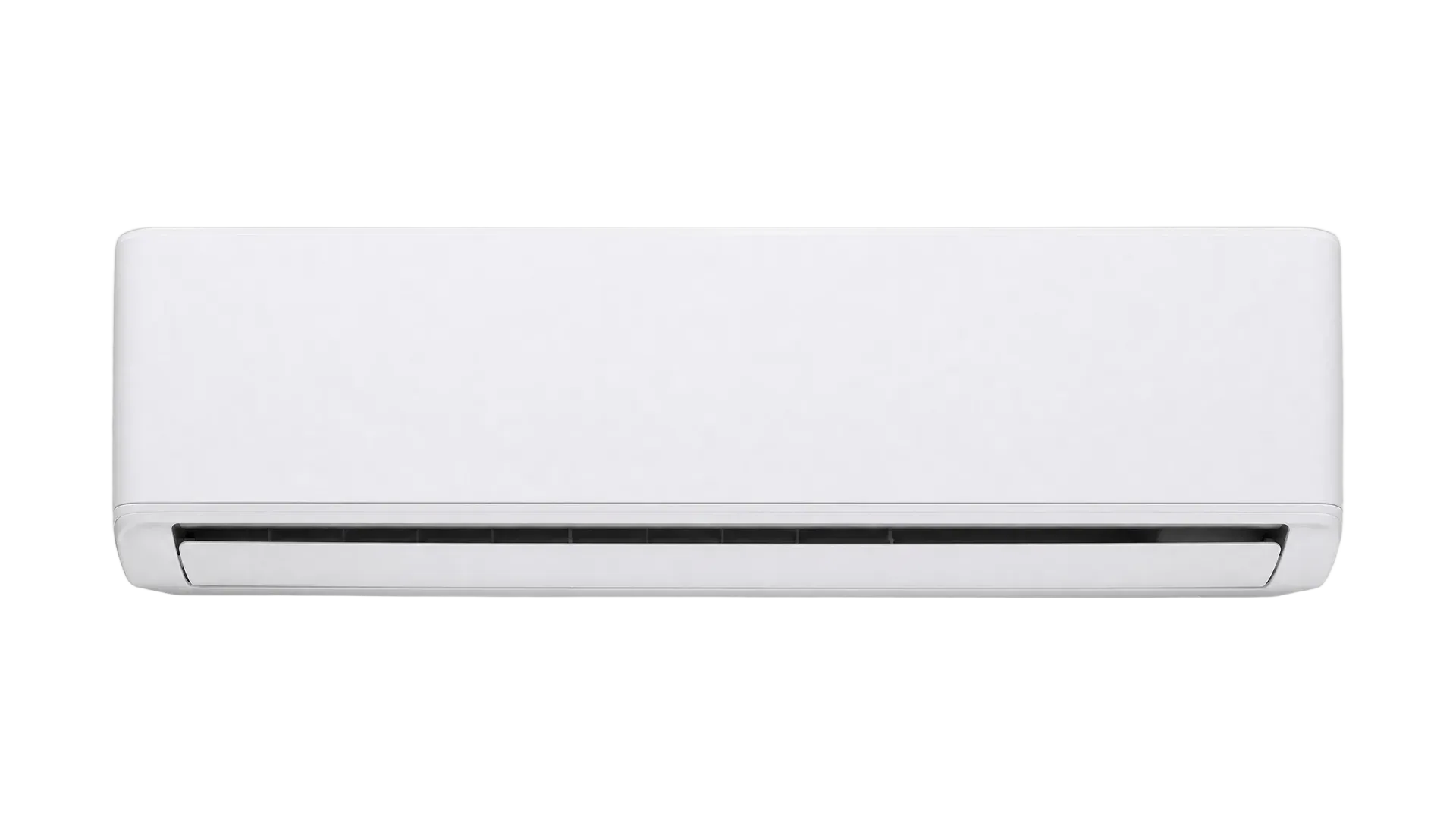
A white wall-mounted mini-split air conditioner indoor unit with a dark horizontal air outlet vent, shown against a plain light gray background.
Connect with a pro

A mini split earns its keep in an Idaho home, mostly for summer. Summers here are hot and dry, and a mini split cools a room directly instead of pushing air through ducts that lose some of it along the way. Most homes here heat with gas, so the mini split isn't replacing your furnace, it's handling the months your furnace doesn't run. That's where the value shows up: a bedroom over the garage that never cools right, a bonus room with no vent, a shop out back. Power here is cheap, so running it doesn't eat into what you'd save by skipping ductwork. Where it matters less is a house with even cooling already. Think about it room by room before the install, not after. The unit you place now is the one you'll live with next July, so match it to the space that actually needs it.


A woman in a grey knit sweater leans back with closed eyes in an armchair beside a window, with a ceramic mug on a round wooden side table and a yellow-leaved tree outside.
A gray-haired man in a blue sweater over a checked collared shirt sits in an armchair with his eyes closed and head tilted back near a bright window, with a houseplant and lamp nearby.

A mini split moves heat, it doesn't make cold air. The outdoor unit pumps refrigerant inside to the indoor head, where a fan draws room air across the cold coil and sends it back out. There's no duct run losing air along the way, which matters when the room you're cooling is a bonus room or a converted garage your gas furnace never served well. Inside, the compressor is variable-speed, so instead of cycling fully on and off like a window unit, it ramps up and down to hold a set temperature. In Idaho's dry summer heat, the air coming across that coil doesn't carry much moisture to begin with, so the unit spends most of its effort on cooling the air rather than wringing water out of it. Outside, the compressor and fan still have to shed that heat somewhere, and on a 95 degree afternoon that fan is working against air that's already hot. Each indoor head runs off its own thermostat, so one room cools on its own without pulling the rest of the house's system into it.
How a mini split actually cools

  • The outdoor unit pumps refrigerant to the indoor head, where a fan pulls room air across the cold coil and blows it back out, no ducts involved.
  • A variable-speed compressor ramps up and down instead of switching fully on and off, so it holds a set temperature without the hot-cold swings a window unit gives you.
  • Idaho's dry summer heat means the coil pulls moisture out of air that barely has any, so the unit spends most of its energy on sensible cooling, not dehumidifying.
  • Each indoor head answers to its own thermostat, so a mini split in a bonus room or garage cools that space without running the rest of the house's gas furnace or ducted AC.
  • The outdoor unit still has a compressor and a fan, and in the dry summer heat here that fan has to shed heat into air that is often already in the 90s.
  • Because a mini split works independent of a home's ductwork, it can cool a room that gas heat never reached well, like a converted garage or an add-on.
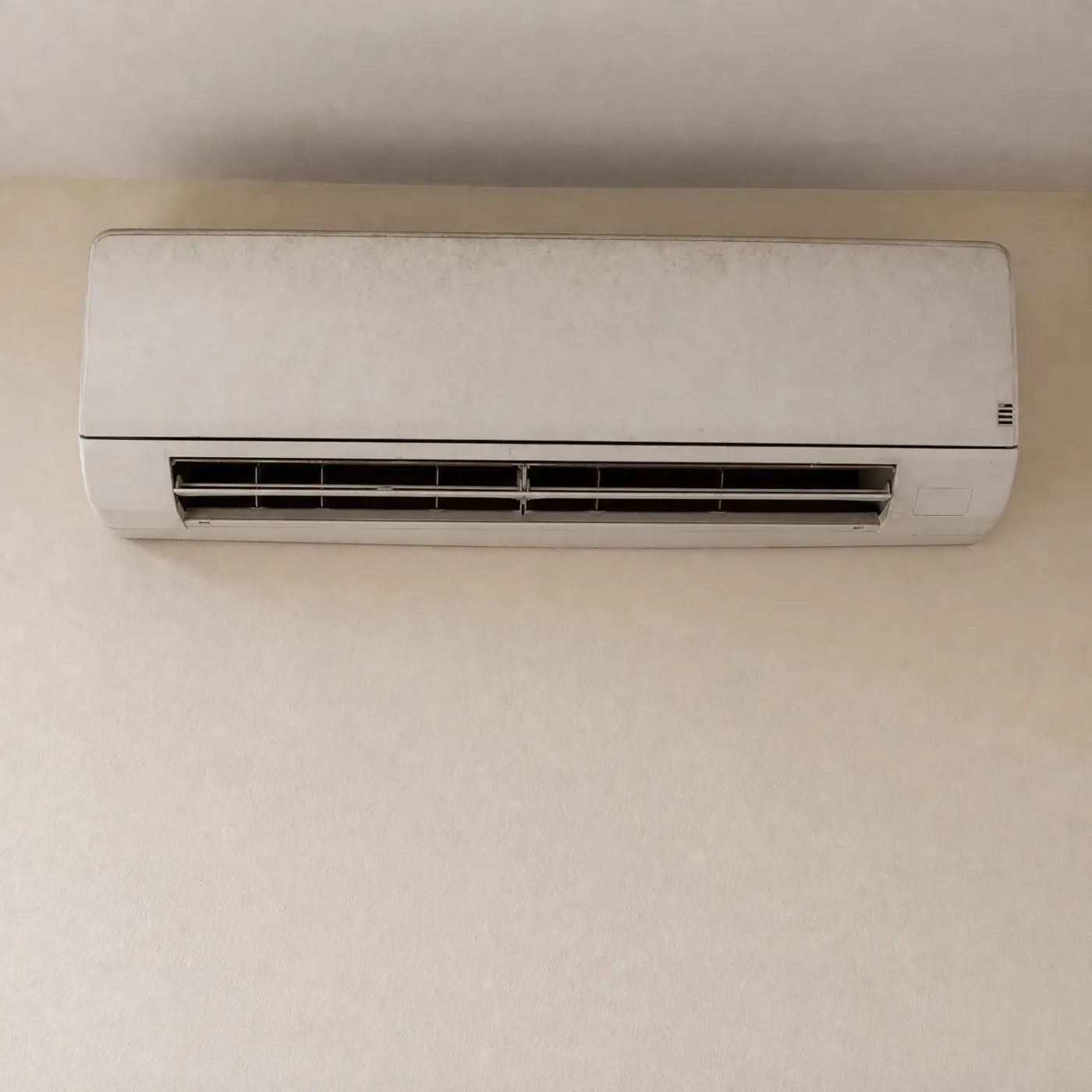
A white wall-mounted mini-split air conditioner indoor unit with visible dust and discoloration, installed near the ceiling on a plain beige wall.
Before you get your mini split installation
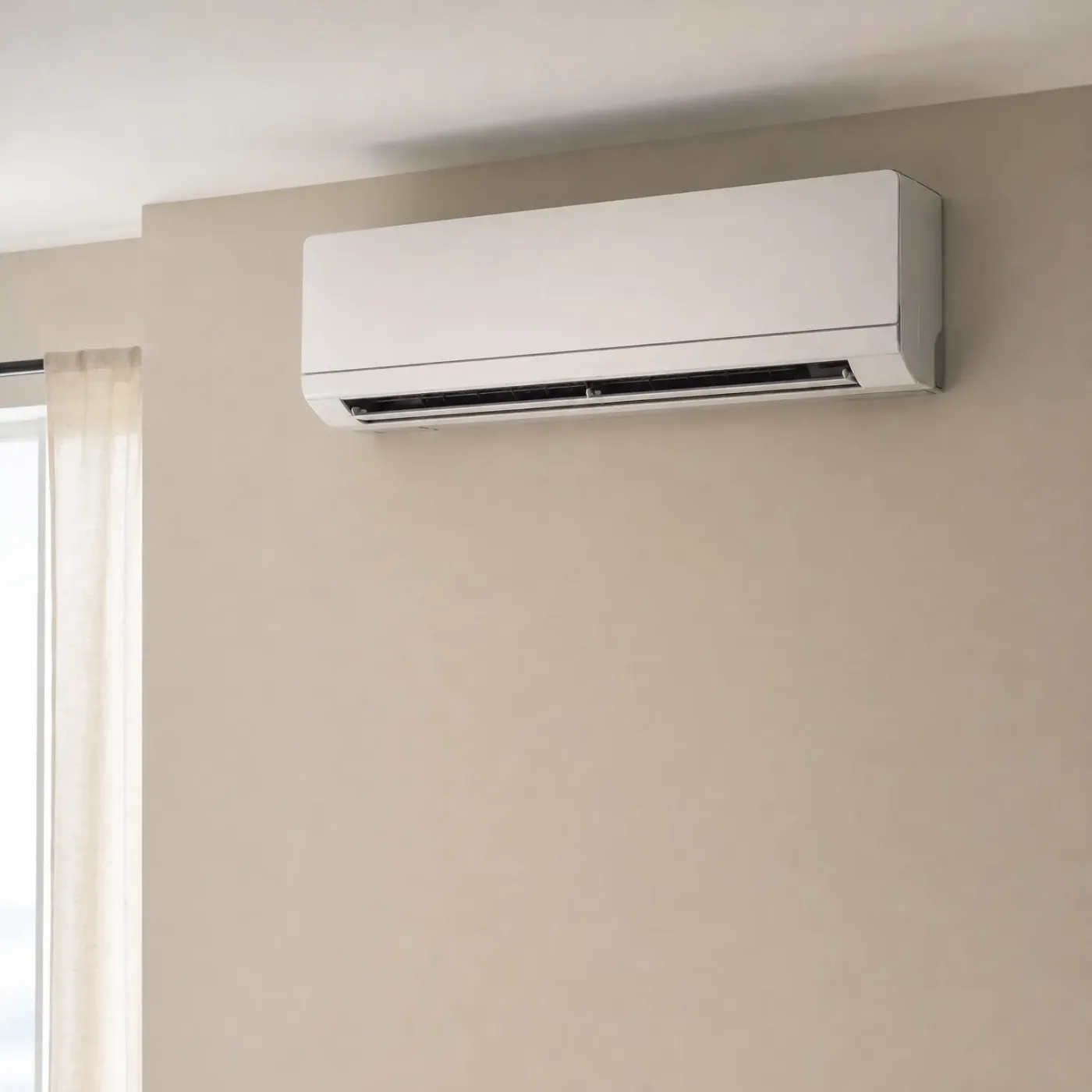
A white wall-mounted mini-split air conditioner installed high on a beige interior wall near the ceiling, with a sheer curtain and window at the left edge.
After you get your mini split installation

What This Means for Your House

  • A mini split cools the room you're in without running the gas furnace's blower just to move air in August.
  • Your gas heating bill stays mostly the same since the mini split takes over cooling, not heating, in most Idaho homes.
  • A room over a garage or above a kitchen that never cooled evenly can get its own head and its own setting.
  • Dry summer air means the coil does less work pulling out moisture, which it can put instead into dropping temperature.
  • A mini split installed now gives you a backup heat source for the handful of nights gas furnaces struggle with a cold snap.
  • Skipping ducts means no duct leaks to find or seal, since the refrigerant line runs straight to the room.

Think about the room in your house that never feels right. Maybe it's the bedroom over the garage, or the one above the kitchen, running hotter than the rest of the house every August no matter what the thermostat downstairs says. A mini split gives that room its own cooling, controlled from its own head, instead of hoping the ducted system catches up. Your gas furnace still handles winter heat the way it always has, so the bill you already know for January and February doesn't move much. What changes is July and August, when the mini split handles the room directly instead of the blower pushing air through ducts to get there. Idaho summers run dry, and that works in the coil's favor. It spends less effort wringing moisture out of the air and more just dropping the temperature, so the room cools faster for the same run time. There's also no ductwork to worry about for that room, no joints to check for leaks, no air lost in the attic before it reaches the vent. And if a cold snap ever pushes a gas furnace past what it can keep up with, the mini split is already there as a second source of heat, not something installed in a hurry when the temperature drops. The room that used to be the problem becomes the one with the most control.


An older woman with gray hair in a gray knit sweater sits on a sofa under a knitted blanket beside a large window, looking out toward yellow autumn foliage, with a living room, fireplace and patterned rug behind her.
An older woman with gray hair in a cowl-neck sweater sits on a sofa under a blanket, looking out a large window toward trees with yellow autumn foliage.
A gray-haired woman in a light knit sweater sits in an armchair by a window, looking out at trees with yellow autumn leaves, with a dark ceramic mug on the sill and a plant in the foreground.
A gray-haired woman in a cream knit sweater sits in a chair by a large window, looking out at rolling hills covered in autumn-colored trees.

A pro who works on mini splits

A mini split doesn't replace the gas furnace heating your house, and it doesn't need to. What it does is handle the one room that never feels right, the bonus room, the garage conversion, the addition the ducts never reached well. If that room has been a problem every summer, getting the unit installed right matters more than most people expect, from where the indoor head sits to how the line set runs outside. Finding a contractor who installs these correctly usually means a handful of calls, explaining the same room and the same problem each time, then sitting on quotes that are hard to compare because nobody measured the room the same way. Handing that off means one contractor who installs mini splits reaches out to you directly, already knowing what you're dealing with. The room gets looked at properly once, not after three estimates that didn't agree.
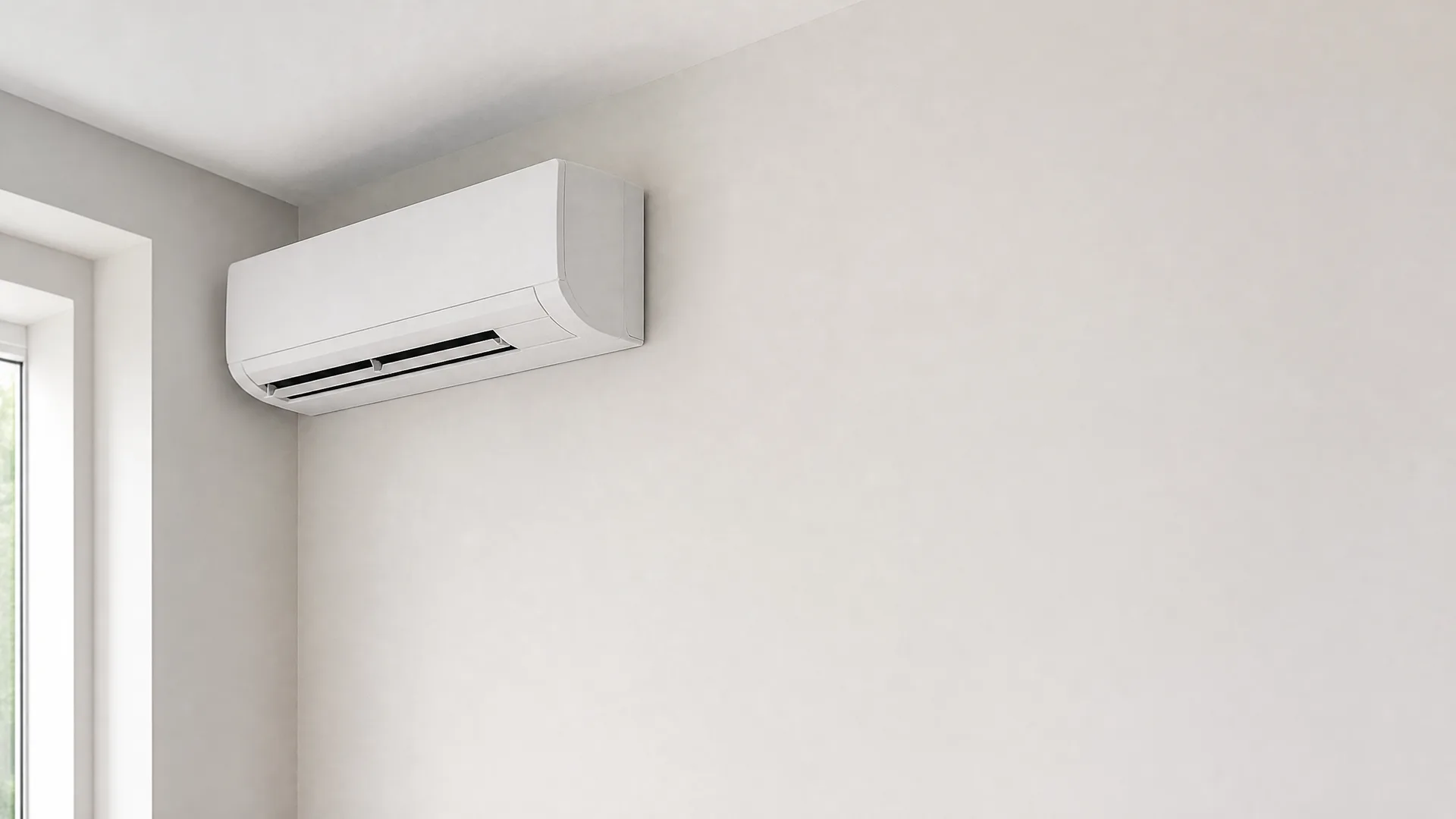
A white wall-mounted mini-split air conditioner installed high on a plain light-colored interior wall near a corner, with a window frame at the left edge.

Why direct cooling uses less power

A mini split's compressor sits right outside the room it cools, so the refrigerant line runs a few feet, not through a duct system losing cold air to an attic or crawlspace along the way. In a dry Idaho summer, that matters more than it would somewhere humid, because the unit isn't fighting moisture too. It just moves heat out of the room and stops.

A white wall-mounted mini-split air conditioner installed near the top of an interior corner wall, with large blank light-colored wall space to the left.

What the variable-speed compressor changes

Most mini splits sold now run a variable-speed compressor instead of the old on-off kind. Instead of blasting cold air then shutting off, it slows down once the room hits the set temperature and holds there. On a 95 degree day that means fewer swings in the room, and the compressor isn't drawing full power the whole time it runs.

Power costs 11.83 cents per kilowatt-hour statewide

At 11.83 cents a kilowatt-hour, running a mini split through a hot, dry Idaho summer costs less than you'd guess, since it only cools the one room instead of the whole house. Keep the setpoint reasonable and the bill stays modest even in August.

EIA-861 2025 statewide residential average
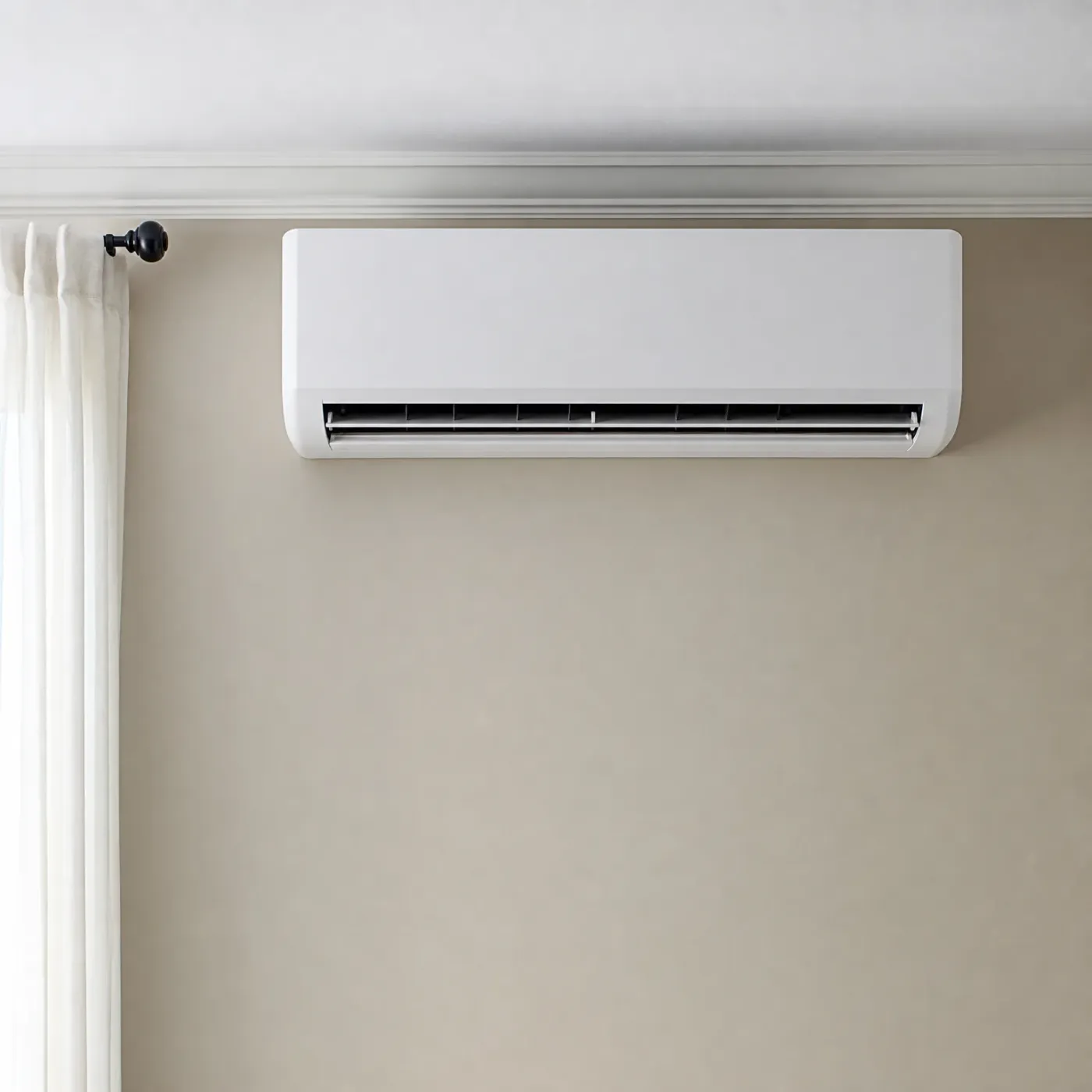
A white wall-mounted mini-split air conditioner installed high on a beige interior wall below crown molding, with a sheer white curtain on a dark rod at the left edge.

Running clean

A mini split that's kept up cools fast and quiet, and the coil behind that white casing stays cold enough to pull the heat out of a hot, dry room in minutes. The filter is doing its job, and so is the fan.
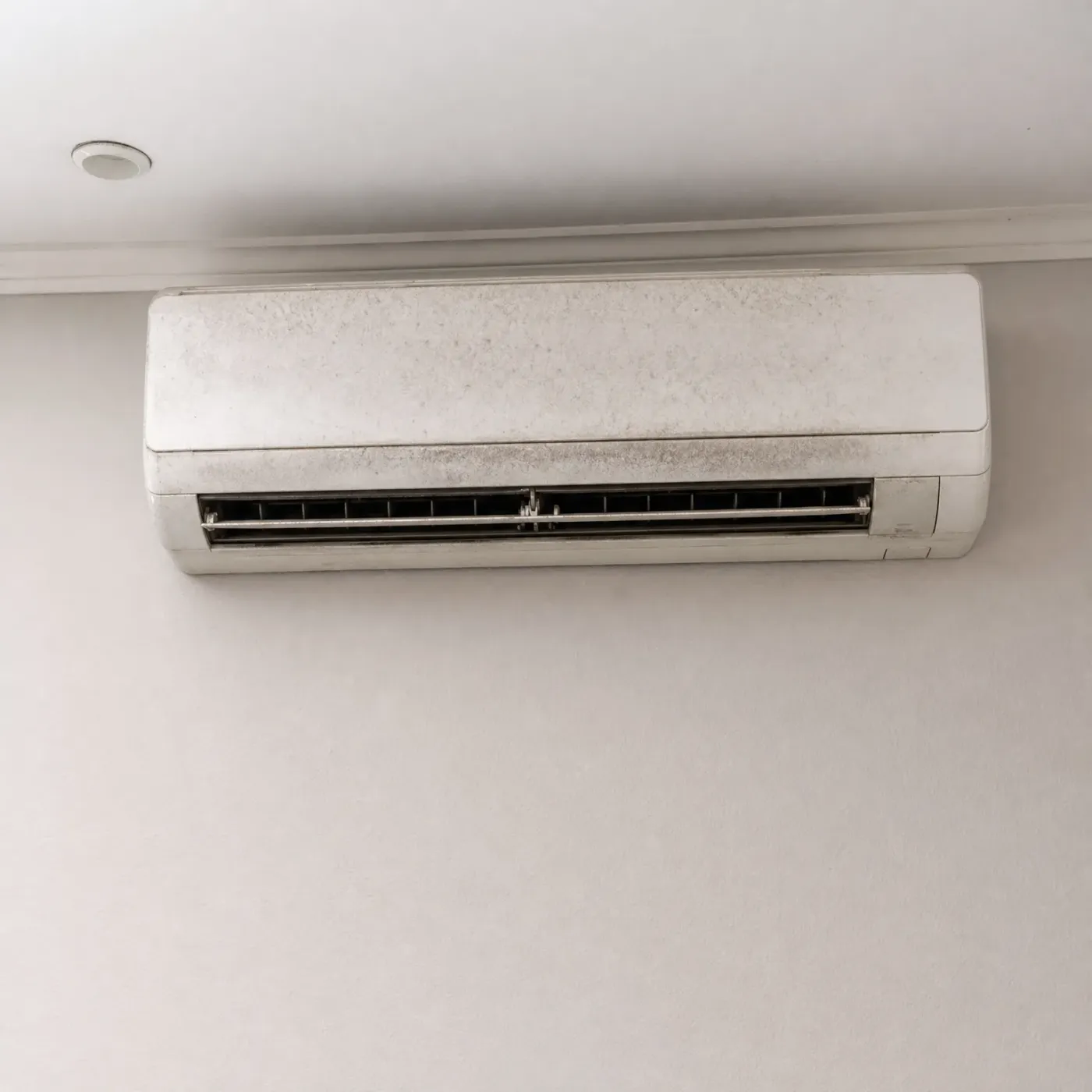
A dusty white wall-mounted mini-split air conditioner unit installed near the ceiling on a plain light-colored interior wall, with a small recessed ceiling fixture at upper left.

Choked with dust

That grime on the casing usually means the filter behind it hasn't been cleaned in a while. Dust buildup like this makes the unit work harder to move air, and a room that used to cool fast starts taking longer.
Is It Worth It For Your Room

Worth it

  • You're cooling one room directly instead of paying to push air through ducts that lose some of it before it reaches that back bedroom.
  • At 11.83 cents a kilowatt-hour, a mini split handling just one room costs less to run than you'd expect through a full Idaho summer.
  • A room the gas furnace's ducts never served well, a garage conversion or a bonus room over the garage, finally holds a set temperature.
  • The variable-speed compressor ramps to match the room instead of cycling fully on and off, so it holds steady through a hot, dry afternoon.
  • Your gas furnace keeps heating the rest of the house all winter, so the mini split is one more tool, not a system you're betting the house on.

Not worth it

  • If the room it's cooling already stayed comfortable off the main ducts, there's no problem here for a mini split to solve.
  • A mini split installed to cool a space you barely use sits there costing you the upfront work without paying you back in comfort.
  • A room with a straightforward duct run and good airflow already gets what it needs from the gas furnace's cooling side, if the house has one.
  • Skipping the unit sized for the room, or placing the indoor head where it can't pull air across the whole space, leaves you paying for equipment that never quite keeps up.
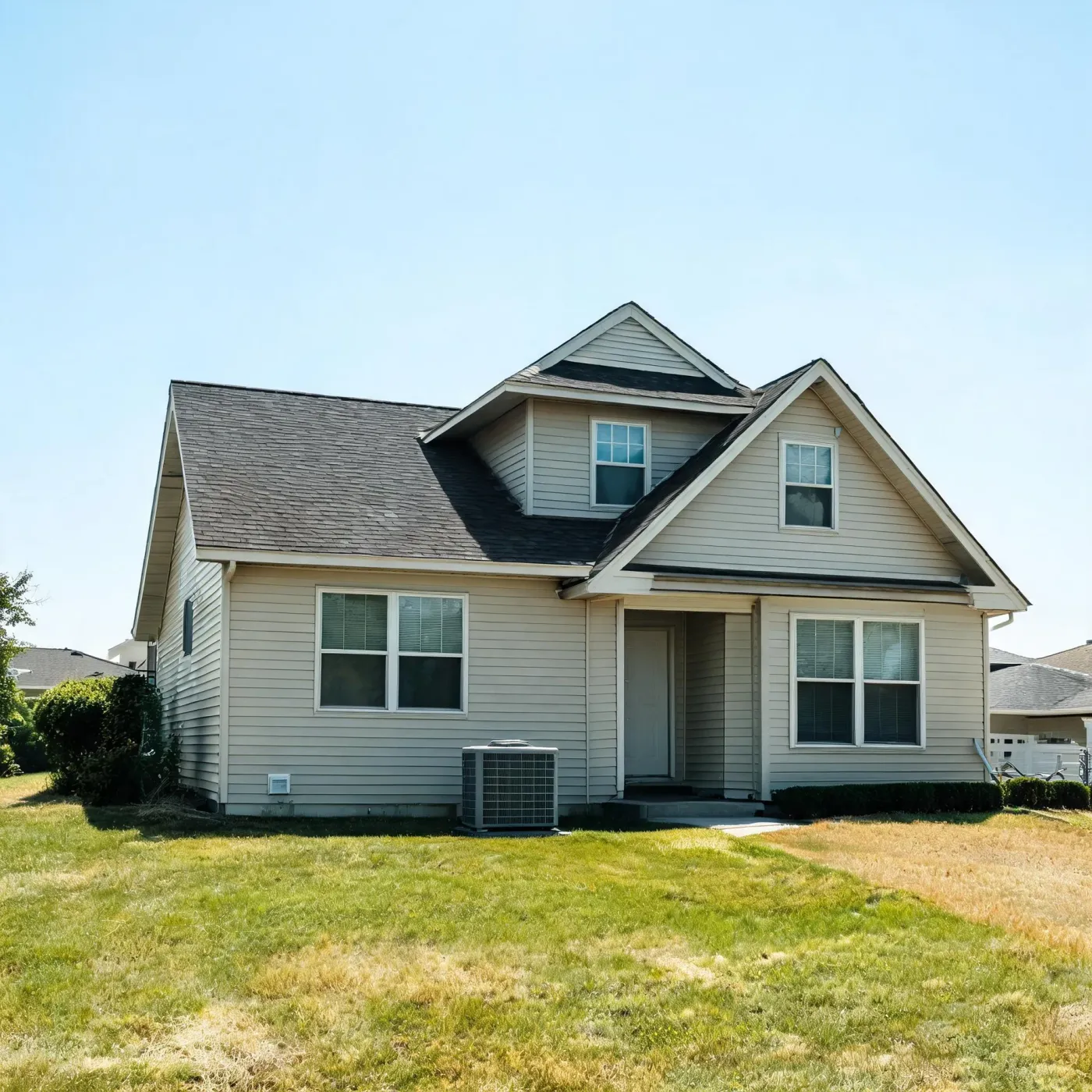
A two-story house with beige horizontal vinyl siding, gray shingled gables and dormer, white-framed windows, a central entry door, and an outdoor air conditioning unit, set on a partly dry lawn under a clear blue sky.

Idaho summer air averages a 42°F dew point across June, July and August, according to NOAA climate data. That's dry air, the kind where sweat evaporates fast and a room can feel cooler than the thermometer says once the humidity drops. A mini split in that air doesn't work to wring moisture out the way one would in a muggy climate. Its coil spends its effort on heat instead, so the room you're cooling drops to temperature quicker and the compressor doesn't have to run as hard to hold it there. You'd notice it as a mini split that keeps up even on the hottest August afternoon without straining.

NASA POWER T2MDEW county cells weighted by homes

A man in a dark polo shirt and cap, seen from behind, walks up a paver path toward a woman standing in the open front doorway of a single-story stucco and stone house.

A mini split earns its place in a dry Idaho summer

A mini split in an Idaho home does one job well. It cools the room you put it in, directly, without asking the gas furnace or the ductwork to do anything they weren't built for. That's the whole case for it, and the facts above hold up: dry summer air, cheap power, a furnace that still handles winter the way it always has.

Whether that's worth it comes down to your room and what it's cost you so far in money and patience. If you're past the point of deciding whether a mini split makes sense and want to know what installing one actually involves for your house, that's a conversation with a contractor who installs them, not another search. Once you're matched with one, they'll look at your space and reach out, and the back and forth of finding someone and explaining the problem from scratch is off your plate.


A living room corner with a light beige sofa holding a textured taupe cushion, a large ceramic vase of olive branches by a window, a framed neutral artwork on the wall, and a dark bowl with stacked books in the foreground.
A single-story house with horizontal siding and large windows lit from within at dusk, beside a lawn, low path lights and a dark gravel driveway, with pine trees and a distant waterway under an orange and blue sky.

Mini Split Installation

Get your mini split to the right pro

New system or replacementMini-splitIdaho
Step 1 of 2

What ZIP code is the job in?

  • A brown leather and wood armchair with a cream knit throw sits in a corner beside a woven basket holding a dark cushion, under a framed mountain photograph, with a wood-trimmed window showing yellow and green foliage.
    • A local pro who knows mini splits gets your details and gets in touch.
    • Describe your mini split job, and a local pro who handles it gets in touch.
  • A dark wood dresser against a pale wall holds a ceramic vase of eucalyptus branches, a stack of books with a wooden bowl, and a woven basket, with a framed landscape painting above and a woven basket holding a knit blanket on the floor beside a window.
    • Send the form and stop researching installers for the new mini split.
    • One request ends the search for a mini split installer.
  • A window seat with beige linen and brown textured cushions, a chunky knit blanket, and an open book, beside a window showing blurred yellow autumn foliage.
    • Skip collecting and comparing quotes for the new mini split.
    • Skip searching for a mini split pro and answer a few questions instead.
  • A cream upholstered armchair with a rust-colored pillow and knit fringed throw sits beside a window with a ceramic vase of orange-leafed branches on the sill, overlooking autumn trees and leaf-covered ground.
    • One installer gets your project, so there's no bidding war over it.
    • Your request stays with one local pro.