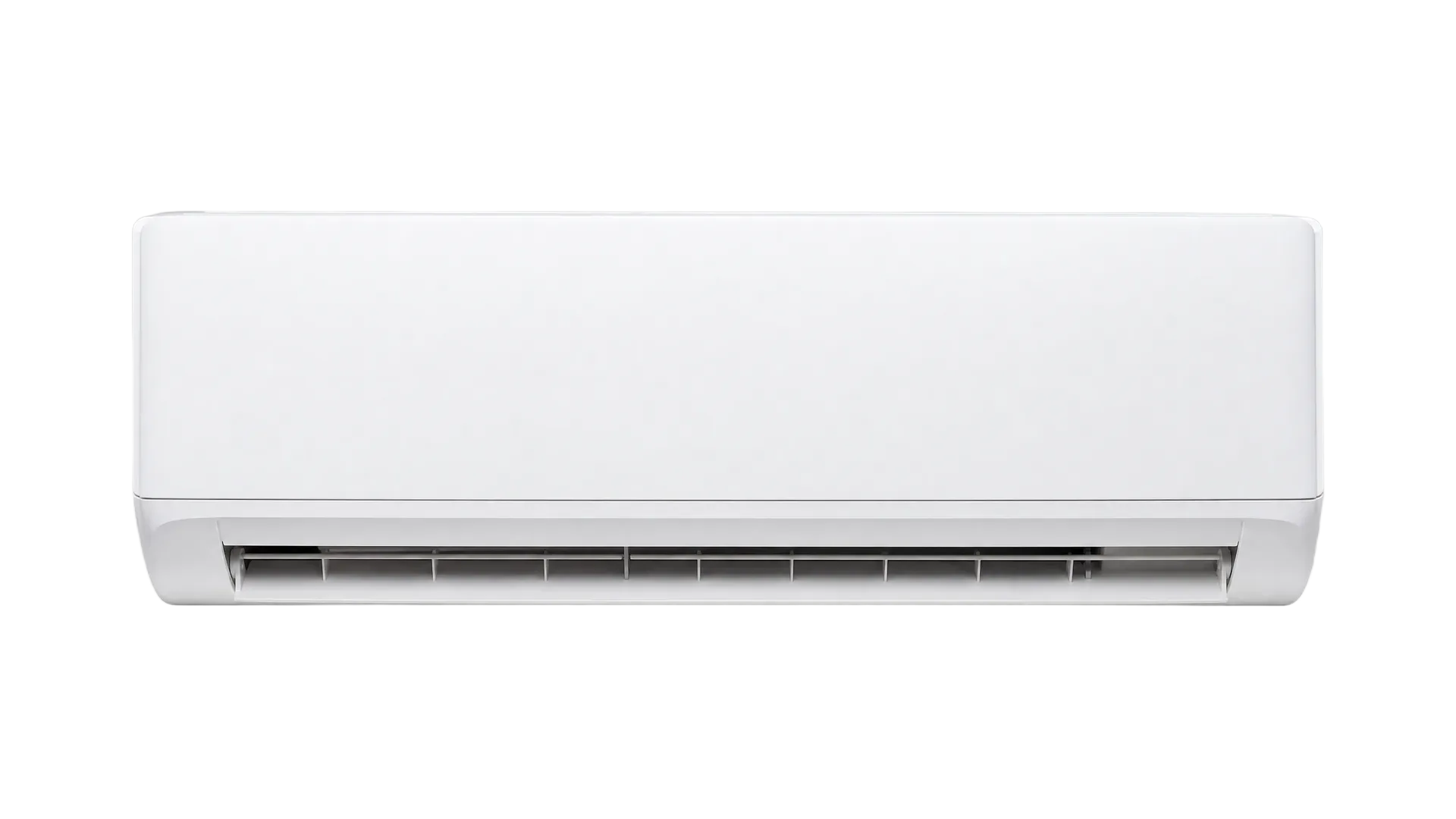

Running clean
This is a mini split doing its job. Air moves out of the vents, the room holds its temperature, and the casing stays white. Nothing about an older house keeps a unit from looking and running like this for years.
You've got an older house and you're wondering if a mini split is actually a good match for it, or if you'd be better off sticking with whatever's there now. Maybe you're worried about old ductwork, or you don't have ducts at all in part of the house. You want to know if this works here, in Idaho, before you spend money finding out the hard way.
A mini split doesn't need ductwork, so it sidesteps whatever your old ducts are doing wrong or the fact that you might not have any in a bonus room or addition. It mounts on a wall or ceiling and runs its own line to an outdoor unit. For an older Idaho home, that matters most in summer. Summers here are hot and dry, and a mini split cools well in dry heat. Most homes here heat with gas, so a mini split usually ends up working alongside your furnace rather than replacing it, handling the room or rooms where the ducts don't reach or don't keep up. Power here is cheap, which keeps it running without adding much to the bill.






If you're already running a mini split in an older Idaho house, pay attention to what it's telling you. A unit that used to drop the room to temperature fast but now runs long stretches without catching up is losing ground, maybe to a dirty filter, maybe to a coil that needs attention. Ice on the outdoor unit in summer, water pooling near the indoor head, or a smell when it kicks on are all worth noting. In a house with gas heat and a mini split for cooling, the risk isn't comfort alone. A struggling unit runs longer for less effect, and in an old house that was never built around this kind of system, small mismatches tend to show up as bigger bills before they show up as bigger problems.
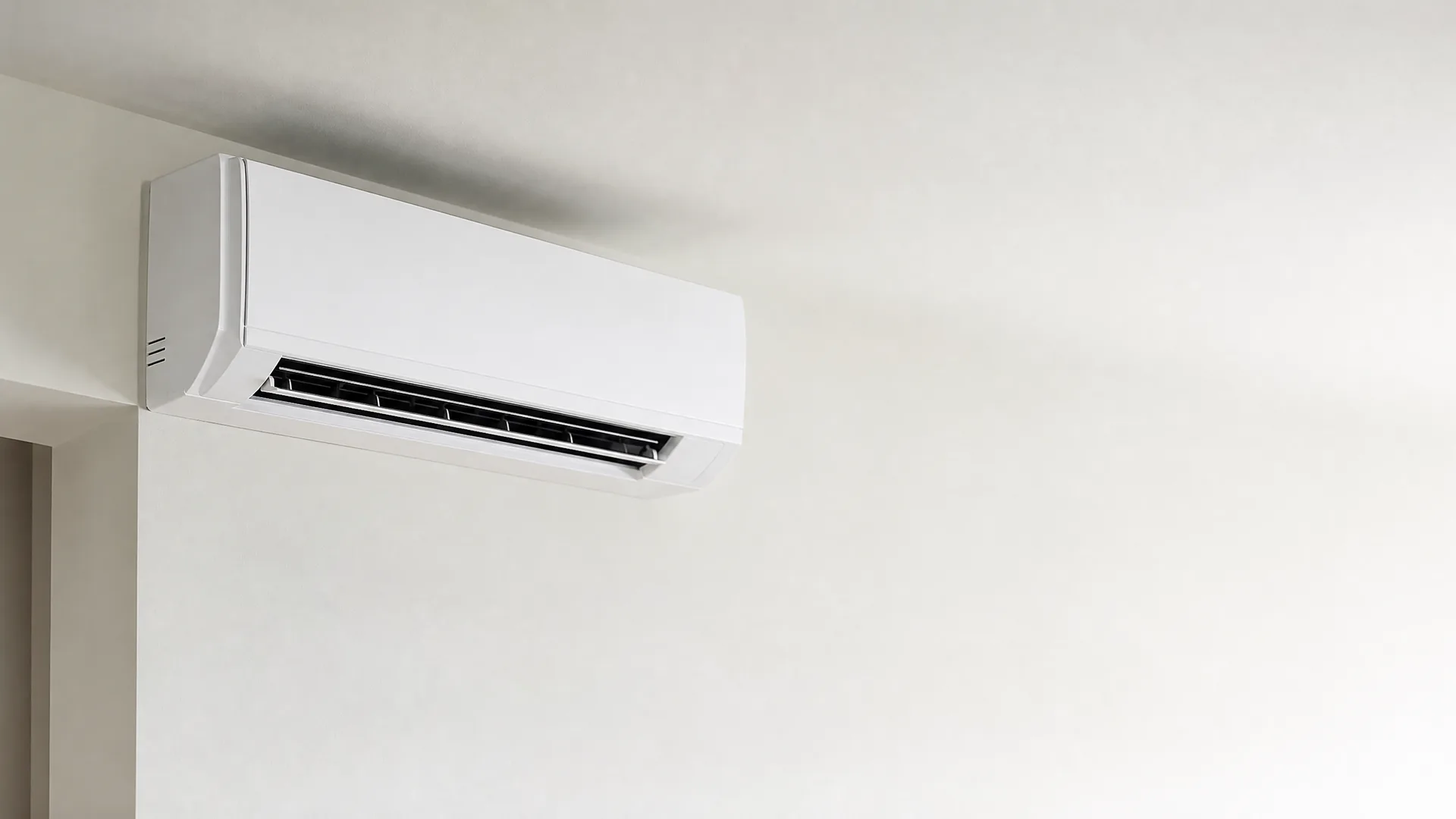
An older house loses conditioned air through old ductwork before it ever reaches the room. A mini split skips that problem. The line set runs from the outdoor unit straight to the indoor head, carrying refrigerant instead of air, so nothing escapes into a wall cavity or an attic along the way. Whatever the unit produces goes into the room it's mounted in.
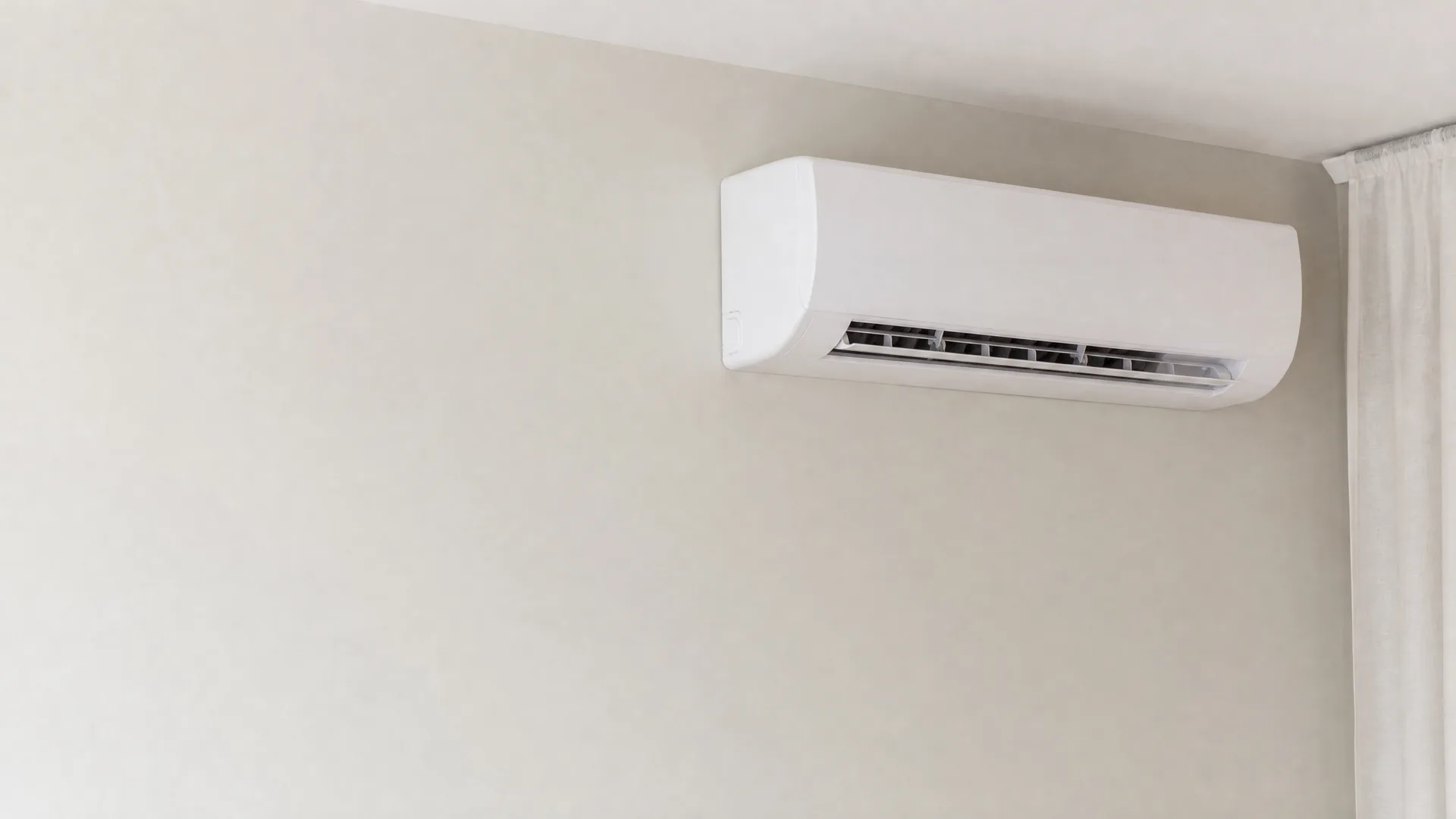
Most houses in Idaho heat with gas, and a mini split doesn't ask you to change that. It handles cooling for the room it's in, running on electricity that costs little here, while the furnace keeps doing the heating it's always done. The two systems don't compete for the same ducts or the same thermostat, so adding one doesn't mean giving up the other.

A mini split's indoor head pulls room air across a coil, not a filter alone, and that coil is doing two jobs at once in an Idaho summer. It pulls heat out of the air and it pulls moisture out too, because refrigerant moving through that coil runs colder than the air passing over it. The blower then pushes that cooled, drier air back into the room through louvers you can aim up or down, left or right, so one head can favor the side of the room where you actually sit. There's no plenum, no return duct pulling from a hallway. The air it treats is the air in that room, nothing more.
That's also why placement matters more with a mini split than with a furnace vent. A head mounted too close to the ceiling corner stratifies warm air above it and leaves the floor untouched. One mounted over a doorway fights the draft every time someone walks through. A contractor who's installed these in older Idaho homes before knows where that head needs to sit in your layout, not just on a wall that happens to be open.



Send the form and stop researching installers for the new mini split.
There's no charge for the request.
Most people picture a compressor switching on and off, same as an old window unit. A mini split's outdoor unit doesn't work that way. The compressor is variable-speed, so once the room gets close to the temperature you set, it throttles down instead of shutting off. It keeps turning, just slower, feeding the indoor head a steady trickle of refrigerant rather than a hard blast followed by silence. That's the whole reason a mini split can hold a room within a degree or two instead of swinging five or six degrees between cycles.
None of this depends on ductwork, which matters in an older house where the ducts are a question mark. The indoor head connects to the outdoor unit through a line set and a run of wire, nothing more. No plenum, no branch runs, no trunk line losing air before it reaches the room.
The indoor head also has its own sensor reading the room it's actually in, not air pulled back from a hallway or a return duct somewhere else in the house. That's a more honest read on the temperature where you're sitting.
Idaho's summer heat is dry, so the compressor spends most of its effort moving heat rather than pulling moisture out of the air, which is the harder of the two jobs. Paired with cheap power here, a compressor that runs slow and steady instead of hard and often tends to show up smaller on the bill than the stop-start equipment it replaces.
At that rate, a mini split costs less to run here than it would in a lot of other states. It uses electricity to move heat instead of generating it, so it gets more cooling out of each kilowatt-hour than a window unit or baseboard heat would, and cheap power only widens that gap.
EIA-861 2025 statewide residential average

This is a mini split doing its job. Air moves out of the vents, the room holds its temperature, and the casing stays white. Nothing about an older house keeps a unit from looking and running like this for years.

Dust built up like this across the casing usually means the filter hasn't been cleaned in a while. The coil behind it is working harder to pull heat and moisture out of the air, and the room is likely taking longer to cool than it used to.
A mini split is a good match for an older Idaho home. It handles the dry summer heat without asking anything of ductwork that may not be up to the job, and it does that work in one room at a time instead of straining to cover a house it was never sized for. What matters now is getting the unit sized and placed right for your house, and that's a job for someone who installs them for a living, not a guess. You don't have to track down that person yourself. Once you send the form, the work of finding a contractor who installs mini splits in Idaho is off your plate. You'll be matched with someone who takes on this kind of work and who reaches out to you about your house specifically. The part that used to be on you, figuring out who to call and whether they know what they're doing, is handled.
One request ends the search for a mini split installer.