Most homes here run on electric heat
Electricity heats 40.5% of occupied homes in Butte County, more than any other fuel. A mini split fits right into that setup, since it runs on electricity too.
Takes about a minute. No obligation.
Electricity heats 40.5% of occupied homes in Butte County, more than any other fuel. A mini split fits right into that setup, since it runs on electricity too.
Bottled, tank or LP gas heats 19.2% of homes in the county, and there's no mention of natural gas service at all. For a lot of homeowners, a mini split means skipping fuel deliveries and tanks altogether.
NOAA nClimDiv, 1991–2020 normals
One quote might list a single outdoor unit and one head, another might list the same brand name but a smaller compressor.
Ask for the model number of the outdoor unit and check it can actually run every indoor head at the same time, not just one at a time.




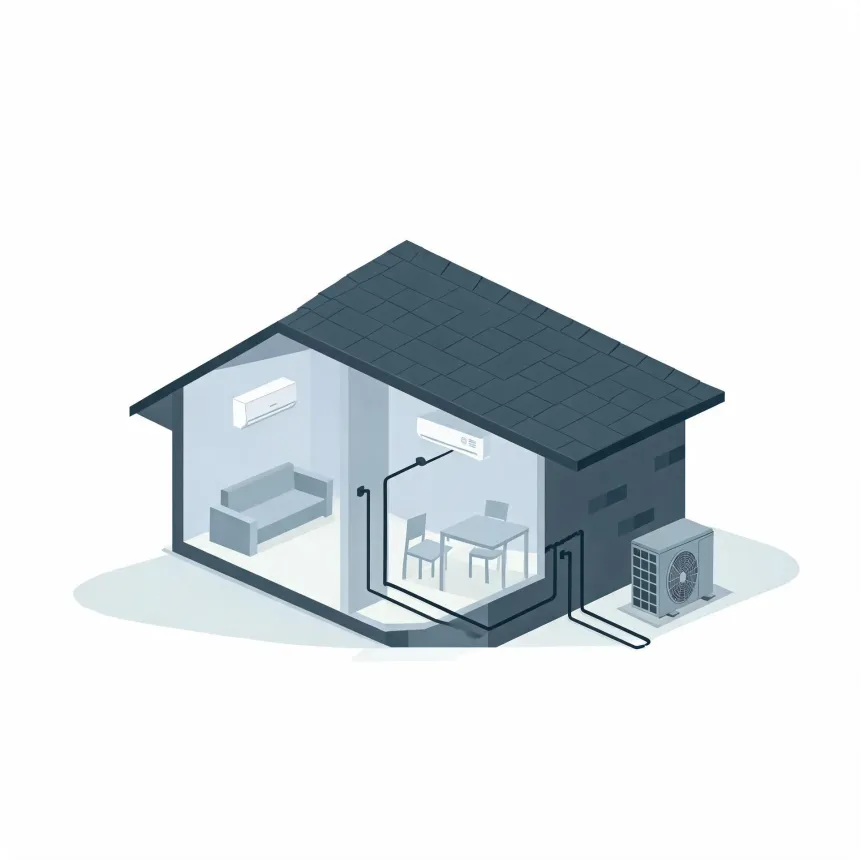
The number of indoor heads drives the cost more than anything else. One head cooling one room is a straightforward job. Several heads tied to one outdoor compressor means more line sets, more mounting work, and an outdoor unit sized to run all of them together. Where that outdoor unit goes matters too. A long run between it and the indoor heads means more refrigerant line, more wall penetrations, and more labor to route it cleanly. The condition of the electrical panel plays a part as well. Some installs need a new dedicated circuit, and if the panel is already full, that adds work before the mini split itself goes in. None of this shows up on a price list until someone has looked at the walls and the panel and counted the heads.
Replace it before the season starts, so it happens on your schedule, not in a hurry.
Find a contractor
Half the homes in Butte County were built in 1971 or earlier. A house that old was built for whatever heated it then, not for a mini split. The wall a line set has to pass through, the spot an outdoor unit can sit without blocking a window or a walkway, none of that was planned around this equipment. It still works, but someone has to look at the actual wall and the actual room before the sizing makes sense.
The SEER2 number on the label rates how hard the compressor has to work to cool, averaged over a season. It says nothing about how the unit performs running heat in the cold. For that, look at the HSPF2 number on the same label. A mini split can carry a high rating on one and a middling one on the other.
A high efficiency rating assumes the unit is sized right for the space it's cooling and heating. An outdoor unit too big for its heads will short cycle, switching on and off instead of running steady, and the efficiency on the label won't show up in how it actually runs. That's why sizing comes before any comparison of ratings between models.
Sizing a mini split starts with a load calculation, not a tape measure on the floor plan. The calculation accounts for window area, insulation, ceiling height, and how many walls face outside, then arrives at how much heat the room gains in summer and loses in winter. An outdoor unit sized above that number doesn't cool better, it cools faster and shuts off, leaving the room clammy because the head never runs long enough to pull moisture out of the air. One sized below it runs constantly and still can't keep up on the coldest or hottest days. The same math has to work for every indoor head on that compressor at once, since they all draw from the same outdoor unit when the whole house is calling for heat or cooling together. Get that number right and the rest of the install, the line sets, the mounting, the electrical, falls into place around it.
Installation starts outside, not in. The outdoor unit gets set on a pad or mounted to a bracket, leveled, and placed where it has clearance on all sides for airflow. Inside, each head gets mounted to a bracket on the wall, usually high up, over the spot where the line set and drain can run most directly to the outside. A hole gets drilled through the wall for the line set, the drain line, and the electrical, all bundled together and sealed where they pass through. Once the lines are run and connected, the system gets pressure tested before any refrigerant moves, to catch a bad joint before it becomes a slow leak nobody notices for months. Only after it holds pressure does the line get charged and the heads powered up and checked, one by one, for airflow and temperature at the vent.