





Illuminated timber-and-stone luxury homes along a residential street at dusk, with snow-capped mountains visible in the background.

Mini Split Installation in Gooding, ID

Tell us about the job

Takes about a minute. No obligation.

New system or replacementMini-splitGooding County, ID
Step 1 of 2

What ZIP code is the job in?

Most homes in Gooding County run on electric heat, 63.7 percent of them. A mini split fits right into that picture, since it runs on electricity too and does both heating and cooling from the same unit. Gas heats a smaller share of homes here, 20.4 percent, with propane further behind at 4.8 percent. If your house already heats with electricity, adding a mini split doesn't mean bringing in a new fuel line or rethinking how the house is set up. It works with what's already there.

8 months
October through May, your system heats
2 months
July through August, it cools
21°F
the average winter night it heats against
86°F
the average summer afternoon it cools against
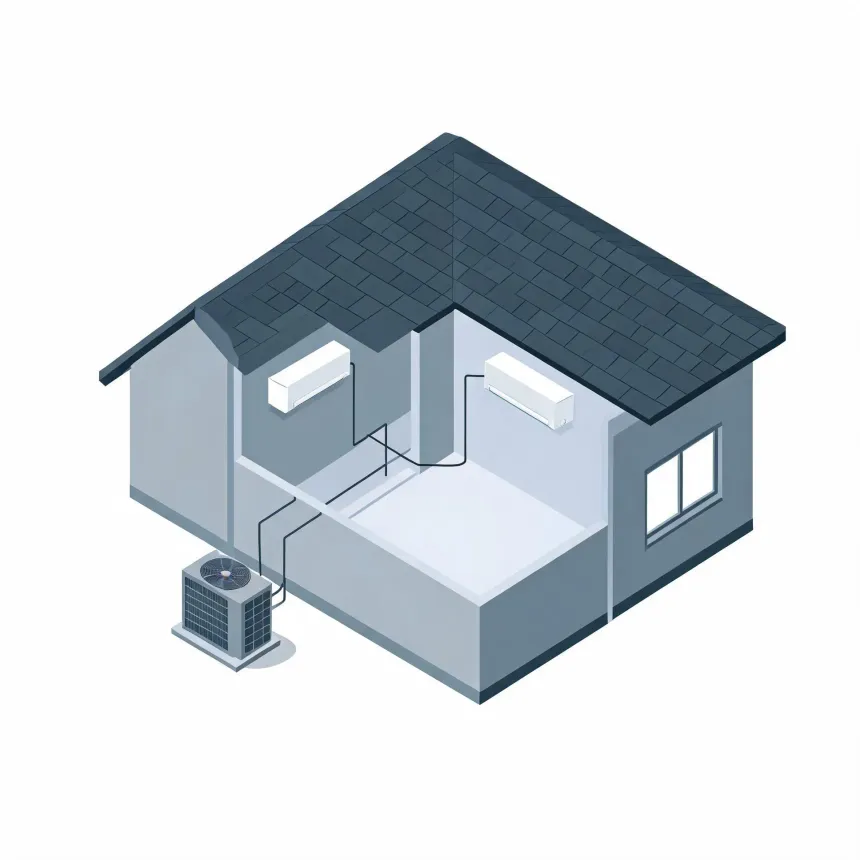
Isometric illustration of a cutaway gray house with a dark shingled roof, showing two wall-mounted indoor air conditioning units connected by lines to an outdoor condenser unit on the ground outside.
Your system heats October through May and cools July through August.

NOAA nClimDiv, 1991–2020 normals

Idaho electricity runs 11.52 cents a kilowatt-hour, well under the national average.

A mini split still cuts your bill, but a pricier high-efficiency model takes longer to earn that difference back here.

A standard mini split handles Gooding summers fine

Half the homes here were built by 1976
Cooling runs July through August
Summer afternoons average 86°F
A standard mini split handles Gooding summers fineCooling only runs two months here, with afternoons around 86°F.

Cooling here only runs July through August. That's a short window, and it means June is the month to get a mini split installed, not the month you find out your old system quit. Install it ahead of the heat and you get to test it, set it up, and work out any kinks before you actually need it running every day. Wait until July and you're asking a contractor to fit you in at the same time every other AC call in the county is coming through.

Any new mini split here has to clear 14.3 SEER2 and 7.5 HSPF2

Gooding County is zone 5B. Any mini split installed here has to meet the federal minimums, 14.3 SEER2 for cooling and 7.5 HSPF2 for heating. That's the floor for units built from 2023 on, ductless or not. A federal tax credit is available on qualifying systems, which can offset some of that cost.

Find a contractor
A man in a dark cap, navy long-sleeve shirt and tan work pants walks up porch steps toward a green front door, carrying a worn canvas tool bag in his right hand.
A beige split-system air conditioner outdoor condenser unit mounted on metal wall brackets atop a stucco wall.

Light use doesn't mean no upkeep

The compressor isn't the only part with a service life. The line set, the indoor coil, the outdoor fan motor all sit outside or behind a wall for however long the system lasts, and none of them get easier to reach once the unit's mounted. A mini split that runs light duty still needs the filter pulled and rinsed on a regular schedule, because a clogged filter makes the indoor fan work harder to push the same air, and that's wear that has nothing to do with the compressor at all. The outdoor unit collects leaves, grass clippings, ice in a cold snap, whatever's around it, and clearing that off matters as much on a mild year as a hard one. None of this depends on how many months the system runs. It depends on whether someone keeps the airflow clear.

Your old system gets disconnected, not just unplugged

If you're replacing a furnace or central AC, the installer has to deal with what's already there. Electric resistance heat or an old central system means shutting off circuits and pulling the unit out. Any ductwork feeding it stays in place unless you ask otherwise, it just won't be doing the job anymore.
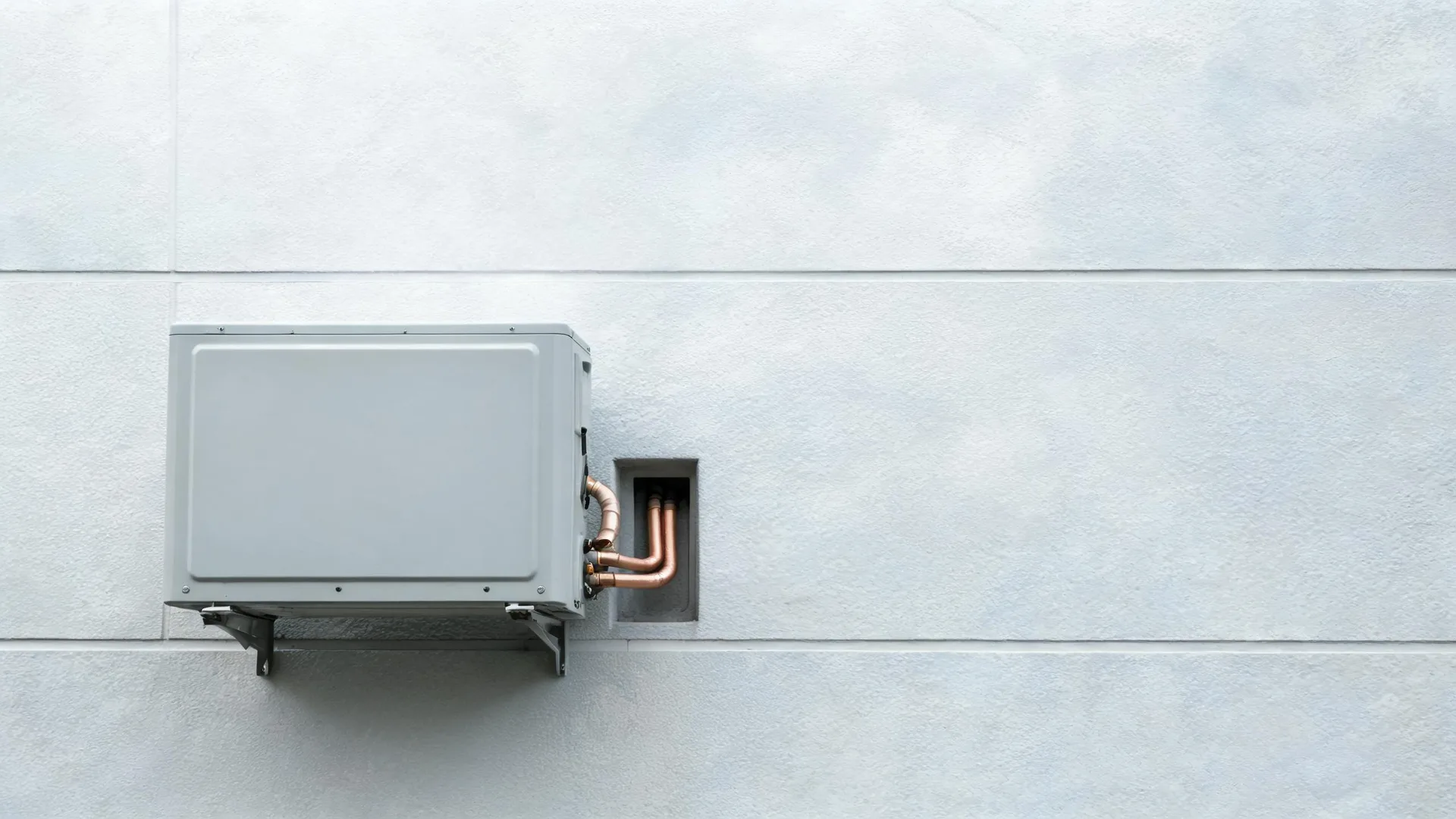
Removal is a separate line item from the install

Taking out the old equipment and hauling it off isn't automatically folded into putting in the new mini split. Ask what the quote covers before you agree to it, so you're not surprised by a second charge once the new units are already on the wall.

Sizing a mini split isn't about matching the old system's output or going a step up to be safe. Too big and it cools the room fast, shuts off, then kicks on again a few minutes later, cycling on and off all day instead of running steady. That short cycling is hard on the compressor and leaves the room clammy, because the unit never runs long enough to pull moisture out of the air. Too small and it struggles to hold the room where you want it, running longer than it should just to keep up. The right size comes from a load calculation, the square footage, how many windows face the sun, how well the place holds insulation, what's typically running inside it. A contractor who sizes it off the room dimensions alone is guessing. One who asks about windows and insulation is actually doing the math.

Install day starts with where the indoor and outdoor units go, and that gets settled before anyone picks up a drill. The indoor head needs a clear path back to the outdoor unit for the refrigerant lines, so the installer works out the shortest reasonable run through a wall. Once that's marked, it's drilling the line set hole, mounting the indoor unit's bracket, and setting the outdoor unit on a pad or brackets outside. The lines get connected, the system gets evacuated to pull out air and moisture before refrigerant ever flows through it, and then it gets charged and tested. A straightforward single-zone setup is usually done in a day. Multiple indoor heads, a tricky wall to run the lines through, or electrical work to add a dedicated circuit all add time on top of that.