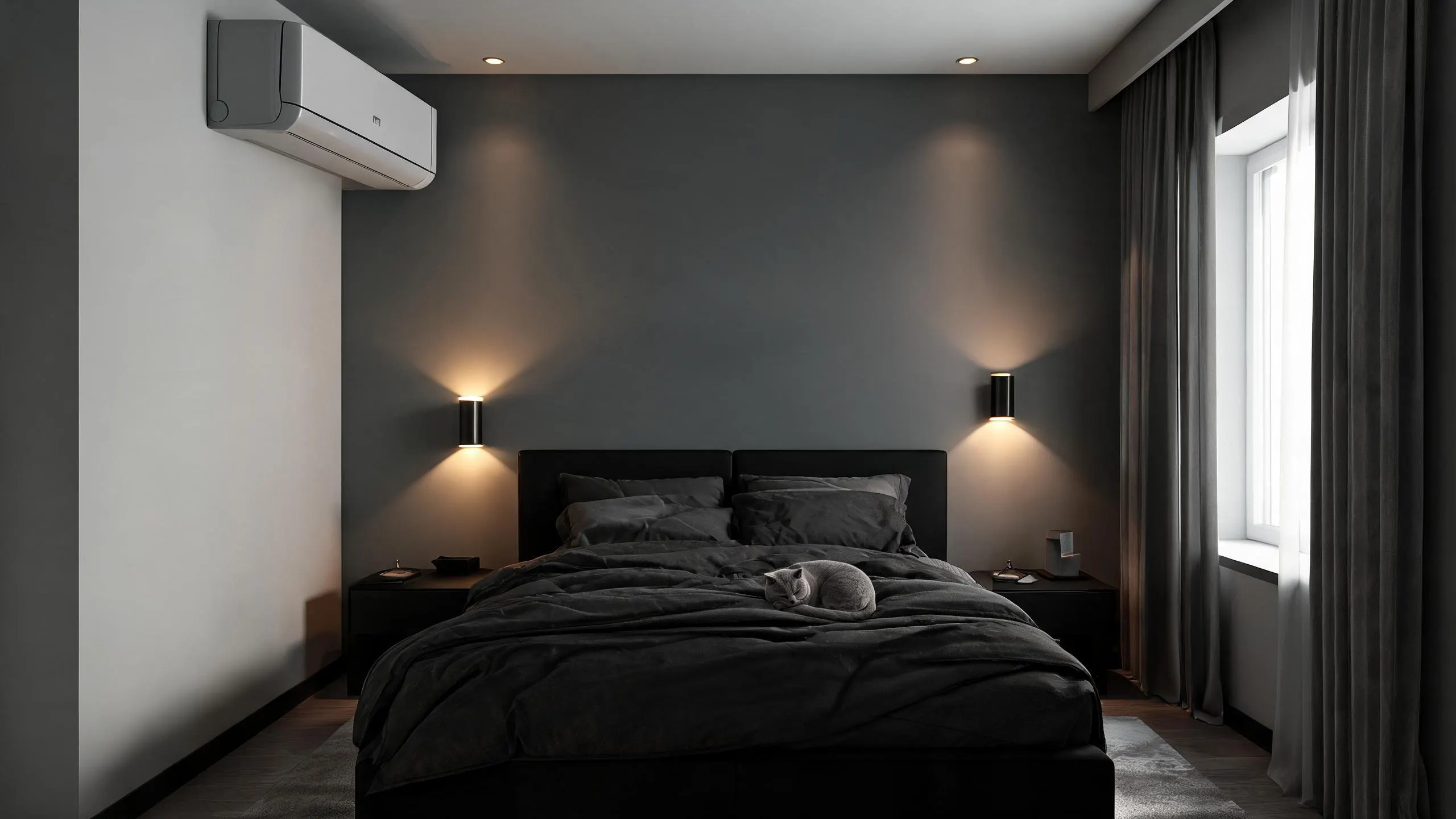






A minimalist bedroom with dark grey walls, a large bed with charcoal bedding, a sleeping cat, two warm-toned wall sconces, and a wall-mounted air conditioning unit.

Mini Split Installation in Homedale, ID

Tell us about the job

Takes about a minute. No obligation.

New system or replacementMini-splitOwyhee County, ID
Step 1 of 2

What ZIP code is the job in?

Most homes in Owyhee County run on electric heat, 66.8% by the latest count. Gas never got much of a foothold out here, with utility gas and propane together heating less than a fifth of homes. A mini split fits into that pattern instead of fighting it. It heats and cools with electricity, so there's no gas line to run or vent to add, and it works alongside whatever electric setup is already there. For a home already wired for electric heat, adding or replacing with a mini split is the straightforward path.

10 months
September through June, your system heats
2 months
July through August, it cools
21°F
the average winter night it heats against
83°F
the average summer afternoon it cools against
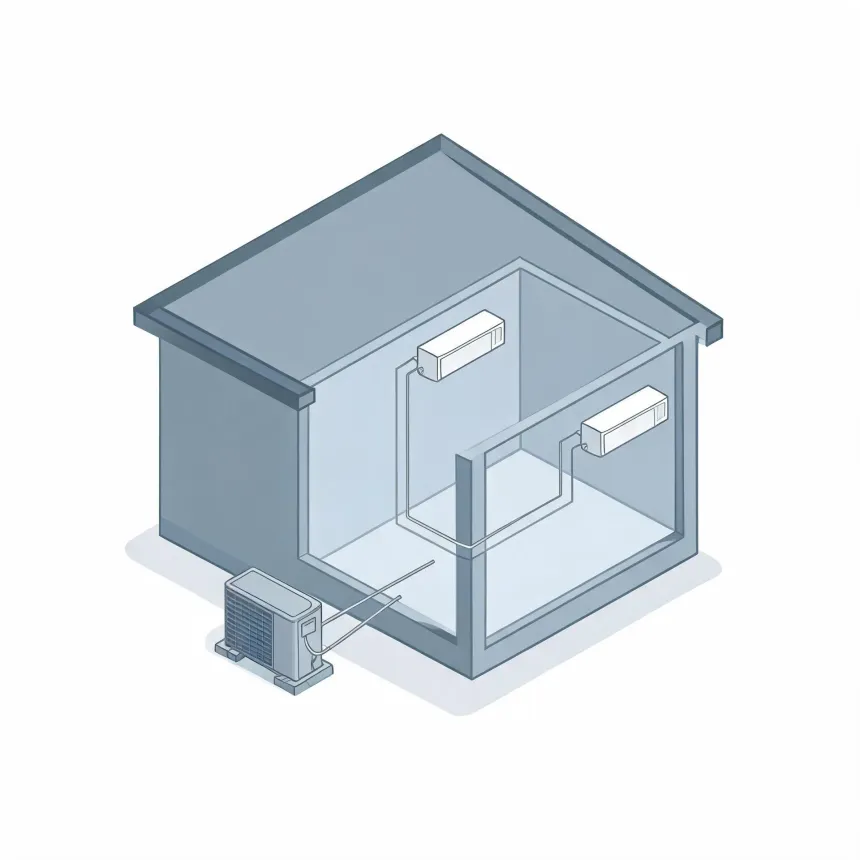
Isometric line illustration of a cutaway building interior with two wall-mounted indoor air conditioning units connected by piping to an outdoor condenser unit on the ground outside.
Your system heats September through June and cools July through August.

NOAA nClimDiv, 1991–2020 normals

Half the homes in Owyhee County were built in 1984 or later, and mobile homes make up 21.7% of the housing stock.

Neither fact changes the job. A mini split sized for the room it's heating and cooling fits either one.

June is the month to get it installed, before cooling starts in July

Cooling runs July through August
Summer afternoons average 83°F
28 damaging wind events from 2015 to 2024
Two months of real workCooling runs July through August here, with afternoon highs averaging 83°F.

Electricity in Idaho runs 11.52 cents per kilowatt-hour, cheaper than most of the country. That changes which mini split makes sense here. A high-efficiency model costs more up front and earns that back through lower bills over time, and with power this cheap, the payback takes longer than it would somewhere with pricier electricity. That doesn't make efficiency pointless, it just means it shouldn't be the only thing deciding the purchase. A unit sized right for the room it's heating and cooling will run less than an oversized or undersized one, whatever its rating says. Fit and a clean install matter more here than chasing the top number on the spec sheet.

Any system installed here has to meet zone 5B's minimum, and a federal credit applies toward it

Owyhee County sits in climate zone 5B, where heating carries the bigger load. Any mini split installed here, ductless units included, has to clear 14.3 SEER2 and 7.5 HSPF2 under the federal minimum. That standard sets the floor for what a contractor can install, not a ceiling worth paying extra to clear by a wide margin. A federal tax credit is available toward the cost of a qualifying system, worth checking against before you settle on a model.

Find a contractor
A man in a cap, long-sleeve shirt and brown work pants carries a worn canvas tool bag up porch steps toward a green front door, with a potted shrub beside the entry.
A white mini-split air conditioner outdoor condenser unit mounted on metal brackets against a beige stucco exterior wall, with a blue sky and scattered clouds in the background.

Sized for the room, not the square footage

Sizing a mini split comes down to matching the unit to the room, not the room to the unit. A contractor works this out with a load calculation, weighing the square footage against insulation, window area, ceiling height and how many walls face outside. Skip that step and guess from square footage alone, and the system runs wrong in a way you'll feel every day it's on. Too big and it cools the room fast, shuts off, then kicks on again a few minutes later. That cycling is harder on the compressor than running steady, and it leaves the room cold and damp instead of comfortable, since a short cycle doesn't run long enough to pull moisture out of the air. Too small and it runs constantly trying to catch up, especially on the hottest afternoons, and it never quite gets there. Neither mistake shows up on the spec sheet. It shows up in how the room feels and how often the outdoor unit is cycling on and off.

How many zones, and what covers each one

A mini split system can run one indoor head or several off the same outdoor unit. Ask what each quote actually covers. Find out if it's one room or the whole house split into zones. More heads mean more upfront cost but let you heat or cool only the rooms in use. One head serving an open layout costs less but means the whole space runs together. Get the zone count and the placement of each head in writing before comparing prices against each other.
Where the outdoor unit sits and how the lines run

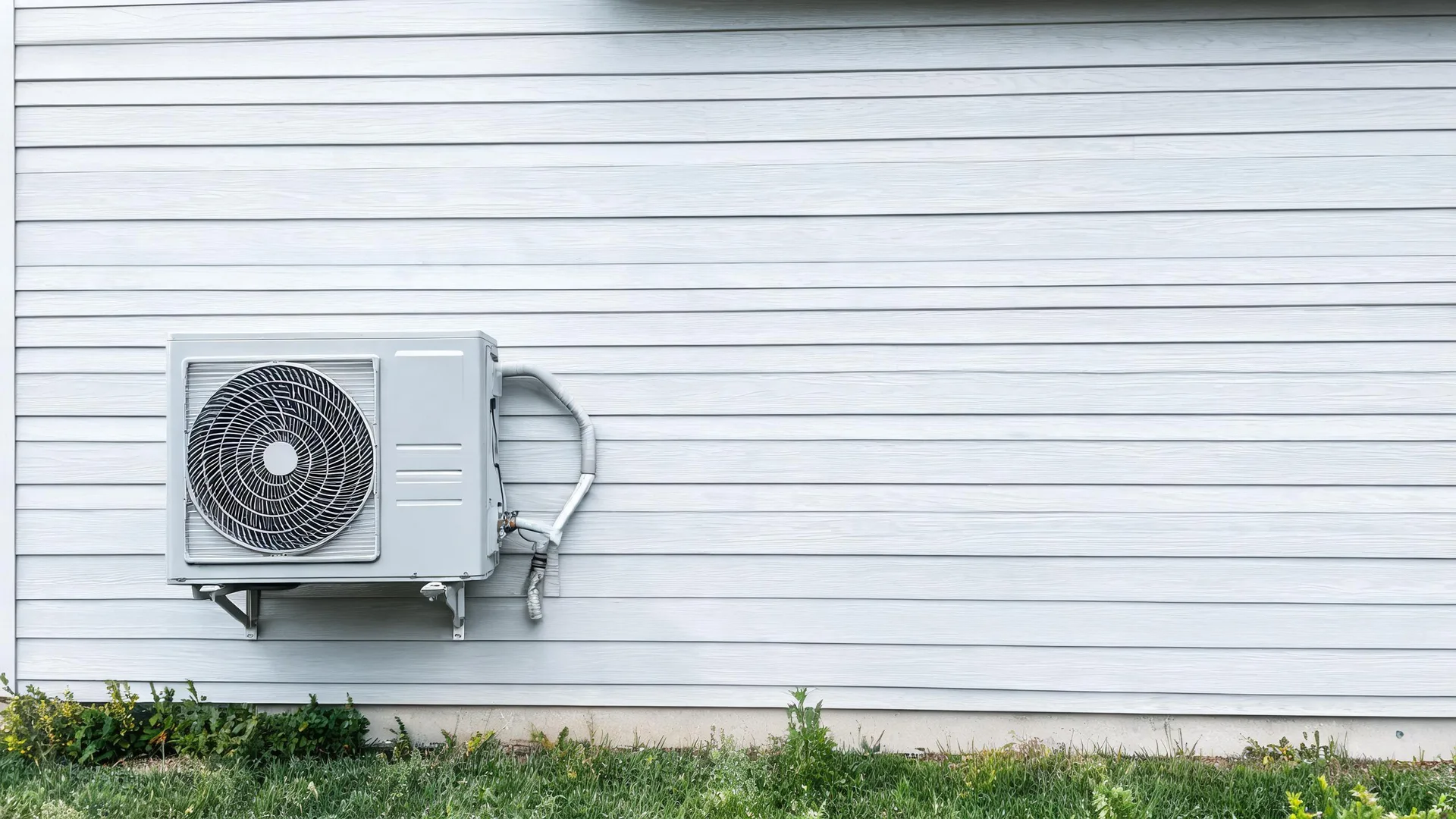
The outdoor compressor needs clearance on all sides to pull air through. It also needs ground or wall mounting so it isn't sitting in standing water or snowmelt. The line set connecting it to the indoor head runs through a hole drilled in the wall, and the length of that run affects how the system performs. A contractor who walks the site and points to the actual wall and the actual spot outside before quoting is giving you a real plan. One who quotes without looking is guessing.

If this is replacing an old system, that unit doesn't owe anyone anything and the contractor handling the install should deal with taking it out. A window unit or an old ductless system gets disconnected and hauled off. If what's coming out is a furnace or central AC, the refrigerant in that old unit has to be recovered by someone licensed to do it, not vented, so factor that into who you hire if a removal is part of the job. Scrap metal recyclers will sometimes take the old equipment off a contractor's hands, which is between them and the hauler, not something you need to arrange. What matters on your end is making sure the quote actually says who's responsible for removal and disposal, because not every installer includes it by default.

Installation day starts with the outdoor unit going up first, since the indoor head can't go on until the line set has somewhere to connect. The wall gets a hole drilled for the refrigerant lines, the drain, and the power wiring to pass through, sealed afterward so no air or water gets in around it. Once both units are mounted and the lines are run, the system gets evacuated with a vacuum pump to pull out moisture and air before refrigerant goes in. Skipping that step is the single biggest cause of a mini split that never performs right, so it's worth asking whether it's part of the process. After charging, the contractor checks the line connections for leaks and runs the system in both heating and cooling before calling it done. A clean install leaves no refrigerant lines exposed to the weather and no drain line pitched the wrong way.