




A lit mountain lodge-style home at night with evergreen trees, stone accents, and snow-capped mountains in the background.

Mini Split Installation in Kellogg, ID

Tell us about the job

Takes about a minute. No obligation.

New system or replacementMini-splitShoshone County, ID
Step 1 of 2

What ZIP code is the job in?

Gas heats a little over half the homes in Shoshone County, and electricity heats about a third. A mini split doesn't compete with the furnace, it takes over the jobs a furnace and a window unit used to split between them. For cooling, it replaces the window unit outright. For heat, it can carry the house on its own through the milder months and let the furnace handle the coldest stretches, or it can work alongside baseboard electric heat if that's what the house has now. Either way, it's added capacity, not a fuel switch, so there's no gas line or electrical service question to sort out first.

10 months
September through June, your system heats
22°F
the average winter night it heats against
73°F
the average summer afternoon it cools against
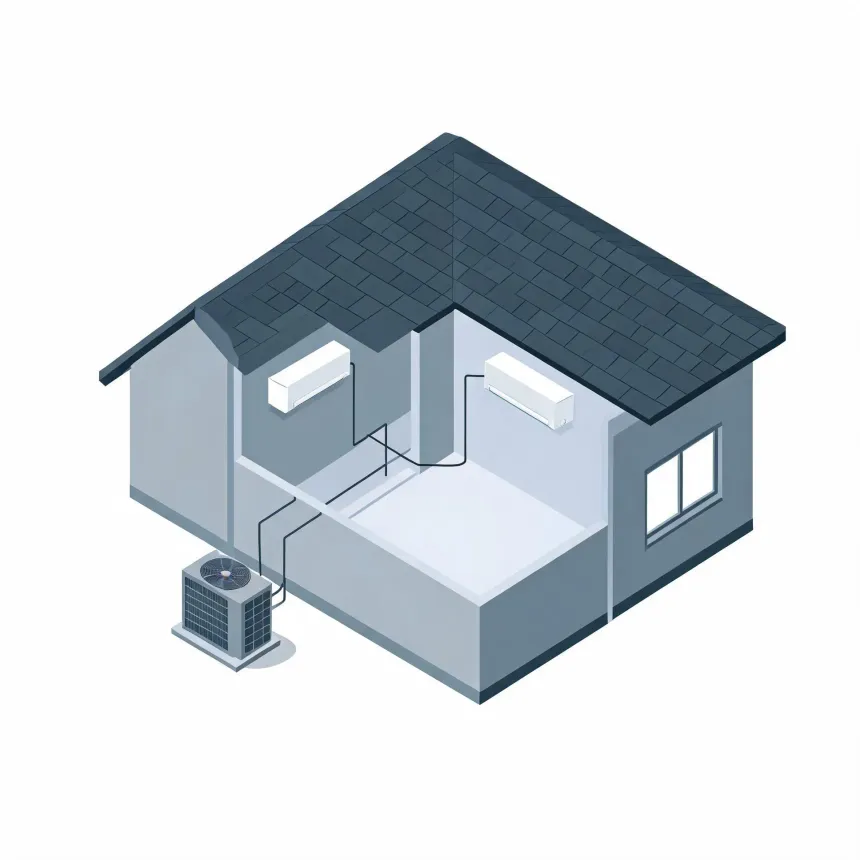
Isometric illustration of a cutaway gray house with a dark shingled roof, showing two wall-mounted indoor air conditioning units connected by lines to an outdoor condenser unit on the ground outside.

Winter storms have hit Shoshone County 189 times between 2015 and 2024.

A mini split sized for Kellogg's normal winter cold handles that without any upsizing.

Kellogg summers barely ask a mini split to work

Summer afternoons average 73°F
13 damaging wind events from 2015 to 2024
2 hail events from 2015 to 2024
Kellogg's homes were mostly built before the mini split existedHalf the homes in Shoshone County went up in 1959 or earlier

Kellogg falls in climate zone 5B, a cold, dry zone where heating carries more of the load than cooling does. Any mini split installed here, ductless or not, has to meet the same federal rule as other split-system heat pumps. For units built from 2023 on, that means 14.3 SEER2 for cooling and 7.5 HSPF2 for heating. There's no separate, looser standard for ductless systems. The HSPF2 number is the one that matters most here, since the unit will spend more hours heating than cooling. A system that clears both minimums may also qualify for the federal efficiency tax credit, worth checking against before deciding on equipment.

Cheap power here means fit and reliability matter more than the efficiency rating

Idaho's electricity runs 11.52 cents per kilowatthour, well below the national average. That changes the math on which mini split to buy here. The highest-efficiency model costs more up front and takes longer to earn that back on a power bill this low. Picking the unit that fits Kellogg's winters and holds up matters more than chasing the top efficiency number.

Find a contractor
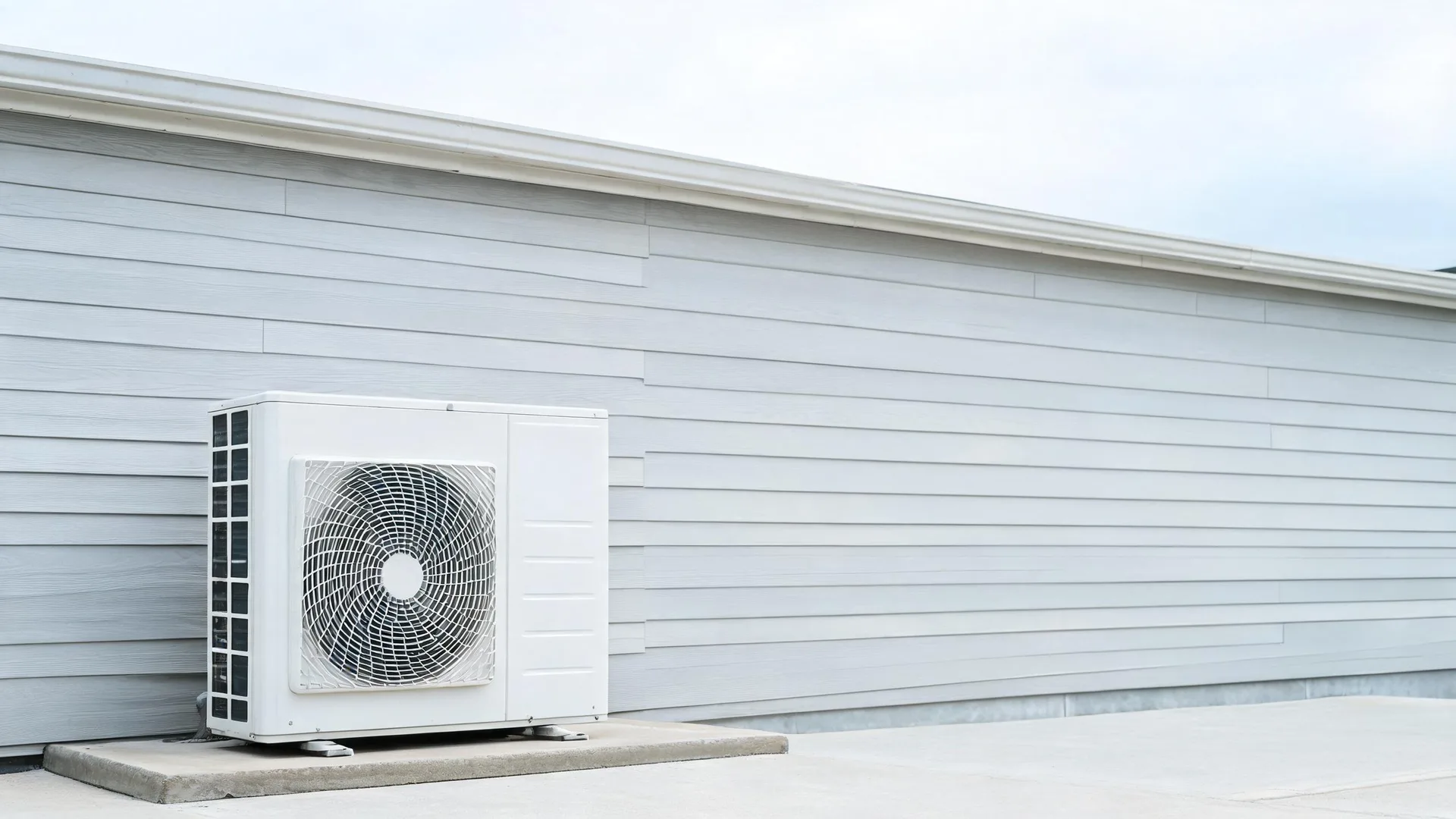
A white mini-split air conditioner outdoor condenser unit mounted on metal brackets against a beige stucco exterior wall, with a blue sky and scattered clouds in the background.

The rating is a lab number, not a promise about this house

The SEER2 and HSPF2 numbers on the label come from a lab test, run at a fixed indoor and outdoor temperature with the unit new and the ducts or line set clean. They tell you how the equipment compares to other equipment, not what it'll do in a specific house. A unit rated higher will use less power to move the same amount of heat, all else equal, but all else is never quite equal once it's mounted on a wall and running against whatever that day asks of it. Fit matters more than the rating once the unit's actually sized for the load it's carrying. An oversized unit with a high rating still short-cycles, switching on and off instead of running steady, and that wears the compressor faster than a smaller, correctly sized unit with a lower number on the sticker. The rating also assumes clean coils and a clear filter. Dust buildup on the indoor coil or a clogged filter drags efficiency down regardless of what the label says, so whatever the unit is rated at, it only holds up with regular filter cleaning.

The line set run sets the labor

The indoor and outdoor units connect through a line set that carries refrigerant between them, run through a wall and routed along the house to wherever the outdoor unit sits. A short, straight run is quick work. A long run, one that climbs a wall, turns a corner, or has to be hidden inside a soffit or chase, takes more line, more labor, and more time flaring and testing the joints. Where the outdoor unit can sit close to the indoor head, the job goes faster.
More heads means more to size and balance

A single indoor head tied to one outdoor unit is the simplest install. Add a second or third head off the same outdoor unit and each one needs its own line set run and its own careful sizing, so the whole system heats and cools evenly instead of leaving one room short. More heads also means more spots to mount, more holes through the wall, and more refrigerant to charge correctly before the system is done.

Taking out the old system is its own job, separate from hanging the new heads. A window unit just comes out of the frame. A furnace or baseboard heat usually stays in place, since the mini split is adding capacity rather than replacing the old heat source outright. If a central air condenser is being retired, it gets disconnected and hauled off, and the line set it used is abandoned rather than reused, since a mini split runs its own refrigerant lines sized for the new equipment. Old refrigerant has to be recovered from that equipment before it's disconnected, not vented, so plan on that step happening before anything gets carried out the door.

Install day starts with the outdoor unit, since where it sits decides everything else. It needs clearance on all sides for airflow and a solid pad or bracket to sit on, away from where snow sheds off the roof. Inside, each head gets mounted high on a wall, on a bracket that has to be level for the condensate to drain right. The wall gets one hole bored through for the line set, the power wire and the condensate drain to pass through together, then it gets sealed against weather once everything's routed. Before anything gets powered on, the line set is pressure tested to check for leaks, then pulled down to a vacuum to clear out air and moisture, since either one left in the line will ruin the refrigerant charge. Once that holds, the system gets charged, powered up, and run through each mode to check that every head is actually heating and cooling, not just blowing air.