



Illuminated timber-frame and stone houses along a residential street at night, with snow-capped mountains visible in the background.

Mini Split Installation in Lewiston, ID

Tell us about the job

Takes about a minute. No obligation.

New system or replacementMini-splitNez Perce County, ID
Step 1 of 2

What ZIP code is the job in?

Gas heats just over half the homes in Nez Perce County, more than any other fuel. Electricity comes next. A mini split doesn't need the ductwork a gas furnace runs on, so it fits either kind of home. In a house with no ducts at all, it can be the only system needed. In a house already heated by gas, it can cover a room the furnace never quite reaches. Check what your home already has before deciding whether the mini split adds to that system or takes over the job entirely.

10 months
September through June, your system heats
2 months
July through August, it cools
26°F
the average winter night it heats against
82°F
the average summer afternoon it cools against
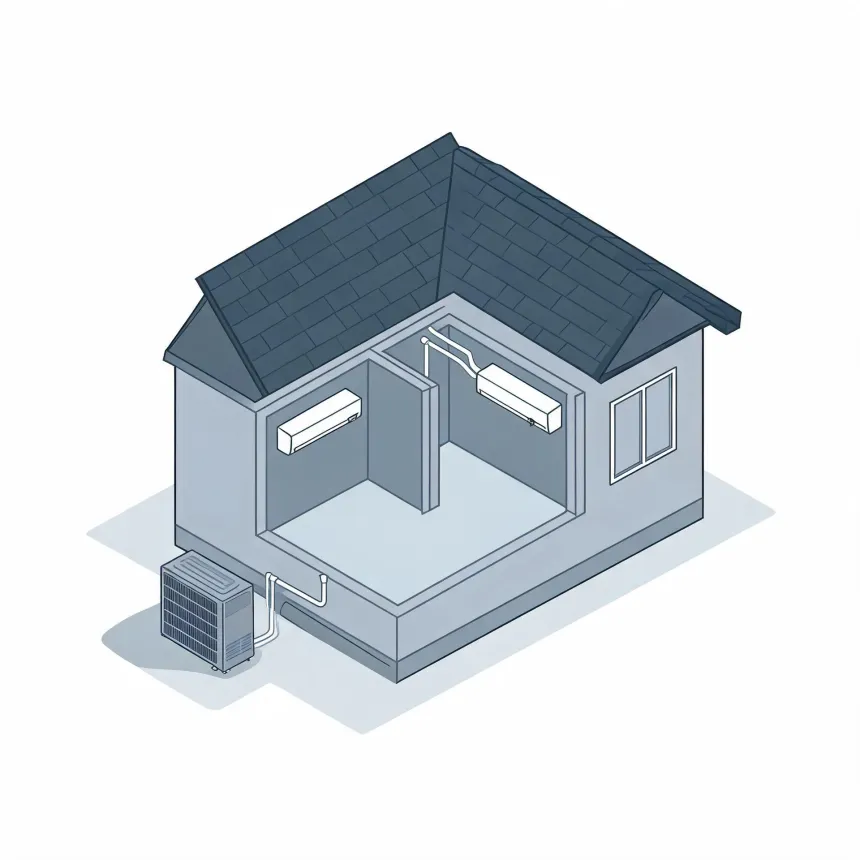
Isometric line illustration of a cutaway house with a shingled gable roof, showing two wall-mounted indoor air conditioning units connected by piping to an outdoor condenser unit on the ground outside.
Your system heats September through June and cools July through August.

NOAA nClimDiv, 1991–2020 normals

Cooling runs about two months a year here, July and August.

A mini split in Lewiston doesn't need to be the biggest unit on the lineup to keep up.

Cheap power here means the payback on a pricier unit takes longer

Power costs 11.52 cents a kWh statewide
Cooling runs July through August
Summer afternoons average 82°F

Half the homes in Nez Perce County were built in 1973 or earlier. A house that age was almost never built with a mini split in mind. The line set needs a path through an exterior wall, and the indoor head needs a spot where it can throw air across the room without a bad angle. The outdoor unit needs its own circuit, and an older panel sometimes doesn't have an open slot for it. None of this rules out a mini split. It just means the install has to work around a house that wasn't built for one, instead of dropping into a space already cut out for it.

Any new system here has to clear zone 5B's heating minimum

Nez Perce County falls in climate zone 5B, where heating is the bigger load and the efficiency rules are built around that. A mini split counts as a split-system heat pump under the federal standard, so any unit installed new has to meet 14.3 SEER2 for cooling and 7.5 HSPF2 for heating. That sets the floor for what a contractor can install here, and a federal tax credit is available on top of it.

Find a contractor
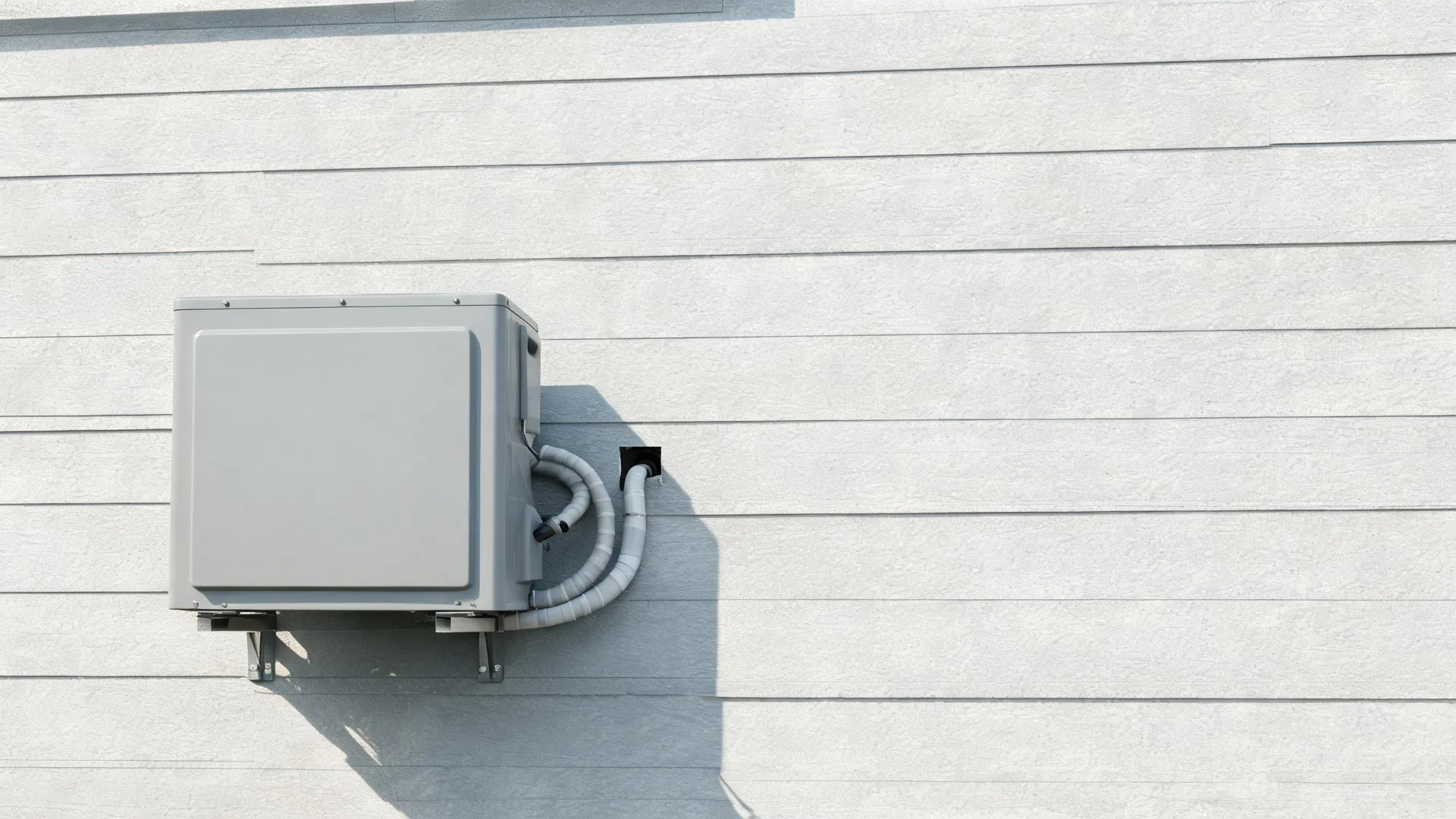
A beige split-system air conditioner outdoor condenser unit mounted on metal wall brackets atop a stucco wall.

Get it in before July, not during it

Cooling starts in July here, so June is when to get a mini split installed, not when the first hot week hits. An install done ahead of the season means the line set, the wall opening and the outdoor circuit all get done without anyone rushing. Wait until July and you're asking for the same work during the two months the system actually has to earn its keep.

Ask for the heat loss and heat gain numbers on the room itself

A contractor should size a mini split to the room it's heating and cooling, not guess from square footage alone. Ask what calculation they ran and what size head it points to. A unit too big cools the room fast then shuts off before it pulls the moisture out of the air, leaving it clammy. A unit too small runs constantly and never quite catches up on the coldest or hottest days.
Ask how many indoor heads one outdoor unit will run

Some outdoor condensers are built for a single indoor head, others split their capacity across several rooms. If a contractor is proposing one outdoor unit for multiple heads, ask what happens if every room calls for full heat or full cooling at the same time. A system stretched across too many heads will leave the room with the worst angle or the longest line run worse off than the rest.

If the mini split is taking over for a system that heated the whole house, that old equipment doesn't have to come out right away. A furnace can stay in place as backup, especially on the coldest nights when a heat pump has to work hardest. Baseboard or wall heaters usually just get shut off at the breaker rather than pulled out, since removing them means patching the wall behind. A window AC unit is the easy case, it comes out whenever you're ready to stop using it. If the old system runs on a fuel the mini split won't use, like propane or oil, ask the contractor what decommissioning actually involves. A tank or line that's just capped and left can be a problem later, even if it's not being used.

The crew starts outside and in, running the line set from the spot picked for the outdoor unit to the wall opening for the indoor head. That hole through the exterior wall gets sealed around the line set and wiring once everything passes through, so cold air and moisture can't work their way in behind the wall later. The indoor head mounts to a bracket fixed to studs, not just drywall, since it has to hold weight without sagging over time. Outside, the condenser sits on a pad or wall bracket raised above ground level, clear of snow and runoff. Once the line set is connected at both ends, the whole system gets evacuated with a vacuum pump to pull out air and moisture before the refrigerant is released into it. Only after it holds vacuum does the contractor check the charge, run the system through a heating and cooling cycle, and show you where the filter sits and how to clean it.