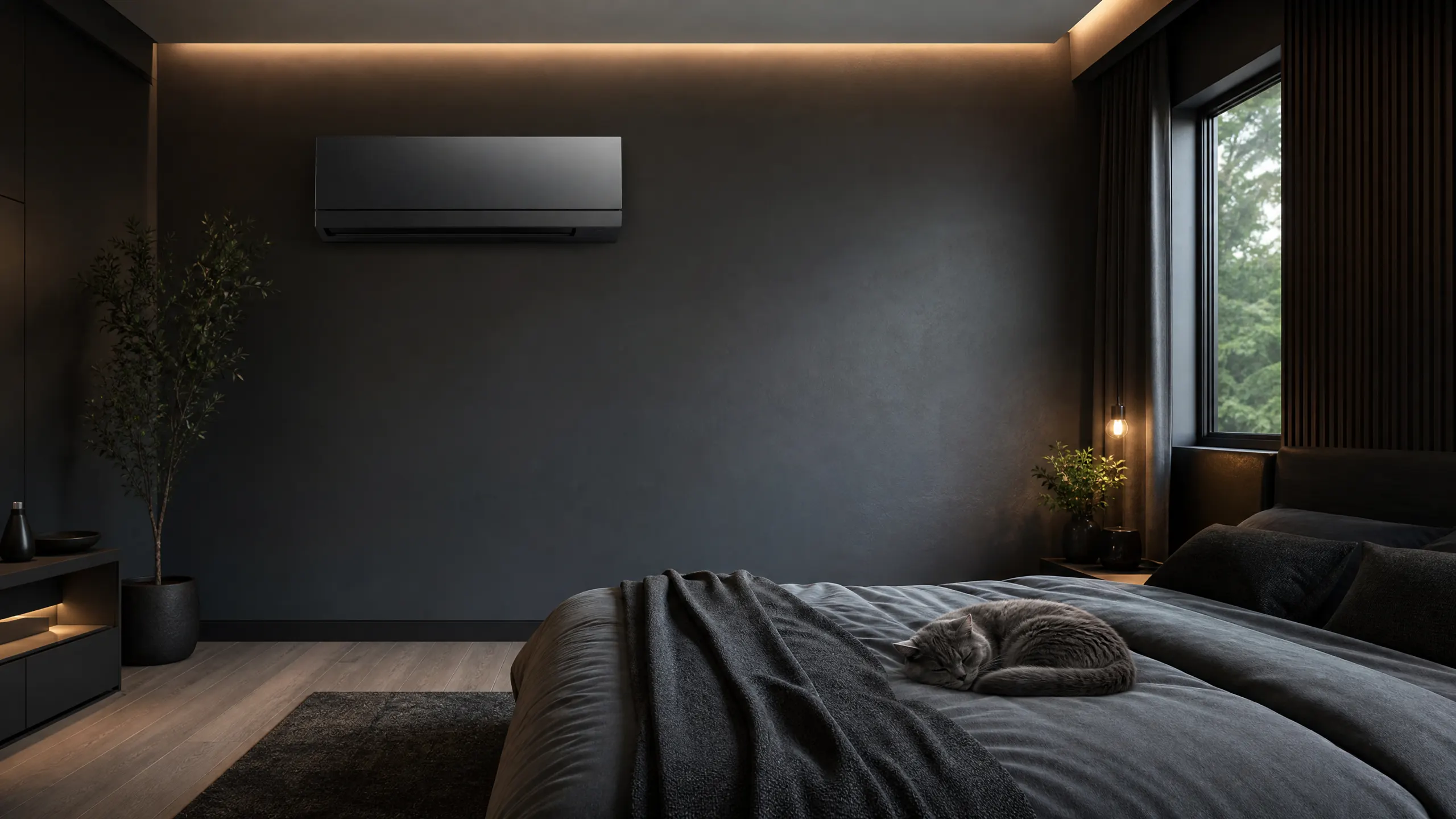





A gray cat sleeps curled up on a dark-made bed in a moody, minimalist bedroom with a wall-mounted air conditioning unit and warm accent lighting.

Mini Split Installation in Montpelier, ID

Tell us about the job

Takes about a minute. No obligation.

New system or replacementMini-splitBear Lake County, ID
Step 1 of 2

What ZIP code is the job in?

Utility gas heats 43.8% of homes in Bear Lake County, more than any other fuel, and another 23.0% run on bottled or LP gas. That means most houses here already have a furnace moving warm air through ducts. A mini split doesn't plug into that system. It runs on its own line, with its own indoor and outdoor unit, so it can go into a room the furnace doesn't reach well, or cover a space added on without touching the ductwork at all. For cooling, it does the job central air would in a home that has it. Where gas is already piping heat through the house, a mini split is less about replacing what's there and more about handling the one room that needs its own answer.

10 months
September through June, your system heats
12°F
the average winter night it heats against
77°F
the average summer afternoon it cools against
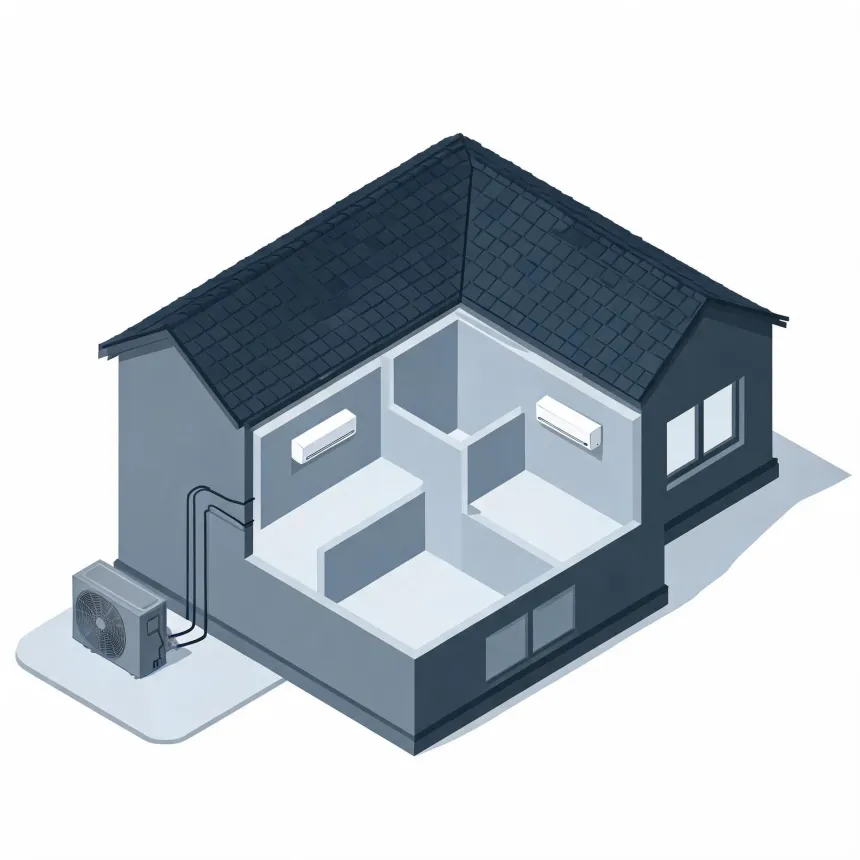
Isometric illustration of a cutaway single-story house with a dark shingled roof, showing two wall-mounted indoor air conditioning units connected by lines to an outdoor condenser unit on a pad beside the building.

Summer afternoons in Bear Lake County average 77 degrees.

A mini split here isn't fighting real heat, so a mid-range unit will keep up fine.

Power here runs 11.52 cents a kWh, so the payback on a top-tier mini split is slow. Pick one that holds up through a wind event.

Power costs 11.52 cents a kWh statewide
Summer afternoons average 77°F
21 damaging wind events from 2015 to 2024

Bear Lake County sits in climate zone 6B, a cold zone with a long winter. Any mini split installed here falls under the same federal rule as other split-system heat pumps. Units built from 2023 on have to hit 14.3 SEER2 for cooling and 7.5 HSPF2 for heating. There's no separate, lower bar for ductless systems. That HSPF2 number is the one that matters most in a place like this, since the unit will spend more months heating than cooling. A federal tax credit is available on qualifying equipment, on top of meeting that minimum.

A standard mini split fits homes here, old or new

Half the homes in Bear Lake County were built in 1974 or earlier, half in 1974 or later. That split doesn't call for anything special in a mini split. A standard size, standard efficiency unit will heat and cool either kind of house fine. The only sizing that matters is the room it's going into.

Find a contractor
A man in a cap, dark long-sleeved shirt and worn brown work pants walks up porch steps toward a green front door, carrying a canvas tool bag in his right hand, with a potted plant beside the door.
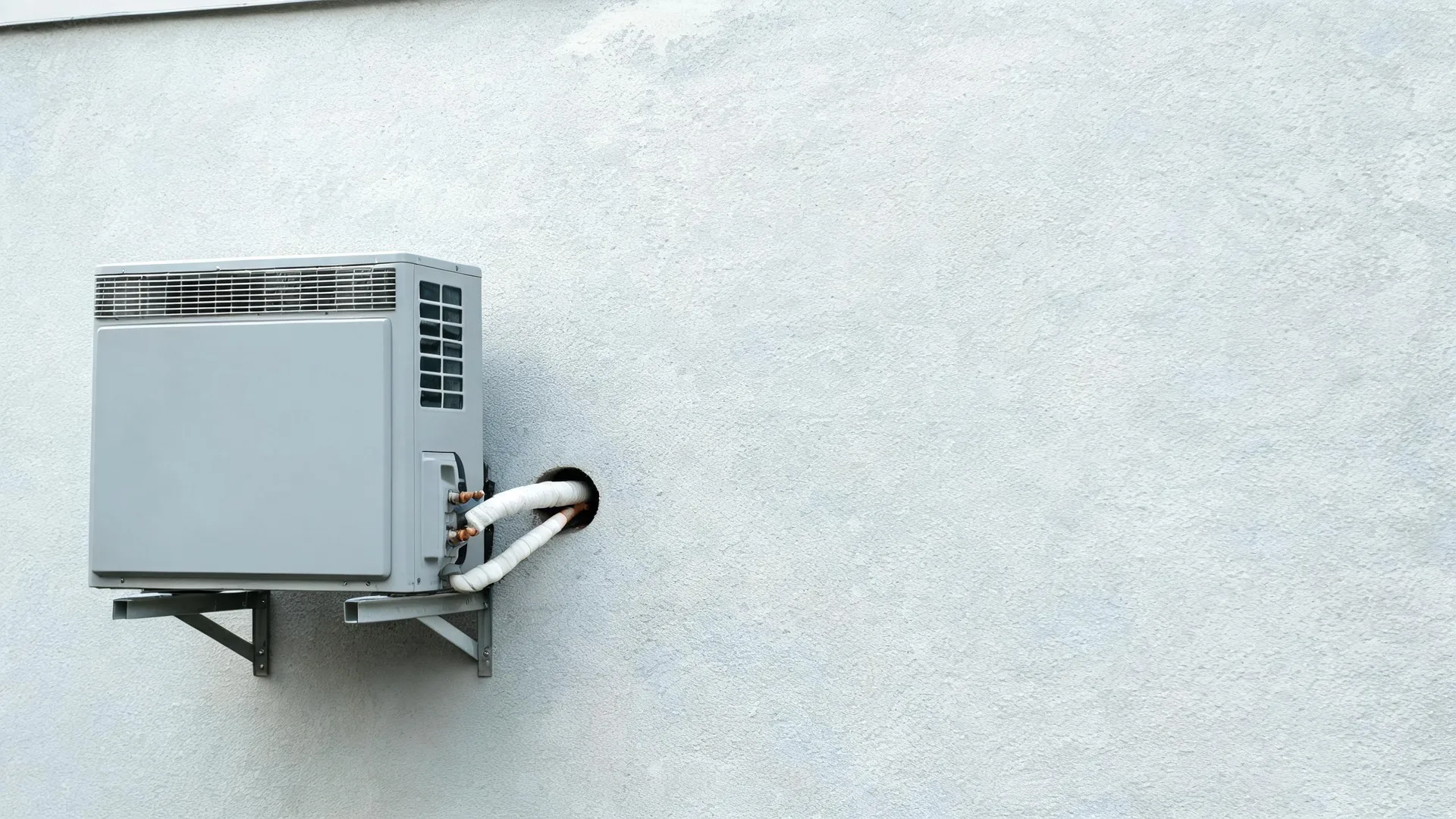
A beige split-system air conditioner outdoor condenser unit mounted on metal wall brackets atop a stucco wall.

Light duty, most of the year

No month here averages warm enough to call for cooling, so the compressor isn't working against real heat on those summer afternoons. It runs, but it isn't under load. A mid-range unit holds up fine on this kind of duty. There's no case for paying more for a higher-tier compressor or an extended parts warranty built for heavier work than this county asks for.

The old equipment doesn't have to come out

If the room getting a mini split is heated by the furnace now, nothing says that ductwork has to change. The mini split runs on its own line and takes over heating and cooling for that one room. The furnace keeps doing what it does for the rest of the house.
Replacing a mini split is a different job

When the system going in is swapping out an older mini split, the line set and electrical may already be in place. A crew still has to check the existing line set for contamination before reusing it, and an outdoor unit sized for the old equipment may not match the new one. That gets confirmed before install, not assumed.

A mini split quote isn't one number, it's several, and the equipment is usually the smallest part of it. What drives the cost is the work to get refrigerant line from the outdoor unit to the indoor head, through a wall, up a chase, or across a roofline, and how far that run has to go. A straight shot through one exterior wall is simple. A run that has to snake through finished space or clear multiple floors takes longer and takes more material. Where the outdoor unit sits matters too. It needs clearance to pull air through the coil and a path for condensate to drain away, and a spot that's easy to reach costs less to set than one that isn't. Electrical is its own piece. Some homes have a circuit nearby that can be adapted, others need new wire run back to the panel, and that difference shows up in the price before the unit is even mounted. Multi-zone systems, where one outdoor unit feeds several indoor heads, add a line set and a head for every room added, so the cost scales with how many zones are on the order, not just the size of the equipment.

Install day starts with the outdoor unit placement and the line set path, since that decides everything else. The crew mounts the indoor head first, usually high on a wall, then drills through to run the line set, the condensate drain and the electrical together. Both ends of the line set get connected, then the whole system gets pressure tested before any refrigerant moves. A leak is easier to catch and fix at that stage than after the system is charged. Once it holds pressure, the line gets evacuated to pull out air and moisture, since either one left behind will hurt the system's efficiency for as long as it runs. Only after that does the refrigerant get released from the outdoor unit into the lines. The last step is running the system, checking the temperature split at the indoor head, and making sure the condensate actually drains where it's supposed to.