





A white wall-mounted split air conditioner on a blue-grey wall, with a moonlit night sky visible through a nearby window.

Mini Split Installation in Mountain Home, ID

Tell us about the job

Takes about a minute. No obligation.

New system or replacementMini-splitElmore County, ID
Step 1 of 2

What ZIP code is the job in?

Utility gas heats 53.4% of homes in Elmore County, electricity heats 33.5%, and a small share run on bottled or LP gas. A mini split is electric, but it doesn't make heat the way a baseboard heater or an electric furnace does. It moves heat from the outside air into the house instead of generating it with a coil. That's a different enough process that comparing it to a gas furnace on one spec sheet doesn't tell you much. For a home that already has electric heat, adding a mini split usually means fewer changes to the house than it would for a home running entirely on gas.

10 months
September through June, your system heats
2 months
July through August, it cools
21°F
the average winter night it heats against
83°F
the average summer afternoon it cools against
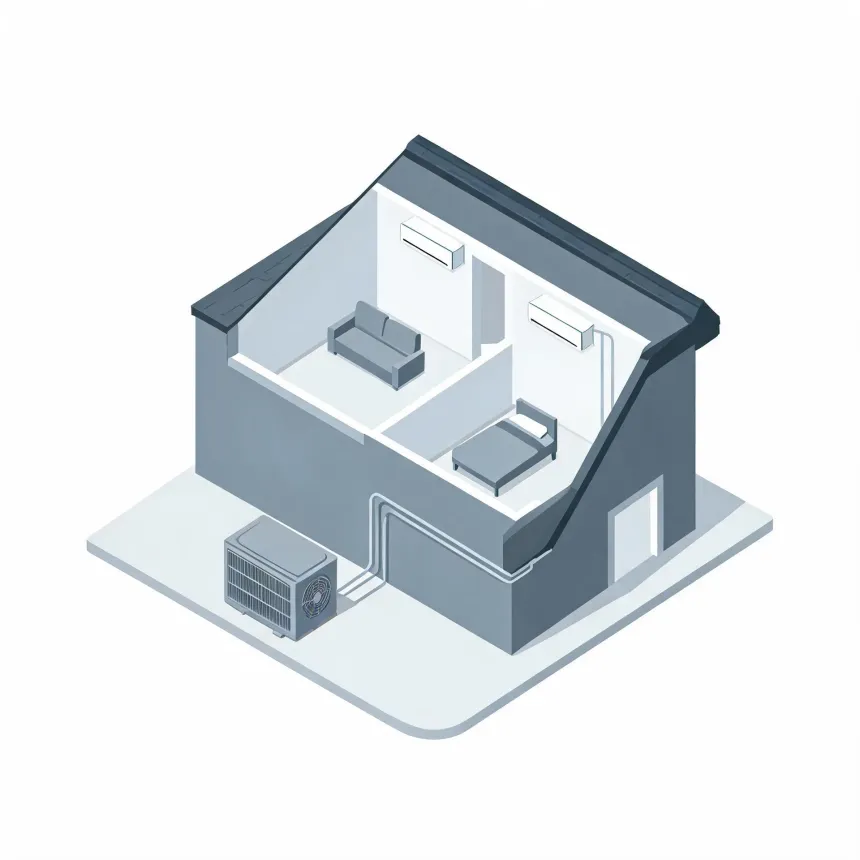
Isometric cutaway illustration of a two-room house showing two wall-mounted indoor air conditioning units connected by line sets to an outdoor condenser unit on the ground outside.
Your system heats September through June and cools July through August.

NOAA nClimDiv, 1991–2020 normals

Cooling in Elmore County runs July through August.

June is the month to get a mini split installed, before the heat shows up.

Cheap power here means payback takes longer, so pick a mini split for what it does well, not for the efficiency rating

Power costs 11.52 cents a kWh statewide
Cooling runs July through August
Summer afternoons average 83°F
Mountain Home barely works a mini splitTwo months of cooling a year, with afternoon highs averaging 83°F in summer

Elmore County falls under zone 5B in the 2021 energy code, a cool zone where heating carries more of the year's work than cooling. Any mini split installed here still has to meet the federal minimum for a split-system heat pump, 14.3 SEER2 for cooling and 7.5 HSPF2 for heating, whether or not it's ducted. The standard doesn't carve out a separate rule for ductless systems, so a mini split is held to the same floor as a central heat pump. That minimum narrows the field some, but it still leaves room to pick a unit based on how well it holds up in the cold rather than chasing a higher number on the spec sheet. A federal tax credit is available for qualifying systems, worth checking against before you settle on a model.

Pick a mini split that's built to last, not one built to impress

Two months of real cooling work a year means this system won't see hard use. Put the money into a unit that holds up and runs reliably, not the highest number on the spec sheet.

Find a contractor
A man in a dark jacket, cap and tan work pants, seen from behind, climbs wooden porch steps toward a green front door while carrying a worn canvas duffel bag.
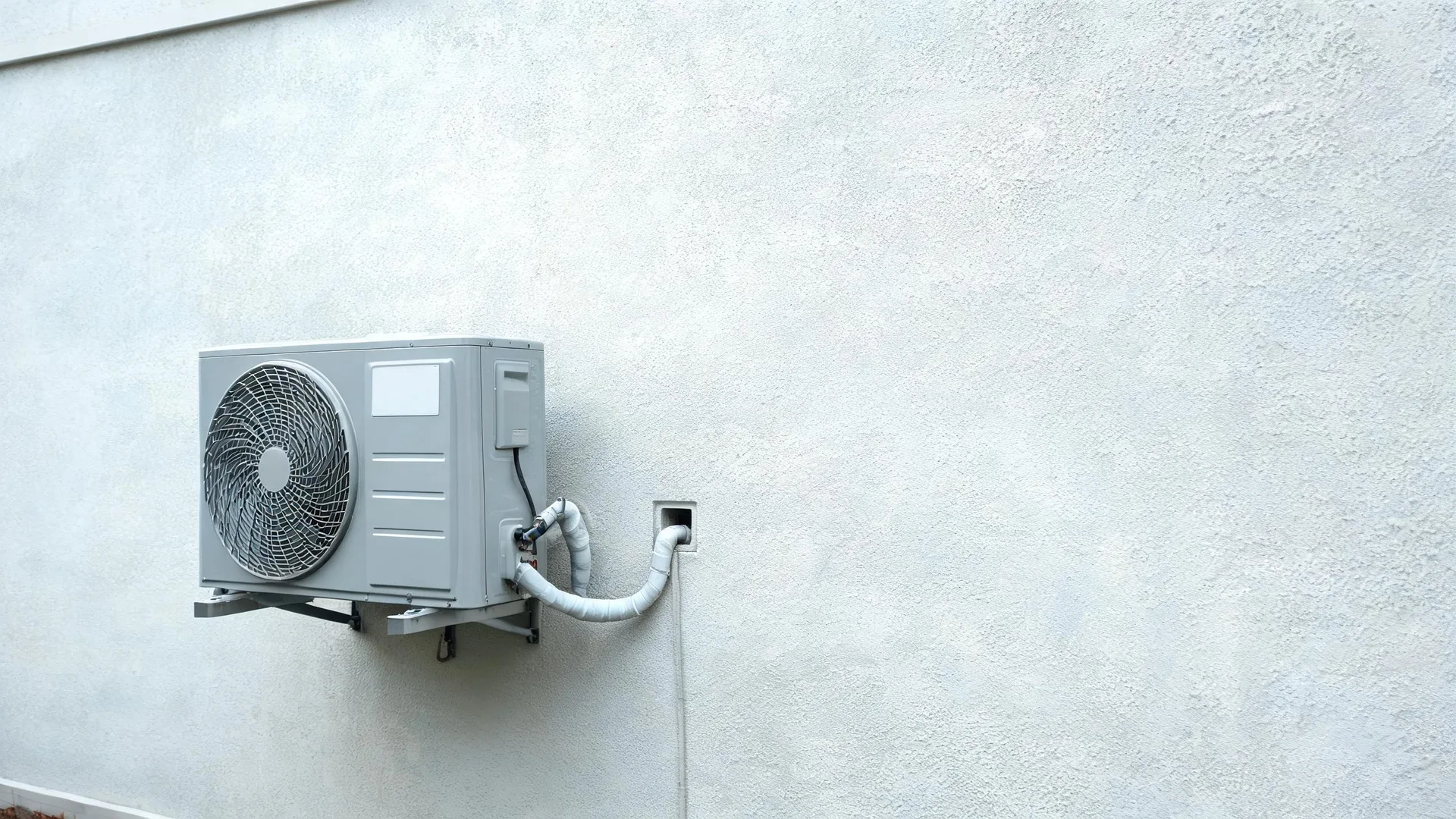
A white mini-split air conditioner outdoor condenser unit mounted on metal brackets against a beige stucco exterior wall, with a blue sky and scattered clouds in the background.

The old equipment doesn't stay behind

Whatever is on the wall now, whether it's a window unit, a baseboard heater, or an older ducted system, doesn't disappear on its own. A contractor handling the install will disconnect it and haul it away as part of the job, so it's worth asking upfront whether removal is included. If the old equipment used a line set or electrical circuit that the new mini split can reuse, that can simplify the work. If it can't, those get abandoned or capped off properly, not just left behind the wall. Window units and portable electric heaters are easy, they unplug and go. A ducted system or an older heat pump is a bigger job, since the outdoor unit, refrigerant lines, and sometimes the indoor air handler all have to come out before the new system goes in.

Sizing is a room by room calculation, not a rule of thumb

A contractor works out the load for each room by looking at square footage, window area, insulation, and ceiling height, then matches it to an indoor head. Picking a size off a chart, or just matching the old unit, skips the parts of the calculation that actually matter for how the room holds heat or sheds it.
Wrong size shows up as comfort problems, not just a number

An oversized head cools the room fast, shuts off, and leaves the air sticky because it never ran long enough to pull moisture out. An undersized one runs constantly and still can't hold the temperature on the hottest afternoons. Either way, the system is working against the room instead of for it.

A mini split's price comes down to what the crew can't see from the driveway. How many indoor heads the system needs to run, how far the line set has to travel between the outdoor unit and each head, and whether that run goes through an attic, a crawlspace, or straight through a wall all change the labor. A single zone system with one indoor head costs less to install than a multi-zone setup feeding several rooms, since each added head means another line set, another mounting job, and another spot on the outdoor unit's circuit board. Where the outdoor unit sits matters too. A condenser that needs a mounting pad, extra clearance from the house, or a longer electrical run costs more to set than one that goes right outside the wall it's feeding. None of this shows up on the unit's spec sheet. It shows up in how much line set the crew has to run and how many walls they have to open to run it.

Installation starts outside, with the outdoor unit set on its pad or bracket and the refrigerant lines run to wherever the indoor heads are going. Each indoor head needs a hole through the wall for the line set, a drain line, and a power connection, so part of the day is spent on that wall penetration and making sure it's sealed against the weather. Once the lines are run, the system gets evacuated with a vacuum pump to pull out moisture and air before refrigerant goes in. That step matters more than people expect. Any moisture left in the lines can freeze or corrode the system from the inside over time, and there's no way to check for it once the system is sealed up and running. After charging the lines, the crew tests each head, checks the temperature split at the vents, and walks through the remote and settings with whoever's going to run it day to day.