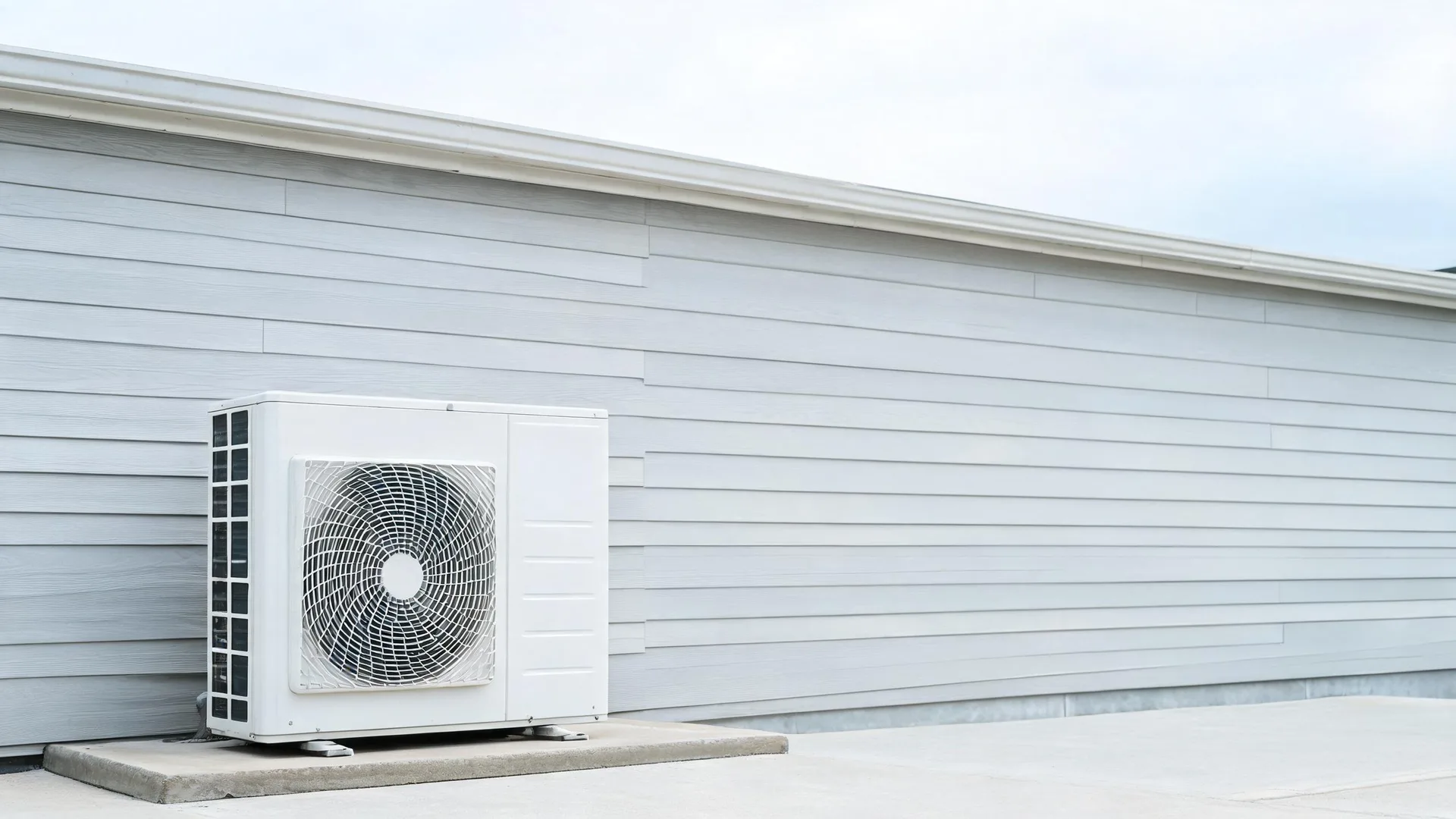
Gas is the default here
Nearly 6 in 10 homes in Canyon County heat with utility gas. A mini split doesn't replace that furnace, it works alongside it, handling the rooms or seasons where ducted heat falls short.
Takes about a minute. No obligation.
Nearly 6 in 10 homes in Canyon County heat with utility gas. A mini split doesn't replace that furnace, it works alongside it, handling the rooms or seasons where ducted heat falls short.
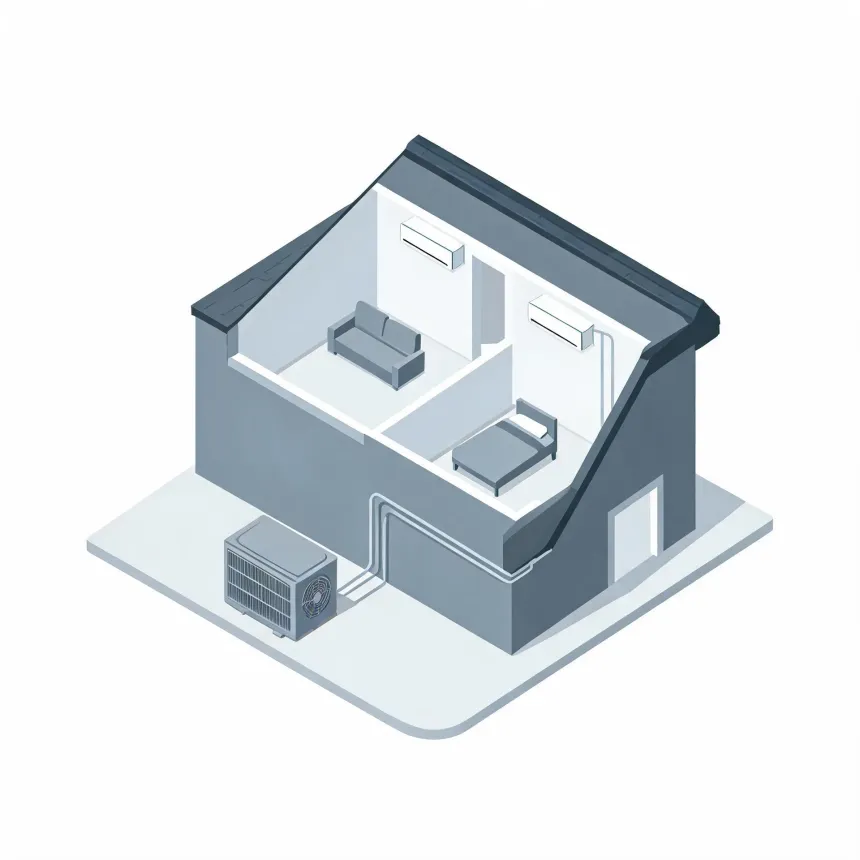
A bonus room, a garage conversion, an addition the ductwork never reached. In a gas-furnace home, a mini split covers what the furnace can't, and it cools too, which most furnaces don't.
NOAA nClimDiv, 1991–2020 normals
Summers here only ask for three months of work, June through August.
A mini split in Nampa doesn't need to be the toughest model on the shelf, just a steady one.



Canyon County falls in climate zone 5B, a cool zone where heating carries more of the year's work than cooling. Any mini split installed here has to meet the federal minimum for a split-system heat pump. That's 14.3 SEER2 for cooling and 7.5 HSPF2 for heating, the same minimum that applies everywhere else in the country. The standard looks at the equipment, not the climate it's going into. A unit that meets that minimum may also qualify for the federal energy efficiency credit, worth checking against before settling on a model.
Cooling in Canyon County starts in June. Get the mini split installed before then and it's running before the first hot stretch, not scheduled around one.
Find a contractor
The SEER2 and HSPF2 numbers on the label are tested figures, not a guess at what you'll see on your own wall. SEER2 covers cooling, HSPF2 covers heating, and both are measured over a full season of starting, running, and shutting off, not at one ideal moment. A higher number means the compressor gets more cooling or heating out of the same electricity, nothing more than that. It doesn't tell you how long the unit lasts or how well it was installed, and a high-efficiency head on a bad line set or a wrong charge won't perform the way the label implies. The rating is a ceiling the equipment can reach under good conditions. Getting close to it depends on the vacuum, the charge, and the sizing, all the work that happens after the box is opened.
A single zone with one indoor head costs less than a multi-zone setup running several heads off one outdoor unit. Each added zone means another line set run, another mounting job, another spot where the crew has to open a wall or find a path between indoor and outdoor units. The outdoor unit sizing changes too, since it has to carry the combined load of every head attached to it.
The distance between the indoor head and the outdoor unit, and what stands between them, drives a lot of the labor. A straight shot through an exterior wall is quick work. A run up through an attic, across a long wall, or around framing takes more time and more material. Where the outdoor unit can sit matters too. A spot with easy access near existing electrical costs less than one that needs new wiring run a long way.
Comparing quotes, ask what's actually in the box. One contractor's bid might include a line set and pad, another's might not, and that gap explains most of the price difference you're seeing. Ask who's doing the vacuum test on the line set before it's charged, since a system that isn't pulled down to a proper vacuum will lose refrigerant slowly for as long as it runs. Ask about the warranty split too. Most manufacturers cover parts, but labor is a separate warranty that the installing contractor sets, and that one varies a lot more than people expect. And ask what happens if the load calculation turns out wrong. A unit sized off a rule of thumb instead of a room by room count can end up short in the room that needed it most.
Install day starts with the load calculation already done and the equipment on site, so most of the day is mounting and running line. The indoor head goes up first, set on a bracket against the wall, with a small hole cored through to the outside for the line set, the drain, and the electrical. Outside, the line set gets connected to the condenser, then the whole system gets pulled down to a vacuum before any refrigerant moves. That vacuum step matters more than almost anything else that happens that day, since it clears out the moisture and air that would otherwise sit in the line and cause problems years down the road. Once it holds vacuum, the system gets charged, the head gets tested on heat and cool, and the crew walks through the remote and the basic settings before they leave. A single zone can often wrap in a day. Add zones, or send the line through framing instead of a straight wall, and it runs longer.