




A tabby cat sleeps on a dark quilted bed in a moody, minimalist bedroom with a black wall-mounted air conditioning unit.

Mini Split Installation in Payette, ID

Tell us about the job

Takes about a minute. No obligation.

New system or replacementMini-splitPayette County, ID
Step 1 of 2

What ZIP code is the job in?

Electricity heats 44.3% of homes in Payette County, more than any other fuel. Gas heats most of the rest, at 38.2%. A mini split fits well into an electric home since it runs on electricity already, with no new gas line or venting to plan around. For a home that heats with gas, a mini split still works, usually alongside the existing furnace rather than replacing it outright. Either way, the installer will size the unit to the rooms it has to cover, not just to what the house used before.

8 months
October through May, your system heats
3 months
June through August, it cools
25°F
the average winter night it heats against
88°F
the average summer afternoon it cools against
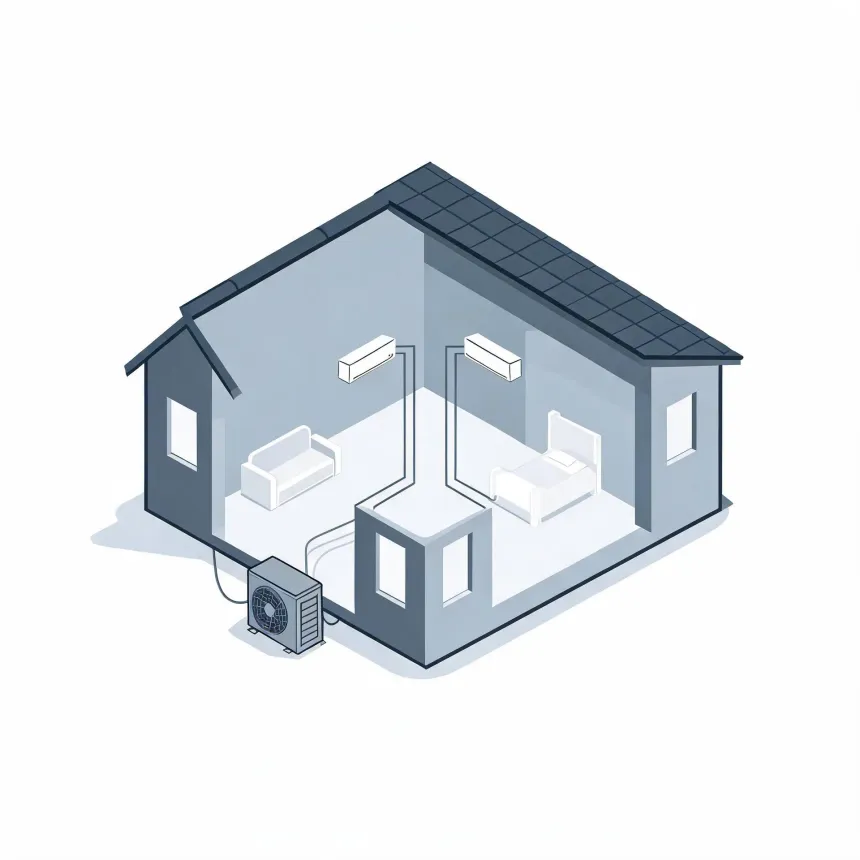
Isometric cutaway illustration of a small house showing two wall-mounted indoor air conditioning units connected by lines to a single outdoor condenser unit beside the building, with a sofa in one room and a bed in another.
Your system heats October through May and cools June through August.

NOAA nClimDiv, 1991–2020 normals

Half the homes in Payette County were built in 1978 or earlier.

A mini split doesn't care either way, as long as it's sized to the room it has to heat and cool.

Three months of summer isn't much to ask of a mini split

Cooling runs June through August
Summer afternoons average 88°F
Power costs 11.52 cents a kWh statewide

Cooling in Payette County runs June through August, so May is the month to get a mini split installed. Book it then and the installer can take their time on the mount, the line set and the pad without rushing to beat the first hot week. Wait until June and you're not the only one calling. Installers get busier once the heat sets in, and a unit put in under pressure is still a unit you'll live with for years. Getting it done in May also means it's running and tested before you actually need it, so any issue shows up while the weather's still mild, not in the middle of the three months you're counting on it.

Cheap power here means fit and reliability matter more than efficiency

Idaho homes paid 11.52 cents per kilowatthour in 2024, well under what most of the country pays. That changes the math on a mini split. The highest-efficiency model takes longer to earn back its extra cost here, so picking one for the lowest bill isn't the priority it is elsewhere. What matters more is a unit sized right for the rooms it has to cover, installed by someone who will stand behind the work.

Find a contractor
A man in a dark T-shirt and olive pants, seen from behind, carries a canvas tool bag up wooden porch steps toward a pale green front door beside a potted plant.
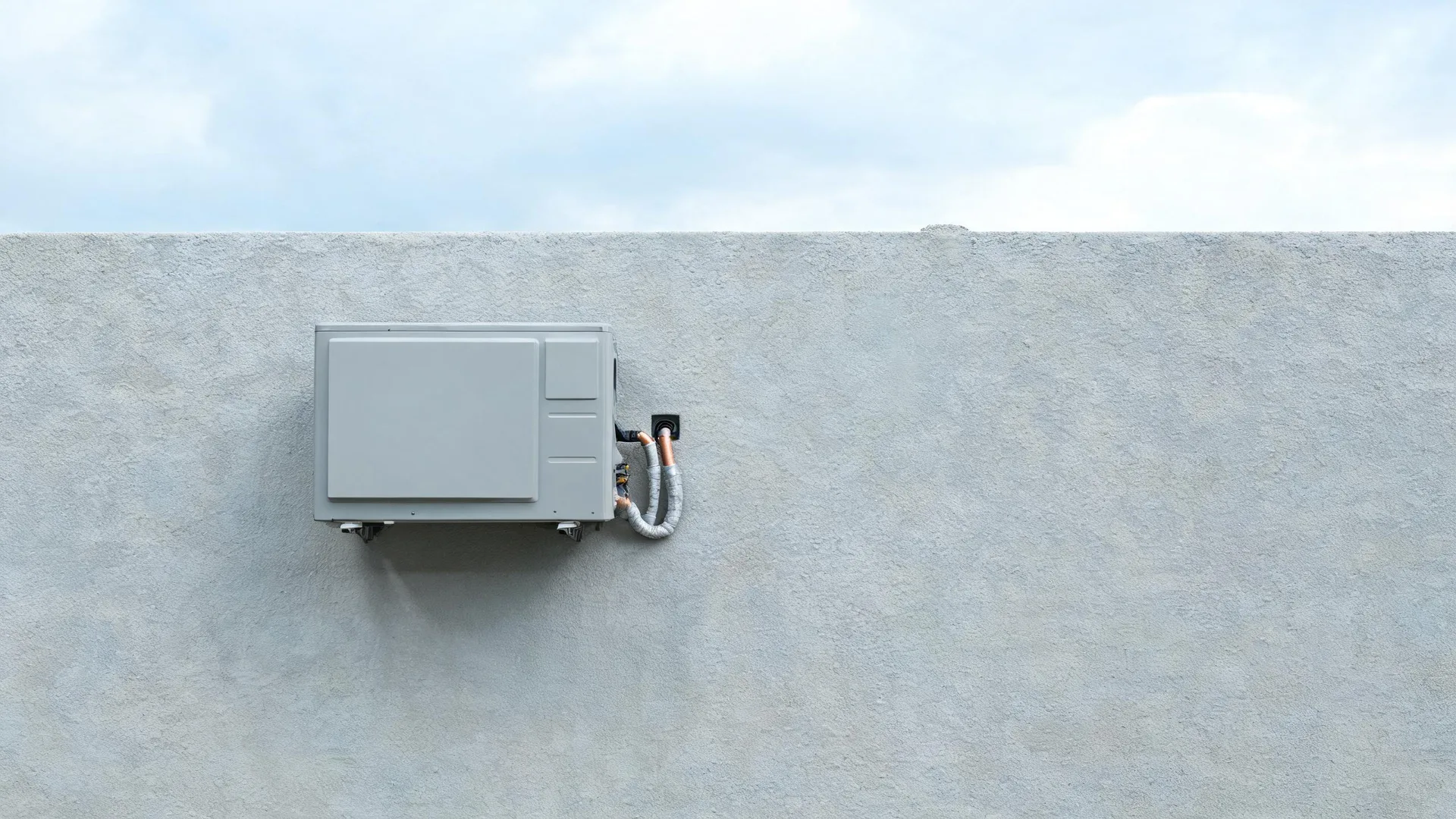
A white outdoor air conditioner condenser unit mounted on metal wall brackets against gray horizontal siding, with a blue sky and white clouds behind it.

Sized to the room, not the old system

Sizing a mini split isn't a matter of matching the new unit to whatever the old system was rated for. The installer works out, room by room, how much heat that space gains in summer and loses in winter, based on things like window area, what's on the other side of each wall, and ceiling height. That math points to a capacity, and the unit gets picked to match it. Oversize it and the unit cools the air fast but shuts off before it pulls the damp out of the room, so the space feels cold and clammy at once. It also means more stopping and starting, which wears at the compressor over time. Undersize it and the unit runs flat out on the hardest days and still can't keep up, with the room never quite reaching the temperature set on the thermostat. Either mistake shows up most on the days the system matters most, not on the mild ones in between.

The old system doesn't have to go first

If a furnace or central air unit is already heating and cooling the house, a mini split can go in alongside it. Nothing has to come out before the new unit goes in, and nothing has to stop working while the job gets done.
What happens next depends on what it is

A furnace or AC unit being replaced outright usually gets hauled off by whoever installs the new system, refrigerant recovered and metal recycled where that's an option. A furnace staying in place as backup just sits idle until it's needed, no disconnection required.

A mini split's price comes down to what the crew has to do beyond hanging the indoor head and the outdoor unit. Running the line set is the biggest swing factor. A short, straight shot through an exterior wall takes less labor than a run that has to snake through an attic or drop down multiple floors. Electrical matters too. Some units run on an existing circuit, while others need a dedicated line back to the panel, and that means more wire, more conduit, more time. Multi-zone systems cost more than single-zone ones because there's more to mount, more line set to run, and more indoor heads to level and secure. Where the outdoor unit sits plays a part as well. A pad on solid ground is simple, but a wall mount bracket or a spot that needs extra support adds steps. None of this is padding. It's the work of getting refrigerant, power and condensate drainage from one unit to another without a leak or a short down the line.

Install day starts outside, not in. The crew figures out where the outdoor unit sits and where the indoor head goes, then runs the line set between them, usually through a single hole drilled through the wall. That hole gets sealed once the refrigerant lines, the power wire and the condensate drain are all run through it. Inside, the mounting plate goes up first, leveled before the head hangs on it. Once everything's connected, the lines get pulled into a vacuum to clear out air and moisture, because either one left behind will wreck the system over time. Only after that does the refrigerant get released to charge the system. The last step is running it, in both heating and cooling, to check the temperature split and listen for anything that shouldn't be there.